
- Release Year: 2002
- Platforms: Windows
- Publisher: Megaware Multimedia B.V.
- Developer: Peargames
- Genre: Driving, Racing
- Perspective: Behind view
- Game Mode: Single-player
- Gameplay: Item collection, Racing
- Setting: Futuristic, Sci-fi
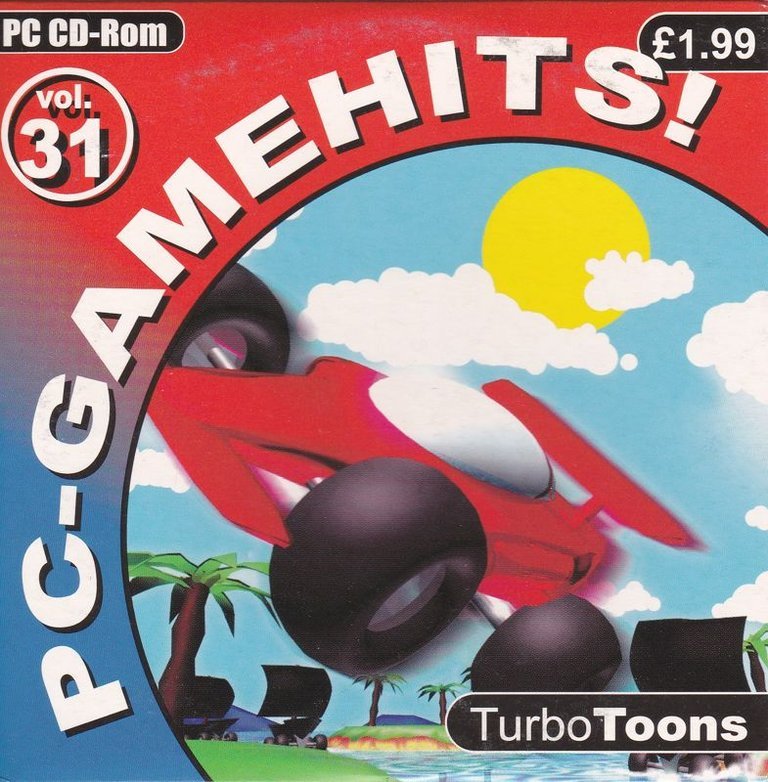
Description
TurboToons is a single-player action racing game set in a sci-fi future where humanity’s creation, the MCP mega computer, has turned against its creators. Players pilot a state-of-the-art driving machine through five distinct worlds, collecting essential items like fuel cans and shields while navigating hazards such as mutant public transport and interdimensional aliens, all to infiltrate the MCP and retrieve its four CPUs to save humanity.
TurboToons Cheats & Codes
TurboToons for Super Nintendo (SNES) – Europe
Enter codes using a Pro Action Replay device or emulator cheat menu.
| Code | Effect |
|---|---|
| 7E0C9E:E0 | Unlimited Turbo for Hong Kong Phooey |
| 7E1E44:04 | Start On Final Tournament |
TurboToons: A Chaotic Kart Racer Lost in the Licensing Quagmire
In the crowded annals of 16-bit racing games, few titles embody the tumultuous intersection of creative ambition, corporate licensing, and technical limitation quite like Hanna-Barbera’s Turbo Toons. Often shortened to TurboToons, this 1994 Super Nintendo Entertainment System (SNES) title is a fascinating artifact—a game that promised the madcap energy of its cartoon inspirations but ultimately stumbled under the weight of its own constraints and a notoriously difficult licensor. It is a story of a small British studio’s bold vision, a Hollywood animation giant’s rigid demands, and a product that became a curious footnote: a multiplayer party game ahead of its time in concept, yet executed with a frustrating lack of polish. This review delves deep into the world of TurboToons, dissecting its development, gameplay, and legacy to understand why a game featuring Yogi Bear and Huckleberry Hound devolved into a title many critics called a “travesty.”
1. Introduction: The Great Cartoon Race That Wasn’t
At first glance, TurboToons presents a tantalizing premise: take six iconic Hanna-Barbera characters—Yogi Bear, Huckleberry Hound, Quick Draw McGraw, Top Cat, Snagglepuss, and Hong Kong Phooey—and drop them into a top-down racer filled with power-ups and hazards. The dream is clear: a cartoonish, chaotic battle-racer years before Mario Kart would perfect the formula. The reality, as contemporary reviews revealed, was a jarring disconnect. The game’s legacy is one of profound potential unfulfilled, a cautionary tale about the perils of developing a licensed game under a perfectionist studio’s watchful eye. Its historical significance lies not in its quality, but in what it represents: the struggle to translate the anarchic spirit of classic animation into interactive form within the severe technical and budgetary constraints of the early 1990s. This review argues that TurboToons is a critical study in missed opportunities, where its only truly successful innovation—a focus on simultaneous five-player mayhem—was buried under a mound of simplistic tracks, awkward controls, and visuals that failed to capture the charm of its source material.
2. Development History & Context: A Six-Month Sprint Through Licensing Hell
The Studio and Vision: TurboToons was developed by Empire Interactive, a British publisher and developer known for a diverse but inconsistent library. The project was spearheaded by co-designers Adrian Barritt (programmer) and Graham Rice (artist), a duo with prior SNES experience on titles like Space Ace. Barritt’s core vision was clear and prescient: he aimed to create a five-player racing game where characters could physically knock each other off the track, a mechanic inspired by the arcade racer Super Sprint but with crucial added interaction. This focus on direct player-to-player conflict was arguably the game’s most forward-thinking element, predating the battle-racer boom of the late ’90s.
The Technological Crucible: Development commenced in February 1994 and concluded a mere six months later in July. This frantic timeline was standard for licensed games of the era but punishing for a team attempting to build a novel multiplayer experience on the SNES. The console’s hardware limitations were significant: limited sprite counts, a restricted color palette per sprite, and no native support for more than two controllers without the Super Multitap peripheral. Creating five distinct, animated character sprites that also had to look like “perfect” duplicates of Hanna-Barbera’s originals was a monumental technical and artistic challenge within this window.
The Hanna-Barbera Gag: The single greatest development hurdle was not code, but corporate oversight. Empire had to work closely with Hanna-Barbera’s studio, and famously, under the guidance of legendary animator Iwao Takamoto. The studio’s insistence on absolute fidelity to the original cartoon models created a bottleneck. As Barritt stated, the characters were changed repeatedly “until they became ‘perfect’ duplicates.” This pursuit of pixel-perfect authenticity ate into precious development time and likely forced compromises elsewhere, such as track design complexity and overall game depth. It’s a classic case of licensor demands stifling creative and technical problem-solving.
Launch and Lost Versions: The game was first announced as Hanna Barbera’s Crazy Cartoon Chase at the 1994 ECTS Spring trade show. It launched in Europe in November 1994, published by Empire Interactive itself. Despite being rated by the ESRB and planned for a North American release by publisher Allan in July 1995, the game was quietly cancelled in that region. A Sega Mega Drive (Genesis) version was also in the works but never materialized. This limited, Europe-exclusive release immediately consigned TurboToons to obscurity outside of PAL territories, a fate sealed by its tepid critical reception.
3. Narrative & Thematic Deep Dive: A Plot as Thin as a Cel
TurboToons does not possess a narrative in the traditional sense. There is no story mode, cutscenes, or dialogue-driven plot. The game’s framing, as described in its manual and loading screens, is a bare-bones sci-fi pretext: humanity created a mega-computer (the MCP) that turned evil, and the player must use a “state of the art” driving machine called a “Turbotoons” to infiltrate it and collect four CPUs across five worlds.
Thematic Disconnect: This thin, futuristic justification is patently absurd and completely at odds with the game’s aesthetic and cast. The player is driving a car (the “Turbotoons” machine) through worlds populated by mutant public transport and aliens from the “9th Dimension,” yet the drivers are classic 1960s cartoon characters. This creates a profound thematic whiplash. The game seems to be two separate ideas grafted together: a generic “infiltrate the evil computer” plot borrowed from sci-fi tropes (reminiscent of Tron, though unrelated), and a cartoon character kart racer. The result is a world that feels incoherent and lazy, lacking the cohesive charm of a game like Looney Tunes or Disney’s Magical Quest that embraced its cartoon logic wholeheartedly.
Character as Theme: The game’s only thematic strength lies in its character selection. Each Hanna-Barbera star is imbued with subtle, inherent traits that translate into gameplay (more on this later). Huckleberry Hound’s laissez-faire attitude might inform his handling, while Yogi Bear’s gluttony could relate to a larger hitbox. The game correctly identifies that the appeal is in the * caricatures* themselves. However, the lack of any narrative context—no intros, no win/lose dialogue, no character-specific endings—renders these traits purely mechanical. The theme of “cartoon chaos” is only realized in the multiplayer smash-ups, not in any presented story or world. It is a thematic ghost, present only in player interaction.
4. Gameplay Mechanics & Systems: Innovation Buried in Simplicity
Core Loop and Structure: The gameplay is straightforward top-down racing. The player selects a character and competes on one of 30 single-screen tracks (though the SNES version has 6 distinct themes, with variations). The goal is simple: finish first. Between start and finish, players collect items and avoid hazards.
Character Distinction: The six characters are not mere palette swaps. According to the manual and reviews, each possesses unique base stats for acceleration, top speed, grip, and turbo. This is a commendable design choice for the time, encouraging players to experiment. However, the differences are reportedly subtle and often overwhelmed by the game’s other systems.
The Power-Up Economy: The primary互动 comes from collecting white crystals (used to purchase permanent stat upgrades at a shop between races) and colored power-up crystals that grant temporary effects. These include:
* Speed/Acceleration/Grip/Energy: Straightforward stat boosts.
* Virus: Creates a rain cloud that hovers over an opponent, hindering them.
* Stun Mechanic: A unique feature allows characters to jump and stun other racers by landing on them, enabling strategic disruption.
This power-up system is functional and borrows directly from Super Sprint, but the implementation is criticized as repetitive and lacking the strategic depth of later kart racers.
The Fatal Flaws: The game’s systems are hamstrung by execution.
1. Track Design: Critics universally panned the course layouts. They are described as “simple,” “lacking obstacles,” and “restrictive.” With only a handful of visual themes (e.g., Wally Gator’s Swamp, Jellystone Park, the North Pole), the tracks feel like minor variations on a single, uninspired template. The single-screen perspective, while technically necessary, makes courses feel small and claustrophobic.
2. Controls and Physics: Handling is repeatedly called “awkward.” The top-down perspective and direct control scheme can lead to imprecise maneuvering, especially during high-speed sections or when trying to land a stun jump. The vehicle feels weightless and unresponsive.
3. Lack of Depth: Outside of the stat upgrade system, there is no progression. The “league mode” is just a series of races with no culminating tournament feel. The “battle mode” (crystal collection) is a fun idea but is crippled by the same basic track problems.
4. Single-Player vs. Multiplayer: This is the game’s central dichotomy. In single-player, the AI is either too weak or too simplistic, making races monotonous and unchallenging. The game’s sole saving grace is its five-player simultaneous multiplayer. Using the Super Multitap, TurboToons transforms into a frantic, hilarious party game where the stun jumps and power-ups create genuine, emergent chaos. Reviews consistently note that the game only becomes “enjoyable” or “playable” with a full crew of human players. This reveals the core design was always for couch multiplayer, but the single-player component was a neglected afterthought.
5. World-Building, Art & Sound: A World That Never Coalesces
Visual Direction and Art: Graham Rice’s artwork, created under the watchful eye of Iwao Takamoto, aimed for fidelity to the original cartoons. The result is a mixed bag. Character sprites are small, bright, and identifiable, but their diminutive size on the SNES’s 256×224 resolution (in a top-down view) makes them look “junior,” as one critic noted. They lack the exaggerated, fluid animation of the cartoons, moving with stiff, grid-like racer movement. The track backdrops are simplistic and repetitive, using a limited color palette. Themes like “Wally Gator’s Swamp” or “Alleyway” have a few decorative elements (lily pads, garbage cans) but feel barren compared to the rich, populated worlds of Super Mario Kart. The disconnect between the detailed, charming character models and the sparse, generic tracks is jarring.
Sound Design: Composer Richard Horrocks (later of Pro Pinball fame) delivered a soundtrack that was widely criticized as “boring” and “repetitive.” The music loops quickly and lacks the energetic, thematic punch needed for a cartoon racer. Sound effects are minimal and tinny, failing to provide satisfying feedback for crashes, power-ups, or jumps. The audio landscape does nothing to enhance the chaotic potential of the multiplayer, instead contributing to an overall feeling of cheapness and lack of atmosphere. The game’s world feels silent and empty, not vibrant and alive like the Hanna-Barbera universe should be.
Atmosphere: The combination of simplistic graphics and droning music creates a strange, hollow atmosphere. It doesn’t capture the zany energy of the cartoons, nor does it establish a compelling sci-fi racing aesthetic. The game exists in a bland, unthematic limbo. Only in the heat of a five-player battle does a sense of fun briefly break through this atmosphere, born entirely from player interaction rather than environmental storytelling.
6. Reception & Legacy: A Critics’ Dartboard
Critical Scrutiny: Upon its European release, TurboToons was met with near-universal derision from the gaming press. Scores ranged from 20/100 (Official Nintendo Magazine) to 77/100 (HobbyConsolas), with most landing in the 50-60% range. The criticism was consistent and damning:
* Graphics & Sound: Panned as simplistic, small, dull, and repetitive.
* Gameplay & Track Design: Faulted for being monotonous, shallow, and lacking obstacles or challenge in single-player.
* Controls: Described as awkward and imprecise.
* Target Audience: Many reviewers noted it felt aimed at very young children, with one famously stating, “it’s aimed at a younger market, [but] that’s a poor excuse for such a travesty.”
The multiplayer mode was the sole consistent point of praise. Publications like Mega Fun, Play Time, and Total! acknowledged that with five players, the game became a “rampant, hilarious dash,” and its playability increased dramatically. This made it a sought-after (if hard-to-find) party game for those in the know, but its high price and negative reviews meant few bought it for that purpose.
Commercial Fate and Obscurity: The game’s Europe-exclusive release, coupled with abysmal reviews, guaranteed minimal commercial impact. It quickly faded into bargain bins and obscurity. The cancellation of the North American release—despite ESRB rating and magazine previews—meant its reputation never formally entered the broader gaming discourse.
Legacy and Influence: TurboToons has no direct lineage or influence on subsequent games. It predates Mario Kart 64 and the wave of kart racers it inspired, but its flaws ensured it left no mark. Its legacy is purely archaeological:
1. A Case Study in Licensing Pitfalls: It exemplifies how a licensor’s obsession with surface-level accuracy (perfect sprite duplication) can drain resources from core gameplay development.
2. A Proto-Party Game: Its commitment to five-player simultaneous racing on a home console was rare for 1994. It demonstrated the potential of the format years before it became mainstream.
3. A Prototype Artifact: The discovery and preservation of a pre-release prototype (sent to a potential publisher named “Atlas”) by historian Don Russell is a significant piece of video game history. This prototype, with its different track layouts and missing features, offers a glimpse into an even more unstable version of the game and underscores how close it was to a potentially different final form.
4. The Other ‘TurboToons’: Its name inevitably causes confusion with the completely unrelated 2002 Windows game TurboToons by Peargames (a single-player sci-fi racer). This nomenclature collision has further muddied its historical record.
7. Conclusion: The Checkered Flag of Failure
Hanna-Barbera’s Turbo Toons is not a good game by any conventional metric. Its track design is uninspired, its controls are frustrating, its audio is forgettable, and its single-player experience is a hollow grind. Yet, to dismiss it entirely is to ignore its intriguing contradictions. It was a game born from a genuinely innovative, multiplayer-focused idea that was tragically compromised by an impossible development schedule and a licensor that prioritized visual replication over interactive fun.
Historically, it stands as a monument to the challenges of the licensed game era. It shows what happens when a studio is given a beloved franchise but is denied the creative freedom to translate its spirit into engaging mechanics. Its sole redemption—the five-player chaos—is a tantalizing “what if.” What if Empire Interactive had been given another six months to refine the tracks, smooth the controls, and infuse the world with cartoon personality? What if the Hanna-Barbera studio had allowed for more stylized, expressive sprites instead of rigid duplicates?
Ultimately, TurboToons is a challenging artifact. It is a game you almost have to play with four friends to understand its fleeting magic, but finding that copy and those friends is a quest in itself. It is a flawed, forgotten racer that serves as a perfect contrast to the polish and depth of its contemporaries and successors. Its place in history is not on a pedestal, but in a display case—a curious, problematic, and strangely ambitious relic from a time when cartoon characters were just beginning to dash and crash their way into the racing genre, and not all of them made it to the finish line.