
- Release Year: 2014
- Platforms: Android, iPad, iPhone, Linux, Macintosh, Windows
- Publisher: Tin Man Games Pty. Ltd.
- Developer: Tin Man Games Pty. Ltd.
- Genre: Adventure
- Perspective: Text-based / Spreadsheet
- Game Mode: Single-player
- Gameplay: Interactive fiction, RPG elements, Text adventure
- Setting: Fantasy
- Average Score: 77/100
Description
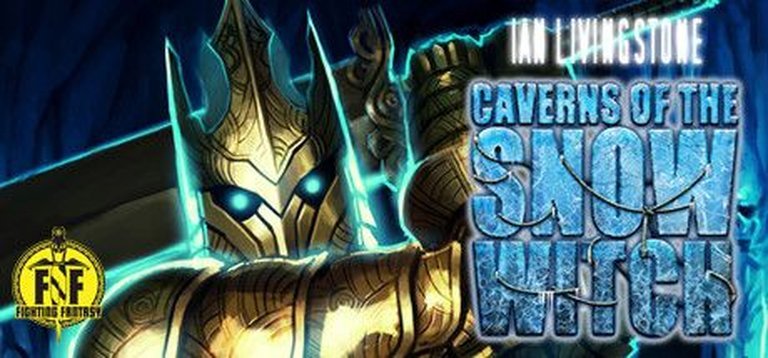
Caverns of the Snow Witch is an interactive fiction game adapted from the classic 1984 Fighting Fantasy gamebook by Ian Livingstone. Players embark on a text-based adventure in the fantasy world of Allansia, navigating perilous icy caverns, battling creatures like the crystal warrior, and making choices that affect the journey. The story features companions such as Redswift and Stubb, and continues beyond the defeat of the Snow Witch, blending indoor and outdoor exploration with RPG elements.
Gameplay Videos
Where to Buy Caverns of the Snow Witch
PC
Caverns of the Snow Witch Guides & Walkthroughs
Caverns of the Snow Witch Reviews & Reception
metacritic.com (75/100): A snow bound adventure that keeps you enthralled from first to last, Caverns of the Snow Witch is well worth a look.
Caverns of the Snow Witch: A Frozen Fortress of Interactive Fiction
Introduction: The Icy Grip of a Classic
In the frostbitten annals of interactive fiction, few titles conjure a more visceral chill than Caverns of the Snow Witch. As the ninth installment in the revolutionary Fighting Fantasy series, it stands not merely as a sequel but as a pivotal evolution—a book that traded the claustrophobic dungeon crawl for the vast, lethal expanse of a frozen wilderness before plunging the player into a glittering, deadly labyrinth of ice. This review posits that Caverns of the Snow Witch is a masterclass in atmospheric world-building and structural ambition, whose legacy is twofold: it advanced the narrative scope of the gamebook format with its companion mechanics and multi-act pacing, while simultaneously cementing a reputation for merciless, often unfair, difficulty that has fascinated and frustrated players for nearly four decades. Through its journey from a Warlock magazine serial to a modern digital adaptation by Tin Man Games, it remains a touchstone for understanding the creative heights and punishing lows of the genre’s golden age.
Development History & Context: Forging a Frozen Classic
The Vision of Ian Livingstone and the Fighting Fantasy Engine
Authored solely by Ian Livingstone—co-creator of the Fighting Fantasy phenomenon alongside Steve Jackson—Caverns of the Snow Witch emerged in 1984 as Livingstone’s fifth solo contribution to the series. Following the foundational, dungeon-centric Warlock of Firetop Mountain, Livingstone sought environmental variety. As he later reflected on the official Fighting Fantasy website, having already tackled “dungeons, forests and islands,” it was “time for some freezing mountain snow for adventurers to survive.” This conscious shift in setting was a strategic move to diversify the series’ palette, leveraging the inherent perils of a blizzard-swept landscape to create a distinct, survival-horror-tinged experience.
The book was built upon the standard, elegantly brutal Fighting Fantasy system: three core attributes (Skill, Stamina, Luck) generated by dice roll, resolved through sequential combat rounds and success-test mechanics. This engine, designed to be a table-top RPG distilled into a solo paperback, provided the rigid framework within which Livingstone’s narrative ambitions would play out. The constraints were both technical (400 numbered paragraphs, black-and-white interior art) and systemic (the absolute lethality of low initial stats).
From Magazine Serial to Standalone Epic
A crucial piece of its developmental history, often overlooked, is its origin. The adventure first appeared in a shortened, 190-section form in Warlock: The Fighting Fantasy Magazine (Issue 2, October 1984). Livingstone then expanded this prototype into the full-length 400-paragraph book. This expansion did not merely extend the journey to the Snow Witch’s lair; as one fan review astutely noted, “the adventure actually continues on after her defeat.” The magazine version ended with the witch’s staking; the book uses that climax as a mid-point pivot, launching a second, desperate act to cure the protagonist of a lethal curse. This “adaptation expansion” gave the book its famous three-act structure: the Yeti hunt, the cavern delve, and the post-curse wilderness trek—a narrative ambition rare for the series at the time.
Artistic Identity and Technological Constraints
The visual identity of the original was defined by the “extremely unusual ‘woodcut’ style” illustrations of Gary Ward and Edward Crosby, as noted on TV Tropes. This stark, high-contrast aesthetic perfectly complemented the icy, ancient feel of the Icefinger Mountains and Crystal Caves. The UK cover was painted by the legendary Les Edwards, whose evocative, sinister portrait of the Snow Witch cemented her iconic status. A common point of fan disappointment, however, was that later digital re-releases (notably by Tin Man Games) did not colourize these original interiors, a decision seen as a missed opportunity to modernize the artwork while preserving its essence.
The 2014 digital revival by Tin Man Games arrived at a moment of resurgence for the series. Released to celebrate the book’s 30th anniversary, this adaptation was part of a conscious effort to bridge the physical gamebook with the touchscreen era. It featured full-color presentation (for the original artwork), physics-based dice rolling, automated stat-keeping, and an auto-mapping system—all designed to reduce the administrative burden of the physical book while enhancing immersion. Ported to iPhone, iPad, Android, and later Steam (2015), it made the adventure accessible to a new generation, though it could not escape the core mechanical brutality of its source material.
Narrative & Thematic Deep Dive: A Tale of Two Quests
Plot Architecture: The Halfway Switch and Its Consequences
The narrative of Caverns of the Snow Witch is defined by its audacious structural pivots. The first 100-150 sections establish a seemingly straightforward monster-hunt: the player, a trapper in the employ of merchant Big Jim Sun, tracks a Yeti ravaging northern caravans. The defeat of this Yeti triggers the first great twist: a dying trapper reveals the true threat—the eponymous Snow Witch, who plans to unleash an eternal winter. The player is given her location and a dire warning.
The second act is the classic Fighting Fantasy dungeon crawl, but with a wintry twist. The Crystal Caves are a maze of ice, filled with minions, traps, and puzzles. The climax is a confrontation with the Snow Witch herself, which subverts expectations: victory is achieved not through a final, epic sword fight, but by a game of “Discs” (a rock-paper-scissors analogue) and the use of specific, previously gathered items (garlic, a runic stake). This reveals her hidden vampire nature—a fantastic “The Reveal” moment noted by TV Tropes. However, triumph is immediately soured. As Redswift, an elf companion rescued earlier, screams in horror, the player realizes the witch’s dying curse has activated: a “Death Spell” that will kill them within hours unless a cure is found.
This forces the game’s third and most infamous act. The remainder of the 400 sections is an overland trek from the frozen north to the temperate Moonstone Hills and the town of Stonebridge, seeking the legendary Healer, Pen Ty Kora. This “cure quest” is where the book’s ambition and frustration converge. It transforms the adventure from a linear dungeon delve into an open-ended, weather-exposed search plagued by random encounters—birdmen, centaurs, barbarians—many of which are brutally difficult and often mandatory. This shift from contained narrative to hazardous wilderness exploration is the book’s most divisive feature. Praise for its “indoor/outdoor variety” is matched by criticism for its punitive “ Grim Up North” to “Everything Is Trying to Kill You” escalation.
Characters: Companions as a Narrative Leap
Where Caverns profoundly impacted the series was in its companion mechanics. After certain encounters, the player can recruit Redswift the elf and Stubb the dwarf. Their integration is relatively seamless; they fight alongside the player (providing extra attacks), offer contextual advice, and—critically—survive the main plot if not killed through player error. This created a sense of camaraderie and narrative continuity absent from the typically solitary heroism of earlier books. As the MobyGames user review passionately states, “I really enjoyed the adventures where you had companions (that didn’t die right at the start).” Their presence makes the world feel less lonely and the stakes higher when they are endangered (such as when the Snow Witch brainwashes them into zombie doubles in a “Fighting Your Friend” sequence).
The Snow Witch herself, Shareella (named in supplementary material Titan), is a surprisingly developed antagonist for a 400-paragraph book. She is not a mere dungeon boss but a schemer with a lingering presence, using crystal balls to monitor her domain and demonstrating “Bond Villain Stupidity” in her second confrontation, where she engages in a game rather than killing the player immediately—a moment of character-driven narrative cleverness. Her revelation as a vampire, while “anticlimactic” in terms of combat (garlic and a stake suffice), adds a layer of gothic lore that enriches her mythology.
Themes: Cold as Metaphor, Curse as Consequence
Thematically, the book weaves cold not just as a setting but as a metaphysical force. The Snow Witch’s planned “Ice Age” is a literal and symbolicBlanket of oblivion. The “Death Spell” curse she inflicts is a perfect embodiment of the gamebook’s core tension: victory is never total, and every action has a delayed, punishing consequence. The player’s journey from a simple hunter to a world-saving (and then self-saving) apostate mirrors the book’s own shift from genre convention to ambitious, almost novelistic, scope. The final cure ritual—requiring a dragon’s egg, a silver coin, and a candle—feels like a scavenger hunt from a myth, tying the disparate parts of the adventure together.
Gameplay Mechanics & Systems: The Calculus of Survival
Core Loops: Precision Tempered by Luck
The gameplay adheres strictly to the Fighting Fantasy formula but applies it to a more varied topography. The “core loop” is: read descriptive paragraph, make a choice, test an attribute (Skill, Stamina, Luck) if challenged, resolve combat if it occurs, update your adventure sheet, repeat. The snowy environment introduces novel environmental hazards. “Cold exposure” mechanics periodically drain Stamina unless the player finds shelter, uses provisions, or acquires specific items like a warming cloak. Ice-based puzzles—using a spear to shatter a barrier or metal discs to cross a frozen chasm—require specific inventory management, pushing players beyond pure combat preparedness.
Combat: The infamous Crystal Warrior
Combat is resolved via the classic Attack Strength (2d6 + Skill) comparison. Luck points can be spent to modify damage. The system is elegant but brutally scaled. The book’s infamy rests heavily on one encounter: the Crystal Warrior. This mid-cavern guardian is nearly indestructible without a specific weapon, the warhammer. However, as the playthrough on Cybe’s Website devastatingly reveals: “If you do have a warhammer, you’re practically forced into battling a Skill 11 enemy that’ll likely kill you.” The optimal strategy, therefore, is often to avoid acquiring the warhammer early (by not looting the trapper’s hut) so that when you meet the warrior, the book offers a “skippable boss” path—using a previously befriended genie to bypass the fight entirely. This creates a perverse incentive structure where possessing a powerful item is a liability, a classic example of “Obvious Rule Patch” and “Skippable Boss” logic that confounds first-time players. It epitomizes the book’s design philosophy: knowledge of its secrets is the true power, not high stats.
Progression and Inventory: A Inventory Management Puzzle
Character progression is almost entirely static. There is no player-leveling; Skill, Stamina, and Luck only change via specific potions or magical items (e.g., the Sword of Speed). Progression is measured in key item acquisition. The adventure is a sprawling puzzle where success depends on collecting a specific toolkit: the warhammer (or a genie’s aid), garlic, the runic stake, a silver item (for a Pegasus ride), the dragon’s egg, and more. Forgetting one essential item dozens of paragraphs earlier renders the final act unwinnable. The inventory limit (two weapons, some provisions) forces constant triage, making the “larder” before the Snow Witch’s chamber a critical, often overlooked, stop.
UI & Interface: Physical to Digital Translation
The physical book’s interface was the adventure sheet and a pencil. Tin Man’s digital version streamlined this with an auto-updating adventure sheet on the screen, eliminating transcription errors. The “physics-based dice rolling” added tactile satisfaction, while the “point and select” menus on mobile/PC handled branching paths cleanly. However, the interface could not smooth over the underlying textual ambiguity; many deaths feel cheap because the text’s description of a threat’s strength is vague until it’s too late, a flaw inherited from the original print.
Innovation vs. Flaw: The Ambition-Punishment Tightrope
Caverns of the Snow Witch’s greatest innovation—its three-act, outdoor/indoor hybrid structure—is also the source of its greatest flaw in the eyes of many. The first act (Yeti hunt) and third act (wilderness cure quest) are superb at creating atmosphere and a sense of a lived-in world, with call-backs to earlier Fighting Fantasy books like The Forest of Doom (the Stonebridge war) and The Warlock of Firetop Mountain (the final location). Yet the third act’s random encounter table is notoriously lethal, demanding high Luck tests against foes with no clear weakness. This leads to the dreaded “Unwinnable by Design” scenario: a player with poor initial stats, or who missed a single crucial item like the elf’s life-saving potion, is doomed halfway through, no matter their skill. The book rewards meticulous, almost metronomic, play and punishes curiosity or bad dice with a cruelty that feels less like challenge and more like authorial caprice.
World-Building, Art & Sound: The Aesthetics of Ice
Setting: The Icefinger Mountains and Crystal Caves
The world is Titan’s northern frontier, the land of Allansia. The setting is Caverns’ most lauded feature. The transition from the “Grim Up North” blizzard-swept slopes—where a mammoth can trample you in two paragraphs—to the surreal, glittering Crystal Caves is masterfully handled. The caves are not just a dungeon but a place: a temple to an Ice Demon, a labyrinth of shimmering, treacherous pathways, a gothic fortress. This “more female feel,” as the MobyGames review poetically put it, contrasts with the masculine, industrial hell of Firetop Mountain. The environment itself is an antagonist: ice pits, avalanches, and freezing temperatures are persistent threats.
Art Direction: Woodcut Grimness
Gary Ward and Edward Crosby’s woodcut-style illustrations are integral to the tone. Their stark lines and heavy shadows create a sense of ancient, unforgiving folklore. The lack of color in the originals (a point of lament for digital adopters) actually serves the theme, making the world look bleached and cold. Key images—the Snow Witch’s red-eyed visage in her crystal ball, the towering yeti, the imposing Crystal Warrior—are iconic within the series. Tin Man’s digital versions kept these visuals but framed them with a cleaner, app-like interface, somewhat softening their raw, printed grit.
Sound Design (Digital Adaptations)
Tin Man Games’ adaptations introduced a minimal but effective soundscape: the crunch of snow underfoot, the crackle of ice, the roar of combat, and the atmospheric, tense music that plays during exploration. The “physics-based” dice rolling provided a satisfying clatter that replaced the mental abstraction of the physical book’s dice toss. These audio cues heightened the immersion, making the frozen wastes and cavern echoes feel tangible. The sound design was never intrusive, always serving the text’s atmosphere.
Reception & Legacy: A Contentious Classic
Initial Reception and Critical Analysis
Upon its 1984 release, the book was a commercial success as part of the Fighting Fantasy juggernaut (which would sell over 20 million copies worldwide). Critical analysis of the period is sparse, but retrospective reviews are telling. The RPG.net review, cited in Grokipedia, declared its concept “substantially better than The Warlock of Firetop Mountain, and certainly more novel than your typical dungeon crawl.” This praise for its scope is universal. However, the same sources consistently highlight its linearity and punishing difficulty. The 2017 blog retrospective on Your Adventure Ends Here commended its “ambition and environmental detail” while slamming its “unfair sections, such as forced high-Skill combats and dice-dependent outcomes.”
The digital revivals by Tin Man Games were met with generally favorable reviews. On Metacritic, the iOS version holds a 75 Metascore from 4 critics. TouchArcade and 148Apps both gave it 80, praising it as “a very solid gamebook” and “a sterling release.” Pocket Gamer UK called it “a snow bound adventure that keeps you enthralled.” The lone mixed review, from Pocket Tactics (60), captured the core schism: “Playing Caverns of the Snow Witch feels, for the most part, like stumbling around half-blind in a blizzard. But it’s one hell of a blizzard.” This encapsulates the experience: admired for its immersive, challenging atmosphere, but criticized for its opacity and merciless RNG.
Influence on Game Design and the Genre
Caverns of the Snow Witch’s most significant influence was its pushing of the gamebook narrative envelope. The three-act structure and persistent companions were ahead of their time, prefiguring the party-based mechanics and act breaks of later CRPGs. Its use of a “cure quest” as a post-climax penalty introduced lasting consequences in a medium often focused on binary win/loss states. It demonstrated that a gamebook could have a story with rising action, climax, and denouement—not just a series of disconnected challenges.
Within the Fighting Fantasy series, it is often ranked as a peak of Ian Livingstone’s early work, rivaled only by Deathtrap Dungeon for its pure challenge, and by The Forest of Doom for its world-building. Its call-backs to previous titles helped weave the loose, emergent canon of Allansia, a practice continued in later books. The “woodcut” art style, unfortunately, was not repeated, making this book visually unique in the main series line.
Digital Legacy and Cult Status
Tin Man Games’ successful adaptation model—used for dozens of classic gamebooks—was itself influenced by the need to solve Caverns’ physical-book problems (book-keeping, lookup time). The Steam “Standalone” version (2015) maintains a “Mostly Positive” rating (79/100 on Steambase from 42 reviews) as of 2026, indicating enduring appreciation. Its inclusion in bundles and continued sales speaks to its status as a cult classic. Fan communities still dissect its secrets, share maps, and debate the fairness of the Crystal Warrior. The book’s design philosophy—that the player must earn the solution through exhaustive trial, error, and note-taking—remains a stark contrast to modern, user-friendly design, granting it a revered, masochistic charm.
Conclusion: The Enduring Frost
Caverns of the Snow Witch is a paradox frozen in time. It is a beautifully brutal, ambitiously structured, and often infuriating artifact of 1980s game design. Its genius lies in its atmospheric world-building, its pioneering use of companions and multi-act storytelling, and its willingness to extend the adventure beyond the obvious climax into a thematically resonant cure quest. Its flaw lies in its adherence to a cruelty that sometimes crosses from “challenging” into “arbitrary,” where a single missed item or a poorly rolled die 300 paragraphs in can doom a 4-hour endeavor.
As a digital product, Tin Man Games’ adaptation is a faithful and polished vessel for this complex legacy. It preserves the source material’s formidable difficulty while mitigating its physical-book tedium. To play Caverns of the Snow Witch today is to engage with a crucial evolutionary step in interactive narrative—a book that dared to be more than a dungeon, that sought to tell a story of a frozen world and a lingering curse, and in doing so, created a template for ambition that the genre would barely match for years. It is not the most accessible Fighting Fantasy title, nor the most balanced. But in its icy, unforgiving heart, it is one of the most memorable—a frozen fortress of interactive fiction whose chill still finds its way down the spine of anyone who daunts to walk its crystal corridors. Its place in history is secure: a pivotal, if perilous, landmark on the map of Titan and the evolution of the gamebook.