
- Release Year: 2001
- Platforms: Macintosh, Windows
- Publisher: Jordan Freeman Group, LLC, Knowledge Adventure, Inc.
- Developer: Knowledge Adventure, Inc.
- Genre: Educational
- Game Mode: Single-player
Description
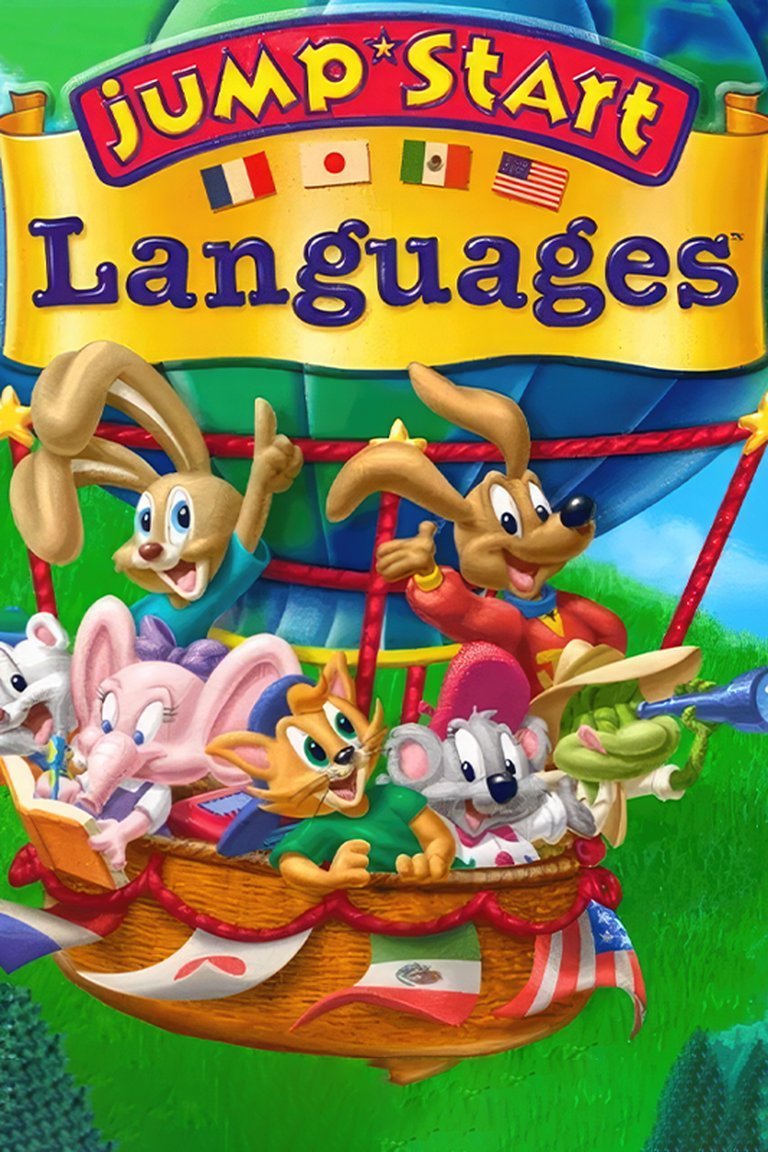
JumpStart Languages is an educational video game released in 2001 by Knowledge Adventure, designed for children aged 3 to 6. Set in the JumpStart Worlds Fair, players explore four themed pavilions representing the United States, France, Mexico, and Japan to learn basic French, Spanish, and Japanese language skills through interactive activities, while also gaining cultural insights about each country.
Gameplay Videos
JumpStart Languages Free Download
JumpStart Languages: A Time Capsule of Early 2000s Edutainment and a Portal to Global Curiosity
Introduction: The World at Their Fingertips
In the landscape of early 2000s educational software, few names resonated with the authority and ubiquity of JumpStart. By the time JumpStart Languages arrived on December 12, 2001, the franchise was a commercial titan, having sold over 13 million units and pioneered the “grade-based” learning software model. Yet, this particular title represented a fascinating pivot. Departing from the core math and reading curricula, it ventured into the speculative and culturally rich domain of foreign language acquisition for preschoolers (JumpStart‘s “Early Discovery” series). It was not a gritty language simulator but a vibrant, character-driven “language appreciation” tool. My thesis is this: JumpStart Languages is a masterclass in contextualized, play-based early education. It leverages the established charm of the JumpStart universe to create a safe, structured, and joyfully confusing first encounter with linguistic and cultural “otherness.” Its genius lies not in teaching fluency, but in igniting the spark of curiosity—making “Bonjour!” and “Kon’nichiwa!” feel as natural and exciting as a new playground. It is a product of its technological moment, yet its pedagogical philosophy of low-stakes exposure through beloved characters remains remarkably prescient in today’s landscape of gamified language apps.
Development History & Context: Building on a Blueprint
The Studio and the Vision: JumpStart Languages was developed by Knowledge Adventure, Inc., the studio that had absorbed the original creators, Fanfare Software, in 1995. By 2001, Knowledge Adventure was a seasoned edutainment powerhouse. The game was part of the “JumpStart Early Discovery” sub-series, aimed at ages 3-6, which included titles like JumpStart Explorers (also 2001) and JumpStart Animal Adventures (2002). The vision here was clear: take the successful formula—a navigable world, a cast of recurring animal buddy characters, mini-game activities—and apply it to the theme of global languages and cultures. Instead of a single contiguous world like the later 3D Virtual World, this title employed a “World’s Fair” hub structure, a brilliant solution for compartmentalizing distinct cultural zones within a single, coherent experience.
Technological Constraints & The “Atlas” Engine: The game was built on Knowledge Adventure’s proprietary “Atlas” engine, a staple of the late-90s/early-2000s JumpStart titles. This engine produced bright, colorful, pre-rendered 2D backgrounds with simple sprite-based character animations—the visual aesthetic of the era. Tech specs reveal the use of Smacker Video for the “Video Voyages” clips (a common, compressed video format for CD-ROM games) and the AIL/Miles Sound System for audio. These were workhorse technologies, chosen for reliability and compatibility across the vast Windows 95/98/ME and Mac OS 7/8/9 installed base. The constraint was memory and CPU power; rich, seamless 3D worlds were out of reach. The design response was a “click-to-transport” hub-and-spoke model that was both intuitive for preschoolers and technically undemanding.
The Gaming Landscape: 2001 was the twilight of the CD-ROM edutainment boom. The internet was expanding, but broadband was not universal. CD-ROMs were still the primary medium for rich multimedia content at home. Competitors included The Learning Company‘s Reader Rabbit and Muzzy language programs. JumpStart differentiated itself with its strong brand identity, recurring characters (Frankie, Hopsalot, etc.), and a focus on “play” over drill. Releasing a language titlespecifically tapped into growing parental awareness of the benefits of early bilingual exposure, positioning JumpStart as a premium, structured alternative to passive TV watching or disjointed web games.
Narrative & Thematic Deep Dive: The World Festival as Cultural Sandbox
The narrative is minimalist but expertly deployed. The framing device is the “JumpStart World Festival,” a global exposition where each language/culture has its own pavilion. This is not a story with a plot conflict; it is a structured exploration premise. The player is an invited guest, a child attending this festival, guided by the host characters. This framing is narratively efficient: it justifies the existence of four discrete cultural zones, the collection of “globe pieces” as souvenirs, and the central “Expo Hall” as a common area.
Thematic Architecture—Culture as Playground: The game’s core thematic achievement is its equitable and positive cultural representation. Each pavilion represents a language and its associated nation-state: English/USA (Frankie & Roxy), Spanish/Mexico (Hopsalot & Serafina), Japanese/Japan (Kisha & Hiroshi), French/France (Pierre & Chloe). There is no implied hierarchy; all are presented as equally fascinating and fun. The activities are not language drills but culturally-situated play:
* Kitchen Hide-n-Seek: A universal concept (hiding objects) filtered through a culturally specific kitchen setup (American, French, Mexican, Japanese appliances and layouts).
* Puppets of the World: Directly engages with a traditional performing art form, allowing children to dress puppets in culturally specific costumes.
* Listen and Learn Story Maker: Offers story templates with culturally resonant elements (e.g., a Mexican sombrero de Mariachi in the Spanish version of Little Red Riding Hood).
* Video Voyages: The most direct cultural module, showing real children from the USA, France, Mexico, and Japan engaging in daily life, sports, and customs. This bridges the animated game world to reality, a crucial step in making the cultures feel authentic.
The underlying theme is “Discovering is Fun.” Language is not presented as a subject to be mastered but as a series of cool sounds, songs, and customs to be sampled. The recurring joke in the trivia—that the French Pavilion’s Chloe never mentions the Statue of Liberty was a gift from France—hints at the game’s deliberate, simplified myth-making. It’s not about historical accuracy; it’s about creating a positive, memorable, and emotionally safe first association with each culture.
Characters as Cultural Ambassadors: The character pairings are key. Each pavilion features one classic JumpStart series regular (Frankie, Hopsalot, Kisha, Pierre) paired with a new, culture-specific buddy (Roxy, Serafina, Hiroshi, Chloe). This serves a dual purpose:
1. Familiarity Anchor: The series regular provides a comfortable, recognizable entry point for the child player.
2. Cultural Guide: The new character is the “native informant,” speaking their language and modeling cultural specifics. The trivia notes that in the non-English pavilions, the English character translates what the native character says. This creates a built-in “comprehensible input” model, where the child hears the foreign phrase and then its English equivalent, mirroring a natural language-learning scenario. In the English Pavilion, Frankie simply repeats Roxy, subtly reinforcing that for an English speaker, other languages are “translations” of their own, a gentle introduction to linguistic relativity.
Gameplay Mechanics & Systems: The Loop of Collecting and Discovery
The core gameplay loop is beautifully simple and perfectly calibrated for the target age group (3-6):
1. Navigate the World Festival Hub. Click on a pavilion.
2. Enter the Pavilion. Meet the character hosts.
3. Select an Activity. Play a mini-game (5-10 minutes max).
4. Earn a Globe Piece. Receive a tangible reward for participation (win or lose).
5. Repeat. Collect four globe pieces to “purchase” a Video Voyage.
6. Return to Expo Hall. Watch Video Voyage, access printables, repeat with another pavilion.
Deconstructing the Activities: Each pavilion has six variations of five core activity templates. This design is economically smart (reusing core code/logic) and pedagogically sound (reinforcing concepts through variation). Let’s analyze one template across cultures:
- Kitchen Hide-n-Seek: This is a hidden object game, excellent for developing attention to detail, object permanence, and following instructions. The cultural variation is purely environmental: the kitchen’s layout, appliances (a French poêle vs. a Mexican comal), and decorative items change. This turns a generic cognitive skill game into a subtle lesson in domestic cultural differences.
- Outdoor Adventure Game: A simple race-to-the-end board game. It introduces concepts of turn-taking, spatial progression, and chance (via spinner/dice). The “win condition” is secondary to the experience of playing; the trivia confirms players earn a globe piece regardless of winning. This removes performance pressure, aligning with the “joy of play” ethos.
- Puppets of the World / Decoration Coloring: These are creative,开放式 play activities. They encourage aesthetic choice and fine motor skills (coloring within lines, drag-and-dressing). The cultural hooks are the puppet costumes and coloring page objects (Eiffel Tower, sombrero, etc.). They are low-stakes, high-reward in terms of agency.
- Listen and Learn Story Maker: This is the most direct language and literacy activity. The child selects icons (a ball, a tree, a house) to insert into a narrated story. Each icon has its word spoken in the target language. It’s a passive vocabulary builder with a narrative wrapper.
- Telephone Number Fun: A short-term memory and sequencing game. The child hears and must repeat a sequence of numbers. This targets numerical digit recognition in any language, a universal skill.
Progression & Reward Systems: Progression is non-linear and intrinsically motivated. There is no “game over,” no failing a level. The only resource is “globe pieces,” which are handed out almost automatically after activity completion. The primary extrinsic reward is unlocking the “Video Voyages,” short documentary-style clips. The secondary reward is the “Make Your Own World Festival” printables, which extend play into the physical world (crafts, songs, games). This design philosophy—rewarding exploration, not mastery—is fundamental to its success with young children. The UI is point-and-click simplicity. CJ and Edison host the central Expo Hall, providing a consistent, friendly interface.
Innovations and Flaws: The innovation is in its modular, culturally-situated design. It systematized cultural exposure through gameplay templates. However, the flaws are those of its era and genre:
* Limited Language Depth: Vocabulary is basic (objects, colors, numbers) and context is narrow (pavilion-specific). There is no conjugation, syntax, or conversational modeling beyond single phrases.
* Replayability: Activities are static. Once a child has seen all variations of a game in one pavilion, there’s little incentive to return.
* The “Goofs”: The extensive “Goofs” section on the wiki is a historian’s dream. It reveals the production’s tight schedule and asset reuse. Inconsistencies like Kisha’s varying foot design, Chloe’s color-changing skirt, and the infamous mistranslation line (“Click on Chloe…” from Kisha) point to a team working under pressure, with voice actors likely recording lines out of context. While charming to enthusiasts now, they would have been minor immersion breaks for a child.
World-Building, Art & Sound: A Postcard from 2001
Visual Direction & Art: The art style is quintessential JumpStart: bright, saturated colors, soft rounded edges, and exaggeratedly friendly character designs. The pavilions are architectural stereotypes presented as inviting dioramas: the English/USA pavilion has a colonial-style building and a Statue of Liberty replica; the French has a咖啡馆 facade and Eiffel Tower; the Mexican features vibrant tiles and a sombrero-topped structure; the Japanese is a pagoda with cherry blossoms. This is not realism; it is iconography. It works for the target age, providing immediate visual cues. The “Goofs” section reveals fascinating details about background inconsistencies (the kitchen’s layout change), suggesting separate teams or artists handled the activity backgrounds versus the pavilion hub screens.
Sound Design & Music: Sound is where the game’s cultural aspirations shine. Each pavilion has its own background music motifs, shared between two paired activities, creating a cohesive auditory identity. More importantly, the “Folk Songs” extra module is a standout feature. It includes authentic (if simplified) renditions of:
* English: “Oh, Susanna!”, “I’ve Been Working on the Railroad”
* Spanish: “De Colores”, “Tengo una Muñeca”
* Japanese: “Sakura Sakura”, “Snow Song”
* French: “Au Clair de la Lune”, “Frère Jacques”
* Multilanguage: “Twinkle Twinkle Little Star”
This is a significant cultural touch, moving beyond vocabulary to rhythm and melody. The voice acting, featuring talents like Grey DeLisle (Kisha, Roxy) and Carol Bach-Y-Rita (Pierre, Serafina), is clear, expressive, and perfectly pitched for children. The “Listen and Learn” narration is slow and deliberate, optimized for auditory processing.
Atmosphere: The atmosphere is one of organized festivity. The World Festival is a bustling but empty fairgrounds; the pavilions are staffed by two characters. This creates a “just for you” feeling. There’s no competition, no other children (except in the videos), no pressure. It is a curated, private multicultural fair, a safe space for a child to explore difference without social anxiety.
Reception & Legacy: A Silver Honor in a Shifting Landscape
Critical & Commercial Reception at Launch: Official critical reviews are scarce (MobyGames has zero critic reviews), but we can infer reception from awards and commercial context.
* Awards: It won a Parent’s Choice Silver Honor in 2001. This is a significant seal of approval from a respected consumer advocacy group, placing it among the best in its category for that year.
* Commercial Context: It was part of the juggernaut JumpStart series, which routinely dominated educational software sales charts in the late 90s/early 2000s. Its inclusion in a Chick-fil-A Kids’ Meal promotion is a telling indicator of its market penetration and brand trust. It was considered a valuable, wholesome product worthy of a major fast-food partnership. Its later re-release as “JumpStart Advanced Language Club” within the JumpStart Advanced Preschool bundle (2003) speaks to its perceived longevity and value as a standalone language module.
Evolution of Reputation: In the dedicated fan and retro gaming community (as seen on the JumpStart Wiki), the game is remembered fondly but with a historian’s eye for detail. The extensive “Trivia” and “Goofs” sections indicate a community that deeply archives and analyzes these artifacts. Its reputation has evolved from a simple children’s product to a textual artifact of its time: a snapshot of early 2000s attitudes toward cultural representation (iconic, simplified), educational technology (CD-ROM, Smacker video), and franchise management (asset reuse, voice actor cameos).
Influence on the Industry & Successors: JumpStart Languages did not spawn a direct clone wave, but its influence is felt in several strands:
1. The “Early Exposure” Niche: It helped cement the idea that very young children (3-6) could beneficially be exposed to second languages through play, paving the way for apps like Duolingo Kids and Endless Reader‘s multilingual offerings.
2. Cultural Modules in Edutainment: The pavilion structure—a central hub accessing distinct cultural/linguistic zones—is a blueprint seen in later titles like Magic School Bus Explores the World of Animals (though more zoological) and numerous online “world” games.
3. Franchise Modularity: Its re-release as an “Advanced Language Club” bundle piece demonstrated a successful model of selling subject-specific modules separately or bundled, a practice continued in later “Academy” and “World” series iterations.
4. The Death of the CD-ROM Language Toy: Its era also marked the peak of this format. As broadband, streaming video, and sophisticated mobile apps became ubiquitous, the static, boxed CD-ROM language experience became obsolete. The YouTube-integrated, adaptive learning platforms of today are its evolutionary descendants, but few retain the coherent, character-driven narrative wrapper that Languages so deftly employed.
Conclusion: A_charming, Flawed Pioneer
JumpStart Languages is not a lost masterpiece waiting for rediscovery. It is a competently crafted, charming, and deeply representative product of its time. Its pedagogical approach—playful, low-pressure, exposure-based cultural curiosity—is sound and retains relevance. Its structural innovation of the thematic pavilion within a festival framework is elegant.
However, its limitations are bound to its format: minimal language depth, static activities, and technical goofs born of a different production pipeline. Its legacy is twofold: as a beloved artifact for a generation of JumpStart fans who touched a computer mouse to hear “Konnichiwa!” for the first time, and as a historical benchmark. It shows the industry moving from the purely academic (“learn Spanish!”) to the experientially cultural (“explore a Japanese pavilion!”). In the grand timeline of video games, it is a small, bright node in the vast edutainment network—a node that successfully connected the dots between play, culture, and early cognitive development for millions of children. For that, it earns its place not in a hall of fame for design innovation, but in a museum of cultural history: a perfectly preserved specimen of the early 21st century’s optimistic, playful, and beautifully simplistic approach to raising global citizens.
Final Verdict: 7/10 – A product of its era with timeless-hearted intentions. A must-study for edutainment historians, a pleasant nostalgia trip for former players, and a gentle curiosity for modern game designers examining the roots of language-learning game design.