
- Release Year: 2019
- Platforms: Windows
- Publisher: Deadlycrow Games
- Developer: Deadlycrow Games
- Genre: Adventure
- Perspective: 1st-person
- Game Mode: Single-player
- Gameplay: Puzzle elements, Survival horror
- Setting: Fantasy
Description
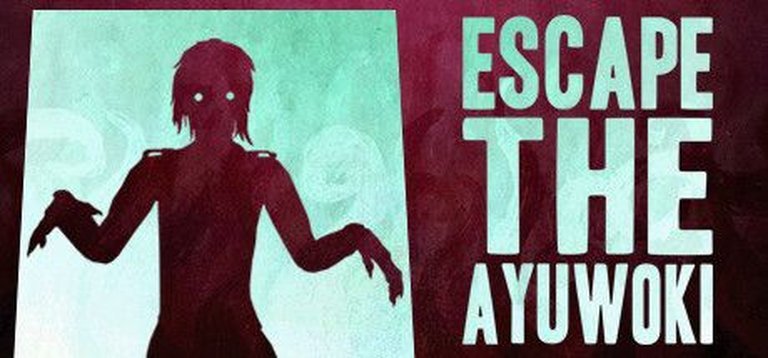
“Escape the Ayuwoki” is a first-person survival horror game set in a haunting mansion where players wake up in a strange room and must escape by locating a red key to unlock the main gate. Filled with puzzle-solving and stealth mechanics, the core challenge involves avoiding the Ayuwoki, a humanoid entity based on a Michael Jackson creepypasta that hunts by sound, forcing players to hide in furniture and other spots to survive.
Gameplay Videos
Escape the Ayuwoki Free Download
Escape the Ayuwoki Mods
Escape the Ayuwoki Guides & Walkthroughs
Escape the Ayuwoki: A Digital Séance in the House of Mirrors
Introduction: The Haunting of a Meme
In the sprawling, spectral archive of internet culture, certain entities transcend their origin as fleeting jokes to become something more primal—modern myths ripe for adaptation. Escape the Ayuwoki (2019) is not merely a game; it is an exorcism of a creepypasta, a digital ritual attempt to give tangible, interactive form to the “Ayuwoki”—a monstrous distortion of Michael Jackson, born from the twisted lyric of “Smooth Criminal” and the collective unease surrounding a pop icon’s eccentricities. This review posits that Escape the Ayuwoki is a fascinating, if deeply flawed, artifact of its time. It represents a specific moment where grassroots internet horror, the accessible power of the Unity engine, and the influence of the “Let’s Play” economy converged to create a title that is less remembered for its mechanical sophistication and more for its audacious, meme-to-medium translation. It is a game that understands its source material’s power—the jarring, low-fidelity horror of an impossible, hyper-speed entity in a familiar setting—and builds a minimalist experience entirely around that single, potent nucleus of fear.
Development History & Context: The Indie Engine of Internet Horror
The Studio & The Vision: Escape the Ayuwoki was developed and published by Deadlycrow Games, a small, largely undocumented independent studio. The available credits and business information paint a picture of a quintessential micro-indie operation: a single project, self-published on Steam for a modest $10.99 in November 2019. There is no grand “vision statement” from a famous director; instead, the vision is clearly inherited from its source material. The developers acted as archivists and constructors, tasked with translating a viral horror story—which had already been visualized in countless low-budget YouTube animations and “creepypasta” readings—into an interactive space.
Technological Constraints & The Unity Landscape: Built in Unity, the game utilizes the engine’s accessibility but not its advanced capabilities. The visuals are intentionally simple, low-polygon models and basic texture work that serve a dual purpose: they keep development costs negligible and, perhaps unintentionally, align with the grainy, “amateur” aesthetic of the original meme images and videos. The technological constraint here is a feature, not a bug; it evokes the look of early 2000s internet shock imagery. In the 2019 landscape, Unity was democratizing game development, allowing creators like Deadlycrow to bypass publishers and release directly to Steam, a path paved by countless other horror hits like Five Nights at Freddy’s and Granny. Escape the Ayuwoki fits squarely into this lineage of high-concept, low-budget horror that finds its audience via content creators rather than traditional marketing.
The Gaming Landscape of 2019: The survival horror genre was enjoying a major renaissance with big-budget titles like Resident Evil 2 Remake and The Last of Us Part II. Against these polished giants, Escape the Ayuwoki’s roughness was immediately apparent. However, it occupied a different ecological niche: the “YouTube horror game.” This sub-genre, thriving on platforms like Itch.io, prioritized shareability, reaction potential, and simple, intense loops over narrative depth or graphical fidelity. Its release was perfectly timed for the “Scary Games!” playlist culture on YouTube, where titles like Escape the Ayuwoki were tailor-made for short, reactive playthroughs.
Narrative & Thematic Deep Dive: A Ritual of Minimalism
Plot Structure & Sparse Storytelling: The narrative is deliberately skeletal, delivered through environmental storytelling and cryptic context. Per IMDb and the game’s official descriptions, the player “wakes up in a very strange room” amidst “a ritual gone wrong” and “a string of kidnappings.” There is no dialogue, no character arc, and no explicit explanation. The goal is singular: find the red key and escape the mansion’s main gate. The plot is a scaffold, a reason to traverse the space, but the true narrative is the player’s personal ordeal with the Ayuwoki.
Characters: The Icon and The Victim: There are only two entities of consequence.
1. The Player Character: An anonymous, silent victim. Their lack of identity universalizes the experience, making every player the “someone” kidnapped by the Ayuwoki’s obsession.
2. The Ayuwoki: This is where the game’s thematic core resides. Based on a creepypasta that reimagines Michael Jackson as a nocturnal, kidnapping entity who whispers “hee-hee,” the game performs Adaptational Ugliness and Adaptational Villainy (as noted by TV Tropes). The memetic idea—Jackson with botox, a grotesque but oddly familiar figure—is transformed into a Humanoid Abomination. The game discards any human semblance for a monstrous design: giant, black eyes, a Glasgow Grin of sharp teeth, long claws, and the ability to shift between bipedal and quadrupedal movement. The theme is no longer about the blurring line between celebrity and monster, but pure, unadulterated predatory horror. The Ayuwoki is an Insurmountable Waist-Height Fence of a problem: you cannot fight it, you cannot reason with it. You can only hide and flee.
Underlying Themes: The game distills several potent themes:
* The Perversion of the Familiar: The entire setting is a haunted mansion—a classic horror trope. But the villain is not a ghost or a demon; it is a hyper-specific, modern pop-culture phantom. It suggests that our collective cultural artifacts can turn on us.
* Sound as a Weapon and a Vulnerability: The Ayuwoki “can hear you. Literally.” This is the central mechanic and theme. In an era of sensitive microphones in our lives, the game weaponizes audio. It’s not just footsteps; in later iterations (like the Demake), it explicitly uses the player’s microphone input, creating a terrifying meta-layer where your own breathing or a real-world sound can trigger the monster. This taps into a deep, technological anxiety.
* Helplessness and Observed Space: The gameplay loop reinforces a theme of being a specimen in a predator’s territory. You are not exploring to conquer, but to escape a space that is actively hunting you.
Gameplay Mechanics & Systems: The Stealth Endurance Test
Core Gameplay Loop: The loop is brutally simple: 1. Spawn in a random room. 2. Navigate the mansion to find puzzle clues/keys. 3. Complete object interaction puzzles (e.g., finding items to power on generators,解开 locks) to access new zones. 4. Constantly listen for the Ayuwoki. 5. If detected, find a “hide spot” (cupboards, under tables, behind furniture). 6. Repeat until the red key is found and used at the gate. There is no combat, no health bar (getting caught is an instant, Jump Scare-filled death), and no character progression.
Mechanics & Systems:
* The Sense-Impaired Monster: A critical design choice. The Ayuwoki is blind (according to TV Tropes and the Demake’s description). It navigates entirely by sound. This creates a core tension: absolute silence is your armor. Every step on a creaky floorboard, every interaction that makes noise, is a calculated risk. This is a pure stealth experience, aligning it with Amnesia or Outlast, but more unforgiving due to the Ayuwoki’s Super-Speed.
* The Super-Speed Threat: The creature’s movement is a Flash Step. It does not chase; it teleports upon hearing you, often appearing instantly in your line of sight. This negates any possibility of outrunning it in a straight hallway, reinforcing the “hide or die” paradigm. This design creates constant, high anxiety rather than long chase sequences.
* Insurmountable Waist-Height Fence: The player and Ayuwoki alike are hindered by trivial environmental geometry (chairs, low walls). This can feel artificially restrictive, but it serves the design: it funnels movement into predictable paths, making sound-based detection more reliable and hiding spots more necessary.
* Procedural Start &物品 Location: While the mansion layout is fixed, the player’s starting room and the locations of certain key items are randomized (implied by playthrough videos and the need for multiple runs). This increases replayability, a necessity for a short game built on a single, tense mechanic.
* UI & Interface: The UI is minimalist—a bare crosshair and perhaps an interaction prompt. The lack of a noise meter or visual indicator of detection level is a deliberate choice to maximize uncertainty and fear, though it can feel opaque to new players.
Flaws & Innovations: The game’s major flaw is a lack of systemic depth. The puzzles are simple fetch/kquests. The environment, while large, can become repetitive. Its “innovation” is not in complexity but in extreme focus. It strips survival horror down to its most basic, terrifying premise: a relentless, sound-hunting predator in a claustrophobic space. The later Escape the Ayuwoki DEMAKE (2022) innovates by layering on fixed camera angles (a Resident Evil/Silent Hill hallmark) and the microphone-input hearing mechanic, which transforms the player’s real-world environment into a gameplay variable—a clever, if gimmicky, escalation of the core concept.
World-Building, Art & Sound: The Architecture of Anxiety
Setting & Atmosphere: The mansion is a classic, archetypal haunted house: long, dark corridors, creepy basements (TV Tropes notes “not one, but two”), messy bedrooms, and ornate, decayed furniture. The atmosphere is one of oppressive, gothic decay. The world-building is entirely environmental. Notes or lore are sparse to nonexistent; the story of the “ritual gone wrong” and “kidnappings” is inferred from the state of the house—overturned furniture, strange symbols, the sheer volume of hidden closets. It feels less like a lived-in home and more like a predator’s lair and maze, designed not for comfort but for trapping.
Visual Direction: The art style is low-poly, low-texture, with muted, dark color palettes. Lighting is key: pools of ominous light from flickering bulbs or windows, with vast shadows swallowing the rest. This visual simplicity serves two purposes: it matches the indie/Unity aesthetic, and more importantly, it maximizes performance of the Ayuwoki’s model. When that creature—with its huge eyes and mouth—darts through a dark corridor or appears in a sudden Wham Shot, the contrast against the simpler environments makes it pop with terrifying clarity. Its later redesign, described as “zombie-like” with skin ripped from its cheeks, leans into visceral body horror.
Sound Design: The Aural Predator: Sound is the game’s masterpiece and its primary gameplay system. The audio design is a masterclass in tension.
1. Ambient Noise: The mansion is never silent. There is a constant, low hum of dread—creaking floorboards, distant drips, the rustle of wind. These sounds are the environment’s heartbeat.
2. Player-Generated Sound: The crunch of your own footsteps, the clink of keys, the click of a door—these are death sentences if done near the Ayuwoki.
3. The Ayuwoki’s Audio Signature: Its presence is announced by a distorted, guttural moan/set (as per the Scribd doc) and, of course, its signature, piercing “HEE-HEE!”—a direct, horrific callback to its Jacksonian roots. This sound is a Red Eyes, Take Warning moment; when you hear it, you are already being hunted.
4. Silence as Terror: The most terrifying moments are the stretches of absolute quiet, where you are frozen in a hide spot, knowing the creature is nearby, listening. The sound design makes the absence of noise palpably frightening.
Reception & Legacy: A Cult Classic Born in the Content Farm
Critical & Commercial Reception: Formal critical reception is virtually non-existent. MobyGames and Metacritic show a lack of critic reviews, and user reviews are sparse. Its IMDb rating of 6.9/10 from 38 users suggests a middling but curious reception. Its commercial success was not measured in sales charts but in cultural penetration within its niche. Its primary legacy is as a Markiplier game. The YouTuber’s playthrough (October 2019–January 2020) across three episodes, titled “ACTUALLY SCARED THE CRAP OUT OF ME,” served as its de facto launch and review. For a game of this scale, a feature on a top-tier horror Let’s Player channel was equivalent to a major publishing deal.
Evolution of Reputation: Initially, it was seen as another ” meme game” riding the coattails of Granny and Poppy Playtime. However, its reputation has solidified as a pure, distilled example of a specific horror subgenre. It is remembered for one thing above all: the sheer, unadulterated terror of that first encounter with the Ayuwoki—a creature that defies physics and embodies the “wham shot” realization of the meme. The release of the DEMAKE in 2022, which consciously aped 90s survival horror aesthetics, demonstrates that even the developers recognized the original’s identity as a modern, internet-born entity. The DEMAKE itself became a commentary on nostalgia, re-contextualizing the same core experience through the lens of classic fixed-camera horror.
Influence on the Industry: Its influence is indirect but significant within the micro-horror ecosystem.
* It reinforced the viability of hyper-specific, meme-derived horror as a commercial product on Steam.
* It demonstrated the power of audio-centric stealth mechanics in an indie context.
* Its existence, and the playing of it by figures like Markiplier, proves that the value of a horror game is increasingly measured in “reaction potential” for content creators.
* The DEMAKE concept shows an understanding of retro-modernism, applying a new stylistic filter to an existing indie hit—a trend seen in other “demake” projects.
Conclusion: A Flawed but Potent Incantation
Escape the Ayuwoki is not a landmark of game design. Its puzzles are rudimentary, its world is a bare-bones mansion, and its systems are fragile. Yet, to dismiss it on these grounds is to miss its entire purpose. It is not an attempt to compete with Resident Evil; it is a ritual object for a specific digital age fear. Its genius lies in its ruthless focus on a single, iconic horror concept—the sound-hunting, impossibly fast, grotesque parody of a beloved/unsettling celebrity—and building an entire interactive experience around the visceral, primal response that concept provokes.
It is a game that understands that true horror in the 21st century can be born from the deepest, weirdest trenches of the internet, and that sometimes, the most effective monster is one that already lives in the collective subconscious, merely waiting for a Unity developer to give it a mansion and a set of lungs. Its place in history is not in the canon of great narrative adventures, but in the cabinet of curiosities of interactive internet horror—a game that is less played than endured, and remembered not for its story, but for the specific, shrill sound of “hee-hee” echoing in the dark, followed by the screen-filling terror of its arrival.
Final Verdict: 6.5/10 – A cult classic by accident of design, a monument to the power of a single good idea executed with sufficient, terrifying efficiency. Its historical value is in its pure representation of a meme-to-game pipeline that defines a strand of modern indie horror.