
- Release Year: 2006
- Platforms: Windows
- Publisher: Activision Publishing, Inc., ak tronic Software & Services GmbH, Sierra Entertainment, Inc., Vivendi Games, Inc.
- Developer: Tilted Mill Entertainment, Inc.
- Genre: Simulation, Strategy, Tactics
- Perspective: Diagonal-down
- Game Mode: Online PVP, Single-player
- Gameplay: Business simulation, City building, construction simulation, Managerial
- Setting: Africa, Classical antiquity, Europe, Middle East
- Average Score: 81/100
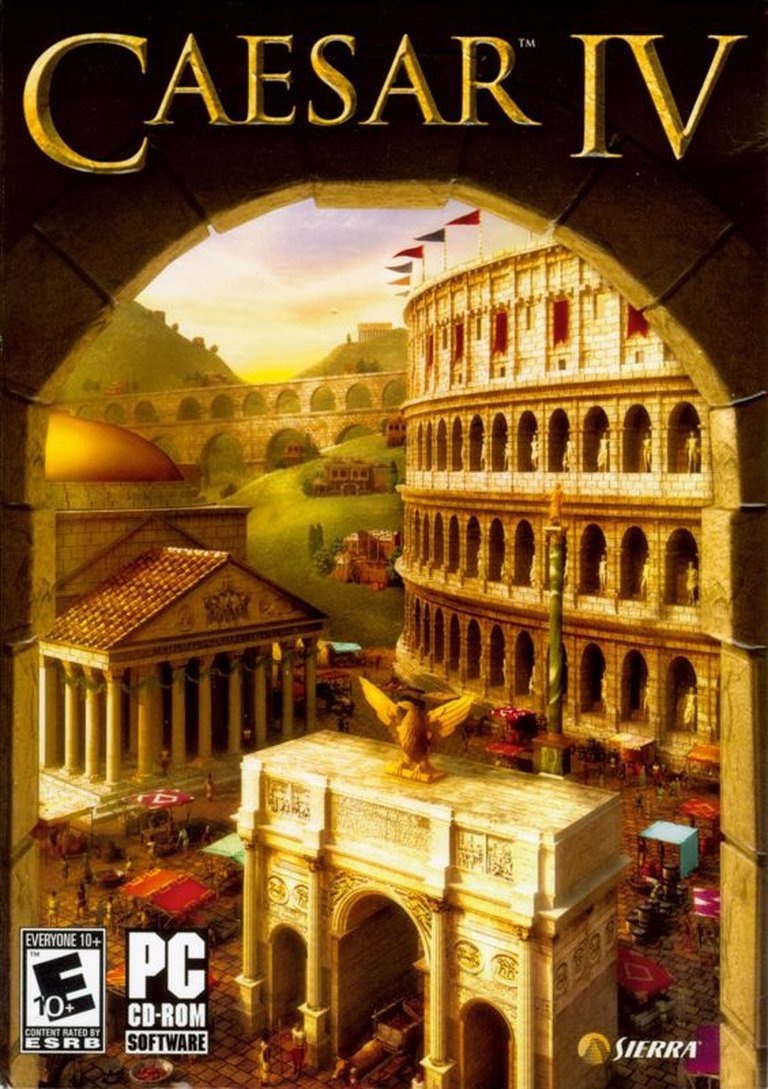
Description
Caesar IV is a historic city-building simulation and strategy game set in the Roman Empire, where players govern a province by constructing and managing its capital city. The core gameplay involves urban planning, resource management, maintaining citizen happiness, and defending against barbarian threats, with the ultimate goal of proving successful enough to move to new provinces and eventually become Caesar.
Gameplay Videos
Where to Buy Caesar IV
Caesar IV Free Download
Caesar IV Cracks & Fixes
Caesar IV Patches & Updates
Caesar IV Guides & Walkthroughs
Caesar IV Reviews & Reception
metacritic.com (89/100): It has all the right components (quality gameplay, strong graphics and sound). Move over Civilization, there’s a new emperor in town and his name Caesar 4.
metacritic.com (83/100): Caesar IV offers hours of gameplay with lots of different types of scenarios to choose. Meeting the objectives is challenging, but not so hard as to be frustrating.
metacritic.com (83/100): A pretty impressive strategy builder and while it doesn’t surpass Glory of the Roman Empire’s ease of use or CivCity: Rome’s good looks, it does offer the most robust city building components of the three.
metacritic.com (82/100): A must for city-building fans with a few frustrations that don’t ruin the experience.
metacritic.com (82/100): Fans of the franchise or new fans will be pleased with Caesar IV; it’s a solid historic city building game with plenty to do.
metacritic.com (80/100): In terms of sheer strategic depth, there’s not a city-builder out there that can match it.
metacritic.com (80/100): Online or offline, as a campaign or a freeform scenario, Caesar IV is an inviting game, easy to like and hard to stop playing. It’s got a fairly forgiving learning curve, and it will rarely plunge you into the sort of economic death spirals that can make other city builders so discouraging.
metacritic.com (80/100): Caesar IV has some awe-inspiring graphics with really easy to use controls and is an overall well constructed city builder. Due to some bugs that were in the final release I could not give the gameplay a better score.
metacritic.com (80/100): The game’s audio perfectly complements the visuals. The background music flows naturally with the game without become an annoyance.
metacritic.com (80/100): Caesar IV deserves an ovation, if not a triumphal procession, for merely reminding people what a good historical city sim looks like.
ign.com : Not the emperor of city building simulations but still a mostly competent governor.
Caesar IV Cheats & Codes
Caesar IV (PC)
Press Enter during gameplay and type the cheat code.
| Code | Effect |
|---|---|
| denarii # | Get indicated amount of Denarii |
| win | Win current scenario |
| jupiter | Hit selected units or buildings with lightning |
| fire | Toggle fires |
| satisfy | Toggle citizen dissatisfaction |
| plague | Toggle plague |
| earthquake | Trigger earthquake |
| rain | Rainy weather |
| moral | Toggle military morale |
| requests | Toggle requests from superiors |
| savings # | Set current money savings |
| unlock | Unlock all scenarios |
| unleashed | Lose current scenario |
Caesar IV: The Marble and the Mortar—A Definitive Analysis of a Fractured Legacy
Introduction: The Weight of the Laurel
To understand Caesar IV is to understand the crushing weight of legacy. Released in 2006, eight years after the genre-defining Caesar III, this was not merely a new game but a homecoming—a return to the hallowed digital soil of ancient Rome for a generation of players who had spent countless hours plumbing the depths of provincial management. Developed by Tilted Mill Entertainment, a studio born from the ashes of the original creators, Caesar IV was tasked with shepherding a beloved franchise into the 3D age. It arrived with the promise of glorious, rotatable vistas and a deeper simulation of Roman life, yet it departed from the altar of its predecessors with a controversial and, for many disciples, fatal simplification. This review posits that Caesar IV is a game of profound contradictions: a visually sumptuous but technically fragile simulation; a title that deepened certain historical mechanics while ruthlessly pruning others that defined its soul; a critical success that fractured its core audience. Its legacy is not one of triumphant sequel, but of a pivotal, problematic transition—a beautifully rendered province built on shaky foundations, whose collapse in the eyes of many fans signaled a permanent shift in the city-building genre it once dominated.
Development History & Context: A New Rome from Old Stones
The Studio and the Vision: Caesar IV was developed by Tilted Mill Entertainment, a studio founded in 2002 by Chris Beatrice and other veterans from Impressions Games, the original creators of the Caesar and Pharaoh series. This was not a superficial reboot by outsiders; it was, in theory, a return to the fold. Beatrice had served as art director on Caesar II and creative lead on Pharaoh, giving him intimate knowledge of the series’ DNA. After Impressions was shuttered by Vivendi Universal in 2004, the Caesar IP remained with Sierra Entertainment (also under Vivendi). Leveraging this shared history and expertise, Sierra turned to Tilted Mill to revive the franchise, a move that initially inspired confidence.
Technical Evolution and Constraints: The project’s primary technical mandate was clear: drag the series kicking and screaming into the third dimension. The team built upon the engine from their 2004 title, Immortal Cities: Children of the Nile, creating a fully 3D environment with variable camera angles, dynamic day-night cycles, weather effects (notoriously demanding), and high dynamic range lighting. This allowed for the free placement of buildings and roads at 45-degree angles—a much-vaunted feature granting unprecedented architectural flexibility. However, this leap came at a severe cost. The game was notoriously demanding for its time, suffering from severe framerate issues, lag, and crashes on mid-range hardware, as repeatedly noted in critical reviews from Bit-Tech, IGN, and PC Games (Germany). The push for visual fidelity often compromised technical stability and UI responsiveness, a trade-off that plagued the launch experience.
The 2006 Gaming Landscape: Caesar IV arrived in a crowded historical strategy space. Direct competitors included CivCity: Rome and Glory of the Roman Empire, all vying for the same player’s passion for antiquity. The genre was seeing a resurgence, but also a fragmentation. Players expected both deeper simulation and more accessible graphics. Furthermore, the mid-2000s saw the rise of online integration; Caesar IV attempted this with “Caesar’s Challenge” (seasonal competitive leaderboards) and “Empire Mode” (uploading/sharing scenarios). This online infrastructure, however, proved ephemeral, with official servers shutting down in November 2008, rendering these features defunct and foreshadowing the game’s eventual isolation.
Narrative & Thematic Deep Dive: The Unseen Hand of the Empire
Caesar IV‘s narrative is not conveyed through cinematic cutscenes or dialogue-heavy characters, but through the systemic storytelling inherent to its format—the “career” of a provincial governor. The plot is a ladder: you begin as an administrator of a rustic backwater in the “Kingdom” era (which serves as a tutorial), advance through the commercial and diplomatic challenges of the “Republic,” and finally face the military and imperial pressures of the “Empire” era. Your ultimate narrative goal is apotheotic: to become Caesar himself.
This is a narrative of silent aspiration, framed by imperial mandates and advisor reports. The “characters” are the 75+ unique citizens you can click on for fleeting commentary—a fisherman complaining about taxes, a patrician lamenting the lack of fine wine. Their feedback, a hallmark of the series, creates a mosaic of public sentiment. The underlying theme is pure, unadulterated civic responsibility as imperial service. Every aqueduct built, every barbarian repelled, every denarius of profit shipped to Rome is a step in a personal political ascent. The game posits that governance is a grand, interconnected puzzle: prosperity breeds loyalty, loyalty breeds stability, stability pleases the Emperor, and imperial favor unlocks the next, more challenging province.
However, compared to the narrative framing of Pharaoh (with its clear religious arcs and mythological events) or even the rival CivCity: Rome, Caesar IV‘s story is starkly bureaucratic. There are no grand campaign narratives, no named rivals, no scripting disasters or cinematic triumphs. The story is the city’s growth itself, from a cluster of huts to a metropolis rivaling Rome. This thematic minimalism is both a strength—it keeps the focus on the player’s direct actions—and a weakness, as many critics and players noted the campaign’s repetitive “achieve X rating” objectives felt like a missed opportunity for dramatic historical episodes.
Gameplay Mechanics & Systems: The Engine Room of an Empire
Core Loops and Economic Simulation: At its heart, Caesar IV is a deeply recursive system of needs, production, and distribution. The primary loop is:
1. Plan & Build: Zone land for residential (by class), farming, industry, and services. Connect everything with roads (now freely rotatable).
2. Satisfy Needs: Ensure Plebs have food, water, and basic security; Equites require education and entertainment; Patricians demand luxury goods (furniture, pottery), multiple food types, and grand entertainment (amphitheaters). Each need is served by specific buildings with circular “influence radii.”
3. Manage Resources: Establish complex supply chains: clay pits → pottery kilns → markets; wheat farms → granaries → food markets → homes. Trade via depots/docks with other provinces is crucial for exotic goods (wine, honey, olive oil) and revenue.
4. Govern & Defend: Balance the budget (tax income vs. wages), maintain imperial favor through tributes, and build forts/militia to repel invasions.
5. Evolve & Expand: Watch housing “evolve” upwards within its designated class as needs are met, increasing tax yield and desirability.
The economic model is widely praised for its intricacy. GameSpy noted “the brilliance of the game’s underlying gameplay and economic engine is based on managing and manipulating little things.” The split housing system (Pleb insulae, Equite domus, Patrician villas) was a major mechanical shift from Caesar III‘s unified evolution path. While designed for historical realism—reflecting Rome’s rigid social strata—it proved divisive. As the infamous MobyGames user review by “Indra was here” argued, it removed the joyful, emergent storytelling of watching a poor district flourish into a rich one, instead forcing the player to manage segregated class zones: “Now you’re more preoccupied in keeping the rich – rich and the poor – poor.”
The Great Simplification: Route Management and Trade: This user review crystallizes the core schism among veterans. In Caesar III, players manually controlled “no-entry” zones and used gatehouses to force citizens along efficient routes to markets, forums, and entertainments. This was a profound layer of logistical micromanagement. Caesar IV automated this entirely: citizens simply “appear” at their workplaces from a pool, and buildings function as long as a road is adjacent. The reviewer’s lament is telling: “The game did not become more user-friendly, it DID become more easier.” The managerial depth was gutted. Similarly, trade was abstracted. In Caesar III, seeing a merchant ship dock, hearing the coin sound, and watching goods physically move was a visceral, rewarding feedback loop. In Caesar IV, trade income is a passive flow, with less transparency about why merchants buy or refuse goods. The “sense of money making,” that reviewer’s phrase, was diminished.
Military and Interface: The Achilles’ Heels: Combat is almost universally cited as the game’s weakest subsystem. Legion recruitment is a resource drain (meat for cavalry, iron for infantry), and battles are passive affairs where cohorts auto-resolve based on numbers and equipment. There is no tactical control; as 1UP scathingly put it, “Battles have nothing to do with tactics, being determined only by who has the bigger, better-equipped force.” It feels tacked-on, a mandatory nod to Roman warlike prestige that lacks the engagement of the city-building.
The User Interface (UI) received consistent criticism. While the advisors provide extensive data (12 specialist panels), navigation is described as “clunky” (Eurogamer) and “archaic” (GameSpot). A specific, repeated frustration is the lack of a preview for a building’s service radius. You must place a building, check the overlay, and undo if it’s wrong—a tedious process. This, combined with response lag on slower systems (a technical issue), made precise city management more frustrating than it should have been.
World-Building, Art & Sound: A Technical Marvel Marred
Visual Direction and Atmosphere: This is Caesar IV‘s undisputed triumph. The shift to a full 3D engine with free camera rotation and zoom was revolutionary for the series. The world is lush, colorful, and alive. Factories animate with workers; water shimmers with reflections; citizens bustle in a continuous flow. The draw distance is impressive, allowing players to survey vast, sprawling metropolises. The architectural models are painstakingly researched, from humble insulae to majestic coliseums, capturing a textbook-perfect vision of Roman urbanism. The weather effects—rain, snow, day-night transitions—add a dynamic, living quality absent from the static sprites of Caesar III. As GameStar (Germany) noted, the graphics are “wonderfully pretty” and the atmosphere “stimmig” (cohesive).
Sound Design and Music: Keith Zizza’s soundtrack is a highlight, providing a dignified, orchestral score that swells with the scale of your city without becoming intrusive. Ambient sounds—market chatter, temple chimes, the clang of the forum—create a bustling soundscape. However, some reviews noted that while fitting, the effects were not groundbreaking. More damning was the critique that sound feedback for key events (like trade ships arriving) was less distinct than in prior games, contributing to the feeling of diminished economic “sense.”
The Technical Cost: The breathtaking visuals came at the steep price of performance. The system requirements were high, and even with specs that should have sufficed (as IGN described with their 3GHz/2GB RAM/GeForce 7800 test bed), the game suffered from “awful” framerates, especially during rain. This wasn’t just an aesthetic issue; slowdown caused input lag, making precise building “frustrating as hell.” The game’s beauty was, for many, literally obscured by its own technical demands.
Reception & Legacy: A Mixed Triumph and a Quiet Hiatus
Critical Reception: On Metacritic, Caesar IV holds a score of 74/100 (“Mixed or Average”), closely mirrored by the MobyGames aggregate of 78% from critics. The critical consensus was a 6.5 to 8.5 out of 10 range. Praises consistently highlighted: the gorgeous 3D graphics and immersive atmosphere, the deep and intricate economic simulation, the faithful historical feel, and the sheer volume of content (campaign modes, sandbox, editor). Criticisms formed a relentless drumbeat: unstable technical performance (crashes, lag), a clunky and archaic UI, shallow and unsatisfying military gameplay, repetitive scenario design (mostly “reach a certain prosperity rating”), and, most poignantly, a feeling of playing a glorified Caesar III with a new coat of graphical paint rather than a true sequel. As Eurogamer summed up, it felt “like a churned out sequel rather than a careful study of what did and didn’t work last time around.”
Player Reception and The “Caesar Just Died” Moment: The player score on MobyGames (3.1/5) and the polarizing Steam/GOG reviews (71-76% positive) reveal a more fractured community. The review by “Indra was here” became a kind of manifesto for the disillusioned. Its passionate, apostate tone—”Caesar just died, by Jupiter!”—captured the sentiment of veterans who felt the game had sacrificed the “managerial strategy” depth that made Caesar III a “freakin award winning game.” The removal of citizen route control, the segmented housing evolution, and the attenuated trade feedback were not just changes but cardinal sins. For this cohort, Caesar IV was a superficial clone that misunderstood what made the series great.
Commercial Performance and Long-Term Legacy: No official sales figures exist, but it is believed to have achieved modest, steady sales within its niche, never matching the cultural footprint of Caesar III. Its commercial afterlife has been bolstered by DRM-free re-releases on GOG (2016) and Steam (2016), which included patches and compatibility fixes, keeping it accessible. An active modding community, centered on sites like Caesar 4 Heaven, has produced custom campaigns and assets, a testament to the enduring passion for its core city-building sandbox.
The game’s legacy is complex:
1. A Genre Pivot Point: It was the last major traditional “Impressions-style” city-builder from the core team. Tilted Mill’s next major project was SimCity Societies (2007), a very different, more abstract take on urban simulation.
2. The 3D Standard-Bearer: It proved that deep, complex city-building could exist in a full 3D engine, paving the way visually for later titles.
3. A Cautionary Tale on “Accessibility”: Its attempts to simplify systems (automated citizen routing) were perceived by core fans as dumbing down, teaching future developers that “user-friendly” must not equate to “less deep.”
4. The End of an Era: The Caesar series has been in hibernation since. While a spiritual successor of sorts exists in Pharaoh: A New Era (2023, a remake of Pharaoh) and upcoming titles like Pompeii: The Legacy cite it as inspiration, there has been no Caesar V. In this sense, Caesar IV‘s mixed reception and technical stumbles arguably contributed to the franchise’s dormancy. It was not the triumphant return needed to justify a sequel.
Conclusion: A Province Beyond Salvation?
Caesar IV remains one of gaming’s most fascinating “near-misses.” It is a game you can see striving for greatness in every meticulously modeled colonnade and every shimmering aqueduct. Its economic systems are a masterclass in interconnected resource chains, and its vision of a living, breathing Roman city is unmatched in atmospheric authenticity. To boot up a new scenario and watch your carefully zoned city grow from a forum and a few farms into a colossal, thriving metropolis is an experience that retains its magic.
Yet, that experience is perpetually undercut. It is undercut by an interface that fights you at every turn, by a military component that feels like an obligatory chore, by performance issues that mar the visual splendor, and—most deeply—by a philosophical divergence from its lineage. For the “Indra was here” faithful, the game is a betrayal, having amputated the very systems that created that magic: the painstaking, creative micromanagement of citizen flow and the visceral, character-driven evolution of society. The automation of routes and the segregation of classes turned a dynamic, emergent social simulation into a more static zoning puzzle.
So where does it stand in history? It is not the emperor of its genre, but neither is it a failed pretender. It is the competent, beleaguered governor of a beautiful but unstable province. It successfully translated the Caesar formula into a new technological era and offered hundreds of hours of deep, rewarding gameplay to those willing to overlook its flaws. But it also crystallized the tensions within the city-building genre: simulation depth versus accessibility, visual fidelity versus performance, historical authenticity versus engaging narrative. Its failure to fully reconcile these tensions, coupled with its technical roughness, ensured it would be the last gasp of the classic Caesar formula as its creators knew it.
To play Caesar IV today is to engage with a snapshot—a beautifully rendered, technically fraught, creatively contested moment where a legendary series looked to the future and, in doing so, fractured its past. It is a game worth playing for its ambitions and its moments of genius, but it is also a permanent monument to what was lost in translation. The empire it built is impressive to behold, but its foundations, for many loyal citizens, were irrevocably cracked. “Ave Caesar,” indeed—but for this particular Caesar, the Tennōs’ final, echoing cry might just be “Iacta alea est… and we rolled boxcars.”