
- Release Year: 2014
- Platforms: Macintosh, Nintendo Switch, PlayStation 4, Windows, Xbox One
- Publisher: Hi-Rez Studios, Inc.
- Developer: Hi-Rez Studios, Inc.
- Genre: Strategy, Tactics
- Perspective: Behind view
- Game Mode: Online PVP
- Gameplay: ARTS, MOBA
- Setting: Fantasy
- Average Score: 80/100
Description
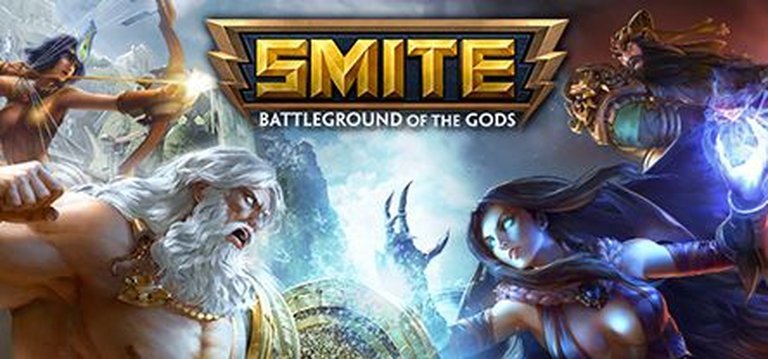
Smite is a free-to-play multiplayer online battle arena (MOBA) game where players assume the roles of deities and mythological figures from diverse pantheons including Greek, Roman, Egyptian, Norse, Hindu, and others. Setting itself apart from traditional isometric MOBAs, it features a third-person perspective and WASD-based movement as teams of five compete across various maps and modes—such as Conquest with its three-lane structure, the chaotic Arena, and other rotating special events—to destroy the enemy Titan base, with gameplay centered on leveling up abilities and purchasing items during each match.
Gameplay Videos
Where to Buy Smite: Battleground of the Gods
PC
Smite: Battleground of the Gods Guides & Walkthroughs
Smite: Battleground of the Gods Reviews & Reception
metacritic.com (80/100): A solid console adaptation of an intricate and rewarding competitive experience, but not without rough edges.
Smite: Battleground of the Gods: A Divine Intervention in the MOBA Genre
Introduction: The God of a New Perspective
In the pantheon of Multiplayer Online Battle Arenas (MOBAs), few titles have dared to fundamentally reimagine the lens through which the genre is viewed. Smite: Battleground of the Gods, launched by Hi-Rez Studios in 2014, did exactly that, swapping the distant, strategic isometric camera for a visceral, third-person perspective that placed players shoulder-to-shoulder with their chosen deity. This was not merely a cosmetic change; it was a philosophical shift that demanded physical skill, spatial awareness, and a new kind of tactical intimacy with the battlefield. Smite’s legacy is that of a bold innovator that successfully transplanted a deeply complex PC-centric genre onto consoles, all while assembling one of the most eclectic and compelling rosters in gaming history—a literal who’s who of global mythology. This review argues that Smite stands as a landmark title not just for its gameplay revolution, but for its ambitious, if tumultuous, fusion of ancient lore with modern esports, creating a uniquely accessible yet profoundly deep competitive experience that redefined what a MOBA could be.
Development History & Context: Forging a New Path
Smite emerged from Hi-Rez Studios, a developer previously known for the critically acclaimed but commercially struggling Tribes: Ascend. Under CEO Stewart Chisam, the studio bet its future on the burgeoning MOBA genre, which was dominated by the monolithic successes of League of Legends and Dota 2. The development vision was clear from the outset: create a MOBA that emphasized action and direct control, feeling more like an action RPG than a real-time strategy game. This meant adopting a third-person view and WASD controls, a decision that was both its greatest differentiator and initial barrier to entry for genre veterans.
Technologically, the game was built on the robust but aging Unreal Engine 3, a choice that provided familiar tools for the team but imposed graphical limitations compared to newer engines. The development cycle was lengthy and public, spanning a closed beta in May 2012, an open beta in January 2013, and an official release on March 25, 2014. This extended beta period was crucial; it allowed Hi-Rez to iterate on core mechanics, balance a growing roster of gods, and build a community from the ground up. The gaming landscape of 2013-2014 was MOBA-obsessed, but largely viewed as a PC-only, hardcore niche. Smite’s simultaneous focus on console releases (Xbox One in 2015, PS4 and Switch later) was a prescient move that anticipated the genre’s cross-platform future.
Narrative & Thematic Deep Dive: Myths Collide
Smite‘s narrative is not conveyed through a single-player campaign but is woven into the very fabric of the game’s existence and expanded through periodic “Odyssey” events, comics, and god-specific lore entries. The foundational premise is deceptively simple: the gods of countless pantheons have been summoned to a mysterious battleground—the “Battleground of the Gods”—to wage an endless war for supremacy. The initial, now non-canon, comic Battleground of the Gods posited a conflict sparked by Zeus’s assassination.
The current canonical storyline, evolving through annual Odyssey events, is a sprawling, multi-pantheon epic. A major arc, “The Pantheon War,” saw divine alliances and betrayals escalate following a crisis in the underworld. This culminated in the “Jade Corruption” event, where the Greek goddess Persephone, in a misguided attempt to make the world safer by stripping gods of their power, poisoned the World Tree (Yggdrasil). This act had catastrophic, unintended consequences: it weakened the cosmic order and, critically, breached the prison of the Great Old One, Cthulhu, whose awakening now threatens all of reality. Subsequent arcs like “Grim Omens” and “Odyssey: Reckoning” have followed disparate pantheons—Chinese heroes like Mulan and Guan Yu, Norse messengers like Ratatoskr, and Yoruba deities like Olorun—as they converge on the roots of Yggdrasil to confront this existential threat.
Thematically, Smite explores hubris, the burden of divinity, and the fragility of cosmic order. The gods are not paragons but flawed, powerful beings capable of immense pettiness and grandeur. The inclusion of the Cthulhu Mythos introduces a layer of cosmic horror, where the deities’ squabbles inadvertently invite an annihilation-level entity. The narrative is dynamic, with events directly altering game maps (like the changing “Corrupted Arena”) and introducing new playable characters (e.g., Mulan, Cthulhu) that become part of the permanent roster, blurring the line between story and gameplay.
Gameplay Mechanics & Systems: The Action-Based MOBA
At its core, Smite adheres to the classic MOBA structure: two teams (typically 5v5 in Conquest) start at opposite bases, farm gold and experience, level up abilities, purchase items, and push down lanes guarded by towers and a final “Titan” boss to win. However, every systemic layer is filtered through its action-RPG lens.
-
Perspective & Control: The shift to a third-person, over-the-shoulder camera (akin to World of Warcraft or Diablo) is the defining mechanic. Abilities are skill-shot oriented, requiring aim and prediction rather than simple point-and-click targeting. Movement is tied to the WASD keys (or a controller’s left stick), creating a more immediate, physical connection to the character. This demands constant situational awareness of one’s position relative to enemies, minions, and terrain—a stark contrast to the macro-management focus of traditional MOBAs.
-
Character Progression & Economy: Players earn gold passively and through kills/objectives, spending it in a shared shop on items that enhance stats. Experience is gained by being near dying minions, monsters, or enemy gods, leveling up the god’s four unique abilities (plus a passive). The level cap is 20, with increasing XP requirements for later levels, pacing the power spike. Crucially, all progression resets after each match, emphasizing in-match strategy over long-term account progression.
-
Game Modes: Beyond the standard Conquest (3 lanes, full jungle), Smite excels in variety:
- Arena: 5v5 team deathmatch-style mode with no lanes or titans, focusing on constant skirmishes and a point-based win condition.
- Joust: 3v3 on a single-lane map, faster and more combat-focused.
- Assault: 5v5 on a single lane with randomly assigned gods, emphasizing adaptability and team composition.
- Slash: A 2022 successor to Siege/Clash, featuring 2 lanes and a central contested jungle with escalating boss fights.
- Adventures & Match of the Day: Limited-time experimental modes (racing, PvE, capture the flag) and daily rotating rule sets that keep the experience fresh.
-
Innovation & Flaws: The core innovation is undeniably the control scheme and perspective, which lowers the barrier for action-game fans while adding a layer of mechanical depth (dodging, positioning). The free-to-play model is largely lauded as fair; gods can be earned with in-game currency (Favor), and purchases are cosmetic or convenience-based. However, the game has historically struggled with balance patches that can drastically alter god viability, and matchmaking—especially in ranked play—has been a perennial point of community criticism for creating uneven games. The learning curve, while smoother than Dota 2, is still steep due to the sheer number of gods (over 130 at the time of writing) and their intricate kit interactions.
World-Building, Art & Sound: A Pantheon of Style
Smite’s greatest artistic achievement is its cohesive yet wildly diverse visual identity. Each god is a masterclass in character design, drawing directly from their mythological roots but filtered through a consistent, high-fantasy art style. Greek gods are depicted in classical, heroic sculptural forms (e.g., Zeus’s weathered throne-like physique), while Hindu deities like Kali were controversially redesigned from a sexualized to a more traditionally formidable and armored visage following real-world backlash. Chinese gods like Sun Wukong burst with vibrant, mythical flair, and the Cthulhu Mythos figures are rendered in grotesque, alien detail.
The maps are not just battlegrounds; they are themed environments. The Conquest map features a lush, ancient Greek-inspired center with distinct lanes flanked by Egyptian, Norse, or Mayan-themed jungle biomes. Arena is a stark, brutal colosseum. The attention to environmental storytelling, from the dripping caverns of the jungle to the Olympian architecture of the bases, sells the fantasy.
Sound design is exceptional. Each god has a full voice set in their native language (or a stylized approximation), delivering iconic lines in battle, taunts, and emotes. The audio feedback for abilities—the crackle of Zeus’s lightning, the bone-rattling roar of Ares’s spears, the eerie whispers of the Morrigan—is sharp and reactive. The soundtrack, while serviceable, often takes a backseat to the cacophony of battle, which is a testament to the clarity of the sound effects.
Reception & Legacy: From Controversy to an Esports Mainstay
Smite received generally favorable reviews at launch, with a Metacritic PC score of 83. Critics consistently praised its innovative perspective, diverse and polished character roster, and accessible yet deep combat. IGN noted it made the MOBA “more approachable,” while PC Gamer highlighted its “action RPG-inspired combat.” Common criticisms included a sometimes-toxicity-prone community, balance hiccups, and a UI that could feel cluttered for newcomers.
Its commercial and community success has been extraordinary for a free-to-play title. From 3 million players at launch, it grew to over 40 million registered accounts by 2020, generating $300 million in revenue by 2019. This growth was fueled by a relentless update schedule—new gods every 2-3 months, new modes, and major “Odyssey” narrative events that acted as live-service content drops.
Smite‘s esports legacy is significant. The inaugural 2015 Smite World Championship featured a then-staggering $2.6 million prize pool, the third-largest in history at the time. Hi-Rez’s investment in a structured Pro League (SPL), which later franchised, cemented its status as a top-tier competitive title, even if the scene never reached the viewership of LoL or Dota 2. It proved a MOBA could thrive in the console esports space.
The game was not without controversy. Most notably, Hindu groups protested the playable depiction of deities like Kali and Agni, arguing it was disrespectful to allow players to control sacred figures. Hi-Rez’s philosophical response—that all gods in their multiverse could be seen as manifestations of a single divine truth—was academically interesting but did little to quell the protests, leading to a redesign of Kali. This incident highlighted the cultural tightrope a global game walks when mining religious iconography.
Its legacy is dual-fold. Firstly, it proved the viability of the third-person MOBA on both PC and consoles, directly influencing later titles and showing that the genre’s rules were not set in stone. Its successful port to Xbox One, PS4, and Switch demonstrated a commitment to cross-platform play that is now standard. Secondly, it created a permanent, expanding museum of mythological figures in gaming. Where other games dabble in mythology, Smite made it its entire identity, introducing figures like the Mayan bee god Ah Muzen Cab or the Slavic witch Baba Yaga to a massive global audience. The announcement of Smite 2 in 2024, built in Unreal Engine 5, is a testament to the enduring brand identity Hi-Rez forged.
Conclusion: An Imperfect Deity Worthy of Worship
Smite: Battleground of the Gods is a landmark of genre hybridization and cultural aggregation. It succeeded not by copying the giants of the MOBA world but by asking a fundamental question: “What if this felt more like an action game?” The answer was a revelation that broadened the genre’s appeal and introduced a generation of players to an astonishingly wide tapestry of global myths. Its strengths—the tactile combat, the breathtakingly eclectic and creative roster, the consistent live-service evolution, and a largely fair free-to-play model—are immense. Its weaknesses—persistent balance issues, a sometimes toxic community, and a UI that can overwhelm, are the common ailments of its genre.
Viewed through the lens of history, Smite is not merely a successful game; it is a catalyst. It forced the industry to reconsider the camera angle as a core design choice, championed cross-platform play before it was commonplace, and built an esports ecosystem from a position of genuine mechanical differentiation. While its player count may have peaked, its influence is secure. It stands as a testament to the power of a single, well-executed innovation to carve out a sacred space in a crowded pantheon. For its sheer audacity, its unwavering dedication to its core fantasy, and its role in expanding the MOBA’s horizon, Smite earns its place as a classic—a flawed, magnificent, and eternally battling god of its own domain.
Final Verdict: 9/10 – A genre-defining innovation encased in a living, mythic museum.