
Description
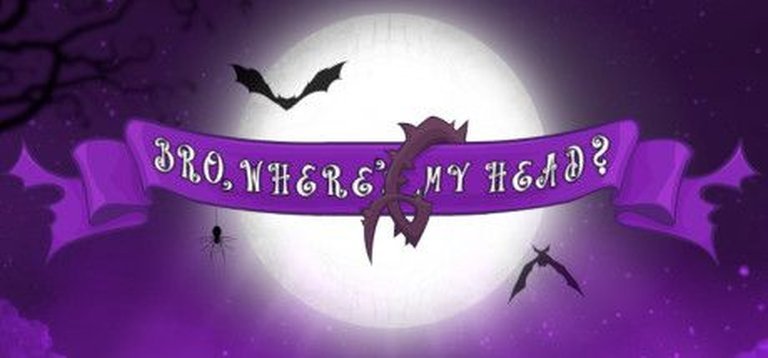
Bro, Where’s My Head? is a fantasy-themed action-puzzle game where players assist Odin, a dark lord from the land of darkness, by solving physics-based puzzles to reunite headless skeletons with their heads after a failed resurrection. Set in a Halloween-inspired cartoon world, the game features 60 challenging levels with a point-and-select interface, professional voice acting, and supports multiple platforms including Windows, Linux, and Mac.
Gameplay Videos
Where to Buy Bro, Where’s My Head?
PC
Bro, Where’s My Head? Guides & Walkthroughs
Bro, Where’s My Head?: A Cerebral Puzzle in a Cartoon Coffin
Introduction: The Allure of the Absurd
In the vast, often-saturated landscape of indie gaming, certain titles emerge not through blockbuster marketing or critical darling status, but via a potent, ineffable combination of bizarre premise, minimalist execution, and a spark of genuine ingenuity. Bro, Where’s My Head? (2021) is one such title. Developed and published by the prolific Polish solo-dev studio Airem, this game exists as a curious footnote in the annals of puzzle design—a physics-based conundrum wrapped in a Halloween-tinged, absurdist cartoon and delivered with the deadpan gravitas of a dark prophecy. Its legacy is not one of mainstream acclaim but of Cult Classic-in-waiting, a game whose very name prompts a double-take and whose straightforward mechanical premise belies a surprisingly thoughtful and often frustratingly clever challenge. This review posits that Bro, Where’s My Head? is a masterclass in constrained design, using its limited scope to explore themes of agency, absurdity, and the unintended consequences of grand ambition, all while operating within a charming, low-fidelity aesthetic that proves style can triumph over graphical horsepower.
Development History & Context: The Airem Assembly Line
Bro, Where’s My Head? emerged from the Airem development collective, a prolific Polish entity known for its rapid-fire output of quirky, often minimalist games spanning genres from bullet-hell shooters (Pattern Survivors) to horror (The Liminal Dimension) and abstract puzzles (THE IMPOSSIBLE). The studio operates with the ethos of a digital artisan, releasing titles at a pace that suggests a deep well of ideas executed with a reusable, efficient custom engine. Released on March 25, 2021, for Windows, Linux, and macOS, the game arrived during a peak period for indie puzzle titles, following the success of games like Human: Fall Flat and World of Goo, which popularized physics-based problem-solving.
Technologically, the game is a study in austerity. Its system requirements (Intel Core 2 Duo, 512MB RAM) place it firmly in the realm of “will run on a potato,” a deliberate choice that maximizes accessibility and aligns with its 2D, fixed/flip-screen visual style. This constraints-first approach is a hallmark of Airem’s design philosophy: innovative mechanics and tight loops are prioritized over graphical fidelity. The gaming landscape of early 2021 was post-pandemic, with players seeking both lengthy immersive experiences and short, satisfying digital snacks. Bro, Where’s My Head? squarely targets the latter, offering a “pick-up-and-play” puzzle structure that belies the depth of its 60-level challenge. Its proximity in Airem’s 2021 release slate to titles like Bro Falls suggests a thematic or branding experiment with the word “Bro,” though any direct lineage is purely titular.
Narrative & Thematic Deep Dive: Prophecy and Pantomime
The narrative of Bro, Where’s My Head? is delivered entirely through its infamous store page “ad blurb” and what is described as “professional voice over” in English and Polish. It is a masterpiece of economical, deadpan storytelling:
“My name is Odin. I come from the land of darkness and I want to take over the world. 3 days ago I tried to resurrect the undeath. Unfortunately, something went wrong because the skeletons don’t have heads, can you help Me find their heads? When I rule the world, I will leave You alone.”
This is not a story; it is a transactional request and a twisted bargain. The player is positioned not as a hero, but as a temporary, coerced intern for a cosmically incompetent deity. Odin’s motive is pure, unadulterated tyranny (“I want to take over the world”), but his method is shockingly sloppy. The failure of his resurrection spell is not a tragic flaw but a clerical error of cosmic proportions. The theme is one of unintended consequences and bureaucratic hell. Odin, the Allfather reduced to a project manager with a faulty script, needs a mortal temp to clean up his mess. The promise “I will leave You alone” is less a reward and more a threat of benign neglect—the ultimate prize is merely being off the god’s radar.
The skeletons themselves are non-entities. They are objects, puzzle pieces. Their headlessness strips them of identity, will, and narrative function. They are the literal “undead” in a state of pure potentiality, waiting for the player to complete the circuit of Odin’s failed magic. The “skull moons” collected in gameplay become macabre rewards, little occult currencies for aiding a would-be dark lord. The story’s dark humor is entirely in its delivery: the voice acting, as noted in features, is “awesome” precisely because it likely treats this ridiculous premise with utter sincerity. The player is complicit in world domination through puzzle-solving, a commentary on the moral neutrality of labor. You are not saving the world; you are helping a problematic god unfuck his own spellcasting. It’s a satire of fetch quests on a metaphysical scale.
Gameplay Mechanics & Systems: Physics, Puzzles, and Pointless收集
The core gameplay loop is deceptively simple: “Click on objects to destroy them, return the head of the skeleton and go to the next level.” This is a physics-based puzzle game with a collectathon element (the skull moons). The player controls an unseen cursor/force that interacts with a fixed-screen, side-view level composed of various destructible materials (wood, stone, ice, etc.) and static environmental hazards.
- Core Loop: Each of the 60 levels presents a headless skeleton (or skeletons) and one or more skulls, often perched precariously or protected by structures. The player must strategically destroy parts of the environment to create a chain reaction—using gravity, momentum, and material properties—to deliver a skull to a skeleton’s neck. Success moves you to the next sequential level.
- Physics Systems: The game relies on a proprietary, lightweight physics engine. Material properties are key: wood breaks easily, stone is heavy and stable, ice is slippery, and bouncy pads provide propulsion. The challenge lies in understanding how removing one support beam will topple a tower, how a rolling stone will shatter ice, or how to use a single explosion to trigger a cascade. The “point and select” interface means precision and timing in clicking destructible objects are paramount.
- Progression & Replayability: Progression is linear through 60 levels. The collectathon aspect (skull moons) provides the primary replay driver. Achievements (17 total) encourage mastery: collecting specific skull counts per level, repeating levels, destroying all bricks (“BRICKS”), reaching score thresholds, and finding the developer’s secret achievement (“AIREM’s secret achievement”). The score attack element, where points are presumably earned for efficiency or skull collection, adds a meta-layer of optimization.
- Innovation & Flaws: The innovation is in its brutal, elegant minimalism. There are no characters to move, no complex inventories—just cause and effect. Its flaw, as implied by the need for 60 levels rather than 30, is potential puzzle padding. Some levels likely rely on trial-and-error rather than “aha!” moments, a common pitfall in physics puzzles where the solution path is narrow and non-intuitive. The lack of a level editor (not mentioned in features) limits community-driven longevity, a curious omission for a puzzle game. The support for mouse, gamepad, and keyboard is basic but sufficient for this input-simple design.
World-Building, Art & Sound: Cartoon Gothic
The game’s aesthetic is explicitly described as having a “Halloween theme & cartoon style.” This is a stylized, minimalist, 2D visual approach. The setting is Fantasy, but a low-key, almost board-game fantasy. Skeletons are simple, slightly goofy-shaped sprites. Environments use a limited, likely muted color palette (oranges, browns, grays) evoking autumn and decay. The “cartoon” aspect softens the macabre premise—this isn’t a grimdark skeleton army, but a slightly clumsy, gone-wrong one. The “comic book” and “abstract” tags from Steam users suggest the art may use bold outlines, simple shapes, and perhaps some comic-panel framing or effects.
The atmosphere is one of playful morbidity. The juxtaposition of a childish cartoon style with the premise of world-conquering undeath creates a dissonant, memorable tone. It’s less Tim Burton and more The Nightmare Before Christmas‘s Halloween Town as interpreted by a minimalist vector artist.
Sound design is where the game punches above its weight. The feature listing of “Professional voice over ENG & PL” is its secret weapon. The deadpan, probably deeply serious narration of Odin’s blurb—delivered in at least two languages—elevates the entire experience from a cute puzzle game to a piece of absurdist theater. The soundtrack is not detailed but is likely a looping, unobtrusive, thematic track (possibly orchestral or synth-hybrid) that reinforces the cartoon-gothic mood without becoming grating during extended puzzle-solving sessions. The combination of simple visuals and professional audio creates a bizarre, compelling contrast that defines the game’s personality.
Reception & Legacy: The Quietly Positive Underdog
Critical reception is essentially non-existent in traditional outlets, as evidenced by the “n/a” MobyScore and the absence of critic reviews on Metacritic. The game operates entirely in the realm of user reviews and社群 discovery. On Steam, it holds a “Very Positive” rating with 88% of 18 user reviews being positive. This is a small but potent sample. The player base is microscopic (only 1 collector on MobyGames, ~112 owners estimated on completionist.me), confirming its status as a deep-cut indie title.
Its legacy is currently being written by its inclusion in the Airem franchise bundles and its consistent, low-key promotion in Airem’s own giveaways (as seen on IndieDB). It is a perpetual entry in the “hidden gem” sections of Steam discovery queues, buoyed by tags like “Cute,” “Dark Humor,” “Memes,” and “Cartoony.” Its influence on the industry is negligible, but its design lineage is clear: it sits in the tradition of minimalist puzzle games like The Incredible Machine: Even More Contraptions (pure cause/effect) and Crayon Physics Deluxe (drawing to solve), but filtered through a specific, joke-driven aesthetic.
Its most significant impact may be conceptual: it demonstrates that a compelling “sell” can be built on a single, funny sentence, and that a full game experience can be extracted from a pure, unadorned physics premise with zero narrative fat. It is a testament to the “one good idea” game, where that idea—headless skeletons needing head retrieval—is explored with 60 variations without ever needing to justify its existence beyond the initial chuckle.
Conclusion: A Niche Curio of Clever Design
Bro, Where’s My Head? is not a landmark title that will be discussed in game design textbooks alongside Portal or Tetris. It is, however, a perfect artifact of its specific indie niche. It succeeds brilliantly at what it sets out to do: deliver 60 charming, challenging physics puzzles under the umbrella of a single, sustained absurdist joke. Its strengths are its razor-sharp focus, its hilarious and uniquely presented premise, its cross-platform accessibility, and the sheer quality-of-life details like full voice acting and multi-language support for a $2 game. Its weaknesses are the inherent potential for frustration in trial-and-error physics puzzles and its lack of broader features like a level editor.
For the puzzle enthusiast, it is a worthy, if sometimes frustrating, 5-10 hour distraction. For the cultural historian, it is a fascinating case study in branding, premise-driven design, and the solo developer’s ability to produce a complete, polished product on a shoestring. For the general player, it is a perfect “itch-scratcher”—a game whose entire concept can be grasped in 10 seconds and enjoyed in short bursts. In the crowded market of puzzle games, Bro, Where’s My Head? distinguishes itself not by reinventing the wheel, but by carving a perfectly round, headless wheel and daring you to make it roll. It is a small, clever, and sincerely funny game that earns its place not in the pantheon, but in the curious, delightful wing of the museum where the oddly specific exhibits reside. Recommended, with the caveat that you are buying a very specific, very quirky experience, not a universal masterpiece.