
- Release Year: 2019
- Platforms: Android, iPad, iPhone, Linux, Macintosh, Nintendo Switch, Windows Apps, Windows, Xbox One, Xbox Series
- Publisher: eSolutions Nordic AB
- Developer: eSolutions Nordic AB
- Genre: Strategy, Tactics
- Perspective: Top-down
- Game Mode: Hotseat, Single-player
- Gameplay: Board game
Description
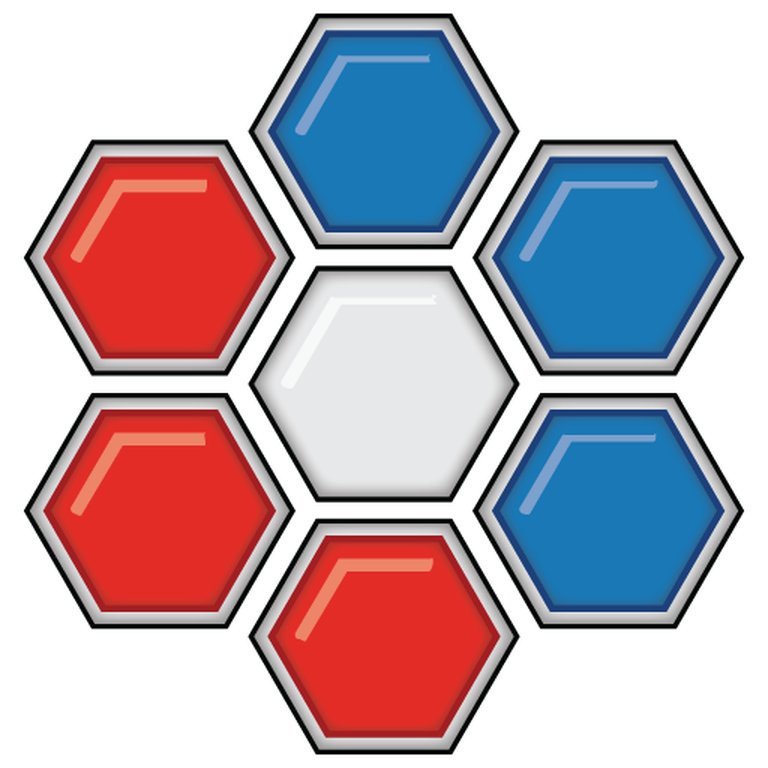
Hexxagon: Board Game is an abstract strategy title where two players compete on a hexagonal grid, aiming to achieve a majority of pieces by converting the opponent’s tokens through tactical moves like doubling or jumping. It is a digital adaptation of an early 1990s classic, featuring top-down, fixed-screen gameplay with a point-and-select interface and supporting hot-seat multiplayer for 1-2 players across platforms such as Android, iOS, Nintendo Switch, Xbox, and PC.
Hexxagon: Board Game: A meticulous dissection of a hexagonal strategy classic resurrected
Introduction: The Enduring Elegance of Abstract Conflict
In an era dominated by cinematic narratives and open-world spectacle, the quiet, timeless appeal of a perfectly balanced abstract strategy game stands as a testament to the foundational power of pure gameplay. Hexxagon: Board Game (2019), developed and published by Swedish studio eSolutions Nordic AB, is not a reinvention but a meticulous preservation and modernization of a specific and brilliant design lineage. It serves as a digital heirloom, carrying forward the torch of the early 1990s’ “logic game” boom into the age of touchscreens and global distribution. This review argues that Hexxagon’s value lies not in innovation but in impeccable execution: it is a flawless,if minimalist,translation of a near-perfect mechanical concept. Its legacy is that of a purist’s artifact, a game that understands that strategic depth emerges from the simplest of rulesets applied on a uniquely challenging geometric plane.
Development History & Context: From DOS Elegance to Universal Access
The story of the 2019 Hexxagon is intrinsically linked to its 1993 progenitor. The original Hexxagon (sometimes stylized Hexxagōn), developed by Argo Games and published by Software Creations for MS-DOS, was a clever adaptation of the 1988 arcade/computer game Ataxx. Ataxx itself was a spiritual successor to the 1988 game Infection (also known as Reversi or Othello on a square grid), but with the critical addition of a “jump” move. The 1993 Hexxagon transplanted this “spread-or-jump” dynamic onto a hexagonal grid, creating a distinct tactical problem space. This original was a niche but beloved title among puzzle and strategy aficionados, praised for its cognitive demands and purity.
The 2019 revival by eSolutions Nordic represents a conscious act of archival resurrection. Operating in a late-2010s landscape saturated with mobile free-to-play titles, the studio chose to leverage the ubiquitous Unity engine and Firebase middleware to create a cross-platform package (Android, iOS, Nintendo Switch, PC, Xbox) that remained conceptually faithful. The technological constraints of 1993—limited color palettes, turn-based processing—are gone, replaced by the instantaneous responsiveness of modern devices. Yet, the developers’ vision was not to expand the game’s scope but to perfect its delivery: seamless “hot seat” local multiplayer, a scalable AI for solo “arcade mode,” and a clean, zoomable interface across phones, tablets, and TV screens. The business model reflects this duality: free on mobile (likely supported by ads or a freemium structure) and a nominal fee (~$5.99) on consoles/PC, positioning it as a premium “digital board game” rather than a service.
Narrative & Thematic Deep Dive: The Poetry of Pure Abstraction
To discuss “narrative” in Hexxagon is to discuss its conscious and profound absence. There is no lore, no characters, no plot, no dialogue. The “theme” is presented in the starkest terms: rubies vs. pearls (as noted on the official hexxagon.com site), or more abstractly, “Player 1” (often red) vs. “Player 2” (often blue or green). This is not a failure of imagination but a central, declarative design philosophy. The game is a theater of pure strategic conflict.
The thematic underpinning is the relentless, exponential drive for territorial control and conversion. The act of placing a piece that “infects” adjacent opponent pieces is a direct metaphor for cellular automata, biological spread, or political hegemony. The board is a void to be dominated. The two-player dynamic creates a simple, eternal opposition: symmetry versus asymmetry, expansion versus containment. The theme is duality and conversion. The “story” of any given match is written entirely in the sequence of moves: a desperate jump to turn the tide, a careful spread to build a wall, a sacrificial play to trigger a chain reaction. The narrative emerges from the player’s mind, a personal saga of triumph or collapse against a faceless, perfectly logical opponent—whether AI or human. It is the purest form of “game as system,” where meaning is derived not from what is told, but from what is done.
Gameplay Mechanics & Systems: The Brute Force of Hexagonal Logic
Hexxagon‘s genius is its devastatingly simple yet profound rule set, etched in stone since the early 90s. The field is a board of 58 hexagonal cells (on the standard size). Each player begins with three pieces. On each turn, a player must choose one of their existing pieces and perform one of two actions:
- Clone (Spread): Place a new piece of their color in any hexagon adjacent (sharing an edge) to the chosen piece. This is a safe, territorial expansion move.
- Jump: Move the chosen piece exactly two hexes in any direction (including over empty or occupied hexes). Upon landing, if that piece is adjacent to any opponent pieces, they are all converted to the player’s color.
The Core Loop: The game ends when the board is completely filled. Victory is determined by a simple majority count. A player can also win by eliminating all opponent pieces, at which point the board auto-fills with their color.
This system creates a multi-layered strategic landscape:
* Tactical Layer (The Turn): Every decision is a calculus of immediate conversion potential versus long-term board control. A jump is high-risk, high-reward, potentially flipping multiple pieces but also moving a piece away from its supportive cluster. A clone is low-risk but slow.
* Strategic Layer (The Board): The hexagonal grid fundamentally changes the tactical geometry from its square-grid cousin Ataxx. Each hex has six neighbors instead of four (orthogonal) or eight (including diagonals). This increases connectivity, shortens effective paths, and makes “enclosure” and “wall-building” strategies more complex and dynamic. It also means a piece has more potential jump destinations and can be jumped from more angles, increasing volatility.
* Systems & Flaws: The system is mathematically elegant and contains no inherent flaws. The “flaw,” if any, is its extreme accessibility barrier for novices. The learning curve is steep; understanding that a piece can be jumped from any direction two spaces away requires spatial reasoning not everyone possesses. The AI, while offering “increasing difficulty,” is a pure positional evaluator and can be unpredictable but not “intelligent” in a human-like sense. The UI, across all platforms, is functionally perfect for its purpose: a clear hex grid, color distinction, and unobtrusive highlighting of legal moves. The lack of a board editor (lamented on the Steam forum) is the only notable modern feature gap, preventing custom map creation.
World-Building, Art & Sound: Minimalism as Aesthetic
Given the abstract nature, “world-building” is metaphorical. The setting is the hexagonal grid itself. The atmosphere is one of cold, tactical calculation. There is no environmental storytelling, no visual narrative. The art direction, therefore, is one of extreme clarity and function.
- Visuals: The 2019 version employs a clean, flat design. The board is a neutral, often light gray or off-white field. The pieces are simple, high-contrast discs (“rubies” are red, “pearls” are white/blue). Animations are minimal: a piece smoothly slides or clones into place, and a quick flash or pulse denotes conversion. This is a virtue. Any artistic flourish—shading, textures, particle effects—would distract from the pure geometry of the board. The visual priority is 100% on piece identification and positional awareness. The perspective is fixed top-down, maintaining perfect spatial clarity.
- Sound: The sound design follows the minimalist brief. A soft, satisfying click or pop accompanies moves and conversions. A gentle, rising chime signals a significant flip or victory. A short, melancholic tone indicates an invalid move. The soundtrack, if present, is typically ambient, wordless electronic music that fades into the background, ensuring no auditory distraction. The soundscape is purely functional and reinforcing, providing haptic and auditory feedback for successful actions.
Together, these elements create an experience that feels less like playing a “video game” and more like manipulating a pristine, physical strategy game projected onto a screen. The contribution to the experience is the removal of all non-essential stimuli, forcing the player’s entire focus onto the board’s state—the ultimate goal of any abstract game.
Reception & Legacy: The Silent Success of Purism
Critical and commercial reception for the 2019 Hexxagon is a study in quiet, niche success. On aggregate sites like MobyGames and Metacritic, critic reviews are nonexistent or non-existent (n/a MobyScore, no critic reviews listed). User presence is tiny: MobyGames lists only one collector, Steam charts show a mere 2 reviews (both positive, yielding a perfect 100/100 Steambase score), and the game maintains a small but dedicated wishlist. This is not a mainstream hit; it is a cult artifact.
Its legacy is two-fold:
1. Archival Success: It successfully移植 (port) a nearly lost piece of 90s PC puzzle gameplay to contemporary platforms, ensuring the original Hexxagon/Ataxx design is playable and accessible to new generations. It is part of a small but important trend of preserving early digital board/puzzle games (akin to efforts for M.U.L.E. or Archon).
2. Design Legacy: The game itself stands as a classic example in the canon of abstract strategy. It is frequently cited alongside Go, Chess, and Reversi in discussions of simple rules creating deep complexity. Its primary influence is on the sub-genre of “territory conversion” games. The 2019 version’s cross-platform release, especially its presence on the Nintendo Switch in the “Board Game” section, introduces these principles to a broader casual audience, even if most players never realize they are engaging with a design that is over 30 years old. It has no direct descendants in major AAA titles, but its DNA is present in any game featuring area-control through adjacency conversion.
Its reputation has solidified post-launch as a “hidden gem” or “must-play for strategy purists.” The absence of marketing and grand narrative is seen not as a weakness but as a badge of authenticity. It is appreciated for what it is: a complete, unadulterated execution of a timeless game design.
Conclusion: A Singular Masterpiece of Mechanical Purity
Hexxagon: Board Game (2019) is a paradox: a game with no story, minimal art, and a 30-year-old ruleset that feels utterly contemporary in its perfect, uncompromising design. It is not for everyone. Those seeking immersion, progression, or narrative will find a barren void. But for those who believe the zenith of game design is a beautifully balanced system waiting to be mastered, it is indispensable.
eSolutions Nordic did not make a new game; they performed a digital embalming with reverence and skill. They took the sharp, clear mind of the 1993 original and gave it a body that works seamlessly on a phone in your pocket or a TV in your living room. Its place in history is secure as the definitive, accessible version of a classic abstract puzzle—a testament to the fact that in strategy, form perfectly follows function, and the deepest joys are found in the silent, clicking logic of a hex grid being claimed, one conversion at a time.
Final Verdict: 9/10 – A flawless adaptation of a timeless design. Its “flaws” are features of its purity. An essential artifact for students of game design and a perpetually engaging mental duel for those who seek it.