
- Release Year: 2017
- Platforms: Nintendo Switch, PlayStation 4, Windows, Xbox One
- Publisher: Outright Games Ltd., Torus Games Pty. Ltd.
- Developer: Outright Games Ltd., Torus Games Pty. Ltd.
- Genre: Action
- Perspective: Third-person
- Game Mode: Single-player
- Gameplay: Beat ’em up, brawler, Transformation
- Setting: Futuristic, Sci-fi
- Average Score: 58/100
Description
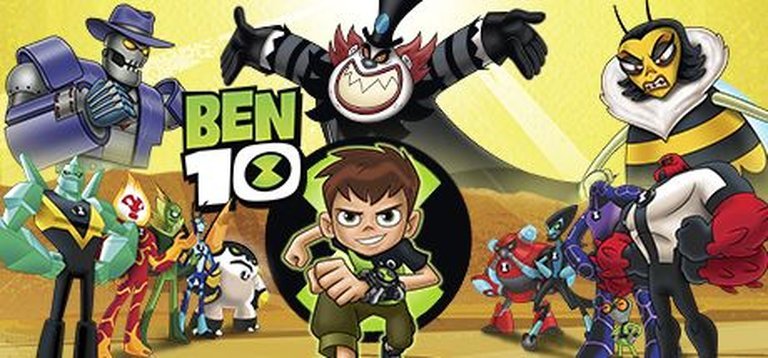
Ben 10 is a third-person action beat ’em up game set in a sci-fi universe, based on the popular animated series. Players control Ben Tennyson as he uses the Omnitrix to transform into various alien heroes to battle enemies, featuring cel-shaded graphics that emulate the show’s visual style. The game offers a straightforward, family-friendly brawling experience designed to appeal to younger fans and series enthusiasts, though it may be criticized for short length and simplicity.
Gameplay Videos
Where to Buy Ben 10
PC
Ben 10 Free Download
Ben 10 Reviews & Reception
metacritic.com (60/100): Ben 10 does its license justice, but unless you’re a fan of the show it just looks like a slightly above-average brawler at best.
opencritic.com (60/100): Ben 10 does its license justice, but unless you’re a fan of the show it just looks like a slightly above-average brawler at best.
nintendolife.com : The combat feels a bit loose, there’s a lack of weight behind your attacks and a delay in enemies flinching that makes it feel as if you aren’t always connecting.
Ben 10 (2017): A Case Study in Licensed Game Mediocrity
1. Introduction: The Omnitrix of Opportunity, Glitched
On November 14, 2017, amidst the launch wave of the Nintendo Switch, a title arrived that seemed predestined for success: Ben 10. Based on Cartoon Network’s immensely popular, multi-series franchise, the game promised to let players wield the Omnitrix, transforming into ten iconic aliens to battle classic villains. The concept was a perfect嫁接到 (perfect graft onto) the 3D beat-’em-up genre—a natural fit for a show about a boy with a watch that turns him into superheroes. Yet, what materialized was not the “Hero Time” the ad blurb promised, but a stark, often frustrating, lesson in how even a conceptually sound licensed game can collapse under the weight of technical shortcomings, design lethargy, and a profound misunderstanding of its own potential. This review will dissect the 2017 Ben 10 game—developed by Torus Games and published by Outright Games—not merely as a failed entertainment product, but as a symptomatic artifact of a specific era in budget-constrained, license-driven game development. Its legacy is not one of influence or acclaim, but of caution, representing a squandered opportunity where a powerful IP collided with uninspired execution.
2. Development History & Context: The “Outright” Factory
2.1 The Studios: A Pattern of Mediocrity
The game’s development pedigree immediately signals its likely quality. Publisher Outright Games Ltd. and developer Torus Games Pty. Ltd. have a well-documented history, primarily of producing licensed games targeted at children and families. A glance at MobyGames’ “MobyPlus” collaboration data reveals a stark pattern: the same core team (Ștefan Șeicărescu, Marius Popa, Szilveszter Pap) credited on Ben 10 also worked on titles like PAW Patrol: On a Roll!, Hotel Transylvania 3: Monsters Overboard, and Adventure Time: Pirates of the Enchiridion. This is not a “dream team” but a streamlined pipeline for converting popular cartoons into functional, low-budget video games. The vision was not to innovate but to fulfill a contractual and retail obligation with minimal risk and cost.
2.2 Technological Constraints and Era
Released in late 2017, the game arrived at the dawn of the eighth generation’s twilight (PS4/Xbox One) and the Switch’s first holiday season. However, its technical presentation is more aligned with early 2010s or late 2000s downloadable titles. The “cel-shaded” visual technique noted in its MobyGames groups was intended to mimic the show’s aesthetic, but the execution is plagued by simplistic modeling, muddy textures, and inconsistent performance—issues noted across all platform reviews, with the Switch version particularly criticized for unstable frame rates. The constraints were likely financial and temporal, not technological; the hardware was capable of more, but the allocated budget and time were not.
2.3 The Gaming Landscape
2017 was a year of exceptional quality across genres. For beat-’em-ups, titles like Okami HD and Cuphead were redefining the genre’s artistic potential. Even within licensed space, standards were rising (e.g., LEGO games by TT Games). Ben 10 entered this landscape as a budget-priced ($24.99 on Steam, often less) product with no notable innovation. Its competition was not God of War, but other $20-$30 shelf-fillers. In this context, its failure to meet even basic expectations of polish and content is more damning.
3. Narrative & Thematic Deep Dive: A Serviceable Sketch
3.1 Plot and Structure
The game’s narrative, penned by David Ellis, is a straightforward, three-episode arc that feels like a direct-to-DVD special. Ben, Gwen, and Grandpa Max’s “cross-country road trip in the Rust Bucket” (the iconic RV) is interrupted by three primary villains from the 2016 reboot series: the clown Zombozo, the insectoid Queen Bee and her Bug Gang, and the elemental Weatherheads. Each “episode” constitutes a world: a forest/small-town stage leading to Zombozo’s funhouse, a hive-like structure for Queen Bee, and a storm-battered industrial zone for the Weatherheads. The story is told through numerous, fully-voiced cutscenes that faithfully recreate the show’s tone and character dynamics. Ben’s cockiness, Gwen’s sarcasm, and Max’s gruff mentorship are all present and correct.
3.2 Characterization and Dialogue
Where the narrative succeeds is in its licensed authenticity. The voice acting (inferred from the cutscenes’ presentation) is competent and captures the 2016 reboot’s vocal mannerisms. The dialogue is replete with the show’s humor and Ben’s iconic catchphrases (“It’s Hero Time!”). However, this fidelity is a double-edged sword. The plot offers zero surprises, functioning as a greatest hits reel of villain encounters without deeper character arcs or thematic exploration. It’s content to be a playground for the core fantasy—transforming into aliens—rather than a story with its own identity. Supporting characters like Kevin Levin or Rook Blonko are absent, narrowing the focus to a simple hero/villain dichotomy that feels thin even for a children’s story.
3.3 Underlying Themes
The game superficially touches on themes from the show: responsibility (Ben’s impulsiveness vs. saving the day), family (the Tennysons’ road-trip bond), and the wonder of discovery (unlocking new aliens). However, these are never meaningfully interrogated through gameplay. The “unlock and transform” loop is a mechanical necessity, not a narrative metaphor for growth or mastery. The themes are window dressing for the core combat loop, making the story feel ancillary—a justification for action rather than an integrated experience.
4. Gameplay Mechanics & Systems: The Core Failure
4.1 Core Loop and Combat
The game is a 3D side-scrolling beat-’em-up with linear stages filled with groups of enemies, occasional platforming gaps, and environmental objects to destroy. The central mechanic is the Omnitrix wheel, allowing real-time transformation between Ben’s ten base aliens (e.g., Heatblast, Four Arms, XLR8, Diamondhead). Each alien has:
* A standard 3-hit combo (identical in animation and feel for all aliens, a critical flaw).
* A unique Special Ability (e.g., Heatblast’s fireballs, Grey Matter’s size-shifting for small passages) on a cooldown.
* An Ultimate Attack that clears the screen when a meter fills.
* A latent Traversal Ability (e.g., XLR8’s super speed for sprint sections).
The combat, as universally criticized, is fundamentally unsatisfying. Attacks lack weight and impactful “hit stop.” Animations are stiff and recycled. The enemy AI is rudimentary, often allowing players to mash the attack button without needing to dodge or block—rendering the counter-attack button functionally useless, as enemies rarely attack in a telegraphed manner. The promised variety of aliens is nullified by the identical base combos; switching is a tactical necessity for traversal or to use a specific special ability, but not for engaging combat variety. Combat devolves into a monotonous, repetitive button-press exercise.
4.2 Progression and Upgrade Systems
The game features an upgrade system where green orbs dropped by enemies and destructible objects can be spent on skill trees for each alien. However, this system is widely derided as superficial and meaningless. Upgrades often provide minor boosts (increased damage, slightly longer special duration) that are imperceptible in a game where enemies die in 2-3 hits. There is no meaningful difficulty curve or enemy types that require specific alien abilities or upgrades to overcome. The system creates an illusion of depth that collapses under the simplest scrutiny.
4.3 Level Design and Pacing
Stages are long (20-30 minutes each) and visually distinct—forests, junkyards, snowfields, villain lairs—but level design is generic and linear. Puzzles are simplistic (use a specific alien’s ability to open a door/break a wall) and serve only to gate progress, not to challenge. The most egregious design flaw is the complete lack of mid-stage checkpoints. Dying or quitting forces a full restart of a 20+ minute level, a punishing and archaic choice, especially for a portable-targeted game on the Switch. This, combined with the game’s short overall length (around 2 hours total), creates a frustrating, unrewarding experience.
4.4 Innovation and Flaws
The sole innovative spark—the real-time transformation wheel—is utterly wasted. Its potential, to create fluid combos by chaining alien abilities or to solve dynamic combat puzzles, is never realized. Instead, it’s a menu navigation during lulls in combat. The game’s flaws are systemic: bad programming (glitches requiring level restarts, as noted in user reviews), unpolished mechanics, and a catastrophic failure to leverage its own core premise.
5. World-Building, Art & Sound: A Faithful, Flawed Facade
5.1 Visual Direction and Cel-Shading
The game’s strongest suit is its art direction’s fidelity to the 2016 Ben 10 reboot. Character models for Ben, Gwen, Max, and the villains are recognizable and well-adapted to 3D. The cel-shading effectively mimics the show’s look, and the vibrant color palette is appealing. The six distinct worlds are visually differentiated. However, this veneer cracks under scrutiny. Environmental textures are low-resolution and repetitive. Character animations, outside of flashy ultimate attacks, are limited and robotic. The visual style is a successful imitation, but the technical execution is cheap and unpolished, looking like a generation behind its contemporaries.
5.2 Sound Design and Music
The soundtrack is described as “easily forgettable” but “suits” the levels—a common euphemism for generic, functional background music that fails to leave any impression. Sound effects for punches and alien powers are adequate but lack punch. The voice acting, as praised, is a high point, directly lifted from or mimicking the show’s actors, providing crucial narrative immersion for fans. The audio mix, however, is noted as uneven, requiring players to adjust settings.
5.3 Atmosphere and Cohesion
The game successfully recreates the feel of a Ben 10 episode: the campy villainy, the roadside adventure vibe, the sense of a young hero learning on the fly. This atmospheric loyalty is its primary saving grace for fans. The world feels connected to the source material. Yet, this cohesion is undermined by the gameplay. The moment-to-moment experience of fighting feels nothing like the dynamic, clever heroics of the show. The disconnect between the licensed skin and the generic mechanical heart is the game’s central irony.
6. Reception & Legacy: A Predictable Panning
6.1 Critical Reception at Launch
The game was universally panned by critics, though with a notable tiering. Metacritic scores are dire: 41 on Switch (based on 5 reviews), 56 on PS4, with “Generally Unfavorable” consensus. OpenCritic’s Top Critic Average is 54%, with only 11% of critics recommending it. Review scores range wildly: Nindie Spotlight (Switch) gave it 77%, praising its fun and variety for the target demo. Way Too Many Games (PC) gave 65%, calling it “an okay brawler… forgettable.” The majority were scathing: Game Hoard (PS4) awarded it a brutal 2/7, calling it “shoddy and unpolished… a proof of concept rather than a finished product.” Spaziogames (Switch) gave 4/10, citing “poor visuals, repetitive gameplay.” Criticisms converged on the same pillars: short length, shallow combat, flawed upgrade system, and technical glitches.
6.2 Player Reception
Player scores are even lower, averaging 1.7/5 on MobyGames from a tiny sample. Metacritic user scores are “Mixed or Average” at 5.0, but analysis of user reviews shows a stark divide: young fans of the reboot often found it “fun” despite flaws, while older players and non-fans were utterly dismissive. The common thread in negative user reviews is the same as critics: lazy programming, lack of checkpoints, and wasted potential.
6.3 Commercial Performance and Historical Legacy
Commercial data isn’t provided, but its rapid discounting and presence in bargain bins suggest modest, license-driven sales aimed squarely at a child audience during holiday seasons. Its legacy is none. It had no influence on the industry. It did not revive the beat-’em-up genre. It did not set a new standard for licensed games. Instead, it stands as a textbook example of the “budget licensed game” template: secure an IP, use a proven but unambitious genre framework, outsource to a studio with a pipeline for such projects, minimize costs, and aim for the lowest common denominator of quality that will pass for the intended young audience. It is a historical footnote, a “what not to do” case study in game design courses, and a cautionary tale for fans hoping their favorite media gets a worthy interactive adaptation. Its only saving grace is that it is not technically broken (though glitchy), merely creatively and mechanically bankrupt.
7. Conclusion: The Final Verdict on an Unremarkable Hero
The 2017 Ben 10 video game is a profound disappointment not because it is offensively bad, but because it is so painfully average and lazy. It possess a kernel of genius—the Omnitrix transformation wheel is a concept begging for a clever, combat-focused game. Yet, Torus Games and Outright Games treated this kernel with such indifference that the resulting product is a hollow shell. It is a game that does the absolute bare minimum: it looks vaguely like the show, it lets you become the aliens, it lets you fight bad guys. It fails at everything else: providing engaging combat, meaningful progression, compelling challenge, or technical polish.
Its place in video game history is as a monument to missed potential. It exemplifies the worst cynical instincts of the licensed game space, where a beloved, action-oriented franchise with built-in gameplay mechanics was reduced to a repetitive, shallow, and short grind. For the young, die-hard fan of the 2016 Ben 10 reboot, it might offer a few hours of passive amusement—the digital equivalent of flipping through a sticker book. For anyone else—for the historian, the critic, the genre enthusiast—it is a grim reminder that even the most promising licenses are not immune to being processed into forgettable, low-effort products. It is not a bad game in the sense of being unplayable; it is a mediocre game in the most damning sense: it is instantly and utterly forgettable, a blip on the radar that achieved nothing beyond a temporary shelf presence. In the pantheon of Ben 10 media, it is a forgotten side-story, a glitch in the Omniverse that is best deleted from memory. The final verdict is a resounding, weary sigh: It’s Hero Time… for something better.