
- Release Year: 2024
- Platforms: Linux, Macintosh, Windows
- Publisher: Cowboy Toad Games
- Developer: Cowboy Toad Games
- Genre: Adventure
- Perspective: 3rd-person (Other)
- Gameplay: Puzzle elements
- Setting: Post-apocalyptic
Description
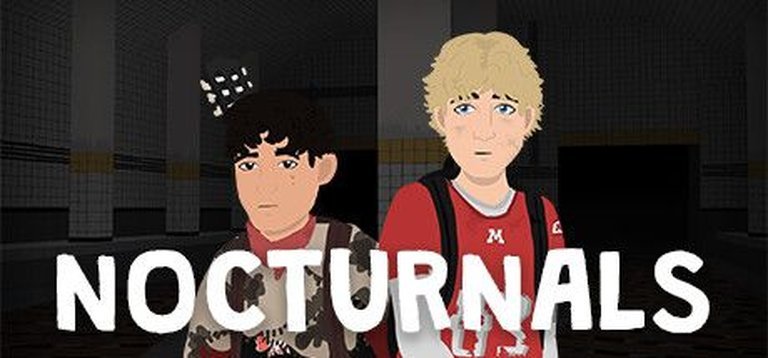
Nocturnals is a short, narrative-driven adventure game with horror elements, set in a post-apocalyptic world where creatures known as Nocturnals have slaughtered most of humanity. Players follow Ted as he explores the abandoned town of Ruddleside, forming a bond with Diego through puzzle-solving and critical choices that shape their relationship and determine one of six possible endings amidst atmospheric 3D environments.
Gameplay Videos
Where to Buy Nocturnals
PC
Nocturnals Patches & Updates
Nocturnals Guides & Walkthroughs
Nocturnals: A Love Letter in the Ashes – An Exhaustive Analysis of an Indie Narrative Landmark
Introduction: Echoes in the Static
In the vast, often impersonal landscape of video game production, where projects are measured in hundreds of millions and development cycles span half a decade, certain titles emerge not from boardroom strategy but from a singular, deeply personal impulse. Nocturnals, the debut and sole released work (to date) from the two-person UK studio Cowboy Toad Games, is precisely such a title. It arrives not as a calculated market entry but as a “love letter,” a term its creator, Max Jolly, has explicitly used to describe the game’s genesis. This foundational fact is not merely biographical trivia; it is the gravitational center around which the entire experience orbits. Nocturnals is a compact, meticulously crafted Choose-Your-Own-Adventure (CYOA) game set in a post-apocalyptic wasteland, yet its true setting is the fragile, hopeful space between two people—Ted and Diego—striving to connect in a world that has forgotten how. This review will argue that Nocturnals represents a significant, if niche, milestone in the evolution of intimate, character-driven narrative games. It demonstrates how profound emotional and thematic resonance can be achieved with minimalist mechanics, a hyper-focused scope, and a development ethos rooted in authentic representation, ultimately proving that the most haunting and hopeful apocalypses are the ones we navigate within ourselves and with one other person.
Development History & Context: From Flash Dreams to Construct Realities
The Studio and the Vision
Cowboy Toad Games is, for all practical purposes, Max Jolly and Pablo Galbraith. The credits, across all platforms, list only five developers (with Jolly credited as Game Creator and voice of Ted, Galbraith as Soundtrack composer and voice of Diego) and four “Special Thanks.” This is the quintessential indie duo: a writer/designer/developer and a composer/sound designer/voice actor, collaborating across what the game itself suggests are romantic partners. The project’s origin is explicitly personal. As documented on its Itch.io page and Fandom wiki, it began as a Flash game titled One Last Pitstop, a prototype of the core narrative concept. This origin in the accessible, democratic medium of Flash is crucial—it speaks to a long-term, DIY development philosophy. The transition to the Construct 3 engine (a popular, web-friendly tool for 2D and simple 3D games) allowed for the realization of the “stylized 3D environments” seen in the final product, but the constraints of the engine and the team’s size are visibly present in the game’s short length (1-2 hours) and relatively simple geometry.
Technological Constraints as Creative Catalysts
The technical specifications listed on Steam—requiring as little as a Dual Core 2.0 GHz processor and 8GB RAM—place Nocturnals firmly in the realm of accessible, low-barrier-to-entry experiences. This was a deliberate, likely necessary, choice. The game’s “Cartoony” and “Stylized” visual direction, often described as resembling hand-drawn Flash animation brought into 3D, is both an artistic aesthetic and a pragmatic solution. It allows for evocative, atmospheric lighting and character expressions without necessitating photorealistic asset creation. The decision to use the Construct engine, while limiting in terms of high-end graphical fidelity or complex physics, provided a stable, familiar toolchain for a tiny team to ship a multi-platform (Windows, macOS, Linux, later iOS/Android) product. The scrapped Xbox port due to “limitations and optimization issues” is a telling footnote, highlighting the vast gap between the resourcefulness of a two-person team and the demands of console certification.
The 2024 Gaming Landscape: A Niche for the Intimate
Nocturnals released in September 2024 into a crowded adventure game scene. The ghost of Telltale Games’ narrative-choice formula looms large, but the landscape was also rich with cozy games, visual novels, and intimate indies like Before Your Eyes or To the Moon. Nocturnals‘ specific positioning—a post-apocalyptic, LGBTQ+ romance/horror blend—filled a very precise gap. Its tags on Steam (“LGBTQ+”, “Post-apocalyptic”, “Horror”, “Romance”, “Short”) map a constellation that few major titles occupy. It competed less with The Last of Us and more with narrative-focused indies that prioritize emotional beats over systemic depth. Its positive reception (“Very Positive” on Steam with over 800 reviews) suggests it found its audience precisely because it was unapologetically a small, personal game in an era where platforms like Steam and itch.io enable such direct creator-to-audience connections.
Narrative & Thematic Deep Dive: The Calculus of Survival and Connection
Plot Architecture: A Study in Efficient Storytelling
The plot is deceptively simple: Ted, a young man born after the apocalyptic event, crashes his truck in the abandoned town of Ruddleside while scavenging for fuel. He encounters Diego, another survivor, and they form an uneasy alliance to escape the town and a lone, predatory Nocturnal creature. This three-act structure (Crash -> Alliance/Exploration -> Escape) is executed with taut efficiency. The “abandoned town” setting is not just a backdrop but a narrative device; every location—the furniture store (Furniture Valley), the high school, the train yard, the subway tunnels—is a diorama of past lives (see “Apocalyptic Logs,” gravestones, photos) that tells a story of collapse and failed community. The central conflict is dual: external (escape the Nocturnal) and internal (will Ted and Diego’s partnership survive their own personalities and past traumas?).
Character Duality: Ted and Diego as Complementary Fractures
Ted and Diego are narrative mirrors and complements. Ted is defined by his driving, almost naive, goal: “find a community.” He is the “Aloner” archetype, but one who actively seeks to end his solitude. His character arc is determined entirely by player choice, manifesting in two visible meters: Warmth (Kind vs. Cold) and Competence (Capable vs. Incompetent). This binary system, while simple, is narratively potent. A “warm” Ted shares resources, shows empathy, and bonds with Diego. A “cold” Ted hoards, threatens, and prioritizes pure survival. The “incompetent” Ted makes foolish, impulsive errors (shooting glass instead of using a rock, telling an armed Maggie to “fuck off”), while the “competent” Ted is pragmatic and resourceful.
Diego is the counterweight. Voiced by composer Pablo Galbraith, his performance is grounded, weary, and subtly sarcastic. He represents the survivor who has already been hardened by loss. His backstory—born in Bosvigo, suffering attachment issues—is delivered sparingly, making the player’s choices in how Ted treats him critically important. Diego’s ultimate decision to stay with or abandon Ted is the direct result of the player’s cumulative calibration of Ted’s personality. This “Karma Meter,” as TV Tropes identifies it, is less about morality and more about social compatibility in a brutal world. Diego isn’t a saint; he’s a pragmatist assessing whether Ted is a viable partner.
The Supporting Cast: Brief Encounters, Lasting Consequences
The other human survivors—Maggie and Mia of the Furniture Valley group—are masterclasses in economical character writing. Their backstory (a group of five reduced to two after a Nocturnal attack) is inferred from environmentals (graves, photos, notes). They represent the “Beware the Living” trope. Mia tries polite coercion; Maggie is unhinged violence. Their interaction with Ted is the game’s “Big First Choice”: whether to shoot Maggie during her initial attack. This single decision cascades into the game’s major branching paths, determining Maggie’s later fate, Mia’s vengeful motivation, and Diego’s ultimate survival in several endings. They are not “villains” but traumatized people whose methods have become extreme, perfectly illustrating the “Took a Level in Jerkass” and “Asshole Victim (Deconstructed)” tropes. Their brief screen time makes their impact and the gravity of the player’s choice toward them disproportionately powerful.
Themes: Love as a Survival Mechanism
The most explicit theme is the “Romance Sidequest” as an emergent or chosen outcome. The developer’s note that it’s a “love letter to my partner” frames the entire interaction. Yet, the game is smarter than a simple gay romance plot. It explores friendship as a precursor to love (the “Best Friend” ending option), trauma bonding, and the pragmatics of partnership in extremis. The dialogue choices allow Ted to be supportive, probing, dismissive, or romantic. The game asks: in a world where “Nocturnals” (literal monsters) and other survivors (figurative monsters) abound, is choosing to care for someone the most radical and dangerous act of all? The ending where Diego dies in Ted’s arms after a “warm” playthrough (“Goodbye”), offering the choice between “Friendship” and “Romance,” is devastating precisely because the bond was earned through positive choices, making the loss meaningful. Conversely, the “Golden Ending” (“Happily Ever After”) where both survive by being warm and competent validates the thesis that connection and capability are not opposed but synergistic in the struggle for a future.
The title, “Nocturnals,” applies to the monsters but also to the human condition. These survivors are nocturnal in the sense of being creatures of a dark, broken time, active only when the old world’s light is gone. Ted and Diego’s journey is about finding a reason to be “nocturnal” together until dawn—metaphorically, until they can find a community (“Bresco”) where they might live in the day again.
Gameplay Mechanics & Systems: The Telltale Skeleton, The Indie Heart
Core Loop: Exploration, Puzzle, Choice
The gameplay is a distilled narrative-adventure loop. The player controls Ted from a first-person perspective (though often described as “3rd-person (Other)” on MobyGames, likely due to occasional cutscene angles) through linear but exploration-friendly 3D environments. The loop consists of:
1. Navigate & Observe: Move through atmospheric spaces, examining environmental storytelling (notes, corpses, artifacts).
2. Interact & Solve: Simple puzzle elements—find a key, use an item, solve a light-based puzzle in the tunnels, find a way to start a van. These are generally straightforward, designed to pace the story rather than challenge intellect.
3. Choose: At critical moments—dialogue, action prompts, moments of crisis—the game presents 2-3 verb-like or attitude-based options (e.g., “[Shoot Maggie]” / “[Yell at her]” / “[Try to reason]”). These are the core “Choose Your Own Adventure” mechanic.
4. Consequence: The game tracks hidden Warmth/Competence points. Most choices add/subtract from these meters, but some are “major branching points” (shoot Maggie or not). The final outcome is calculated based on these metered scores and the key binary choices.
The Dual-Meter System: Brilliant in Its Simplicity
This system is the game’s most innovative narrative mechanic, given its scope. It’s a quantified relationship sim. Every interaction with Diego—sharing food, asking about his past, reacting to his trauma, showing resourcefulness or foolishness—is tabulated. The six endings (“Happily Ever After,” “Himbo,” “Psycho,” “Crash and Burn,” “Sole Survivor,” “Goodbye”) are direct products of these two axes.
* Warm + Competent = Golden Ending. A true partnership.
* Warm + Incompetent = “Himbo.” Diego stays out of pity, highlighting the tragicomic cost of good intentions without skill.
* Cold + Competent = “Psycho.” Diego abandons a capable but cruel Ted, underscoring that survival skill without humanity is worthless to him.
* Cold + Incompetent = “Crash and Burn.” The worst of both worlds, leading to abandonment and Ted’s emotional collapse.
* Cold + (Kill Maggie) = “Sole Survivor.” Violence begets violence, leading to Diego’s death and Ted’s isolation.
* Warm + (Kill Maggie) = “Goodbye.” A tragic variant where the bond is genuine but the violent act still has fatal consequences.
This system makes the player constantly evaluate their actions not just in the moment, but in terms of their long-term impact on the relationship. It turns every minor choice into a relationship point.
UI and Interface: Functional and Unobtrusive
The interface is minimalist. Dialogue and action choices appear as button prompts at the bottom of the screen. The “Menu structures” (as listed on MobyGames) are simple inventory and map screens. The “Quick Time Events” (QTEs) during chase/escape sequences with the Nocturnal are its only action-oriented element, serving to create tension and a sense of lethal immediacy (“Hold [SHIFT] to run back!”). These are pure stress tests; failure results in a “Cruel and Unusual Death” (acid face-melt, dismemberment), reinforcing the Nocturnal as an “Invincible Villain”—an unstoppable force of nature. The inability to fight back is a core, terrifying design choice.
Flaws: A Function of Scope
The systems are not without issues. The meters are invisible to the player, leading to potential frustration when an ending is achieved that feels at odds with the player’s self-perception. The lack of a “save” or “rewind” function in some versions (though Steam’s cloud save might allow load-hacking) means a full replay is needed to see different outcomes, which is a barrier given the game’s reliance on a ~1-hour loop. Some puzzles are overly simple or feel like filler (e.g., the guitar choice, which is a major Warmth/Competence pivot but logically odd). However, these are the inevitable trade-offs of a small team creating a tightly woven, choice-dependent narrative with multiple endings. The focus was on branching narrative trees, not puzzle complexity or UI accessibility.
World-Building, Art & Sound: The Beauty of Desolation
The Setting: Ruddleside as a Character
Ruddleside is not a vast open world but a series of connected, intimate locations: a crashed truck in a train yard, a looted furniture store, a high school with frozen prom decorations, a claustrophobic subway system. This “Ghost Town” aesthetic is post-apocalyptic by way of The Last of Us or Fallout, but filtered through a British indie sensibility (the “Where the Hell Is Springfield?” trope—American icons (football jerseys, M1 Garands) with British-voiced characters and right-hand drive cars). This subtle dislocation adds to the eerie, timeless feel. Environmental details are the primary lore-delivery system: “Apocalyptic Logs” on a phone, the graves of the Furniture Valley group, the prom banners decaying in the gym. It efficiently paints a picture of a Class 2 “Apocalypse How” (societal collapse, not extinction) where the real threat is not just the monsters but other desperate humans (“Raiders,” the Furniture Valley survivors’ turn to violence).
Art Direction: Stylized Survival
The visual style is a major selling point. It uses a “Cartoony”, low-poly 3D aesthetic with hand-drawn textures and effects that directly homage its Flash roots. The character models for Ted and Diego are simple but expressive, especially in close-up dialogue shots. The Nocturnal design is a masterclass in efficient horror: a “Grey”/ “Xenomorph Xerox” blend—skinny, long-limbed, with a massive chest wound (“Body Horror”) and black eye sockets. Its design telegraphs alien otherness, predatory speed (“Lightning Bruiser”), and vulnerability to light (“Weakened by the Light”), all without a word of exposition. The lighting is key, using deep shadows and limited color palettes (muted greens, grays, the Nocturnal’s eerie glow) to enhance the oppressive, lonely atmosphere.
Sound Design: The Score of a Love Letter
Sound is where the game’s emotional core is most audibly expressed. Pablo Galbraith’s soundtrack (sold separately as an album) is not epic orchestration but intimate, melancholic, and often minimalist piano or ambient tracks. It underscores the loneliness of the roads and the fragile hope of connection. The use of diegetic sound—the crunch of gravel, the dripping water, the Nocturnal’s terrible cry and skittering—is excellent, making its appearances visceral. The voice acting, by the two creators, is a point of debate among reviewers. Max Jolly (Ted) and Pablo Galbraith (Diego) deliver lines with a raw, slightly awkward sincerity that perfectly suits the characters’ backgrounds. It’s not AAA polish; it’s authentic, which for this story is a net positive. It feels like listening to two real people, not actors playing survivors.
Reception & Legacy: Cult Success and the Queer Post-Apocalypse
Critical and Commercial Reception: A “Very Positive” Anomaly
At launch, Nocturnals had no professional critic reviews (Metacritic shows “tbd” for Metascore and User Score pending ratings). Its reputation was built entirely on user reviews on Steam, where it has maintained a “Very Positive” rating (87% of 820+ reviews as of early 2026). The praise consistently highlights:
* Story & Characters: “Heartfelt,” “emotional,” “loved Ted and Diego.”
* Atmosphere: “Atmospheric,” “spooky but cute.”
* LGBTQ+ Representation: Deeply appreciated by queer players for a normalized, central romance that isn’t the butt of a joke or a grim tragedy (though tragedy is present). Reviews explicitly call out the value of seeing their lives reflected.
* The Personal Touch: Many reviews note the evident care and personal nature of the project, forgiving its short length because of its emotional impact.
The criticisms are equally consistent:
1. Length: The most frequent complaint. At 1-2 hours for a full playthrough, it feels more like a proof-of-concept or a short film than a full-priced game ($7.99 on Steam, later $2.99 on mobile). Some users, as seen on itch.io, explicitly mention feeling “deceived” by the short runtime for the price, though many (like the user “dor8989”) state they won’t ask for a refund because they believe in the project’s future.
2. Technical Roughness: Occasional bugs, simple graphics, and the invisible choice meters.
3. Replay Value: While 6 endings encourage replay, the 1-hour loop can feel like a slog to see minor variants.
Legacy and Influence: The Path of the Personal Indie
Nocturnals‘ legacy is not one of blockbuster influence but of proof-of-concept for a specific niche. It demonstrates that a tiny team can create a narratively complex, choice-driven game with emotional depth using accessible tools (Construct). Its success—selling well enough to fund ports to iOS/Android and greenlight a sequel, Nocturnals: Cacti Coast—is a testament to the power of direct-to-audience marketing via social media and community building.
Its influence is likely to be seen in:
* The “Queer Post-Apocalypse” Subgenre: It joins titles like The Last of Us (with its prominent queer supporting characters) in showing LGBTQ+ relationships as a normal, central part of survival stories, not a side plot.
* Micro-Narrative Games: It fuels the “short and emotional” indie trend, comparable to games like A Night at the RTTE or Lieve Oma Hat, proving that a 60-minute game can have a lasting impact.
* The “Love Letter Game”: It is a clear descendant of the “game I made for my partner” tradition (think Doki Doki Literature Club!‘s meta-narrative or Anne‘s personal history), but framed explicitly as a gift. This model is increasingly common on itch.io and Steam, where personal resonance trumps universal appeal.
The TV Tropes page for Nocturnals is itself a legacy marker. The sheer number of tropes it hits—from “Beware the Living” to “Sole Survivor” to “Redemption Earns Life”—shows it is a knowledgeable, deliberate piece of genre fiction. It uses familiar post-apocalyptic and CYOA conventions as a scaffold for its unique emotional payload.
Conclusion: A Flawed Gem in the Rubble
Nocturnals is not a perfect game. Its graphical fidelity is modest, its puzzles rudimentary, its runtime frustratingly short for its price point, and its hidden stat systems can feel unfair. To judge it by the standards of a $60 AAA title would be to miss the point entirely. It must be judged as what it is: a meticulously crafted narrative artifact from a two-person team wearing their hearts on their sleeves.
Its genius lies in its focus. Every system—the two-axis personality meters, the binary first choice, the limited locations, the small cast—serves the central thesis: that in a broken world, the quality of your connections is the ultimate measure of your survival, both literal and spiritual. The game’s greatest tension is not between humanity and monsters, but between warmth and coldness, competence and incompetence, as they apply to a single, fragile relationship.
The fact that it was born as a love letter is not a cute footnote; it is the explanation for its sincerity. The voice acting, the earnest dialogue, the willingness to let a relationship be messy, romantic, platonic, or doomed by a single bad choice—this all feels authentic because it is authentic, rooted in a real-world bond. When Diego says, “Then don’t do the same to us! Please!” to Maggie, it’s not just a plot beat; it’s an emotional payload delivered with the weight of someone who knows what loss means.
In the canon of video game history, Nocturnals will likely not be remembered for technological innovation or commercial domination. Instead, it will be remembered as a touchstone for intimate, personal, queer-narrative indie games. It is a game that asks not “Can you save the world?” but “Can you save this connection?” and makes the player feel the catastrophic weight of that question. Its sequel, Cacti Coast, promises a longer, more varied experience. If it builds upon the profound emotional foundation laid here—the understanding that the most terrifying apocalypse is loneliness, and the most potent salvation is a hand to hold in the dark—then Cowboy Toad Games may have forged something truly special. For now, Nocturnals stands as a brave, beautiful, and brief testament to the idea that even in the ruins, we can choose to build something with someone, and that choice is the most powerful narrative of all.