
- Release Year: 2024
- Platforms: Nintendo Switch, PlayStation 4, PlayStation 5, Windows, Xbox One, Xbox Series
- Publisher: Chibig, S.L.U.
- Developer: Chibig, S.L.U., Nukefist
- Genre: Action
- Perspective: 3rd-person
- Game Mode: Single-player
- Gameplay: Aviation, Flight, Open World, Platform, Puzzle elements, RPG elements, Sandbox
- Setting: Fantasy
- Average Score: 64/100
Description
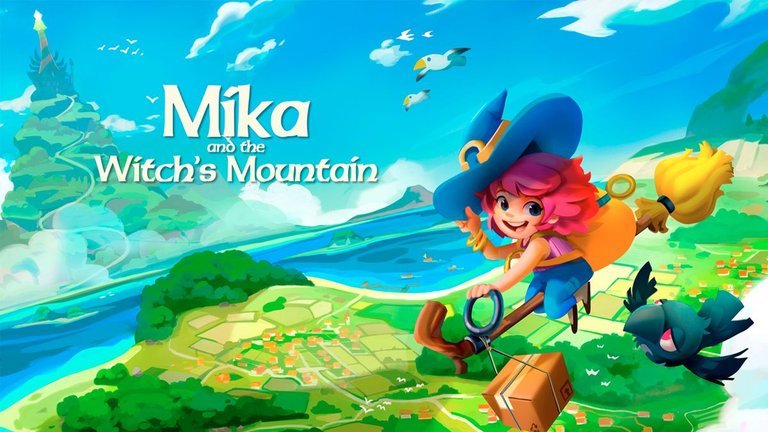
Mika and the Witch’s Mountain is a cozy action-adventure game set in a vibrant fantasy world where players control Mika, a witch exploring a mystical mountain island on her broomstick. The gameplay focuses on delivering packages, collecting items, and solving puzzles in an open-world sandbox environment, featuring charming anime-inspired visuals and relaxing exploration.
Gameplay Videos
Where to Buy Mika and the Witch’s Mountain
PC
Mika and the Witch’s Mountain Free Download
Mika and the Witch’s Mountain Guides & Walkthroughs
Mika and the Witch’s Mountain Reviews & Reception
metacritic.com (66/100): Mika and the Witch’s Mountain wears its inspiration on its sleeve, and it is so dedicated to its core gameplay mechanic that it can wear a little thin before the game is up.
opencritic.com (63/100): Mika and the Witch’s Mountain has a good enough base, but not enough magic to keep it afloat.
cozygamereviews.com : The flying mechanics are a little clumsy at first—but that’s part of the charm.
switchitongaming.com : Mika and The Witch’s Mountain is a very short game… I got used to exploring the island, discovered many hidden secrets, and simply had a fun time.
Mika and the Witch’s Mountain Cheats & Codes
Mika and the Witch’s Mountain
Enter 4-digit pin codes at the Amazing Deliveries terminal to access packages or messages.
| Code | Effect |
|---|---|
| 0202 | Love Potion package |
| 0295 | Lucky Charm package |
| 0493 | Strawberry Teapot package |
| 0607 | Shark Plush package |
| 0668 | Locomotive package |
| 0768 | Red Crystal package |
| 0826 | Strawberry Shortcake package |
| 0897 | Small Radio package |
| 1141 | Pizza Box package |
| 1172 | Fox Plush package |
| 1173 | Wasabi Pea package |
| 1181 | Oni Mask package |
| 1363 | Wooden Turtle package |
| 1440 | Fan Coil package |
| 1484 | Mustache package |
| 1540 | Dragon Book package |
| 1804 | Cap & Sunglasses package |
| 2201 | Big Peach package |
| 2290 | Fidget Cube package |
| 2411 | Phoenix Feather package |
| 2569 | Candy Jar package |
| 2570 | Kalimba package |
| 2671 | Cat Box package |
| 2842 | Pet Bag package |
| 2882 | Scimitar package |
| 2907 | Sextant package |
| 3003 | Dad’s Radio package |
| 3216 | Dreamcatcher package |
| 3319 | Wolf Statue package |
| 3360 | Monster Backpack package |
| 3412 | Rocket Ship package |
| 3439 | Wizard package |
| 3528 | Raven Feather package |
| 3624 | Hammer package |
| 3644 | Hedgehog Plush package |
| 3662 | Cat Plate package |
| 3798 | Lotus package |
| 3814 | Macaroon package |
| 3973 | Grocery Bag package |
| 4147 | Tape Measure package |
| 4154 | Green Ukelele package |
| 4349 | Green Crystal package |
| 4560 | Moon Plush package |
| 4606 | Daffodils package |
| 5340 | Cora Amethyst package |
| 5411 | Apple package |
| 5624 | Golden Retriever Plush package |
| 5850 | Sushi package |
| 6408 | Bookmark package |
| 6810 | Purple Turtle Shell package |
| 6864 | Bubble Tea package |
| 6888 | Walliser package |
| 6915 | Lightning Orb package |
| 6979 | Dragon Scale package |
| 7002 | Fan package |
| 7215 | Crystal Ball package |
| 7434 | Amethyst package |
| 7612 | Sewing Kit package |
| 7689 | Honey Jar package |
| 7722 | Luxury Bottle package |
| 7737 | Coffee Bag package |
| 7739 | Razor Saw package |
| 7757 | Pet Collar (Mio’s Quill) package |
| 7843 | Witch Lizard package |
| 7910 | Guitar package |
| 8046 | Silver Cube package |
| 8173 | NIMI Ukelele package |
| 8175 | Periwinkle Bouquet package |
| 8189 | Moon Feather package |
| 8271 | Drumsticks package |
| 8469 | Necromancer Book package |
| 8476 | Magic Scepter package |
| 8525 | Penguin Plush package |
| 8558 | Eye Talisman package |
| 8657 | Plushie package |
| 8724 | Zelda Jar package |
| 8748 | Brigadeiro package |
| 8882 | Collar Snake Plush package |
| 8893 | Agaric Mushroom package |
| 8999 | Captain Hat package |
| 9119 | Rabbit Origami package |
| 9257 | Medusa Hat package |
| 9423 | Purple Lantern package |
| 9607 | Cauldron of Dice package |
| 9759 | Gummy Bears package |
| 9780 | Silver Ship package |
| 9803 | Fish Pie package |
| 9854 | Spellbook package |
| 9910 | Mahogany Ukelele package |
| 9926 | Bonsai Tree package |
| 0080 | Displays a personal backer message |
| 0081 | Displays a personal backer message |
| 0093 | Displays a personal backer message |
| 0115 | Displays a personal backer message |
| 0139 | Displays a personal backer message |
| 0142 | Displays a personal backer message |
| 0143 | Displays a personal backer message |
| 0150 | Displays a personal backer message |
| 0163 | Displays a personal backer message |
| 0164 | Displays a personal backer message |
| 0171 | Displays a personal backer message |
| 0181 | Displays a personal backer message |
| 0229 | Displays a personal backer message |
| 0237 | Displays a personal backer message |
| 0238 | Displays a personal backer message |
| 0259 | Displays a personal backer message |
| 0264 | Displays a personal backer message |
| 0266 | Displays a personal backer message |
| 0270 | Displays a personal backer message |
| 0284 | Displays a personal backer message |
| 0297 | Displays a personal backer message |
| 0313 | Displays a personal backer message |
| 0318 | Displays a personal backer message |
| 0320 | Displays a personal backer message |
| 0330 | Displays a personal backer message |
| 0343 | Displays a personal backer message |
| 0350 | Displays a personal backer message |
| 0355 | Displays a personal backer message |
| 0356 | Displays a personal backer message |
| 0363 | Displays a personal backer message |
| 0371 | Displays a personal backer message |
| 0374 | Displays a personal backer message |
| 0389 | Displays a personal backer message |
| 0391 | Displays a personal backer message |
| 0395 | Displays a personal backer message |
Mika and the Witch’s Mountain: Review
Introduction: A Broomstick Ride into the Cozy Gaming Vanguard
In an era where the video game industry often chases cinematic scale and mechanical complexity, the rise of the “cozy game” has been both a rebellion and a balm. Within this movement, few studios have cultivated a more distinct and beloved aesthetic than Chibig, the Spanish developer behind Summer in Mara and Ankora: Lost Days. Their 2024 release, Mika and the Witch’s Mountain, serves as a potent crystallization of their philosophy: a game that wears its inspirations on its celestial sleeve, prioritizes warmth and wonder over challenge, and asks the fundamental question, “What if Kiki’s Delivery Service and The Legend of Zelda: The Wind Waker had a baby, and that baby was a video game?” This review will argue that Mika and the Witch’s Mountain is a landmark title in the cozy genre, not for its depth or length, but for its masterful synthesis of art, theme, and accessible gameplay into a digitally handcrafted artifact of comfort. It is a game that understands the therapeutic power of simple tasks in a beautiful world, even as it exposes the limitations of that very formula when stretched beyond its gentle, concise premise.
Development History & Context: From Kickstarter Stardom to Early Access Evolution
Mika and the Witch’s Mountain was born from a triumphant Kickstarter campaign in 2021, where it shattered its humble €40,000 goal, ultimately raising over €1.3 million. This financial validation was a testament to the potent combination of its charismatic pitch—a witch delivery service—and the strong, existing “Chibig Universe” fanbase cultivated through prior releases. Developed by Chibig in collaboration with Nukefist, the game’s creation was deeply informed by its founders’ stated love for Studio Ghibli’s whimsical, community-oriented storytelling and Nintendo’s cel-shaded, exploration-focused design, particularly The Wind Waker.
The technological constraints were those of a stylized, accessible indie title built in Unity. The goal was not photorealism but a vibrant, hand-painted aesthetic that could run smoothly on everything from high-end PCs to the Nintendo Switch, its primary early launch platform alongside Steam. The decision to launch into Early Access on August 21, 2024, was a pragmatic and community-focused one for Chibig. As their roadmap states, it allowed them to gather player feedback on the core delivery-and-flying loop—the game’s heart—while continuing narrative and artistic polishing. This approach, common in PC gaming but rarer on consoles like the Switch, meant the “full release” on all platforms (PlayStation, Xbox) in late 2024/early 2025 would still be an evolution of the initial Early Access build, with promised free content patches adding minigames, dungeons, and quality-of-life improvements. This context is crucial: the game was reviewed in a state of flux, a finished experience but an unfinished product.
Narrative & Thematic Deep Dive: A Coming-of-Age Woven from Errands
At its core, Mika and the Witch’s Mountain is a deceptively simple coming-of-age story. The narrative, penned by Vic Franco (Lead Game Designer and Writer), is structured around a three-day workweek. Aspiring witch Mika is unceremoniously thrown from the peak of Mont Gaun by her mentor, Olagari, in a “sink-or-swim” test. With her family heirloom broom broken, she must work as a delivery girl for the town of Orilla to earn money for a repair and, ultimately, a broom capable of returning to the mountain.
The brilliance of the narrative lies in its delivery system as a character-building engine. Each package is not a chore but a vignette. Delivering a seafaring man’s package to his son, or finding a lost item for a recluse artist, gradually unwraps the island’s communal tapestry. Themes of emotional labor, community interdependence, and the dignity of work are explored not through grand monologues, but through mundane, relatable tasks. The game posits that becoming a “true witch” is less about magical power and more about empathy, responsibility, and connecting with others—a subtle, anti-capitalist subtext appreciated by critics like GamerFocus.
However, the narrative’s concision is its greatest weakness. The compressed timeline means character relationships, particularly the central conflict with Olagari and Mika’s internal struggle between her witchly tools (chocolate, paints) and helping others, feel rushed and underdeveloped. Reviewers from Nintendo Life to Cozy Game Reviews noted that emotional beats land before the player has time to invest. The shared universe cameos (Koa and Mûn from Summer in Mara) are charming Easter eggs for fans but serve little narrative purpose. The story is a pleasant, heartwarming fable, but one that lacks the time to become truly memorable, leaving the player wanting more depth from its delightful cast.
Gameplay Mechanics & Systems: The Physics of Gentleness
The entire gameplay structure is anchored to the broomstick flight. This is not a simple “press up to fly” mechanic. Mika’s broom constantly loses altitude, forcing the player to seek out and dive through vertical wind currents to gain height and horizontal gusts for speed. This creates an intrinsic puzzle-platforming element to exploration. The island of Mont Gaun is a vertical maze, and learning its wind tunnel geography is the primary skill progression. The tactile satisfaction of going from a clumsy, ground-hugging beginner to a graceful, soaring courier mastering the currents is the game’s core reward loop, praised by The Gamer’s Lounge and Rectify Gaming.
Delivery mechanics add conditional stakes. Packages have health (hearts), vulnerability to water, and occasionally time limits (melting ice cream). Damage from crashes or environmental hazards lowers the delivery rating, which is required for story progression. The system is explicitly forgiving: failed deliveries can be instantly reset with no penalty beyond minor progress loss. This reinforces the cozy, stress-free ethos but also removes the tension that could make successes more meaningful. Critics were split: some (Hooked Gamers, Comfy Cozy Gaming) lauded the relaxing, consequence-free nature; others (VGChartz, Analog Stick Gaming) saw it as a lack of meaningful challenge or evolution, leading to repetition.
Progression is tied to broom upgrades, purchased with earnings. Each new broom offers more package slots, better speed, or mid-air boosts, organically unlocking previously inaccessible areas—a classic Metroidvania-lite structure applied to an open island. Side content includes finding “Napopo” statues (a Deiland reference) and “Simiente” jars for cosmetic rewards (outfits, broom trails), and “stranded item” side quests that flesh out the world. However, the game loop is fundamentally narrow. As Niche Gamer noted, it’s essentially a series of fetch quests. The planned roadmap (dungeons, fishing minigame, petting) aims to address this, but in its launch state, the gameplay lacks systemic depth beyond the core delivery mechanic.
World-Building, Art & Sound: A Ghibli-esque Masterclass in Coziness
This is where Mika and the Witch’s Mountain achieves unequivocal greatness. The visual direction is a love letter to The Wind Waker and Ghibli, with crisp cel-shading, bold outlines, and a saturated, warm color palette. The island of Mont Gaun is divided into distinct, picturesque biomes—sunny beaches, lush forests, rocky cliffs, snowy peaks—each feeling alive with swaying grass, bustling NPC animations, and playful wildlife. The art style makes exploration constantly rewarding; every flight is a postcard. Character designs are expressive and full of personality, with Mika’s animations—her determined kick-off, her clumsy recoveries—being particularly charming.
The sound design and music perfectly complement this world. Composer Adrián Berenguer Pastor delivers a dynamic soundtrack that shifts from playful, piano-led village themes to more atmospheric, soaring melodies during flight. The sounds of wind, waves, and bustling towns create an immersive, soothing soundscape. The use of gibberish voice lines (à la Pokémon) gives characters presence without the need for full localization, a smart resource decision that maintains the game’s universal, fairy-tale feel. Technically, the game performs well on PC and Steam Deck, though the Nintendo Switch version, as Touch Arcade reported, suffers from occasional frame rate drops—a notable flaw in an otherwise polished audiovisual package.
Reception & Legacy: A Charming-but-Flawsome Indie Darling
Upon release (and in Early Access), Mika and the Witch’s Mountain received a mixed-to-positive critical reception, reflected in its MobyGames score of 72% and Metacritic scores in the mid-60s to low-70s depending on platform. The consensus was remarkably consistent: praise for its art, charm, and cozy flight mechanics was nearly universal. Criticisms centered on its extreme brevity (most completionist playthroughs reported 4-6 hours), repetitive gameplay loop, underdeveloped characters/story, and in some cases, control finickiness or Switch performance issues.
Its commercial performance is less public, but the successful Kickstarter and multi-platform release (including physical editions for backers) indicate a solid, if niche, commercial base. Its legacy is twofold:
- As a Peak Cozy Game: It solidifies the “Chibig style” as a recognizable brand. It demonstrates that a game can be profoundly relaxing and aesthetically rich without traditional difficulty or lengthy campaigns. It joins A Short Hike, Unpacking, and Dorfromantik as a benchmark for the genre’s priorities.
- As an Early Access Blueprint: Chibig’s transparent roadmap and community engagement provide a case study in how to manage expectations for an Early Access title on console. The promised free updates (dungeons, more content) are essential to its long-term reputation. If delivered, they could transform it from a “short but sweet” diversion into a more substantial package.
- Industry Influence: Its direct line from Kiki’s Delivery Service may inspire more narrative-driven delivery games, moving beyond the utilitarian tension of Death Stranding toward pure, joyful service. Its success on modest hardware also reinforces the viability of stylized, non-photorealistic indie games on all platforms.
Conclusion: A Imperfect Gem in the Cozy Crown
Mika and the Witch’s Mountain is not a perfect game. It is too short, its narrative too compressed, its mechanics too narrow to be called a masterpiece. Yet, to dismiss it on these grounds is to miss its point entirely. It is a deliberately scoped experience, a digital relaxation tool wrapped in a Ghibli-esque fable. Its genius is in its unwavering focus on creating a specific, comforting feeling: the weightless joy of flight over a beautiful, friendly world, the quiet satisfaction of a job well done for happy neighbors, the visual and auditory warmth of a handcrafted oasis.
For its target audience—the player seeking a stress-free, aesthetically profound escape—it is nearly unmatched. The flying sensation, while initially clumsy, becomes a sublime form of meditation. The world, though small, feels lovingly detailed and alive. The story, while simplistic, has a genuine heart.
In the grand canon of video game history, Mika and the Witch’s Mountain will likely be remembered not as a revolutionary title, but as a definitive and influential exemplar of a subgenre. It proves that a game built on fetch quests can possess soul, that brevity can be a virtue, and that “cozy” is a legitimate and powerful design pillar. With its planned content updates, its legacy may evolve from a charming boutique experience to a more robust title. As it stands today, it is a flawed gem—a little shallow, a little short—but one that shines with an unmistakable, magical light. It is a game that doesn’t demand to be played, but gently invites you to take a broomstick ride, and for many, that invitation will be more than enough.
Final Verdict: 7.5/10 – A beautifully crafted, heartfelt cozy adventure whose superb art and flight mechanics are unfortunately shackled to a repetitive loop and an all-too-brief narrative. A must-play for genre enthusiasts, but one best approached with the expectation of a sweet snack rather than a full meal.