
- Release Year: 2018
- Platforms: Linux, Macintosh, Windows
- Publisher: N-Tri Studio
- Developer: N-Tri Studio
- Genre: Adventure
- Perspective: 1st-person
- Game Mode: Single-player
- Gameplay: Hidden object, Puzzle elements
- Setting: Contemporary
Description
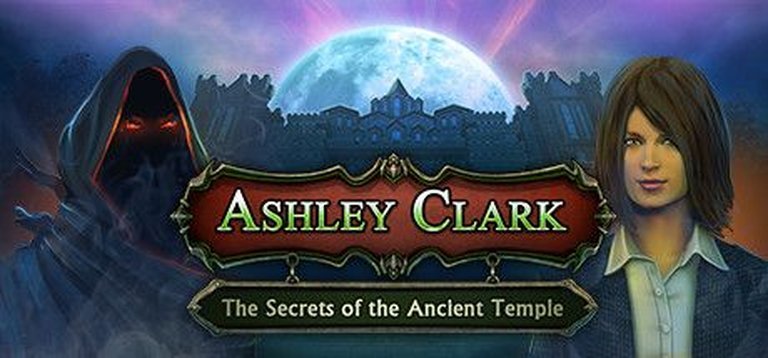
In this contemporary hidden object adventure, detective Ashley Clark probes the suspicious death of a zoo employee in a provincial town, initially dismissed as an animal attack but soon revealing mysterious occurrences tied to the secrets of an ancient temple.
Gameplay Videos
Where to Buy Ashley Clark: The Secrets of the Ancient Temple
Ashley Clark: The Secrets of the Ancient Temple Guides & Walkthroughs
Ashley Clark: The Secrets of the Ancient Temple Reviews & Reception
gamefools.com : Ashley Clark: The Secrets of the Ancient Temple was a great game that captivated me with its intriguing nature, keeping me interested throughout. I’m keen on playing more games similar to this one in the future.
Ashley Clark: The Secrets of the Ancient Temple: A Chronicle of Niche Excellence and Genre Staunchness
Introduction: A Detective in a Hidden Object World
In the sprawling ecosystem of video games, certain titles occupy a unique and often under-examined stratum: the dedicated hidden object puzzle adventure (HOPA). These games, frequently dismissed as casual or filler content, represent a persistent and commercially viable design philosophy centered on meticulous visual search, logical puzzle-solving, and narrative scaffolding. Within this contested space, Ashley Clark: The Secrets of the Ancient Temple (2018) emerges not as a revolutionary landmark, but as a fiercely competent and narratively grounded exemplar of its form. Developed by the Russian indie studio N-Tri Studio, this title leverages a familiar premise—a detective investigating unusual deaths at a zoo—to deliver a tightly structured, multi-layered experience that proves the enduring appeal of well-executed genre conventions. This review will argue that Secrets of the Ancient Temple is a significant, if understated, entry in the HOPA canon, notable for its coherent narrative integration, robust puzzle variety, and its reflection of a specific, globally distributed development culture, even as it remains hamstrung by the artistic and mechanical limitations inherent to its budget and genre.
Development History & Context: The Persistence of the Point-and-Click
The Studio and Its Vision
N-Tri Studio, the developer and publisher of Secrets of the Ancient Temple, operates from a specific niche within the global games industry: the production of accessible, story-driven casual adventures for the digital distribution market. Credited on this title are the Yuzvovich brothers (Aleksandr, Sergei, Yurij), alongside a small team of sound designers (Petr Yakyamsev, Artur Safarov, Nikolai Mechikov) and artists from Trilogia Studio. The studio’s portfolio, including titles like Crossroad Mysteries: The Broken Deal and King’s Bounty: Legions (the latter a more notable strategy RPG), reveals a pattern of working within established genres with a focus on content volume and reliable mechanics. Their vision for Secrets of the Ancient Temple is clear from the official description: to craft an “intriguing plot with twists and turns” wrapped in a package of “exciting mini-games” and “wide range of difficulty levels.” This is not a studio aiming for AAA prestige but for consistent, reliable delivery to a core audience of casual and mid-core players, primarily on PC via Steam and other storefronts like GOG.
Technological Constraints and the Unity Engine
The game’s technical foundation is the Unity engine, a choice that perfectly encapsulates the studio’s operational context. In 2018 (with a Steam release dating to 2015, suggesting a staggered platform rollout), Unity was the democratizing tool of indie development, offering cross-platform capability (Windows, Mac, Linux) at a low barrier to entry. This explains the game’s modest system requirements (a 1.7 GHz Dual Core processor, 2 GB RAM) and its 1.2 GB storage footprint. The constraints are evident: the 3D environments are likely simple, baked-light models; animations are basic; and the UI is a functional, non-negotiable element of the point-and-select interface. There is no pretension of graphical fidelity here—every development dollar and hour was funneled into asset creation (the hidden objects, the puzzle pieces) and scriptwriting, not shader complexity or physics simulation. This technical modesty is not a flaw but a calculated design decision, aligning resources with the genre’s core player expectations: clarity of scene composition and item legibility are paramount.
The 2010s Casual Adventure Landscape
Secrets of the Ancient Temple arrived at a curious juncture for its genre. The “Big Fish Games” model of downloadable casual adventures was maturing, with a glut of HOPA titles flooding the market. This saturation bred a certain homogeneity. The game’s direct competitors, as listed on MobyGames’ “Related Games” section—titles like Chronicles of Mystery: Curse of the Ancient Temple (2009) or Lost Secrets: Ancient Mysteries (2010)—highlight a crowded field of similarly themed, archaeologically-tinged mysteries. N-Tri Studio’s title distinguishes itself primarily through its specific narrative hook (the zoo setting) and its Russian/European production background, which offers a slightly different aesthetic and pacing sensibility compared to its North American counterparts. Its release on Linux and Mac via Steam also speaks to the inclusive, platform-agnostic distribution strategy common for this tier of indie title, seeking every possible sale in a crowded marketplace.
Narrative & Thematic Deep Dive: Detective Work in a Conspiracy of Silence
Plot Deconstruction: From Zoo Accident to Ancient Conspiracy
The game’s narrative, as distilled from store pages and descriptions, is a masterclass in efficient genre storytelling. It begins with a classic “Case of the Week” premise: Detective Ashley Clark is called to a provincial town where a zoo employee was killed by an animal. The official verdict is an accident, but the seasoned detective’s intuition screams foul play. The inciting incident is immediately followed by a second, parallel death—a security guard—solidifying the pattern and escalating the stakes. The title itself, The Secrets of the Ancient Temple, telegraphs the central MacGuffin: the zoo’s odd history and its proximity to or incorporation of an ancient temple structure. The plot thus follows a predictable but satisfying arc: investigation leads to hidden object scenes (searching for clues in forensics reports, zoo offices, animal enclosures), which in turn unlock puzzle sequences (decoding inscriptions, restoring mechanisms) that reveal the temple’s entrance and its deeper, more sinister history. The “twists and turns” promised in the ad copy likely involve betrayals within the town, the true nature of the “mysterious force” behind the deaths, and perhaps a supernatural or pseudo-scientific explanation tied to the temple’s artifacts.
Character and Dialogue: Functional Archetypes
Ashley Clark herself is an archetype: the competent, slightly world-weary professional, a protagonist who allows the player to project themselves into the role of the investigator. She is defined by her profession and her dogged pursuit of truth. The supporting cast—zoo staff, town officials, perhaps an antagonist or two—exist primarily to deliver exposition, provide red herrings, or serve as the human obstacle in the detective’s path. Dialogue, based on standard HOPA practice, is likely functional and branching only in minor ways (e.g., choosing to intimidate or cajole a witness might yield a different hidden object list). The narrative’s strength lies not in deep character psychology but in its structure: it provides a clear, progressive series of logical goals that perfectly justify each gameplay scenario. A hidden object scene in the zoo’s veterinary clinic makes sense because you’re looking for medical evidence. A puzzle involving temple mechanisms makes sense because you’re trying to open a sealed chamber. This diegetic integration is where the narrative succeeds.
Themes: Order vs. Chaos, The Past That Will Not Die
Beneath the procedural surface, the game touches on classic adventure themes. The zoo, a place of controlled, contained nature, becomes a site of uncontrolled chaos and murder. The ancient temple represents a past shrouded in mystery and danger, a force of history that disrupts the present’s superficial order. Thematically, the game explores the idea that civilizations (the zoo) built on apparent safety can be undermined by ancient, inexplicable forces. The detective’s role is to impose rational order on this chaos, using observation (hidden objects) and logic (puzzles). It’s a comforting, intellectually conservative narrative where curiosity and deduction ultimately triumph over hidden menace.
Gameplay Mechanics & Systems: The Engine of Engagement
Core Gameplay Loop: A Tripartite Structure
The game’s architecture is clearly delineated by its MobyGames specs and store features: 23 quest levels, 35 mini-games, and 14 hidden-object (HOS) levels. The loop is as follows:
1. Quest Level (Hub): The player navigates a static, first-person perspective scene (e.g., the zoo entrance, the temple antechamber). Here, they receive objectives from Ashley’s internal monologue or brief dialogue, collect inventory items from the environment, and access sub-locations.
2. Hidden Object Scene (HOS): A cluttered, illustrative scene based on the current locale. The player must find a list of specific items (often thematically related: medical supplies, animal-related objects, ancient relics). This is the primary method of “clue gathering” and progression. Finding all items usually unlocks a key item, new area, or triggers a cutscene.
3. Puzzle/Mini-Game Level: These are discrete, often abstract puzzle interfaces that use the items or information gathered. The Steam community guide mentioning a “clock/gear puzzle to raise the gate” is a perfect example. These 35 levels provide variety and cognitive challenge, ranging from slider puzzles and pattern recognition to more complex mechanical or logic-based challenges. They serve as “gates” preventing blind forward momentum.
Progression and Difficulty
Progression is linear and level-based. Completing one HOS or mini-game typically unlocks the next scene in the chain. The “wide range of difficulty levels” advertised suggests a settings menu where players can adjust the hint availability, time limits (if any), or the obscurity of hidden objects. This is a critical feature for the genre, allowing the game to cater to both relaxed players and those seeking a serious visual challenge.
User Interface and Innovation
The point-and-select interface is the genre standard and is executed competently. The cursor changes contextually (magnifying glass for search, hand for interaction). Inventory management is basic. The UI’s innovation, if any, lies in its seamless integration into the narrative frames. However, the game is fundamentally conservative. It does not innovate on the HOPA formula; it perfects its execution within a known template. The 44 Steam achievements (noted in the store data) serve as extrinsic goals, encouraging 100% completion and replay of mini-games.
Flaws: The Genre’s Burden
Potential flaws are inherent to the design. Repetition is the greatest threat—the core loop of “find objects, solve puzzle” can become grinding if the narrative momentum falters or the hidden objects are poorly placed. The reliance on “pixel hunts” for obscure items can frustrate. The first-person perspective, while immersive for investigation, limits the visual dynamism of the scenes compared to a panoramic view. The game’s quality entirely rests on the cleverness of its puzzle design and the artistic density of its hidden object scenes.
World-Building, Art & Sound: Evocative Constraints
Setting and Atmosphere: The Uncanny Zoo
The game’s primary setting—a closed, eerie zoo—is a genius stroke for a HOPA. It provides a built-in rationale for a diverse array of visually rich, cluttered scenes (animal cages, food storage, veterinary surgery, gift shops, maintenance tunnels) that are academically “reasonable” places to find hidden objects. The “ancient temple” sub-setting introduces a shift in visual palette, likely featuring more monolithic, stone textures and hieroglyphic motifs, providing a stark contrast to the contemporary, grimy zoo environment. This dual-setting structure aids in visual variety, combating the fatigue that can set in during longer HOPA sessions. The atmosphere is one of creeping unease, amplified by the “something very strange” occurrences and the abandonment of the zoo itself.
Visual Direction: Painting with Objects
As an indie Unity title, the visual direction is pragmatic. The art style, credited to the Yuzvoviches and Trilogia Studio, likely employs a “painterly” or illustrated realism common to the genre—scenes are hand-drawn or digitally painted with high attention to detail so that countless small objects can be hidden within believable clutter. The screenshots on Steam and the community hub (e.g., “Hairy Mary” showing a gorilla cage) reveal a commitment to this density. The success of the hidden object design depends entirely on the artist’s ability to create a cohesive image where dozens of tiny, often incongruous items (a key, a feather, a gemstone) can plausibly be camouflaged without breaking the scene’s realism. The “great graphics” claimed on the N-Tri website should be understood in this context: not polygon count or ray-tracing, but artistic composition and clutter density.
Sound Design: Unseen Guidance
The sound design by Petr Yakyamsev and Artur Safarov plays a supporting but vital role. In a genre where the visual search is paramount, audio cues are used sparingly but effectively: a chime for finding an item, a eerie ambient track for the zoo at night, unsettling sounds emanating from animal enclosures, and perhaps a rising tension score during puzzle sequences. The “full audio” support in 10 languages suggests professional, if not A-list, voice acting for Ashley’s deductions and key character lines, adding a layer of polish and aiding narrative delivery for non-English players. The soundscape works to maintain a low-grade thriller mood without overwhelming the player’s concentration.
Reception & Legacy: The Quiet Triumph of the Niche
Critical and Commercial Reception: A Mixed Bag in a Vacuum
Official critic reviews are virtually non-existent for the title on MobyGames (“Be the first to add a critic review!”), highlighting its status outside the traditional press circuit. Its reception is almost solely through user reviews on Steam, which are “Mixed” (60% positive from 60 reviews as of latest data). The Steambase Player Score of 63/100 confirms this lukewarm average. The positivity likely stems from players who appreciate the solid puzzle variety, the engaging enough detective plot, and the game’s value proposition as a contained, complete experience. The negativity probably originates from players who find the HOPA formula inherently repetitive, who critique the graphics as dated (a common, somewhat unfair criticism for the genre), or who encountered bugs or obtuse puzzles (as suggested by community guides seeking help). The commercial performance is opaque but the game’s presence on multiple storefronts (Steam, GOG Dreamlist, formerly GameFools) and its inclusion in bundles (the “Ashley Clark Collection”) indicates it recouped its