
- Release Year: 2003
- Platforms: Windows
- Publisher: Sierra Entertainment, Inc.
- Developer: Buzz Monkey Software, LLC
- Genre: Strategy, Tactics
- Perspective: Top-down
- Game Mode: Hotseat, Single-player
- Gameplay: Dice games, Tile matching, Turn-based, Word Games
Description
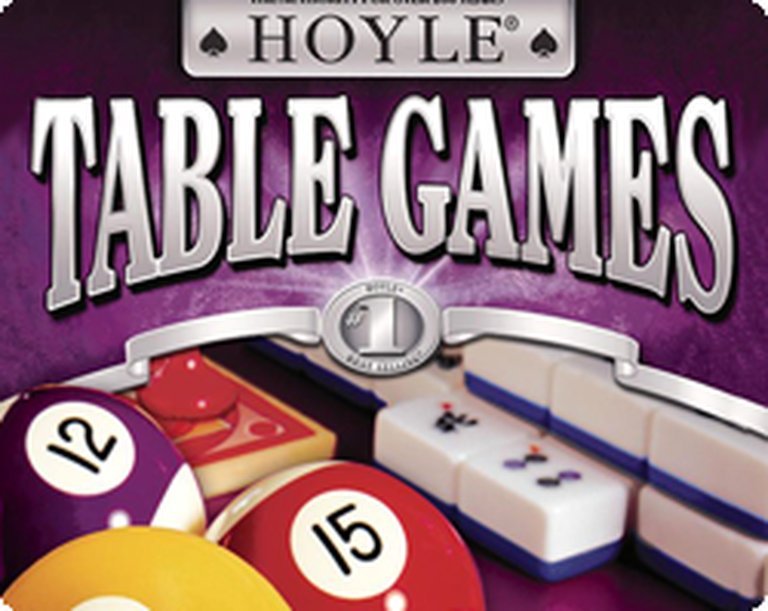
Hoyle Table Games 2004 is a digital compilation featuring 18 classic table games, including board games like chess, backgammon, and dominoes, as well as tile-matching and word-based challenges. Players can engage in single-player modes against AI opponents or hot seat multiplayer, with a rewards system where winning earns Hoyle Bucks to unlock additional content such as music tracks and environments.
Hoyle Table Games 2004 Cracks & Fixes
Hoyle Table Games 2004 Patches & Updates
Hoyle Table Games 2004 Reviews & Reception
myabandonware.com : I am crying listening to the soundtrack, so many good memories.
retro-replay.com : Hoyle Table Games 2004 delivers an impressive buffet of 18 distinct table and board games.
Hoyle Table Games 2004: The Digital Campfire – A Comprehensive Retrospective
Introduction: The Unassuming Standard-Bearer
In the crowded landscape of early-2000s PC gaming, dominated by 3D accelerators, online multiplayer shooters, and burgeoning MMORPGs, Hoyle Table Games 2004 arrived as a quiet, unassuming, and profoundly important artifact. It was not a graphical powerhouse, nor did it promise epic narratives. Instead, it offered something far more fundamental and enduring: a meticulously curated, digitally-perfect interpretation of the family game night. Released in September 2003 by Sierra Entertainment and developed by Buzz Monkey Software, this entry in the venerable Hoyle series represents the zenith of a decades-long effort to codify, preserve, and democratize the rules of classic tabletop games for the personal computer. My thesis is this: Hoyle Table Games 2004 is not merely a compilation but a cultural artifact—a deliberate, high-quality digital museum piece that prioritized rule fidelity, accessibility, and multiplayer social dynamics over innovation, thereby cementing the Hoyle brand as the definitive, generational standard for digital board, card, and puzzle games. Its legacy is not in mechanics reinvented, but in a baseline of quality and completeness that made it the irreplaceable household utility it became.
Development History & Context: The Buzz Monkey Engine and the Sierra Strategy
The game was crafted by Buzz Monkey Software, LLC, a studio with a deep, decade-long history with the Hoyle franchise. By 2003, Buzz Monkey had become Sierra’s internal “quarry” for these annual compilations, having contributed to numerous entries across the Card Games, Puzzle Games, and Board Games spin-offs. This specialization bred a unique expertise: not in creating novel gameplay, but in executing a vast array of other people’s mechanics with absolute precision. The “vision” was one of authoritative curation, a digital extension of Edmond Hoyle’s 18th-century ambition to be the final arbiter of game rules.
Technologically, the game was a product of its constraints and targets. Built for the mainstream Windows PC of the early 2000s (Pentium 233 MHz, 32 MB RAM recommended), it demanded minimal 3D acceleration. Its graphics were deliberately functional—clean, high-contrast, and legible—prioritizing clarity of game state over cinematic spectacle. The “pseudo-3D” views in Chess and Checkers were a modest nod to contemporary aesthetics but remained firmly in the service of gameplay readability. The CD-ROM format was its native medium, a physical artifact for an era of slow internet, with the game itself being a self-contained package. Notably, the UK disc’s inclusion of Placer Racer and Mahjong Tiles transferable to Palm PDAs/Windows CE devices was a fascinating, ahead-of-its-time gesture toward portable gaming, acknowledging the burgeoning personal digital assistant market.
The gaming landscape of 2003 was at a crossroads. While online gaming exploded with Battlefield 1942 and Call of Duty, and narrative adventures matured, the “casual” and “family” market was still being defined on PC. Sierra’s Hoyle line occupied a dominant, almost monopolistic, position here. Against niche competitors like Microsoft’s Entertainment Pack or single-game specialty software (e.g., Chessmaster), Hoyle Table Games 2004’s strength was its sheer, comprehensive aggregation. It was the Swiss Army knife of tabletop gaming, a one-stop-shop that eliminated the need to purchase separate programs for pool, chess, and word games. The development context is thus one of consolidation and standardization, not disruption.
Narrative & Thematic Deep Dive: The Story of the Rules
Hoyle Table Games 2004 possesses no traditional plot, characters, or dialogue. Its “narrative” is abstract, systemic, and deeply thematically resonant with its purpose. The core theme is codification and mastery. The game presents itself not as a creator of stories but as an enabler of them. Every match of DoubleCross or session of Rummy Squares is a potential story of cunning, luck, betrayal, or triumph that the players themselves author. The game’s role is that of the impartial referee and provider of the sandbox.
Thematically, it champions accessibility and intergenerational play. The PEGI 3 rating is not an accident; the interface is designed for a child’s understanding as much as an adult’s. The help screens for each variant (e.g., the seven different pool games in Maximum Pool) act as in-game rulebooks, democratizing knowledge that was once the provenance of physical rulebooks or experienced friends. The “Hot Seat” multiplayer mode is the literal and figurative centerpiece of this theme. It transforms the solitary PC into a campfire around which family and friends gather. The narrative here is social: the ribbing after a lucky Battling Ships sink, the tense silence during a timed Word Yacht roll, the collective groan when a crucial domino chain is blocked in Pachisi.
The “Hoyle Bucks” economy provides a light, gamified progression system that substitutes for a narrative campaign. Earning currency to unlock new table felt colors, music tracks, or bonus environments creates a meta-game of collection and discovery. It’s a Skinner box designed not for grinding but for encouraging exploration of the 18 different rule sets. The unlockable portable games for the Palm/CE further extend the narrative of “your games, your way, anywhere,” a bold vision of personal gaming space in 2003.
The underlying, almost philosophical, theme is the preservation of analog tradition in a digital age. Every game—from the ancient strategy of Backgammon to the 20th-century invention of Mastermind—is treated with equal reverence. There is no hierarchy; Chess and Gravity Tiles sit side-by-side. This egalitarian approach tells a story: these are all valuable, worthy pursuits for the mind, and the digital medium is the perfect vessel to ensure their rules are played consistently, forever, without the wear and tear of cardboard or the disputes over house rules.
Gameplay Mechanics & Systems: Mastery Through Variety
The genius of Hoyle Table Games 2004 lies in its modular yet unified design. Each game is a self-contained system, but they all share core DNA: a focus on perfect rule implementation, a standardized control scheme (primarily mouse-driven with drag-and-drop or click interactions), and a consistent presentation philosophy.
Core Gameplay Loops: The loop for each game is simple: learn the rules (via help screens or personal knowledge), execute moves within the game’s logic, and achieve a win condition (clear tiles, capture the king, empty your hand). The diversity of loops is staggering:
* Tile Matching (Mahjong Tiles, Gravity Tiles): Pattern recognition and spatial planning under time pressure (optional). Gravity Tiles adds a dynamic “falling” mechanic, creating a more active, almost Tetris-like reaction component.
* Word Construction (DoubleCross, Word Yacht, Wordox): Lexical knowledge combined with strategic tile placement. DoubleCross is the standout innovation, introducing “unsafe” partial words and punitive “bomb tiles,” creating a high-stakes, bluff-and-counterbluff dynamic missing from Scrabble.
* Classic Board Games (Backgammon, Reversi, Dominoes, Chinese Checkers, Checkers, Pachisi): Pure strategy and positional play. The AI opponents provide a consistent, if not superhuman, challenge across three difficulty levels. The pseudo-3D in Checkers and Chess is a nice aesthetic touch that doesn’t interfere with the clear 2D board geometry.
* Luck/Strategy Hybrids (Yacht/Word Yacht, Rummy Squares, Bump ’em): These blend random element rolls (dice/letter dice/tickets) with hand management and set/run creation.
* Guessing Games (Battling Ships, Master Match): Pure logic and deduction, with Battling Ships‘ initial six-shot salvo adding a tactical pre-game layer.
* Cue Sports (Maximum Pool): The most mechanically complex, requiring precise mouse control for angle and power. The inclusion of seven variants (from basic Pocket Billiards to the positional mastery of Snooker) is unparalleled in a single package.
Innovative & Flawed Systems:
* Innovation: The DoubleCross “unsafe word”/bomb tile mechanic is a genuinely clever twist on cross-word games, creating risk assessment not found elsewhere. The unified “Hoyle Bucks” economy across all disparate games is a masterstroke of meta-game design, encouraging cross-title play and providing a tangible sense of progression.
* Flaws: The most notorious quirk is Maximum Pool‘s requirement for two registered profiles even for single-player vs. AI, a bizarre and user-hostile relic of Sierra’s registration/licensing systems that breaks the solo flow. The online gaming feature, while forward-looking, was already defunct by 2021, a testament to the fragility of early 2000s server-dependent features in compilations. The AI, while competent, is predictable; dedicated players of any single game would quickly outgrow it, seeking specialized software for deeper challenge.
User Interface & Controls: The UI is a paradigm of functional clarity. Game boards are centered, controls are intuitive, and help is always a click away. The “Hot Seat” interface cleanly rotates the board or perspective for the next player. The main menu is a simple, scrollable list of the 18 games. There are no frills, but also no ambiguities. It is the antithesis of “cinematic UI”; it is a utilitarian tool that gets out of the way.
World-Building, Art & Sound: The Aesthetic of Clarity
The “world” of Hoyle Table Games 2004 is not a fantasy realm or a historical setting; it is the abstract, idealized Platonic form of each tabletop game. The art direction, led by Rabih AbouJaoudé, commits fully to this. Environments are simple, often single-color felt backgrounds for card/tile games or lightly textured tables for board games. The priority is maximum contrast between pieces (black vs. red checkers, brightly colored Mahjong tiles) to ensure instant readability.
- Visual Direction: Pseudo-3D effects in Chess and Checkers provide a slight sense of depth, making pieces feel tangible. The Maximum Pool tables have convincing felt textures and shiny, reflective balls. The Mahjong Tiles and dominoes have pleasing, tactile designs. The unlockable “environments” (different table felt colors, backgrounds) are the only significant visual customization, and they serve a functional purpose: reducing eye strain during long sessions by changing the color palette.
- Sound Design: The soundtrack is a collection of light, inoffensive, royalty-free-style tunes—often piano or light jazz—that loop seamlessly. Their purpose is purely atmospheric: to fill silence without being distracting. Sound effects are crisp and physical: the clack of dominoes, the thud of a pool ball, the satisfying click of a Mastermind peg. They provide essential audio feedback for moves, reinforcing the tactile feeling of manipulating physical objects. The overall sound design builds the illusion of playing on a real, quiet table in a comfortable room.
These elements combine to create an atmosphere of calm, focused, and social potential. It is the auditory and visual equivalent of a well-lit, quiet den with a good table. This aesthetic is the perfect container for the social experiences the game facilitates.
Reception & Legacy: The Silent Giant
Critical Reception at Launch: The game was reviewed modestly but positively. GameZone awarded 85%, praising its value and the Hoyle brand’s reputation for quality, though noting the incremental nature of yearly updates (“not enough new content to warrant spending $30 if you already have last year’s copy”). 7Wolf Magazine gave it 78%, specifically highlighting its low system requirements (“will run even on machines from the last century”) and the sheer variety of “exotic” games alongside classics. The consensus was clear: this was a reliable, high-quality, and valuable compilation for families and casual gamers, but not a revolutionary product.
Commercial & Cultural Impact: Its commercial success was likely steady and significant, riding on the back of Sierra’s distribution and the Hoyle name’s household recognition. It was the go-to gift for “the person who has everything but a good [insert game here] program.” Its true impact was in standardizing digital versions of these games for a generation. For millions, this was their first encounter with a particular game’s rules in digital form—be it the specifics of Rummy Squares or the scoring of Yacht. It became the de facto reference.
Evolution of Reputation & Retrospective Legacy: In the abandonware and retro gaming communities, the game’s reputation has elevated significantly. On MyAbandonware, it holds a stellar 4.4/5 from over 20 votes. User comments are overwhelmingly nostalgic, citing it as a cornerstone of childhood (“remind me of my childhood… i think bcz of this game i’m smart now”), family bonding (“Gin rummy I played with my parents”), and a respected source of rule knowledge. Its status as abandonware has turned it into a cherished time capsule.
Its influence is subtle but pervasive. It demonstrated the enduring market for high-fidelity compilations of classic games, a niche later filled by dedicated services like Board Game Arena and digital adaptations by companies like Asmodee. However, it also represents the end of an era. Its offline, hot-seat, CD-ROM-based model was rendered obsolete by the rise of online matchmaking, digital storefronts, and specialized AI opponents (like modern chess engines). Its legacy is as the last great standalone, all-in-one physical compilation of its kind. It proved that a single disc could be a complete, permanent library of classic play, a concept that feels increasingly anachronistic in the age of streaming and subscriptions.
Conclusion: The Definitive Verdict
Hoyle Table Games 2004 is not a game that seeks to awe with technical marvels or narrative depth. It is a tool, a utility, and a social conduit. Its place in video game history is not as a pioneer of new genres or mechanics, but as the culmination and gold standard of a specific, vital genre: the comprehensive digital tabletop anthology.
Its strengths—flawless rule implementation, unparalleled variety, intuitive interface, and a design philosophy rooted in social accessibility—make it a masterpiece of its kind. Its weaknesses—dated online features, a bizarre registration quirk in Maximum Pool, and AI that cannot match modern dedicated programs—are artifacts of its time and purpose.
For the historian, it is a perfect snapshot of early-2000s casual PC gaming and Sierra’s final flowering before the Vivendi merger reshaped the industry. For the retro enthusiast, it is a cherished, functional time machine to a simpler era of gaming. For the modern player seeking a no-fuss, all-in-one board game solution for a local multiplayer night, it remains surprisingly effective, its core design impervious to the passage of time.
Final Verdict: Hoyle Table Games 2004 is a 5-star utility and a 4-star game. It achieves exactly what it sets out to do with near-flawless execution for its scope. It is an essential artifact for understanding the preservation of analog play in the digital age and stands as the most complete and satisfying realization of the “Hoyle” ideal ever committed to disc. Its quiet, unassuming excellence is its most defining feature.