
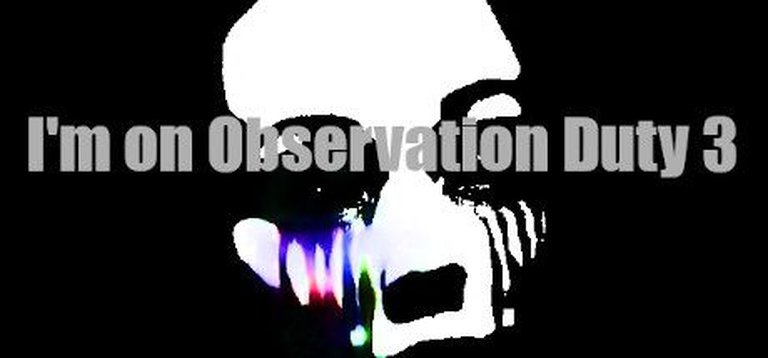
Description
I’m on Observation Duty 3 is a first-person horror puzzle game where players take on the role of an observer monitoring eerie settings like a mysterious country house and a headquarters for paranormal anomalies and intruders. The gameplay centers on tense surveillance and survival mechanics, challenging players to detect threats and endure through the night, such as surviving the witching hour from 3 AM to 4 AM while managing multiple active anomalies.
Gameplay Videos
Where to Buy I’m on Observation Duty 3
PC
I’m on Observation Duty 3 Guides & Walkthroughs
I’m on Observation Duty 3: A Pivotal, Flawed Pivot in a Cult Horror Series
Introduction: The Observer Becomes the Observed
The I’m on Observation Duty series carved a unique niche in the indie horror landscape by distilling surveillance-based dread into a minimalist, puzzle-like format. Its first two entries established a compelling, if niche, formula: a static security feed, a list of anomalies to spot, and a creeping sense of wrongness in mundane environments. With I’m on Observation Duty 3 (released November 13, 2020), developer Notovia executed a daring and controversial pivot—placing the player directly inside the haunted locations they once only watched. This review argues that IOBD3 is a fascinating but fundamentally uneven experiment. Its shift to a first-person perspective amplifies existential terror and immersive environmental storytelling but simultaneously undermines the taut, cerebral gameplay loop that defined its predecessors, resulting in a game that is more memorable for its ambitious missteps than its successes. It stands as a crucial, if divisive, turning point that tested the very foundations of its own series.
Development History & Context: A Studio in Constant Iteration
Notovia, a Finnish independent studio operating under the creative direction of a single developer (often credited as “Zastera” or related handles), had built a reputation on rapid, iterative horror experiments. The original I’m on Observation Duty (2019) and its sequel 2: Timothy’s Revenge (2020) were released within a year of each other, sharing a core engine (Unity) and a chillingly simple premise: monitor CCTV feeds, spot subtle changes, and report them. This “slow horror” design was a direct reaction to the jump-scare-heavy mainstream, emphasizing patience, attention to detail, and the psychological weight of the mundane turning malevolent.
IOBD3 represents a significant departure, conceived likely as a response to player feedback and the studio’s own desire to evolve. The decision to move from a detached, surveillance-room perspective to a first-person patrol within the environments was a monumental shift in design philosophy. Technologically, the move to a fully explorable 3D space in Unity was feasible but resource-intensive for a solo/small team. The gaming landscape of late 2020 was dominated by pandemic-era indie surges and the rising popularity of VR. Notovia capitalized on this by offering both a traditional desktop version and a native VR port for Windows, a notable technical feat for such a small project. However, this ambitious scope came at the cost of the refined, focused design of the earlier games. The development history is thus one of a studio courageously—perhaps recklessly—betting that its core horror concept could survive a fundamental change in player embodiment.
Narrative & Thematic Deep Dive: Fragmented Stories and the Timothy Enigma
The narrative of IOBD3 is not a linear story but a patchwork of environmental lore and cryptic, recurring motifs, primarily the enigmatic figure of “Timothy.” Unlike its predecessors, which had loose narratives connecting observation rooms to entities, IOBD3 drops the player into two distinct, isolated locations—”The Country House With No Past” and “The Headquarters”—with only contextual names implying a backstory.
Thematic Core: The central theme is the fragmentation of reality and identity. The very act of observation is now personal; the player is in the space, and the space actively warps around them. The pervasive idea, crystallized in the game’s secret ending, is that “there is more than one Timothy.” This suggests a multiverse, a cycle of recurrence, or a psychological breakdown where a single name becomes a archetype for loss, guilt, and repetition. The cryptic messages (“ABIGAIL was the MOTHER and Timothy was dead,” “TIMOTHY was the MOTHER and Timothy did not kill the bride”) form a non-linear, almost algorithmic poetry, implying a ritualistic or cosmic horror logic where names, relationships, and events are interchangeable variables in a terrifying equation.
Environmental Storytelling: The two maps serve as narrative canvases.
* The Country House With No Past: This is a classic, affluent haunted house. Its anomalies tell a story of a family’s dissolution—a drowning woman painting, a chessboard rearranged, a naked man intruder (likely a traumatic memory or entity). The “Floating Man” intruder, with his distinct musical cue, feels like a specific, almost historical ghost tied to this location.
* The Headquarters: This sterile, institutional building (with rooms like Dr. Alexander Lömsk’s office and “Timothy’s room”) suggests a medical or corporate facility, possibly linked to the “Observation” series’ broader lore. Anomalies here are more clinical and bizarre: a corpse on a bed (“What Remains of Timothy”), a wheelchair figure at the door, a head in a toilet. The “Wandering Man” intruder, pacing a specific hallway, implies a repetitive, purgatorial state.
The Secret Ending & Timothy’s Mystery: The achievement-triggered sequence, where collecting three specific photographs leads to a ringing phone and a glitchy, text-based monologue, is the game’s primary narrative “reveal.” It doesn’t explain but rather obfuscates further. The text’s contradictory statements (“Timothy is dead” / “Timothy is alive”) and its recursive, almost computer-generated syntax position “Timothy” not as a person but as a concept—a constant, a variable, a necessary component of the horror cycle. The player, by completing their observation duty, is implicated in this cycle (“IT IS NOW TIME for VACATION… GET BACK TO WORK”). This thematizes the player’s own role as a repetitive, faceless observer within a larger, incomprehensible system.
Gameplay Mechanics & Systems: The Burden of Proximity
The seismic shift from CCTV to first-person patrol fundamentally alters the game’s mechanical and emotional core.
Core Loop Redefined: The core loop remains: survive from 00:00 to 06:00 by identifying and reporting anomalies via a handheld camera/phone. However, the means of detection and the penalty for failure are transformed.
* Dual-Layer Observation: The player must now constantly toggle between their naked eye and the phone screen (right-click to bring up). Some anomalies are visible only through the phone’s lens (e.g., Timothy’s ghost), creating a jarring, technological scrying effect. Others are blatant (an intruder in the hallway) but require a quick photo before they disappear or attack.
* The 4-Anomaly Cap: The central tension mechanism is unchanged: allowing four active anomalies (reported or unreported) triggers a game over. But the experience of managing this cap is now viscerally personal. Anomalies can spawn while you’re investigating another, or worse, an “intruder” can chase you directly. The abstract “too many active feeds” failure from previous games is now a tangible, panicked scramble.
* Movement and Risk: Walking (WASD) is now your primary action. The guide notes you can walk backward (S) without making sound, a subtle but crucial stealth mechanic. The first-person perspective makes every shadow, every sound from behind, a direct threat. The horror is no longer at a remove; it is behind you.
Anomaly Taxonomy (Per NamuWiki & Guide): The game categorizes anomalies, though the player doesn’t see the categories. They manifest as:
1. Intruders: Humanoid entities that can move autonomously and often cause instant death on contact (e.g., The Floating Man, The Wandering Man, the Kitchen Naked Man). They have audio cues (music, groaning) but can be silent.
2. Ghosts/Apparitions: Often static or moving in set patterns, usually phone-only (Timothy), or visible to both (ghost spinning in library).
3. Object Anomalies: The bulk of the list. These include:
* Move Object: Furniture rearranges (chess pieces, chair patterns).
* Add Object: New items appear (taxidermy skull, extra toilet).
* Missing Object: Items vanish (kitchen towel, pot).
* Picture/Visual Anomalies: Paintings change (faces appear, images invert).
* Electronics: TVs turn on, laptops activate.
* Environmental: Walls turn black, translucent snow appears.
Flawed Systems:
* The Memorization Trap: The early period (until ~00:15/00:30) is meant for learning the “normal” state. However, with dozens of objects in multiple rooms, this creates an oppressive memorization burden. Missing one displaced chair among hundreds feels unfair, promoting guide-dependence over organic discovery.
* Anomaly Spam & Cabinet Overload: The guide explicitly warns about cabinets: “there are a lot of cabinets… near almost all of them don’t [have anomalies].” This creates a tedious “check every cabinet” ritual that breaks tension and feels like a grind.
* Reporting Ambiguity: The guide advises: “If you see something… take it again and resubmit it.” There is no feedback on a “bad” photo. This uncertainty can lead to frantic, repetitive photography.
* The Secret Ending’s Simplicity: Its trivial execution (collect 3 items, answer phone) feels tonally dissonant with the game’s grueling difficulty, suggesting it was an afterthought or developer in-joke.
Innovation: The phone-as-tool mechanic is brilliant in theory. It makes the player complicit in a technological mediation of reality, a potent horror device. In VR, this is presumably intensely immersive.
World-Building, Art & Sound: Atmosphere Through Austerity
Art Direction: Notovia employs a low-poly, starkly lit aesthetic common in minimalist indie horror. The “Country House” is a sterile, beige-and-wood mansion with generic, almost non-descript furniture. The “Headquarters” is a cold, institutional space with tiled floors, medical equipment, and bland corporate art. This stylistic austerity is a double-edged sword. It enhances the “unsettling normalcy” when anomalies occur (a smiling face in a bland painting is creepier than in a gothic portrait), but it also makes locations visually monotonous and forgettable, hindering spatial memory.
Sound Design: This is the game’s masterstroke. The audio landscape is minimal but exquisitely tense. The pervasive, low hum of the building (or perhaps the player’s own breathing), distant creaks, and the sudden, sharp audio cues for specific intruders (the Floating Man’s musical cue, the Wandering Man’s groan) are critical survival tools. The sound design forces the player to listen intently, making the first-person perspective terrifyingly immediate. The silence between cues is as frightening as the cues themselves.
VR vs. Non-VR: The VR support is a significant feature. In VR, the act of physically turning one’s head to check a corner, or physically raising the phone to take a picture, would obliterate the last barrier between player and horror. However, the Steam store page notes it hasn’t been tested on latest headsets, suggesting potential comfort or technical issues. The non-VR version relies on mouse-look, which, while effective, lacks that total sensory immersion.
Reception & Legacy: A Divisive Turning Point
Critical & Commercial Reception: Formal critic reviews are virtually non-existent (MobyGames has no critic scores, IGN has no rating). The game’s reception is almost entirely based on user reviews on Steam (“Mostly Positive” at ~77% of 349 reviews as of early 2026) and community discussion.
* Positive Reception: Praised for its intense, immersive first-person horror, successful VR implementation, and the sheer creepiness of its phone-only anomalies. Some found the shift a welcome, more personal evolution.
* Negative Reception: The dominant criticism, echoed in the Korean NamuWiki analysis, is a fierce dislike of the first-person perspective. Players of the first two games found the loss of the detached, strategic CCTV view to be a regression, not an evolution. The memorization load, cabinet spam, and perceived unfairness of some anomaly spawns were frequently cited as frustrating. The guide’s very existence—a necessity for many—is a testament to the game’s opaque rules.
Legacy and Influence: IOBD3 is a critical juncture in its own series. Its commercial performance and mixed community reception directly led to a swift course correction. The subsequent entries (IOBD4 through IOBD8, released annually from 2021) reverted to the original CCTV surveillance formula. This makes IOBD3 an isolated, anomalous experiment—a “what if” that the series ultimately answered with “no.” Its legacy, therefore, is as a bold but failed prototype. It demonstrated that the core horror of the series is tightly bound to its specific interface of detached observation. The immersion of being inside the house traded away the cerebral puzzle-solving for a more visceral, but also more scattershot and frustrating, survival horror experience.
In the broader context of indie horror, it is a notable footnote in the early exploration of VR horror and the subversion of established mechanics. It didn’t spawn clones, but it serves as a cautionary tale about changing a successful core loop without refining the supporting systems (like memory aids or clearer feedback).
Conclusion: A Haunting Curiosity
I’m on Observation Duty 3 is not a great game by conventional measures. Its design is often unfair, its environments forgettable, and its core mechanic a source of frustration as much as fear. However, it is an undeniably important and fascinating game. It is the series’胆大妄为的 (dǎn dà wàng wéi—recklessly ambitious) tangent, a game that asked if the horror of observation could survive when the observer became the observed. The answer was a resounding, complicated “sometimes.”
Its strengths—the terrifying immediacy of first-person dread, the genius of the phone-as-lens mechanic, and the deep, cryptic lore of Timothy—are forever intertwined with its weaknesses: the brutal memorization, the repetitive environment checks, and the alienation of its core fanbase. It is a cult classic precisely because of this divisiveness. For historians, it is a pristine case study in game design evolution, showing how a single, seismic shift in perspective can alter a genre-esque formula’s DNA. For players, it is a brief, intense, and ultimately grueling night spent in a haunted house where the greatest anomaly might be the game’s own existence. It does not succeed on its own terms, but its ambition and the chilling atmosphere it intermittently achieves secure its place as a pivotal, if flawed, chapter in the ongoing saga of I’m on Observation Duty.