
- Release Year: 2008
- Platforms: Windows
- Genre: Adventure
- Perspective: 3rd-person
- Game Mode: Single-player
- Gameplay: Inventory-based, Point-and-click, Puzzle elements, Puzzle-solving
- Setting: Futuristic, Sci-fi
- Average Score: 90/100
Description
Set on a planet tidally locked to its sun, with one side in perpetual daylight and the other in endless night, ‘A Second Face: The Eye of Geltz is Watching Us’ is a point-and-click adventure where players control Rabokk, son of the dark realm’s ruler, as he journeys to the enlightened light side to steal the Margin, a mysterious energy source vital to survival. The game features inventory-based puzzles and exploration of the contrasting civilizations of the Strefis and Ugeltz in a sci-fi setting.
A Second Face: The Eye of Geltz is Watching Us Free Download
A Second Face: The Eye of Geltz is Watching Us – Review
Introduction: A Cosmic Duality Forged in the Crucible of Indie Ambition
In the vast, often homogenous cosmos of adventure gaming, certain titles emerge not as mere entries in a genre, but as singular, uncompromising artistic statements. A Second Face: The Eye of Geltz is Watching Us is one such title. Released in December 2008 as a freeware point-and-click adventure crafted almost entirely by a single visionary, Jospin Le Woltaire, using the accessible Adventure Game Studio (AGS) engine, the game immediately announced its arrival with a premise of breathtaking scope: a planet eternally divided between unending light and perpetual darkness, home to two diametrically opposed civilizations locked in a struggle for survival. It garnered immediate and significant acclaim within the niche but passionate AGS community, sweeping the 2009 AGS Awards with wins for Best Game, Best Original Story, and Best Background Art. Yet, beneath this veneer of critical triumph lies a game of profound contradictions—a work of immense atmospheric and philosophical depth that is equally plagued by interface idiosyncrasies, pacing issues, and a narrative structure that can feel more like a demanding archaeological dig than a guided journey. This review will dissect A Second Face not merely as a product of its time, but as a testament to the audacious, often fraught, creative potential of the indie adventure game, examining how its formidable strengths are both elevated and undermined by its design choices.
Development History & Context: The AGS Renaissance and a Solo Vision
The late 2000s represented a golden age for the Adventure Game Studio, a tool that democratized game development and fostered a vibrant ecosystem of amateur and professional creators. Against this backdrop, German developer Jospin Le Woltaire (credited on MobyGames as the sole force behind screenplay, background art, character art, scripting, cover design, manual, dialogues, and sounds) undertook A Second Face as a passion project of staggering personal investment. The game’s status as a freeware release, with no commercial motive, allowed for a creative freedom that would have been impossible within a corporate structure. This is evident in the game’s esoteric mechanics and dense, uncompromising narrative—elements that rarely pass the focus-group test but thrive in an independent space.
Technologically, AGS provided a familiar 2D point-and-click framework, but Woltaire pushed it to its limits with pre-rendered 3D backgrounds (a technique seen in titles like Grim Fandango) to create a world that felt both alien and tactile. The game’s multi-language release (English, German, Italian, Polish, Spanish), achieved through a distributed translation effort led by figures like Javier Kohen and Alasdair Beckett-King, speaks to a dedicated post-release community support that was common for prominent AGS titles. Furthermore, the game was conceived as the first part of a planned series, a fact that explains its abrupt ending and threads left deliberately dangling. This context is crucial: A Second Face is not a standalone commercial product but the inaugural volume of a personal epic, a “proof of concept” for a larger world, which inherently affects its structure and completeness.
Narrative & Thematic Deep Dive: Allegory on a Tidally Locked World
The game’s core narrative is a masterclass in world-building efficiency and symbolic storytelling. The setting—a planet with one face forever baked in sunlight (the Strefis, “the illuminated ones”) and the other in eternal night (the Ugeltz, “the people of night”)—is a literalization of the classic light/dark, good/evil dichotomy that Woltaire proceeds to systematically deconstruct. The inciting incident is a resource crisis: the Ugeltz’s vital energy source, “Margin,” is dwindling. The dying Ugeltz king, Ugk, dispatches his two sons, Rabokk (the player character) and Torg, on a quest to the mythical Realm of Light to secure a new source.
What follows is less a hero’s journey and more an investigation into a dying society’s cultural and spiritual rot. The dark-city, explicitly inspired by ancient Mesopotamian/Babylonian urban plans (as noted on the official website), is a towering, oppressive labyrinth of ziggurats and claustrophobic alleys, reflecting a civilization built on strict hierarchy, ritualistic oppression, and a pervasive cult of personality around the “Eye of Geltz”—a mysterious, possibly extraterrestrial artifact that is both god and technological relic. Thematic currents run deep:
- The Second Face as Metaphor: The title operates on multiple levels. Physically, it refers to the planet’s hidden dark side. Sociologically, it refers to the “second face” of the Ugeltz society—its hidden cruelties, its secret underground slave economy (the “Undertown”), and the hypocrisy beneath its rigid religious façade. For Rabokk, it represents the emergence of his own conscience and empathy, a “second face” of morality developing in contrast to his father’s brutal utilitarianism.
- Critique of Dogma and Resource-Based Theocracy: The Ugeltz religion is intrinsically tied to Margin. The priesthood controls the scarce resource, using it to maintain power. The game relentlessly exposes this as a fabricated system of control, with the “sacred” rituals (like the life-giving “juices” made from Margin) revealed as mere chemical processes. This ties directly into the Babylonian inspiration, evoking historical state religions where divine right and economic power were inseparable.
- Paranoia and Surveillance: The ever-present “Eye of Geltz” is more than a symbol; it’s a literal surveillance state. Characters speak in hushed tones, paranoia is palpable, and the player’s own actions are monitored. This creates a constant, unsettling atmosphere that aligns with the cyberpunk and dark fantasy tags on itch.io. The game’s very title declares that one is always being watched, a theme that permeates every dialogue and location.
- Philosophical Undercurrents: As one user review noted, it’s “the truly first aGS game Ive seen with a deep philosophical undercurrent.” The plot interrogates the meaning of life when sustained by a finite resource, the ethics of survivalism, and whether a society built on fear and scarcity can ever genuinely evolve. The ending, which many players reached, promises a paradigm-shattering revelation about the nature of Margin, the Strefis, and the planet itself—a revelation that positions the entire first chapter as a prologue to a much larger metaphysical argument.
The narrative’s execution, however, is where divisiveness arises. The story is conveyed primarily through lengthy, keyword-driven dialogue trees (discussed further in Gameplay). The prose, particularly in the English translation, is frequently noted by critics (e.g., the MobyGames user review) as “strange, stilted,” and “like a translation that needs work.” This can create a barrier, making the profound themes feel buried under awkward phrasing. Yet, for patient players, the world’s internal logic and the slow unraveling of its mysteries create a powerful, immersive dread. Characters like the terminally ill king Ugk, the enigmatic tutor Mandor, the tormented priest Molitor, and the slave-girl Fraka are archetypes rendered with enough specific detail and visual expression (see Art & Sound) to transcend cliché. The plot’s strength is its structure: it is a mystery box where every object, conversation, and rumor is a potential key, building towards a climax that recontextualizes everything. The criticism that it feels “short” or “directionless” often stems from a player’s failure to assemble the non-linear clues, a design choice that is either a brilliant emulation of investigative work or a frustrating obscurity, depending on one’s tolerance for ambiguity.
Gameplay Mechanics & Systems: The Burden of Investigation
“A Second Face” is a pure, unadulterated point-and-click adventure, and its mechanics are the primary source of both its charm and its most severe criticisms.
-
Core Loop & Exploration: The player navigates a 3D model of Rabokk through beautifully rendered, but often cavernous and repetitive, environments. The primary verb is “examine,” used to scrutinize every inch of the backgrounds for pixel-hunt clues. The “double-click to run” feature, praised by multiple reviewers, is a crucial quality-of-life addition that mitigates the sluggish traversal across the massive city map. However, the game’s commitment to realism—requiring you to physically walk through a corridor to change zones—becomes a repeated chore, as noted by the user “Karens.”
-
The Keyword Dialogue System: The Central Controversy: This is the game’s most defining and divisive feature. Instead of a conversation tree with selectable topics, the player must type keywords into a dialogue box when talking to characters, based on nouns and names they have encountered in the world (e.g., “Margin,” “Geltz,” “Torg,” “juice,” “Undertown”). The system is pure text-adventure inheritance.
- The Praise: For some, like the user “aedler,” this is “IMPOSSIBLE!” (meaning impressive). They argue it creates immense immersion and freedom, making the player an active investigator who must mentally compile a list of leads. Finding the right word feels like a genuine discovery. It aligns perfectly with the game’s themes of investigation and hidden knowledge.
- The Criticism: For many others, including the critical user review on MobyGames, it is a “cop-out” and an “unnecessary burden.” It shifts the burden of conversation design from the developer to the player, forcing them to maintain a manual list of keywords. It lacks the accessibility of a dialogue tree and can lead to endless trial-and-error. The review astutely compares it to Gabriel Knight and Cruise for a Corpse, which managed broad topic lists through nested menus, a system that organizes information rather than hiding it. Furthermore, the game provides almost no feedback on failed keyword inputs—often giving no response at all—making it impossible to know if a keyword is irrelevant, if you need to learn more first, or if the game simply doesn’t acknowledge it.
-
Inventory & Puzzles: Puzzles are heavily inventory-based: combine object A with B, give item C to character D. They are generally logical within the game’s internal logic but are frequently criticized as being trivial (“use knife on break, make sandwich”) and not deeply integrated into the narrative’s philosophical core. A common complaint is the lack of feedback; trying a combination might yield nothing, leaving the player perpetually unsure if they are on the right track or pursuing a dead end. This ties back to the game’s philosophy of not holding the player’s hand, but it often crosses the line from challenging to opaque. The “juice”-making sub-system is a specific example cited by “Karens” as poorly signposted, requiring the player to intuit the need to repeatedly craft the same consumable items.
-
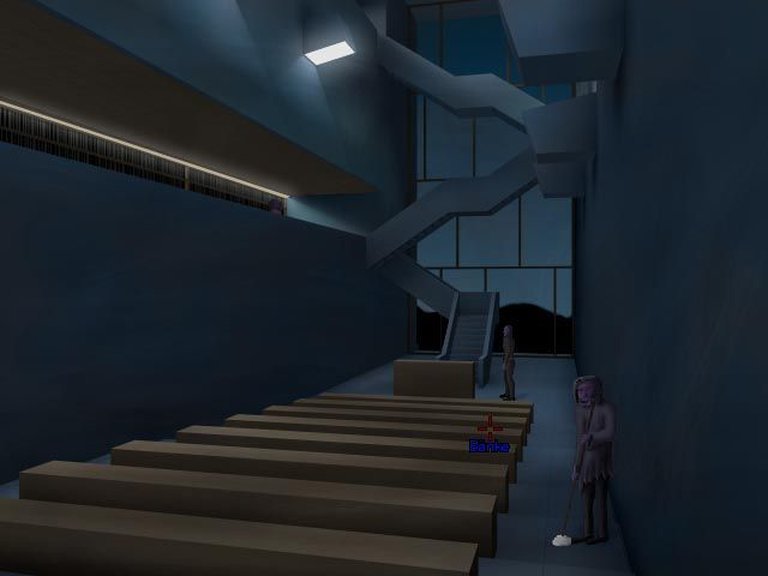
Interface & UI: The click-and-hold “verb coin” is functional and, as one review notes, implemented smartly (separating the click for “walk” from the hold for the verb coin, avoiding the delay of games like Full Throttle). The main UI flaw is the notoriously hard-to-read red font used for the protagonist’s internal monologue and some dialogue, a persistent strain on the eyes in the already dark visuals.
The gameplay, therefore, is a high-wire act. It demands a specific mindset: that of a relentless, notebook-carrying detective willing to engage with the world on its own obtuse terms. For players who value emergent, player-driven investigation, it’s a unique thrill. For those who prefer curated, narrative-driven experiences with clear feedback loops, it is an exercise in frustration that grinds momentum to a halt.
World-Building, Art & Sound: A Bleak, Oppressive Masterpiece
Where A Second Face achieves universal acclaim is in its audiovisual presentation and world design, which remain its most enduring legacy.
-
Visual Direction & Art: The game’s aesthetic is a stunning fusion of cyberpunk industrial decay and Mesopotamian ziggurat architecture. The dark city is a vertical maze of towering, angular structures, sheer drops, and oppressive shadow. The pre-rendered 3D backgrounds (at a 640×480 resolution) are dense with detail: flickering lava-lamps, intricate glyphs, hanging chains, and panoramic views of the perpetual night sky. The character art is equally distinctive, featuring elongated faces, sharp features, and exaggerated expressions that shift grotesquely during conversation (as noted by a reviewer, “including some pretty grotesque smiles”). This is not a beautiful world; it is a felt world—claustrophobic, paranoid, and ancient. The light-side, glimpsed only briefly in the finale, is a stark, blinding contrast that reinforces the thematic dichotomy.
-
Atmosphere & Sound Design: The atmosphere is the game’s greatest strength. It is unrelentingly grim, paranoid, and gritty. The soundscape is minimal but effective: the drip of water, distant machinery groans, the low hum of the city. The decision to license Carl Orff’s Carmina Burana (specifically the “O Fortuna” movement, though other excerpts are likely used) is a bold, almost heavy-handed choice that immediately sets a tone of epic tragedy and fatefulness. It elevates the game from a simple adventure to a melodramatic operatic experience. The voice acting, while uneven (the same user review found it grating over time), is committed and helps flesh out the quirky, world-weary cast. The sound effects, created by Woltaire, are functional and atmospheric.
-
Cinematic Ambition: The game consistently aspires to a cinematic language. Conversations take place against full-screen character portraits that change based on location and emotional context. The camera occasionally pans or shifts angles during key moments. The intro sequence, accompanied by the Orff music, sets a high bar for dramatic presentation that the gameplay rarely matches but constantly evokes.
Together, these elements create one of the most distinctive and memorable settings in indie adventure history. The Babylonian-inspired city plan, the oppressive verticality, the fusion of mysticism and industrial decay—it all coheres into a place that feels lived-in and ideologically coherent. You are not just exploring a backdrop; you are exploring the physical manifestation of a dying theocracy.
Reception & Legacy: A Cult Classic Forged in Community
“A Second Face” ’s immediate reception was strong within its target niche. Its 81% critic average (based on 5 reviews) and its sweep of the 2009 AGS Awards (Best Game, Best Original Story, Best Background Art) cemented its status as a flagship title for the engine and the indie adventure movement. Reviews consistently praised its ambition, story, and art while critiquing its gameplay stiffness and translation. Player scores on MobyGames (4.4/5) indicate a dedicated fanbase that overlooks its flaws.
Its legacy is twofold:
-
As a Benchmark of Indie AGS Artistry: For years, it was held up as an example of what a solo developer could achieve with AGS in terms of scope, atmospheric depth, and narrative ambition. Its visual style, in particular, is frequently cited as a high point of pre-rendered 3D backgrounds in 2D adventures. It demonstrated that AGS could be used for projects with serious philosophical themes, not just comedies or parodies.
-
As a Cautionary Tale on Interface Design: Conversely, it became a textbook case study in how not to handle conversation systems and player feedback. Its keyword system is often discussed in contrast to more successful implementations (like the hybrid system in The Dig or the comprehensive lists in Gabriel Knight). Its obscurity is a reminder that “hardcore” design must still respect the player’s cognitive load.
The planned sequel, A Second Before Us (released in 2017, per MobyGames’ “Related Games”), exists as a testament to Woltaire’s persistence but also highlights the challenges of such an ambitious arc. The original game’s unresolved ending and massive lore dumps in its final act feel like the first movement of a symphony; the sequel’s existence validates that artistic vision, even if it never reached a wide audience.
Today, it exists as a cherished, free artifact on sites like MobyGames, the Internet Archive, and itch.io. It is a game that is talked about more than it is played through, a badge of honor for those who claim to have “gotten into” its dense, difficult world. Its influence is subtle, seen in later indie adventures that prioritize mood and theme over conventional pacing (e.g., The Cat Lady, The Last Door in its darker moments). It proved that a game could be a sincere, ugly, beautiful, frustrating, and philosophical artifact all at once.
Conclusion: A Flawed Gem of Unignorable Significance
A Second Face: The Eye of Geltz is Watching Us is not a perfect adventure game. It is, in many mechanical respects, a problematic one. Its reliance on a bare-bones keyword system, its lack of meaningful interaction feedback, its occasionally stilted prose, and its monotonous traversal can—and do—alienate players expecting the polished accessibility of a LucasArts or later Telltale title. To play it is to consent to a certain amount of archaeological labor.
However, to dismiss it on these grounds is to miss its monumental achievements. It is a game of audacious world-building, creating a planet and a civilization so conceptually rich and visually distinct that they linger in the memory for years. It is a game of uncompromising thematic depth, using its sci-fi/fantasy premise to interrogate power, dogma, and survival in a way few adventures attempt. And it is a game of startling artistic cohesion, where every background, character design, and sound cue reinforces the oppressive, paranoid atmosphere of a society staring into an energy-starved abyss.
For the historian, A Second Face is a vital document of the AGS era’s potential—a time when a single creator could realize a vision of planetary scope without corporate interference. For the connoisseur, it is a challenging, rewarding experience that demands patience and rewards it with a sense of having uncovered something truly unique. It is a game that wears its heart, its philosophy, and its flaws on its sleeve. Its place in video game history is secure not as a masterpiece of gameplay, but as a masterpiece of imagination—a stark, challenging, and unforgettable vision of a world with two faces, one of which, the dark one, is always watching. It is, ultimately, a game that must be experienced to be believed, flaws and all, and its legacy is that of a fiercely independent creative spark that refused to compromise on its most difficult, and most profound, ideas.