
- Release Year: 2021
- Platforms: Linux, Macintosh, Nintendo Switch, PlayStation 4, PlayStation 5, Windows, Xbox One, Xbox Series
- Publisher: Fossil Games, Hound Picked Ltd.
- Developer: Fossil Games
- Genre: Adventure
- Perspective: Diagonal-down
- Game Mode: Single-player
- Gameplay: Exploration, Fetch quests, Graphic adventure, Puzzle platforming
- Setting: 1980s, Fantasy, North America
- Average Score: 80/100
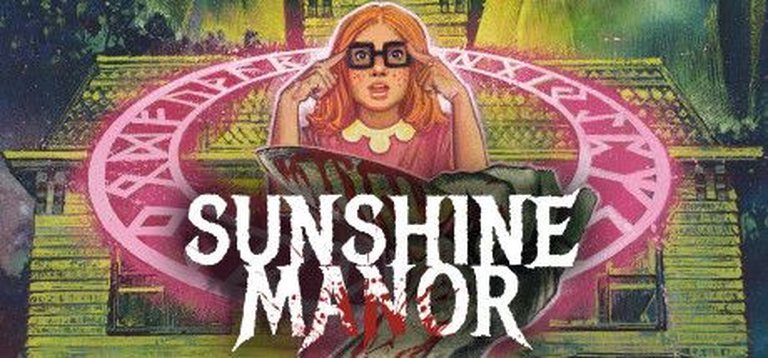
Description
Sunshine Manor is a horror-themed graphic adventure game set in the 1980s in North America, where players explore a haunted manor, solve puzzles, and travel between the human and demon worlds to save ghosts and friends. Featuring retro 8-bit visuals, a creepy-yet-fun atmosphere, and engaging platforming elements, it offers a charming and spine-tingling experience as part of the Sunshine Universe series.
Gameplay Videos
Where to Buy Sunshine Manor
Sunshine Manor Guides & Walkthroughs
Sunshine Manor Reviews & Reception
nichegamer.com : Sunshine Manor’s biggest disappointment is the story… the ending of Sunshine Manor is the most incomplete ending to a game I’ve ever experienced.
saveorquit.com : The variance in gameplay is superb.
metacritic.com (80/100): While I had a lot of fun reviewing Sunshine Manor, I don’t feel it quite lived up to the promise of 8-bit survival horror.
lastwordongaming.com : Overall, I’m very impressed with the amount of content in Sunshine Manor.
Sunshine Manor: A Charming But Flawed Homage to 80s Horror
Introduction: A Haunting Love Letter to a Bygone Era
In the crowded landscape of indie horror games, where pixel art and synthwave soundtracks have become almost as ubiquitous as jump scares, Sunshine Manor arrives with a specific, heartfelt mission: to capture the essence of 1980s horror cinema and translate it into a tight, top-down adventure. Released in October 2021 by the two-person UK/US duo Fossil Games—the creators of the cult hit Camp Sunshine—this prequel aims to explore the tragic history of the Sunshine name and the events leading to the “Camp Sunshine Massacre.” It presents itself as an “8-bit blood-soaked Horror RPG,” a descriptor that proves both enticing and misleading. My thesis is this: Sunshine Manor is a game of striking, affectionate contrasts—it masterfully channels the aesthetic and tonal warmth of 80s horror-comedy but is fundamentally held back by a confusing narrative structure, inconsistent gameplay systems, and a deeply unsatisfying conclusion that undercuts its own emotional and mechanical setup. It is a game you will enjoy exploring while simultaneously questioning its core design choices, a charming yet frustrating experience that feels both endearingly authentic and strangely incomplete.
1. Development History & Context: A Labor of Love in a Pixelated Sanctuary
Sunshine Manor exists within the “Sunshine Universe,” a loosely connected series of horror games that began with Camp Sunshine (2016). Fossil Games, comprising Paul Dolby (UK) and Josh (US), are fervent horror aficionados whose inspirations are explicitly drawn from the pantheon of 80s genre cinema. As they detail in interviews, their influences include From Beyond (1986), Friday the 13th (1981), A Nightmare on Elm Street (1984), and the atmospheric dread of Phenomena. Gameplay-wise, they cite classic series like The Legend of Zelda, Resident Evil, and Silent Hill as touchstones for exploration, puzzle-solving, and tension.
The development of Sunshine Manor was fueled by a successful Kickstarter campaign in 2020, which reached 134% of its funding goal (£26,842 from 627 backers). This community backing allowed for stretch goals like a chiptune remix soundtrack, additional costumes for protagonist Ada, and bonus content. The game was published by Hound Picked Games and launched on PC (Windows, Mac, Linux) in October 2021, withconsole ports for Switch, PlayStation, and Xbox following in 2023. Its creation was a “labor of love” for the duo, who work on these projects as a side venture amidst their day jobs, a fact that explains both the game’s meticulous artistic detail and some of its rough-hewn technical edges.
Technologically, the game employs a “hand-drawn 8-bit-esque” pixel art style with clear outlines—a deliberate aesthetic choice that evokes the golden age of console gaming while allowing for expressive character animation and grimy, atmospheric environments. The soundtrack, a key selling point, is an original 1-hour-22-minute synthwave score composed exclusively for the game, designed to shift dramatically between the silent, eerie halls of the mortal manor and the pulsating, dangerous demon realms.
In the 2021 indie gaming landscape, Sunshine Manor competed in a niche but crowded “retro horror” space (think Senua’s Saga: Hellblade‘s aesthetics meets Five Nights at Freddy’s‘s cult following). Its unique selling proposition was its blend of “cozy horror” vibes—cartoony gore, quirky characters, comedic relief—with genuine, if tonally inconsistent, scares, all wrapped in a package explicitly celebrating 80s kitsch. The involvement of legendary illustrator Graham Humphreys (known for poster art for The Evil Dead, A Nightmare on Elm Street) for limited-edition Kickstarter art further cemented its credentials as a love letter to the era.
2. Narrative & Thematic Deep Dive: A Prequel That Struggles to Justify Its Existence
Sunshine Manor is a narrative prequel to Camp Sunshine, set approximately seven years before the massacre at Big Bear Lake. The story begins in the 1970s with a fading TV star, Dalton Aitken, making a pact with a clairvoyant that triggers a curse, leading to gruesome murders at the old Aitken House. The main narrative jumps to Halloween night, where a group of children—including our protagonist, Ada MacReady, and her two best friends—dare to enter the now-abandoned mansion. Ada becomes separated as the house’s supernatural forces activate, and she must uncover the manor’s secrets while searching for her missing friends.
The core narrative structure isAda’s journey to free four key ghosts trapped within the manor, each representing a different era and theme of the house’s history. By helping these specters resolve their unfinished business, she gains access to the “Demon Realm,” a twisted mirror dimension where the true evil, the omnipresent Shadow Man, holds sway. Thematically, the game explores guilt, unresolved trauma, and the parasitic nature of evil—the Shadow Man feeds on the pain of the dead to maintain his power. The 80s setting is more than aesthetic; it informs a specific kind of storytelling where melodrama, camp, and genuine horror coexist.
However, the narrative execution is where Sunshine Manor faces its most severe criticism, primarily from reviewers like those at Niche Gamer and the Save or Quit critic. The central plot thread—Ada’s mission to rescue her two friends—is almost immediately abandoned. After a brief early scene where they are kidnapped, the game’s quests never revolve around saving them. The player is instructed to help the ghosts and defeat the Shadow Man, with the friends’ fate becoming a background concern. This creates a profound dissonance: the player’s ostensible primary motivation is erased from the gameplay loop. As Niche Gamer bluntly states, “You don’t actually get to take ANY action to rescue your friends. It is impossible for you to rescue them.”
The ending exacerbates this failure. After a final battle, Ada escapes the collapsing manor alone. The game cuts to a scene of a grown-up Ada (implied to be years later) obsessively researching the cult behind the events, but her friends are never mentioned again. They are seen once more, briefly, with pink, demonically possessed eyes, but Ada shows no recognition of their condition or intent to save them. This abrupt, incomplete conclusion clashes violently with the game’s otherwise “cozy” and humorous tone, leaving players feeling confused and cheated. The existence of collectible masks and costumes, which upgrade Ada’s abilities, further implies a potential for varied outcomes or a stronger final confrontation, but these are stripped from her before the climax with no narrative justification. The game’s marketing promised a “dark, involved and outright weird story that builds to the events of the Camp Sunshine massacre,” but for many, it delivers a story that builds to a hollow, character-abandoning whimper.
The Easter eggs and connections to Camp Sunshine are noted as “subtle” by the developers. The primary link is the appearance of Camp Sunshine‘s protagonist, Jesse, in the final scene—a moment intended to thrill fans but which, for critics, highlighted the neglected fates of Ada’s own friends. The lore, scattered across optional audio tapes (which cannot be replayed, forcing risky save-scumming to hear again), provides backstory on Dalton Aitken but fails to integrate the emotional core of Ada’s personal journey into the larger mythology.
3. Gameplay Mechanics & Systems: Exploration Tainted by Friction
Gameplay in Sunshine Manor is a hybrid of top-down graphic adventure, light puzzle-platforming, and simplistic combat, framed by a “fetch quest” structure that reviewers frequently compare to Camp Sunshine but find variably improved.
Core Loop: The loop is cyclical. Explore the static, multi-room layout of the Aitken House (the “mortal realm”) to find a ghost. Complete a simple fetch or interaction quest for that ghost (e.g., find a lost item, clean a room). This triggers a portal to that ghost’s themed “Demon Realm” dungeon. Complete the dungeon—which involves platforming, minor combat, and environmental puzzles—to defeat the realm’s demon boss and “free” the ghost. Return to the manor, which then shifts (new enemies appear, layout alters slightly), and repeat for the next ghost.
Exploration & Mapping: The manor itself is a small but dense hub. Its lack of an in-game map is a major, recurring point of criticism (from Switchaboo, Game Crater, WGB). Players are forced to rely on spatial memory, leading to “aimless wandering” and frustration, especially when backtracking for newly triggered events. Objects and interactions can be obscure, compounding the issue.
Combat & Progression: Ada’s combat uses a shared stamina bar for dashing and attacking. Attacking has a noticeable cooldown, and most standard enemies require multiple hits. The system is intentionally leisurely; as Save or Quit notes, “bosses are passive. You don’t need an insane reflex speed… it’s up to you to remember their attack patterns and when to hit them.” Some enemies are invincible, serving only as environmental hazards. Progression is gated by quest completion and key items, not character levels (there are none). The “RPG” label is a misnomer confirmed by Niche Gamer: “There is no meaningful customization… no branching paths… no RPG-style combat.” Customization comes via collectible Costumes/Masks (e.g., a fire-shooting mask, a robot costume), which grant new abilities like enhanced jumping or alternative attacks. These are often required to access the demon realms or secret areas, but their utility is nullified right before the final sequence, a baffling design choice that Niche Gamer calls “extremely frustrating.”
Puzzle-Platforming: Each demon realm dungeon has a distinct theme (e.g., a library with moving bookshelves, a factory with spinning gears) and introduces a specific mechanic. Platforming segments, particularly in the third dungeon, are cited as the game’s most challenging and potentially “taxing” parts, with a lack of checkpoints causing progress loss on failure. The puzzles are generally well-regarded as “devious” but fair, avoiding “frustration” for most (Pure Nintendo, Bloody Disgusting).
User Experience & Flaws: The game is plagued by quality-of-life (QoL) issues that mar the experience:
* No key rebinding: A significant oversight for a PC title.
* Slow movement speed: Ada’s base walk is sluggish, forcing constant dashing, which consumes the shared stamina bar.
* Technical bugs: Reports of softlocks (inventory clutter with rocks), 140Hz monitor incompatibility requiring a switch to 60Hz, and a buggy “load game” menu interface.
* No map: As stated, the most consistent complaint.
* Ambiguous objectives: Some quests lack clear direction.
These issues are acknowledged by the developers in post-release discussions and patches, but they define the play experience for many, making the adventure feel archaic in its user-unfriendliness rather than charmingly retro.
4. World-Building, Art & Sound: Where the Game Shines Brightest
If Sunshine Manor has an undeniable crown jewel, it is its artistic presentation and sound design, widely praised across the board and responsible for carrying the game through its weaker moments.
Art Direction & Pixel Work: The hand-drawn 8-bit style is gorgeous and intentional. Each dungeon’s theme is vividly expressed through enemy design, environmental palette, and architectural details. The manor itself is a character—a creaky, cobwebbed, multi-room labyrinth dripping with 80s haunted house tropes. The pixel art manages to be both stylistically nostalgic and expressively animated; cutscenes are a particular delight, with characters like the vain demon Vestasia or the imprisoned Maid ghost full of personality. The influence of Graham Humphreys’ illustrative style is felt in the bold, graphic outlines and lurid use of color, especially in demon realms splattered with pixelated blood. The art successfully balances “cozy” cartooniness with moments of “blood-soaked horror,” creating that signature “spoopy” (spooky + silly) atmosphere.
Sound Design & Music: The audio is a masterclass in atmospheric contrast. As Pure Nintendo’s review highlights: “Most of your time wandering the mansion is spent in silence, evoking a chill that makes you feel like you should be tip-toeing around the grounds. What it also does is highlight any sudden noises.” This quiet, tense ambient design makes environmental sounds—a creak, a whisper, a sudden enemy screech—genuinely jarring, creating effective, low-tech jump scares.
Conversely, upon entering a Demon Realm, the signature 80s-inspired synthwave soundtrack kicks in. Described as having a “Stranger Things vibe,” these tracks are energetic, eerie, and perfectly matched to the on-screen action, heightening the sense of entering a dangerous, otherworldly space. The dichotomy between the silent, unsettling manor and the loud, pulsing demon worlds is a brilliant audio narrative device.
Atmosphere & Tone: The world-building succeeds in creating a specific, self-aware tone. It’s a horror-comedy where you can pet a dog (the early warning system Gnarlie, voiced by the developer’s actual dog) minutes after seeing pixelated gore. The dialogue is often quippy, and side characters like the Maid or various bickering demons provide genuine charm. This “cozy horror” or “spoopy” vibe is the game’s most distinctive and successful element, making it accessible to those who find pure terror overwhelming while still offering a thematic hook for horror buffs. It evokes the feeling of watching a beloved, slightly cheesy 80s horror film with friends.
5. Reception & Legacy: Cult Potential Marred by Fractured Identity
Critical Reception: Sunshine Manor holds a MobyScore of 6.9 and a 70% critic average based on 12 reviews, placing it solidly in the “mixed or average” category. The reception is notably polarized, splitting along lines of tolerance for its flaws versus appreciation of its style.
- The Praises (85-80% reviews – Pure Nintendo, ThisGenGaming, Bloody Disgusting): These reviewers overwhelmingly celebrate its vibe and artistry. They use terms like “spine-tingling,” “creepy-yet-fun,” “charm,” and “retro presentation.” They highlight the excellent soundtrack, the creative dungeon themes, the satisfying puzzle-solving, and the “delightful” or “quaint” characters. For them, the game’s short length (4-5 hours) and lack of extreme difficulty are strengths, not weaknesses. The “cozy horror” aesthetic is a primary selling point.
- The Middling (74-60% reviews – Nindie Spotlight, Movies Games and Tech, GamEir): These critics acknowledge the talent on display—especially the sound design and art—but find the game “odd” and “reluctant to pick a direction.” Movies Games and Tech‘s review is particularly damning: the game’s passion is “so often overwritten, so often siphoned of identity.” They note the gameplay innovation but feel it doesn’t coalesce into a memorable whole.
- The Negative (55-30% reviews – Game Crater, WGB): These reviews focus on frustration with mechanics and narrative collapse. WGB’s 30% review calls it “boring,” criticizing the fetch-quest repetition, “useless” combat, and “nonexistent” story. Switchaboo and Game Crater cite the lack of a map and frustrating gameplay as primary failures. Niche Gamer’s 4.5/10 review is the most extensive narrative critique, focusing entirely on the abandoned rescue plot and unsatisfying ending, calling it “the most incomplete ending to a game I’ve ever experienced.”
Commercial Performance & Player Response: Sales figures are not public, but the game maintains a 88% positive user review rate on Steam (based on 26 reviews as of the latest data). This suggests a smaller but very pleased player base, likely fans of the Sunshine Universe or those specifically seeking this “cozy horror” niche. The 1 player on MobyGames who “collected” it hints at its cult, rather than mainstream, status.
Legacy and Influence: As part of a trilogy (or series), Sunshine Manor‘s legacy is intrinsically tied to the Sunshine Universe. It successfully builds the mythology and aesthetic foundation for Camp Sunshine, making the bear-masked killer’s origins feel part of a larger, 80s-inspired occult tapestry. Its direct influence on the broader industry is likely minimal—it is a niche homage, not a trendsetter. However, it stands as a prime example of the “indie developer as die-hard fan” ethos. Its dedication to recreating a specific cinematic era’s look, sound, and feeling is impeccably thorough. For future retro-horror developers, it serves as a case study in the power of cohesive art/sound direction, but also a cautionary tale about the importance of narrative integrity and player convenience (i.e., always include a map).
Its legacy may be as a beloved, flawed gem among horror connoisseurs—a game you recommend with a caveat: “You have to be okay with [specific flaw X] to love this.” The polarized reception ensures it will be discussed, if not universally acclaimed.
6. Conclusion: A Haunting That Lingers Despite Itself
Sunshine Manor is a game of profound contrasts. It is a visually and aurally sumptuous love letter to 1980s horror that is technically rough around the edges. It builds a charming, quirky world of ghosts and demons, only to tell a story that abandons its protagonist’s core motivation. It innovates with themed dungeon design and atmospheric audio shifts, yet stumbles with outdated QoL decisions like the absence of a map and unrebindable controls. It is, in many ways, a game at war with itself.
Its greatest achievement is capturing a specific, comforting yet spooky “Halloween” feeling—the joy of exploring a haunted house with a mix of trepidation and delight. The pixel art is consistently excellent, the soundtrack is genre-defining, and the sheer variety of the demon realm dungeons keeps the gameplay engaging. For players who can overlook narrative incoherence and mechanical friction, it offers a short, memorable, and genuinely fun adventure.
However, its failures are significant and cannot be dismissed. The botched ending that renders Ada’s friends’ fate meaningless is a cardinal sin for a narrative-driven game. The lack of a map transforms exploration from a pleasure into a chore. These are not minor nitpicks; they are fundamental design choices that sabotage the experience for a large contingent of players.
Final Verdict: Sunshine Manor is not a great game by conventional metrics, but it is an undoubtedly authentic and interesting one. Its place in video game history is secure as a cult artifact of dedicated fandom—a testament to what two passionate creators can achieve with limited resources and a clear vision. It is a flawed prequel that deepens the Sunshine Universe lore while simultaneously frustrating those who invest in its protagonist’s journey. It deserves to be played by anyone interested in the evolution of indie horror aesthetics, but should be approached with tempered expectations and a high tolerance for jank. It is, in the end, a haunted house you’ll remember for its decorations and scares, even if you wish the story written on its walls had made more sense.