
- Release Year: 2020
- Platforms: Macintosh, Windows
- Publisher: Orbital Speed Studio Co.,Ltd.
- Developer: Orbital Speed Studio Co.,Ltd.
- Genre: Action, Strategy, Tactics
- Perspective: 3rd-person
- Game Mode: Single-player
- Gameplay: Turn-based strategy
Description
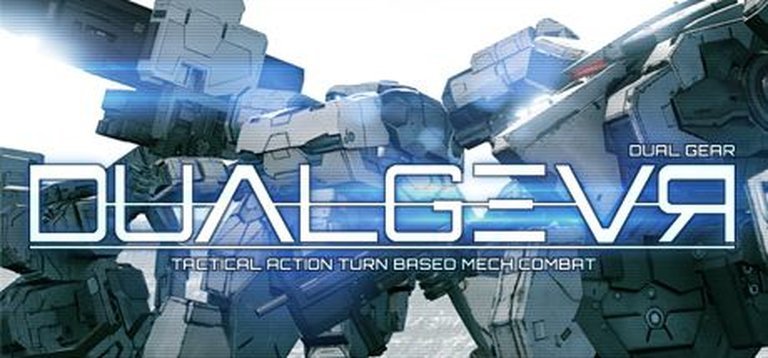
Set in the year 2069, eleven years after the catastrophic Massive Orbital Incident (MOD) that polluted Earth’s orbit and ignited global conflicts called Cluster Wars, Dual Gear places players in the role of young elite pilots commanding advanced Dual Gear mechs—specialized THV units—under the organization NEMOS. This turn-based strategy game features tactical battles with giant robots in a third-person, anime-inspired presentation, as pilots defend Earth from the enigmatic threat of the Watchmaker amidst rising tensions between nations.
Gameplay Videos
Where to Buy Dual Gear
Dual Gear Patches & Updates
Dual Gear Guides & Walkthroughs
Dual Gear: A Titan of Unfulfilled Potential – The Rise and Fall of Thailand’s Mecha Ambition
1. Introduction: The Ghost in the Machine
In the vast cemetery of Early Access titles, few graves are as poignant or as puzzling as that of Dual Gear. Here lies a game that dared to fuse the tense, chess-like strategy of Front Mission with the visceral, real-time cockpit thrill of Gundam—a hybrid revolutionary on paper. Developed by Thailand’s Orbital Speed Studio and launched into Steam Early Access in July 2020, it presented a compelling promise: a tactical mech game where you command a squad in a turn-based strategic layer, then pilot each unit in a real-time action sequence where every movement burns energy and invites enemy fire. For a fleeting moment, it seemed like a genre-defining experience was being built. Five years later, with the developer silent for over a year and the last update in 2023, Dual Gear remains a fascinating, deeply flawed, and ultimately abandoned artifact. This review argues that Dual Gear is not merely a failed game, but a profound case study in ambitious indie development hitting the immutable walls of technical scope, poor UX design, and unsustainable project management—leaving behind a skeleton of brilliant ideas wrapped in a shroud of broken promises.
2. Development History & Context: A Star-Crossed Project from the Start
Orbital Speed Studio Co., Ltd., a small Thai team, conceived Dual Gear with audacious goals. According to its Steam store page and historical announcements, the project was crowdfunded (via Indiegogo) and first shown in a basic alpha at the 2015 Tokyo Game Show. The vision was clear: a game powered by Unreal Engine 4 that married “3D Mech Action Shooting and Turn-Based Strategy,” inspired by “Classical Japanese Mech Games.” The official “Roadmap [2023]” even promised a migration to Unreal Engine 5, codenamed “Dual Gear [D].”
However, the development timeline tells a story of chronic overreach and progressive abandonment:
* 2015-2020: Years of pre-production and fragile alpha builds. The game entered Early Access on July 28, 2020, with an officially stated plan for a full release within one year, featuring 25 story missions, new mechs, weapons, and stretch goals like local multiplayer.
* 2020-2022: The pace of updates was glacial. The initial release was notoriously bare—a single combat mission. By 2022, a third story mission and a “Skirmish” mode were added, but the content remained a fraction of the promised “first act.”
* 2023: The final, faint pulse. The developers announced the UE5 migration and showcased concept art for new units and weapons, but repeatedly missed release dates for the promised update. The official website (duageargame.com) was broken, showing only 2015 information. The last post on the game’s Facebook page was in July 2023.
* 2024-Present: As detailed in a comprehensive and damning Steam Community guide by user “Mr. Moyer,” the project is effectively abandoned. The guide’s title bluntly states it: “Early Access Guide for Dual Gears” (noting the plural in the title), and its conclusion is unequivocal: “It now appears that the developers have ABANDONED this game… the developer has VANISHED with our money.”
This context is essential. Dual Gear was never a finished product. It is a snapshot of a game in a perpetual, unfinished state, where the foundational systems were built but the content, polish, and critical UX improvements were perpetually deferred until they never arrived.
3. Narrative & Thematic Deep Dive: A Plot Lost in Translation
The narrative of Dual Gear, as pieced together from the Steam store description, IMDb, and in-game text, is a familiar mecha anime trope cocktail, but one critically hampered by abysmal localization.
Setting & Premise: The year is 2069 (or 2064, per Gamepressure—a timeline inconsistency hinting at deeper disarray), 11 years after the “Massive Orbital Incident” (MOD). This cataclysm has created orbital pollution and scattered global conflict into “clusters.” The United Nations of Resistance (UNR), an alliance of eight powers, deploys a new weapon: the Tactical Humanoid Vehicle (THV), or “Dual Gear.” The enigmatic terrorist group “Watchmaker” threatens Earth’s orbit. To combat this, the organization NEMOS is formed, recruiting young prodigy pilots to operate Dual Gears.
Characters & Conflict: The core cast, per the Steam store, includes:
* Neil Carlsen (42): A veteran pilot who lost his family in the MOD. He returns to hunt the “Black Dual Gear” responsible for the Gaia Space Station attack.
* Aliya Afrah (16): The mysterious pilot of the Black Dual Gear, “Xenoframe.” Code-named “Negative Zero,” she is revealed to bear a striking resemblance to Neil’s deceased daughter, creating a personal, emotional stake.
* Alma, Ajay, Kenji: Other members of “NEMOS 7.”
The plot delivered in the three available missions is skeletal and riddled with logical holes, as the Steam guide’s “poorly written story” section savagely details. Alma, the initial player character and team leader, is unceremoniously demoted after one mission when Neil—a wanted war criminal—joins the team and is made leader. The story hints at a conspiracy where the rebel factions might be collaborating, but this thread is never developed. The climax is a fight against a “huge mech boss” that must be dismembered part-by-part.
Thematic Analysis: Thematically, the game attempts to explore legacy, loss, and the blurred lines between terrorist and protector (the Watchmaker vs. UNR/NEMOS). The central, potent idea—a father confronting a daughter he thought dead, now an enemy combatant—is a classic mecha trope with emotional weight. However, the execution is fatally undermined. As the Steam guide notes, the translation is “atrocious,” “worse than Google Translate,” making narrative engagement nearly impossible. Dialogue lacks nuance, plot turns feel arbitrary (like Neil’s instant promotion despite being a fugitive), and the world-building remains a vague collection of acronyms (MOD, THV, UNR, NEMOS) without substance. The story is not just bad; it is actively distracting, a series of cutscenes to be skipped, not experienced.
4. Gameplay Mechanics & Systems: A Brilliant Core Buried Under UX Rubble
This is Dual Gear‘s saving grace and its greatest tragedy. The core combat loop is, as the Steam store claims, a genuinely innovative fusion.
The Dual-Layer System:
1. Strategic Layer (Turn-Based): Before each mission, you manage your squad of pilots and their Dual Gears from the “NEMOS Hangar.” You select your team, assign pilots to mechs, and enter a tactical map view to issue movement and attack orders. The turn order is clear: all your units act, then all enemy units act.
2. Tactical Layer (Real-Time Action): When a unit’s turn begins, you take direct, real-time control of that mech. Movement is fluid but consumes Generator Points (GP). While moving, the unit can be fired upon by enemies. You manage a limited pool of Action Points (AP) to activate weapon-specific skills. The genius is in the tension: you must move to position yourself or dodge, but doing so burns GP and makes you a target. Standing still preserves resources but cedes positional advantage.
Progression Systems:
* Pilot Progression: Pilots earn Pilot XP to level up, granting “Dual Points” to increase maximum AP or unlock Skill Slots. They also earn Weapon XP (WXP) specific to each weapon type (SMG, Missile, Melee, etc.). WXP unlocks new active skills for that weapon class (e.g., for SMGs: Normal Strike, Splash Strike, Hi-Tension Strike). Critically, skills unlocked for an SMG remain even if you equip a different SMG later, but not if you switch to a Shotgun.
* Mech Customization: Mechs are built from five interchangeable parts: Main Camera (Head), Cockpit, Arms, Legs, and Backpack. Each part has stats like Durability (HP), Absorb (damage resistance), Sensor (accuracy/evasion), Agility (evasion/movement), Synchro (unclear effect), Servo (determines max weight capacity), Weight, and Walk Speed. Weapons are equipped to hands and shoulders. The Steam guide meticulously deconstructs the meta, declaring weapons like Knuckles and Swords “garbage” due to point-blank range requirements and high GP cost, while SMGs (especially the Edge AW06 Assault Rifle) and Vertical Missiles (VD-MM5) form the dominant, efficient meta. Cannons are situational due to extreme weight and initial inaccuracy.
The Fatal Flaws: The brilliance of the combat is systematically strangled by horrific user experience.
* Obfuscated UI: The game provides zero tooltips. Stats like “Synchro” and “Servo” are listed with no explanation. The pilot upgrade screen is a nightmare of unlabeled, tiny click zones, with the guide author spending “two whole hours” to figure out how to upgrade AP. The mech parts screen is a “trial-and-error guessing game.”
* Hidden Information: Critical stats and a “secret menu” showing full unit stats are only accessible by right-clicking the mech model in the hangar—a non-standard, undiscovered interaction.
* Broken Mechanics: The guide documents game-breaking bugs, most notably a scenario where losing both arms can lock the player on an aiming screen, forcing a mission quit and total reward loss.
* Shallow Content: With only three replayable missions (plus a tutorial and a boss fight), the strategic layer is anemic. The “Skirmish” mode’s wave-based repetition exposes the lack of enemy and map variety.
The system is a fascinating, ambitious prototype that feels 80% complete in its core combat but 10% complete in its surrounding management, progression, and quality-of-life features.
5. World-Building, Art & Sound: Aesthetic Promise, Technical Quagmire
Visual & Artistic Direction: Dual Gear leans heavily into a clean, “semi-real” anime aesthetic reminiscent of Gundam or Front Mission. The mech designs (like the “Sidewinder” and “Xenoframe”) are competent, if not groundbreaking. The environments are small, sterile, and utilitarian—lackluster in detail but functional for the tactical gameplay. The UI, while sometimes stylish, is fundamentally non-intuitive. The “coloring module” for mech customization is a superficial layer over systems that are already confusing.
Sound Design: Information is scarce. The Steam store page claims “Full Audio” in English and Japanese, but no specific details on soundtrack or sound effect quality are provided in the sources. The guide makes no mention of audio as a notable positive or negative, suggesting it is functionally adequate but unmemorable.
Atmosphere & Cohesion: The sterile environments and poorly translated cutscenes fail to create a cohesive sci-fi atmosphere. The potential for a tense, orbital-war setting is squandered by a lack of environmental storytelling, compelling music, or voice acting (if any exists) that elevates the material. The art serves the mechanics, but the mechanics are buried under such poor presentation that the aesthetic effort feels wasted.
6. Reception & Legacy: The Sound of Silence
Critical & Commercial Reception at Launch: Dual Gear launched to a “Mixed” reception on Steam (currently 56% positive from 445 reviews). Early impressions were colored by the extremely limited content and pervasive technical issues. The promised “first act” was thin, the translation awful, and the core loop promising but hampered by the UX disasters detailed above.
Evolving Reputation & The Abandonment Narrative: Over time, the reputation solidified into a specific, tragic archetype: the abandoned Early Access scam. The Steam guide’s meticulously documented timeline of radio silence—over a year with zero contact, a broken website, missed update deadlines—transformed player frustration into outright accusation. The “Mixed” rating now masks a community where many positive reviews are from early adopters impressed by the concept, while negative reviews are dominated by warnings about abandonment and poor design. The price ($19.99, up from an Early Access discount) is frequently cited as egregious for the truncated experience.
Influence on the Industry: Dual Gear‘s direct influence is negligible due to its obscurity and unfinished state. However, it serves as a potent cautionary tale for indie developers:
1. The “Vertical Slice” Trap: Building a deep, innovative combat system without parallel investment in UI/UX, content, and translation is building a palace on sand.
2. Communication is Covenant: The complete breakdown in developer communication after 2023 turned a struggling project into a pariah. Transparency about delays or cancellation could have preserved some goodwill.
3. Scope vs. Team: A five-person team attempting a full tactical RPG with deep mech customization, a story campaign, and multiple game modes was likely always an impossible dream. The focus on a single, polished mission with a complete loop would have been a more viable Early Access strategy.
Its legacy is as a “what not to do” case study in Early Access management and the critical importance of user experience design, even for the most innovative mechanics.
7. Conclusion: The Elegant Ruins
Dual Gear is a paradox. In its combat—that brilliant, tense dance of GP management, real-time positioning under fire, and impactful part-based damage—it achieves moments of genuine tactical brilliance. The satisfaction of perfectly timing a V-Missile Array Strike from behind, or using a high-GP mech to kite enemies, is palpable. For a few hours, you can see the 90th percentile game that could have been: a benchmark for mecha strategy.
But that brilliance is incarcerated within a prison of its own making. The impenetrable UI, the nonexistent tutorials, the laughable localization, the skeletal content, and the final, unforgivable act of abandonment reduce it to a curiosity. It is not a “bad” game in the traditional sense of being poorly made on all fronts; it is a profoundly unbalanced one, where 20% of its systems are A+ and 80% are F-tier.
Verdict: 6/10 – A Brilliant Prototype, A Failed Product.
Dual Gear deserves recognition for its audacious hybrid design, which genuinely moved the mecha genre’s conversation forward conceptually. However, as a product available for purchase, it fails catastrophically on every front outside its central combat loop. It stands today not as a lost classic, but as a haunting monument to ambition crushed by reality—a ghost of a great game that never learned to walk before it was left to die. For historians and designers, it is an essential study. For players, it is a warnable, $20 gamble on a ruin.