
- Release Year: 2020
- Platforms: Windows
- Publisher: World of Legends
- Developer: World of Legends
- Genre: Role-playing (RPG)
- Perspective: Diagonal-down
- Game Mode: MMO
- Gameplay: Action RPG, Hack and Slash, Massively Multiplayer
- Setting: Fantasy
Description
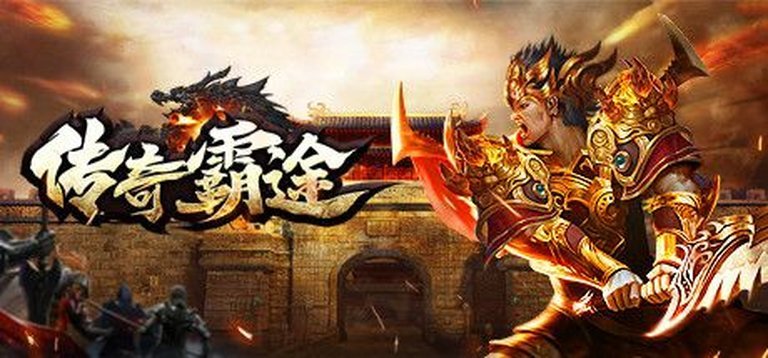
Legendary Batu is a classic retro massively multiplayer online action role-playing game (MMO ARPG) set in a fantasy realm, where players engage in hack-and-slash combat against monsters to acquire equipment and grow stronger. The game features progression through challenging dungeons like the Tower of the Nine Storeys of Evil and the Temple of the King, alongside large-scale siege battles where players compete to become city lord and earn top honors, with additional systems including fashion, pets, and equipment synthesis.
Legendary Batu: Review of a Digital Ghost
Introduction: The Unseen Monument
In the vast, meticulously cataloged archives of video game history, certain titles exist not as celebrated classics or notorious failures, but as digital phantoms. They appear on databases with functional descriptions, tagged with genres and release dates, yet leave no ripple in the cultural consciousness, no critic’s pen, no player’s heartfelt diatribe or praise. Legendary Batu (传奇霸途/傳奇霸途) is one such specter. Released on November 20, 2020, by the studio “World of Legends” for Windows, this free-to-play “Classic retro MMO ARPG” embodies a specific, continentally popular genre yet remains a profound void in the global gaming discourse. This review is therefore an exercise in archaeology of the absent—an attempt to construct an analysis from shards of metadata, to diagnose a game whose primary legacy is its own obscurity. My thesis is this: Legendary Batu is not a bad game by default, nor a forgotten gem; it is a stark illustration of the fragmented, region-locked nature of the modern game industry, where titles with robust mechanical frameworks can utterly fail to generate the narrative, community, or critical momentum required for lasting historical significance. Its true subject is not its own content, but the silent chasm between production and perception.
Development History & Context: A Studio in the Shadows
The development story of Legendary Batu is, almost by definition, a story of non-event. The sole credited developer and publisher is an entity named World of Legends. No further credits, no named designers, artists, or composers, are listed on MobyGames. This singular attribution suggests either a very small team, a contractual shell company, or a studio operating under a brand designed for a specific market niche. The game’s titles in Simplified (传奇霸途) and Traditional (傳奇霸途) Chinese confirm its primary target audience: the massive, enduring market for Chinese-developed MMORPGs and ARPGs.
The year 2020 was a paradoxical time for game development. On one hand, the global pandemic forced many indie studios into remote work, yet also created a surge in player engagement. This was the year of breakout indie successes like Hades, Ghost of Tsushima, and the cultural phenomenon Among Us. On the other hand, the Chinese gaming market was (and is) a world unto itself, governed by unique business models, aesthetic preferences, and regulatory landscapes. Legendary Batu launched into this bifurcated landscape not as a hopeful indie contender for global acclaim, but as a product calibrated for a domestic audience accustomed to the “retro MMO ARPG” formula it so explicitly names.
The technological constraints are implicit. The “diagonal-down” perspective and “hack and slash” gameplay, combined with a “Classic retro” descriptor, point toward a 2D or 2.5D sprite-based engine, likely built for accessibility on a wide range of PC hardware. This is a game designed for LAN cafes and lower-spec machines, contrasting sharply with the 3D, photorealism pursued by Western AAA titles of the era. Its business model—”Freeware / Free-to-play / Public Domain”—is a critical detail. It was not a commercial product in the Western sense but a service, monetized presumably through cosmetic items, convenience boosts, and the “fashion system” mentioned in its features, common in the “pay-to-look-good” rather than “pay-to-win” (though the line is often blurred) Eastern model. Its existence on Steam in an “Early Access” state (as noted in its MobyGames group) further suggests a live-service rollout, a continuous project rather than a finished product.
Narrative & Thematic Deep Dive: The Void at the Center
Here, the review must confront an absolute absence. The official Steam “Ad Blurb” and MobyGames entry provide zero information on plot, characters, dialogue, or themes. The game’s promotional text is a laundry list of systems and dungeons: “Titular dungeon,” “Tower of the Nine Storeys of Evil,” “The Secret of the Nine Devils.” These names evoke generic fantasy tropes—a celestial tower, a demonic conspiracy—but offer no narrative hook. There is no protagonist, no antagonist, no hint of a world in conflict beyond the implied “kill all kinds of monsters to get equipment.”
This vacuum is itself analytically rich. Legendary Batu represents a pure mechanics-first, narrative-absent design philosophy common in certain niches of the Asian MMO market. The “story” is the player’s progression loop: the journey from weak to strong, from novice to “city lord.” The theme is aspirational grind. The underlying message, delivered through systems like “reincarnation” and “Equipment Synthesis,” is one of perpetual growth. The game’s world is not a place with history or moral complexity (as seen in The Witcher 3 or Mass Effect); it is a proving ground. It is the antithesis of the “detailed lore and backstories” celebrated in sources like The Review Geek, which praises The Elder Scrolls for “hundreds of individual stories” and World of Warcraft for its “nations, varied scenery, and swarming civilizations.” Batu’s world is a menu. It asks not “Who are you in this world?” but “What will you kill next to get stronger?”
The lack of a written review on MobyGames or any other platform means we cannot analyze character arcs or plot twists. The game exists in a state of pure ludonarrative potential: its narrative is whatever the player projects onto the cycle of monster-killing, loot-gathering, and stat-incrementing. It is the ultimate blank slate, a testament to a design model where story is not told but performed through gameplay.
Gameplay Mechanics & Systems: Deconstructing the Loop
The Steam description provides a rare glimpse into Legendary Batu‘s mechanical heart. It is a massively multiplayer, action-oriented, hack-and-slash RPG with a direct-control interface and diagonal-down perspective—a topology common in games like Diablo and its countless imitators.
- Core Loop: Explicitly stated: “kill all kinds of monsters to get equipment, make yourself stronger, to meet the more difficult challenges.” This is the sacred trifecta of the ARPG genre: combat → loot → progression. The slogan “if you can liver, you can have it all!” (a likely mistranslation of “grind”) confirms that the primary currency is time investment. Progression is gated by power levels, which are increased through better gear obtained from higher-tier content.
- Systems: The list reveals a deep, if conventional, systemic sprawl:
- Fashion System: Cosmetic armor, a staple of live-service games for monetization and player expression.
- Pet System: A companion mechanic for stat boosts or additional combat support.
- S.H.I.E.L.D. System: Likely a defensive barrier or aura mechanic, common in Chinese ARPGs.
- Cutting System: Possibly a specific weapon mastery or skill-tree branch.
- Equipment Synthesis & Reincarnation: Core progression mechanics. Synthesis implies combining lower-tier items into higher ones. “Reincarnation” is a common term for a prestige/rebirth system, resetting character level for permanent bonuses—a crucial endgame loop to extend playtime.
- Battle Flag Build & Tomahawk building: These are obscure. “Battle Flag” may refer to a guild/alliance war mechanic where territory is claimed. “Tomahawk building” could be a weapon-crafting system or a specific class/utility tool.
- Nomenclature System: A name-changing or title-earning system, often tied to achievements.
- Dungeon Structure: The game features a significant number of instanced dungeons (“Tower of the Nine Storeys of Evil,” “Temple of the King,” “Infinite Mysteries”) and open-world boss events (“World Boss,” “Challenge the Great Sage”). The phrase “The twelve realms of heaven and earth” suggests a tiered world structure or expansion system.
- Innovation/Flaws: Based solely on this feature list, there is no apparent innovation. The systems are a composite of established genre tropes from 2000s-2010s Chinese/Taiwanese MMOs and ARPGs (think Perfect World, JX Online, Diablo clones). Any “flaw” would be speculative without playtime, but common pitfalls in such games include: severe endgame grind, pay-to-win advantages disguised as convenience, repetitive dungeon runs, poor netcode in MMO segments, and a UI cluttered with systems offering little meaningful choice. The “Early Access” tag in 2020 suggests potentially unstable or incomplete systems at launch.
The genius of such a design is its predictability and its addictiveness for its target audience. The flaw is its homogeneity and its failure to translate that addictive loop into a compelling experience worth discussing beyond its mechanics.
World-Building, Art & Sound: The Aesthetics of Anonymity
Once again, we face a total data blackout. No screenshots are available on MobyGames. No videos are linked. The promotional text offers no descriptive language about environments, character designs, or soundtracks.
We must infer from context and genre. As a “Classic retro MMO ARPG” from a Chinese developer in 2020, the visual style is almost certainly:
* 2D or 2.5D Isometric: Using sprite-based characters and environments, possibly with some 3D effects for spell graphics.
* Fantasy Archetypes: Armored warriors, robed mages, beastly monsters, glowing swords, ornate armor sets tied to the “fashion system.”
* UI Density: A screen likely packed with buttons for skills, inventory, quests, system menus (pet, shield, synthesis, etc.), and minimap—a hallmark of the genre.
* Sound Design: Probably a mix of generic medieval-fantasy orchestral tracks for towns and intense, looping electronic or rock riffs for combat. Sound effects for hits, spells, and item pickups would be sharp and satisfying, a crucial feedback element in loot-driven games.
The “atmosphere” is not one of immersive storytelling but of functional fantasy. The world is a backdrop for system interaction. A “Tower of the Nine Storeys of Evil” is not a place with a history; it is a 9-floor instance with increasing monster difficulty and better loot drops at the top. This is the opposite of the “beautifully repulsive world” of Paradise Killer or the “stunning art direction” of Call of the Sea praised in the IGN list. Any artistic merit would be incidental to its utility as a game-space. The sound and visuals exist to efficiently communicate gameplay states: “enemy aggro,” “critical hit,” “rare item drop.” They are instruments of interface, not vehicles for emotion or theme.
Reception & Legacy: The Sound of One Hand Clapping
This is the most telling section. There are zero critic reviews for Legendary Batu on MobyGames. The “Player Reviews” section is empty. It has no Metacritic score. It does not appear on any “Best of 2020” lists from major outlets like IGN, PC Gamer, or GameSpot, as examined in the source material. Those lists are filled with masterpieces like Hades, major remakes like Final Fantasy VII Remake, and innovative indies like Spiritfarer and Paradise Killer. Legendary Batu is not just unranked; it is unmentioned. It exists outside the frame of critical discourse.
Its “legacy” is a lesson in statistical obscurity. Out of the 309,844 games tracked by MobyGames, this one contributes to the vast mass of titles that achieve a kind of digital equilibrium: they are born, they are available, they may have a small, dedicated player base in their target region (likely China), and then they fade or continue in obscurity without crossing the language, cultural, or marketing barrier that grants a game “legacy.” Compare this to the indie success stories in the Game Rant article—Palworld with its “Pokemon With Guns” viral moment, Lethal Company with its cooperative horror chaos, or even Braid‘s foundational narrative twist. Legendary Batu made no such moment. It had no “WTF ending” to theorize about, no “unforgettable demise,” no “haunting ghost story.” It offered no hook for content creators, no unique aesthetic for meme culture, no contentious design for forum debates.
Its influence on the industry is, as far as can be determined from available data, nil. It did not pioneer a mechanic, define a subgenre, or alter business models. It did not attract academic citation (unlike the 1,000+ cited by MobyGames’ own stats page for its database). It is a data point, not a milestone. It represents the vast, silent majority of games that are consumed, then discarded, leaving no critical residue. In the taxonomy of gaming history, it is not a classic, a cult hit, a notorious flop, or a fascinating failure. It is a non-entity.
Conclusion: A Monument to the Unremarkable
Legendary Batu cannot be awarded stars or a numerical score in any traditional sense. To judge its combat responsiveness or loot tables would be to pretend we have information we do not. Instead, its review must be a verdict on its cultural existence.
As a game, it is presumably functional within its niche. It executes a well-known, profitable formula with the expected systems: grind, loot, prestige, social competition (siege battles for “city lord”). For players seeking that specific, unpretentious loop of progression, it may have served its purpose. As a piece of interactive art, a narrative experience, a technological showcase, or a innovative design piece, it has no discernible presence.
Its place in video game history is not on a pedestal but in a footnote—a case study. It is evidence of the global industry’s asymmetry. It is a reminder that the thousands of games released each year exist on a spectrum of visibility, and for every Hades that redefines a genre, there are countless Legendary Batus that quietly service a regional audience without a ripple. It underscores the critical importance of preservation and context: without dedicated archival work (like MobyGames’), such titles vanish into total oblivion, their development efforts, their service to a community, and their mechanical designs lost to time, leaving no trace of their passage.
In the end, the most profound fact about Legendary Batu is not what it contains, but what it lacks: a single word of analysis, a single screenshot, a single player memory shared online. It is the gaming equivalent of a tree falling in an empty forest. The sound it made was the quiet hum of server farms in a region we did not watch, processing the eternal, universal language of loot drops and experience points, before returning to silence. Its ultimate verdict is not “good” or “bad,” but inconsequential—a perfectly designed, utterly forgettable monument to the unremarkable.