
- Release Year: 2022
- Platforms: Windows
- Publisher: HandMade Games
- Genre: Driving, Racing
- Perspective: Behind view, Diagonal-down
- Gameplay: Vehicular combat
Description
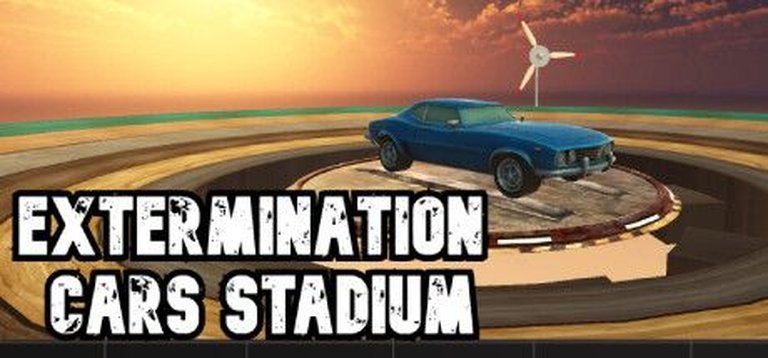
Extermination Cars Stadium is a vehicular combat racing game set in a stadium arena, where players customize armored cars to engage in destructive battles. The objective is to eliminate all opponents while surviving the onslaught to become the sole champion, earning money and fame in this innovative battle royale-style racing experience.
Where to Buy Extermination Cars Stadium
PC
Extermination Cars Stadium: A Review of a Digital Ghost
Introduction: The Specter of Obscurity
To review Extermination Cars Stadium is not to analyze a game, but to perform an autopsy on a ghost. Released on November 13, 2022, for Windows by the entity “HandMade Games” (with developer listed as the individual “Balti Calarasi” on Steam and confusingly as “Atomic Fabrik” on Metacritic), this title exists in a peculiar state of digital limbo. With a list price of $0.99, frequently discounted to $0.49, and a SteamDB owner count of “Less than 20,000,” it is a whisper in the cacophony of the indie storefront. My thesis is not that Extermination Cars Stadium is a lost masterpiece or a fascinating failure, but that it is a perfect, almost crystalline, artifact of the contemporary “ultra-low-budget, hyper-niche” indie ecosystem. Its review becomes an exercise in documenting absence, analyzing the void where expected content, context, and community should be, and questioning what it means for a game to “exist” in 2025 with virtually no trace of its own creation or consumption.
Development History & Context: The Solo Dev in the Algorithmic Fog
The development history of Extermination Cars Stadium is, for all practical purposes, non-existent in the public record. No interviews, no devlogs, no post-mortems, and no press releases preface its release. The credited developer, Balti Calarari (as listed on Steam), is a name with no discernible prior or subsequent credits in the mainstream gaming ecosystem. The publisher, HandMade Games, is a similarly cryptic entity with a minuscule footprint, its Steam page listing only this title and a couple of other obscure, low-count releases like “Buildway” and “Super Robot Wars.”
This places the game squarely within the “asset-store-constructed, solo-dev” model that has proliferated in the 2020s. The technological constraints were likely minimal—the system requirements (Intel Dual Core, 2GB RAM, Intel HD graphics) are near-universal for any PC from the last decade, suggesting a game built in a simple engine like Unity or Godot with pre-made vehicle and environment assets. The gaming landscape of late 2022 was dominated by blockbuster tentpoles, live-service behemoths, and a flooded, desperate indie market on Steam where discoverability is the primary challenge. Extermination Cars Stadium did not enter this landscape; it dissolved into it. Its context is not one of creative tension with the era’s trends, but of complete statistical insignificance against them. It is a game that could have been made by anyone, anywhere, and for all public intents, was made by no one notable.
Narrative & Thematic Deep Dive: The Easter Egg Metaphor and the Void of Lore
The official Steam description provides the sole, meager narrative frame: “It’s like the tradition in Eastern Europe with the breaking of Easter eggs, only the strongest remains behind.” This is the game’s stated thematic core—a ritualistic, symbolic combat where victory is total annihilation and survival is the only narrative payoff. The player is implicitly the “destroyer,” offered “money and fame” for acts of vehicular violence, a premise that frames the arena not as a sport, but as a brutal, amoral spectacle. The tone is cynical and transactional, presenting the violence as “something dirty in the middle.”
However, this thematic skeleton is entirely unsupported by any in-game narrative apparatus. There are no characters beyond the implied drivers of the 4 “destroyer cars.” There is no dialogue, no story mode, no context for the “Stadium,” and no explanation for the “levels.” The only lore-related community interaction, a lone Steam discussion thread titled “So whats the lore?” from April 2024, posits a theory of “a romance between the player and the lambo.” This bizarre, fan-created headcanon—born from a complete textual vacuum—is more telling than the official text. It demonstrates how a community, even a non-existent one, will strain to invent meaning where none is provided. The game’s narrative identity is therefore a dual void: the empty, metaphorical promise of the store page, and the absurdist, user-generated fiction that orbits it. It is a game about extermination that has exterminated its own story.
Gameplay Mechanics & Systems: A Skeleton of a Concept
From the sparse feature list (“4 destroyer cars,” “10 levels,” “Timer,” “Level of destruction of the car”), we can reconstruct a bare-bones gameplay loop. This is a top-down or diagonal-perspective (MobyGames lists “Behind view / Diagonal-down”) vehicular combat/arena brawler. The core mechanic is a demolition derby with a survival goal: be the last car functional in the arena.
* Vehicles & Progression: Four distinct cars suggest minor statistical or visual differences (speed, armor, handling), but with no progression system mentioned. There is no unlockable content, no upgrade paths, no garage. The “Level of destruction of the car” is likely a rudimentary damage meter—perhaps visually represented by smoke, sparks, or part loss—which serves as the primary failure condition (total destruction = elimination).
* Core Loop & Structure: The “Timer” implies a match or level is time-limited, either to force a kill count or to add pressure. “10 levels” could mean 10 unique arena maps or 10 sequential rounds within the same arena. The absence of any mention of AI difficulty, game modes (beyond the implied “last man standing”), or local/online multiplayer suggests a profoundly limited, likely single-player only experience against simple, scripted or state-based AI opponents.
* Interface & Innovation: The “Direct control” interface points to simple, arcade-style driving (WASD/Arrow keys + maybe a spacebar for a primary attack or “boost”). There is no hint of sophisticated physics, complex weapon systems, or strategic depth. Any “innovation” claimed in the ad blurb (“a new type ofracing – competition game”) is immediately negated by the sheer, decades-old familiarity of the demolition derby concept. The game’s systems are not innovative; they are minimalistic to the point of being skeletal. The “flaw” is not in broken complexity, but in a profound lack of substance.
World-Building, Art & Sound: The Aesthetics of Nothingness
Here, the review confronts a true black hole. There are zero screenshots, videos, or audio clips publicly associated with the game on its Steam page or MobyGames entry. The Steam “Screenshots” tab is empty. Community uploads are absent. We have no visual data on the “Stadium” arenas, the car models, the color palette, or the user interface.
We must therefore infer from context. Given the developer’s apparent scale and the $0.49 price point, the art direction is almost certainly:
1. Extremely Low-Poly 3D or Simple 2D Sprites: Using basic geometric shapes for cars and flat, tiled textures for arenas.
2. A “Greybox” or “Placeholder” Aesthetic: Environments likely consist of plain concrete textures, minimal obstacles, and poor lighting. The “Stadium” is probably a flat, enclosed plane.
3. Minimalist UI: A basic health bar, timer, and perhaps a simple kill counter.
4. Audio: A strong likelihood of using free or stock sound effects for engine roars, collisions, and a single, looping background track. The Steam page confirms only English “Full Audio” and “Subtitles,” but without a single word of script, the “subtitles” claim is rendered meaningless.
The atmosphere, therefore, is not one of gritty destruction or arcade excitement, but one of functional emptiness. The world-building is the world of a default Unity project. The sound design is the sound of nothing remembered. The game’s contribution to experience is a blank canvas onto which a player’s imagination (or the Steam thread’s “lore”) might project, but which the game itself actively refuses to populate.
Reception & Legacy: The Sound of One Hand Clapping
The critical and commercial reception is a study in null results.
* Critical Reception: There are zero critic reviews aggregated on Metacritic or MobyGames. The MobyGames entry explicitly states “Be the first to add a critic review for this title!” Curators on Steam have reviewed it, but their feedback is not publicly summarized.
* Commercial Reception: Steam shows “8 user reviews” with a breakdown that, when filters are cleared, reveals a total of 17 reviews (8 positive, 9 negative) according to Steambase data. This represents a microscopic sample from a presumed owner base of under 20,000. The “Player Score” of 47/100 on Steambase signifies a “Mixed” reception, but with such a minute and likely polarized sample (dedicated fans vs. bored bargain-hunters), it is statistically worthless.
* Evolving Reputation: There is no reputation to evolve. The game has no cultural footprint. It has not been featured in “hidden gem” lists, discussed in YouTube “worst games” compilations, or written about by niche blogs. It is a perfect non-event.
* Influence: Its influence on the industry is zero. It has inspired no clones, contributed no mechanics to the zeitgeist, and been cited by no developers. The “Extermination” and “Stadium” strings in its title link it via algorithmic association to titles like Starship Troopers: Extermination (2023) or the 1987 arcade game Extermination, but this is a coincidence of metadata, not design lineage.
* Legacy: Its legacy is that of a digital glyph. It serves as a data point in the vast, uncountable mass of Steam’s “long tail.” It is a testament to the accessibility of game development tools and storefronts, but also to the crushing indifference of the market. It will be preserved in MobyGames and SteamDB not because it was played or loved, but because it was released. Its ultimate legacy will be as a ghost entry in databases, a warning about obscurity, and perhaps as a punchline or curiosity for future historians examining the sheer volume of “content” that vanishes without a trace.
Conclusion: A Monument to Nothing
Extermination Cars Stadium is not a bad game in any traditional sense, because evaluating it as a “game” requires a baseline of functional completeness and intentional design that it does not demonstrate. It is, instead, a release event—the act of a compiled binary being published to a storefront. The analysis reveals a project with no discernible design vision beyond a two-sentence elevator pitch, no artistic identity, no community, and no reception. To give it a “score” would be to invent criteria from whole cloth.
In the canon of video game history, it occupies a space even more obscure than the infamous Big Rigs: Over the Road Racing. That notorious title at least had a catastrophic, memorable failure state. Extermination Cars Stadium has no failure state memorable enough to be documented. It is the gaming equivalent of a blank sheet of paper sold as a “novel.” Its place in history is not as a game to be played, but as a canary in the coal mine of digital oversaturation. It exemplifies the endpoint of the “anyone can publish” ideal: a product so devoid of craft, communication, or ambition that its primary function is to contribute to the statistical noise that drowns out all signal. It is not a forgotten classic; it is a forgotten fact. A footnote stating: “Here, something was once listed. Now, it is only data.” The final, definitive verdict is that Extermination Cars Stadium is historically insignificant, artistically inert, and conceptually inert—a perfect zero in the grand equation of interactive media. Its only enduring lesson is that existence on a storefront is not synonymous with existence in any meaningful cultural or experiential sense.