
- Release Year: 2017
- Platforms: Linux, Macintosh, Nintendo Switch, Windows, Xbox One
- Publisher: Boombox S.L., NerdRage Studios Ltd.
- Developer: NerdRage Studios Ltd.
- Genre: Action
- Perspective: Side view
- Game Mode: Co-op, Single-player
- Gameplay: Platformer, Shooter
- Average Score: 82/100
Description
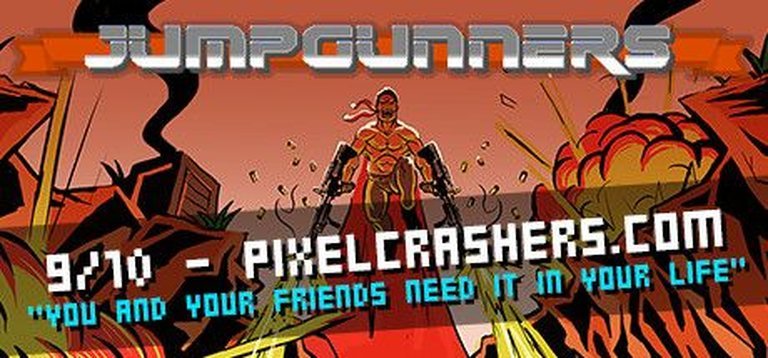
Jump Gunners is a fast-paced 2D side-scrolling multiplayer platform shooter where up to four players battle in vibrant arenas using an arsenal of guns, explosives, and special abilities while dodging random environmental hazards like sudden waves and airstrikes. Developed by NerdRage Studios, it emphasizes local couch co-op and competitive chaos with simple controls but deep strategic gameplay across multiple modes, making it a standout party game for friends.
Gameplay Videos
Where to Buy Jump Gunners
PC
Jump Gunners Reviews & Reception
metacritic.com (72/100): If you’re after some classic multiplayer action, then Jump Gunners is a game you need to add to your collection.
monstercritic.com (90/100): If you’re after some classic multiplayer action, then Jump Gunners is a game you need to add to your collection.
opencritic.com (80/100): it’s a must-have for multiplayer action.
Jump Gunners: The Chaotic Charm of a One-Man Indie Revolution
Introduction: A Blast from the Couch Past
In an era dominated by sprawling live-service models and online multiplayer ecosystems, Jump Gunners stands as a defiant, joyous anachronism. Released in 2017 by the singular vision of James Oliver Stone under the NerdRage Studios banner, this game rejects the contemporary trend of isolationist gaming. Instead, it fervently champions the tangible, sweat-inducing, controller-throwing camaraderie of local multiplayer. Its thesis is simple yet profound: the purest form of digital conflict is shared on a single screen, where you can see the grin of triumph or the scowl of betrayal on your friend’s face in real-time. Jump Gunners is not merely a game; it’s a cultural artifact that argues for the enduring power of the couch, a love letter to the era of Contra and Smash TV filtered through the precise, chaotic lens of modern indie design. It poses the question: can a solo developer, armed with Unity and a lifetime of gaming passion, recapture the magic of split-screen mayhem? The answer is a resounding, explosive yes.
Development History & Context: The 20-Year Leap of Faith
The story of Jump Gunners is intrinsically the story of its creator. James Oliver Stone, not to be confused with the filmmaker, was a 40-year-old man who, as documented in his viral Reddit post, quit a 20-year career in non-game-related fields to pursue his childhood dream of game development. This was not a fresh-faced graduate but a mature artist with a clear, unwavering vision. The development was a largely solo endeavor, with Stone credited for concept, design, programming, and art—a testament to a staggering range of skills. The only external contributions were David Gucwa’s “over the top” chiptune-inspired soundtrack and a small team of dedicated testers, including his best friend Andrew Minor, who endured the process “with a crap controller.”
Technologically, the mid-2010s provided the perfect canvas: Unity had matured into a robust engine for 2D games, allowing a single developer to handle all facets of production. The game’s “Fixed / flip-screen” perspective and pixel-art aesthetic are deliberate nods to 16-bit era constraints, turning technological limitation into a cohesive stylistic choice. This was released into a market experiencing a renaissance of “couch co-op” and “party games,” spurred by titles like TowerFall Ascension (2013) and Broforce (2015). Jump Gunners entered this space not as a me-too product, but as a focused, mechanic-driven hybrid that married the horizontal platforming of the former with the destructible terrain and weapon madness of the latter, most famously compared by creator Mike Bithell (of Thomas Was Alone fame) to “the beautiful child of Towerfall and Worms.”
Narrative & Thematic Deep Dive: The Story is the Scuffle
Jump Gunners presents a fascinating case study in minimalist narrative design. There is no story mode, no cutscenes, no lore or backstory for its customizable pixel protagonists. The narrative is emergent, authored entirely by the players. The “plot” is whatever dramatic rivalry or temporary alliance forms between friends in a given session. The characters are blank slates—their identity defined by their chosen color and the ridiculous hat they don.
This absence of prescribed narrative is its greatest thematic strength. The game’s core theme is pure, unadulterated play. It explores the social dynamics of competition and cooperation without verbal or textual barrier. The dialogue is the thwump of a rocket launcher, the sizzle of a flamethrower, and the ensuing shouts of “No way!” or “I totally meant to do that!” The underlying message is anti-grind and anti-solitude. It posits that the highest form of gaming enjoyment is derived from shared physical space and immediate, visceral feedback. The “war” is a playful one, a sandbox for social friction and bonding. The only narrative arc is the one that travels from “First Blood!” to the final, hilarious demise of the last player standing.
Gameplay Mechanics & Systems: The Precision of Chaos
At its heart, Jump Gunners is a 2D side-scrolling arena shooter, but its genius lies in a single, defining mechanic: Recoil Jumping. Every weapon fires with a significant kickback. Shooting downwards propels your character upward, shooting upwards pushes them down. This transforms the platforming from a simple traversal exercise into a dynamic flight system. Players must master not just aiming, but positioning via gunfire, using shotgun blasts to rocket onto higher platforms or reverse-fire a sniper rifle to drop safely from deadly heights. This mechanic is the game’s soul; it’s easy to learn (“shoot to jump”) but has a cavernous skill ceiling, allowing for trick shots, defensive maneuvering, and breathtaking evolutions of play.
The systems built around this are elegantly chaotic:
* The Arsenal: The game delivers on its promise of “20+ over the top weapons.” The roster includes classics (pistol, machine gun, shotgun), heavy artillery (rocket launcher, gauss rifle), and bizarre tools (the “Cattle Prod” stun gun, the “Black Hole” generator). Each weapon has distinct recoil, rate of fire, damage, and projectile behavior, forcing players to constantly adapt their recoil-jumping style. A flamethrower offers sustained, low-recoil pressure; a sniper rifle is a single, devastating repositioning tool.
* The Battlefield: The “80+ destructible environments” are not just a gimmick but a core tactical layer. Levels are built from tile-based terrain that can be blasted away. This allows for:
* Creating new paths or shortcuts mid-match.
* Removing cover from under an opponent.
* Digging pitfalls or funneling enemies into kill zones.
* The ultimate risk-reward: destroying the ground beneath yourself to escape, only to fall to your death.
* Game Modes: The package is robust. Last Man Standing is the pure test of skill. Team Deathmatch and Capture the Flag introduce coordination (or betrayal). “Hilarious multiplayer & single player minigames” are a standout: modes like “Rocket tag” (keep a rocket alive) or “Gun game” (progress through a preset weapon cycle) provide frantic, rule-set variations that refresh the core loop. The “Tough Single player challenges” are a Bot-filled gauntlet that, while functional, are widely cited as the game’s weaker link due to AI that, while “incredible” per some critics, cannot replicate the psychological warfare of human opponents.
* Customization & Progression: Character customization is purely cosmetic (colors, hats), emphasizing skill-based prestige over unlocks. The “Custom game mode” is exceptionally powerful, allowing players to tune weapon sets, gravity, health, and even enable/disables specific environmental hazards like sudden waves or air strikes, making it a perfect tool for tailored house rules.
Flaws emerge primarily in solo play and UI/feedback. The single-player experience is barebones, suffering from a lack of compelling bot AI personalities or a structured campaign. The user interface, while functional, is often described as basic, with some important information (like precise weapon stats or level layouts) not readily available, forcing players to learn through experimentation—which is part of the fun but can feel opaque initially.
World-Building, Art & Sound: Retro Authenticity Meets Modern Polish
The aesthetic of Jump Gunners is a masterclass in efficient, expressive pixel art. The visual style is not “retro” as an aesthetic afterthought, but as a functional and atmospheric choice. The limited color palettes and crisp, animation-focused sprites ensure clarity in the heat of battle—you can instantly tell a rocket’s trajectory from a sniper’s laser sight. The environments, from jungle temples to cyber-factories, are themed with charming, economical detail. The true world-building happens in the destructibility: watching a meticulously constructed brick wall explode into meaningful debris is a visceral pleasure.
The sound design is equally purposeful. David Gucwa’s soundtrack is a collection of driving, energetic chiptune tracks that never overwhelm the action but provide a propulsive, upbeat rhythm. The sound effects are where the game truly sings: each weapon has a distinct, weighty audio signature. The deep thwump of a rocket, the sharp crack of a sniper rifle, the manic buzzing of an electric weapon—these sounds are critical feedback tools. They communicate weapon identity, impact, and, in the case of certain explosives, impending doom. The combination creates an atmosphere of cartoonish violence—everything feels powerful and impactful, but never gruesome.
Reception & Legacy: Cult Classic in the Making
Jump Gunners launched to a muted but positive critical reception. Its aggregated scores vary (77% on MobyGames from 3 critics, 72/100 on Metacritic from 4), revealing a clear consensus: it is a superb multiplayer game with a weaker solo offering.
* Critical Praise: reviewers consistently hailed it as a must-have for local multiplayer. TheXboxHub (90%) called it “one of the best party platformers released this year,” praising its “incredible AI” (for bots) and replayability. GameSpew (80%) championed its “easy to pick up yet hard to master” design, while Xbox Tavern (79%) highlighted the “healthy serving of weaponry and its deep pool of destructible maps” that keep the game “constantly fresh.”
* Critical Criticism: The harshest reviews, like XBLA Fans (40%), argued the game’s strong core concept was let down by a lack of polish and personality, feeling like “a basic competitive sidescrolling shooter” that “doesn’t have a high level of polish.” HonestGamers (60%) noted it was “an excellent foundation” but one best enjoyed with “couch co-op” friends you don’t mind falling out with.
* Commercial & Cultural Footprint: Its commercial impact was modest but successful for a niche indie. Its true legacy is being cementing as a cult classic in the local multiplayer genre. Its port to Xbox One (2018) and Nintendo Switch (2019) expanded its reach to the console咖喱 (local multiplayer) audience. The consistent praise from developers like Mike Bithell and a dedicated player base (as seen in its “Mostly Positive” Steam rating) have solidified its reputation. It didn’t revolutionize the industry, but it perfected a specific, beloved niche. It serves as a direct spiritual successor to the Worms/TowerFall lineage, proving that the “couch combat” genre still has room for innovation through a single, brilliantly executed mechanic.
Conclusion: A Championship Caliber Niche Player
Jump Gunners is not for everyone. Those seeking a deep narrative, a compelling single-player campaign, or graphical photorealism will be left cold. But for its intended audience—a group of friends with a console, a screen, and a desire for laughter-fueled, skill-based competition—it is nothing short of essential.
James Oliver Stone’s gamble paid off, delivering a game of remarkable mechanical depth and social payoff. Its “recoil jumping” system is a design masterstroke, turning every match into a physics-based puzzle and skill expression. Combined with a vast array of weapons, brilliantly destructible arenas, and a suite of thoughtful game modes, it creates an experience that is infinitely replayable and organically hilarious.
In the grand tapestry of video game history, Jump Gunners may not be a landmark title with blockbuster sales or genre-creating impact. However, its place is secure as a definitive, love letter to the lost art of shared-screen gaming. It is a beacon for the indie developer, proving that a singular, polished vision, built on a foundation of classic mechanics and pure fun, can carve out a beloved and lasting legacy. It is, as its subtitles proclaim, the “definitive couch combat game” for those who remember what that means—and a perfect introduction for those who don’t. Its ultimate victory is not in high scores, but in the nights of noise, rivalry, and camaraderie it facilitates, one perfectly aimed recoil jump at a time.