
- Release Year: 2008
- Platforms: Windows
- Publisher: City Interactive S.A., Noviy Disk
- Developer: City Interactive S.A.
- Genre: Action
- Perspective: 1st-person
- Game Mode: Single-player
- Gameplay: Shooter
- Setting: Africa, Europe, World War II
- Average Score: 83/100
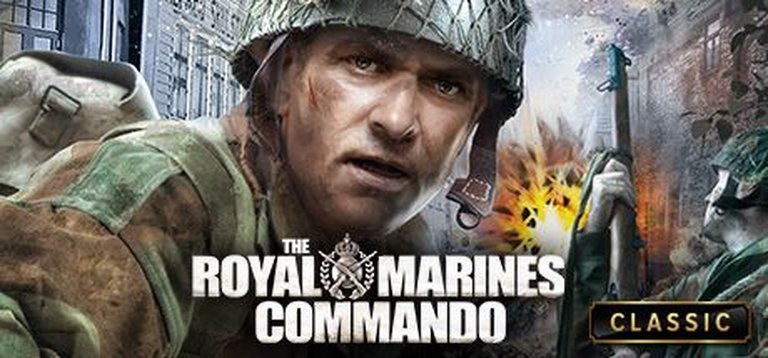
Description
The Royal Marines Commando is a first-person shooter set during World War II, casting players as elite British Royal Marine commandos undertaking covert operations and raids across multiple theaters. Spanning locations from the African deserts to European battlefields, including specific areas in France and Scotland, the game focuses on tactical combat and historically inspired scenarios in its mission-based gameplay.
Gameplay Videos
Where to Buy The Royal Marines Commando
PC
The Royal Marines Commando Patches & Updates
The Royal Marines Commando Guides & Walkthroughs
The Royal Marines Commando Reviews & Reception
gamepressure.com (71/100): Many users appreciate the game for its nostalgic resemblance to early first-person shooters like Call of Duty and Medal of Honor.
metacritic.com (90/100): Приятная музыка
imdb.com (90/100): Good polish shooter
gamesreviews2010.com : The Royal Marines Commando is a well-made and enjoyable RTS game that offers a challenging and immersive experience.
The Royal Marines Commando Cheats & Codes
PC
Press “T” during game play, then enter one of the following codes to activate the corresponding cheat function.
| Code | Effect |
|---|---|
| Ammo | Unlimited ammunition. |
| God mode | God mode. |
The Royal Marines Commando: A Budget WWII Shooter’s Archaeological Dig
Introduction: Ghosts of the Battlestrike
In the vast, overcrowded graveyard of World War II first-person shooters, few titles occupy as paradoxical a space as The Royal Marines Commando. Released in 2008 by Polish studio City Interactive, it arrived not with a bang, but with a quiet thud onto digital shelves, a title that seemed to exist in a temporal rift—a game visually and mechanically reminiscent of 2003-2004, launched into an era being utterly transformed by Call of Duty 4: Modern Warfare. Its critical reception was a masterclass in apathy, averaging a mere 34% across the few outlets that deigned to review it. Yet, over fifteen years later, it maintains a “Mostly Positive” (71%) rating on Steam from hundreds of user reviews, lauded for its short, nostalgic fun and affordable price tag. This review will argue that The Royal Marines Commando is not a “good” game by any conventional metric, but it is an instructive one. It serves as a crystalline snapshot of a specific, budget-conscious development ethos of the late 2000s, a game built on reused technology and formulaic design that inadvertently highlights the very elements—tight scripting, compelling AI, set-piece design—that define its more acclaimed peers. To study Royal Marines Commando is to understand the floor of the genre it attempted to join.
Development History & Context: The Engine of Reuse
Studio & Vision: The Royal Marines Commando was developed and published by City Interactive S.A. (now CI Games), a Polish studio with a prolific, if unspectacular, output in the action genre. Under the leadership of CEO Marek Tymiński and Director of Development Leszek Kobyliński, the project was part of the studio’s “Battlestrike” series, a direct sequel in all but name to 2006’s World War II Combat: Road to Berlin. The creative vision, as pieced together from scant credits and the game itself, was not one of innovation but of efficient replication: to deliver a competent, low-budget WWII FPS using proven, in-house technology and design patterns. The screenplay, credited to Konrad Filipowicz, Jakub Majewski, and Piotr Wątrucki, suggests a narrative built from a standardized template rather than a desire for historical or dramatic depth.
Technological Constraints & The LithTech Legacy: The game’s most defining technical feature is its engine: LithTech Jupiter EX. This is not some custom, bespoke tool, but the very same iteration of Monolith Productions’ engine that powered the 2005 landmark F.E.A.R.. As a ModDB tutorial explicitly notes, the similarity is blatant. This was a double-edged sword. On one hand, it provided a relatively robust foundation for physics (ragdoll effects, breakable bottles, extinguishable lights as noted by an IMDb user), dynamic lighting, and particle effects—technologies that were impressive in 2005 but were visibly dated by 2008. On the other hand, it tethered the game to the aesthetic and systemic limitations of its source material. The “astonishing graphics” promised in the official blurb were, in reality, a pale, low-polygon imitation of F.E.A.R.‘s gothic horror, applied to muddy European towns and generic African outposts. The reuse was so thorough that the community could adapt F.E.A.R.‘s WorldEdit level editor to create custom maps, though with significant limitations due to missing source files for game logic and prefabs.
The 2008 Gaming Landscape: The game’s release date (November 2008) placed it in a的市场 dominated by Call of Duty: World at War and Brothers in Arms: Hell’s Highway. These titles featured scripted spectacle, refined gunplay, and a commitment to cinematic pacing. Royal Marines Commando, by contrast, felt like a relic from the era of Medal of Honor: Allied Assault—linear, corridor-based, and reliant on simple “go here, shoot this, press that” objectives. It was a budget-priced ($4.99 on Steam) product attempting to compete in a space where AAA franchises had already set the new standard.
Narrative & Thematic Deep Dive: Paper-Thin Propaganda
The narrative, as delivered through the game’s sparse cutscenes and in-mission dialogue, is a masterclass in utilitarian storytelling. The premise, lifted from the official description: In 1941, British intelligence discovers German plans for a new type of “U-boat” submarine (the text oscillates between “U-boat” and the vaguer “deadly weapon”) that will grant the Nazis “worldwide naval supremacy.” The response is the deployment of the Royal Marines Commandos on a series of missions across France, Africa, Scotland, and Norway to sabotage this project.
Plot & Structure: The campaign is a disconnected string of 10-12 missions with no chronological or logical through-line. One moment you’re sabotaging a coastal battery in Scotland, the next you’re fighting in a North African desert town, then a Norwegian fjord. There is no character arc, no overarching strategic context beyond the initial premise. Each mission follows a rigid template: infiltrate an area, eliminate resistance, plant explosives on a specific target (radio tower, bunker, ship), and exfiltrate.
Characters & Dialogue: The cast is comprised of a handful of archetypes: the grizzled, constantly barking Captain (whose “constant remarks” were a lone positive noted by a Steam user), the quiet rifleman, and the occasional intelligence officer over a radio. There is no development. The dialogue consists almost entirely of tactical callouts (“Grenade!”, “Clear!”, “Moving up!”) and brief objectives. The promise of feeling “part of the team” is fulfilled only in the most superficial sense; your AI squadmates exist primarily as window dressing, occasionally firing at enemies but more often featured as a liability (see AI section).
Themes: Any thematic weight is accidental. The game’s tagline “Join the Elite!” is ironic, as the experience is anything but elite. The themes that emerge are not those of brotherhood or sacrifice, but of industrial repetition—the theming of a factory line. You are not a commando; you are a component in a level-design machine. The only “historical” theme is a jingoistic, Allied-centric perspective where Germans are faceless, shouting targets who “template greet a thrown grenade” (as the Russian review derisively notes). There is no exploration of the moral ambiguity of war, the specific history of the Royal Marines, or the strategic stakes beyond the MacGuffin weapon. It is WWII as a generic backdrop for shooting.
Gameplay Mechanics & Systems: The Corridor Shoot Loop
Core Loop: The gameplay loop is as simple as it gets: Move from point A to point B, clear rooms of stationary or patrolling enemies, interact with an objective device, repeat. Levels are almost entirely linear, funneling the player through narrow streets, identical warehouse interiors, and trenches with no meaningful alternative paths. This linearity is both a design choice and a technical limitation, born from the engine’s focus on scripted encounters and controlled AI.
Combat & Gunplay: The combat is the game’s most earnest, yet most flawed, system.
* Weapons: The arsenal is a standard WWII roster—Lee-Enfield rifle, Sten submachine gun, Bren light machine gun, German Kar98k and MP40, plus a few explosives. Reviewers noted a “decent roster,” which is accurate for the genre’s basics, but animations are stiff, and sound design is serviceable but unimpactful.
* Handling & Aiming: This is a major point of criticism. The gunplay suffers from misaligned sights and a general lack of “weight” or precision. Aiming down sights often feels disconnected from the actual bullet path, leading to frustrating misses. The recoil pattern is minimal and unpredictable. This directly contradicts the claims of “outstanding AI” (from the Steam store blurb) and places the game in the “flawed systems” category.
* Physics & Interactivity: Here, the game shows its F.E.A.R.-derived roots. The ragdoll physics are exaggerated—enemies “fly when they die,” as one user reviewer cheerfully noted. Environmental interaction is present but shallow: bottles and certain crates shatter, lights can be shot out (though not everywhere), and fire can be a hazard. These moments of chaotic physics provide the game’s chief Moments of emergent fun, breaking the rigid monotony.
Character Progression & RPG Elements: There are none. There is no perk system, no unlockable weapons, no skill tree. You begin a mission with a preset loadout (usually a rifle and SMG) and whatever ammo you can scavenge. Progression is purely linear and level-based. This aligns with the game’s design philosophy of being a short, 1.5-2.5 hour “experience” (as noted by a Steam reviewer on hard difficulty) rather than a deep, replayable shooter.
User Interface: The UI is basic and functional: a crosshair, ammo counter, health bar, and mission objective tracker. There are no frills. The infamous “keys are not configured” issue at startup, noted on both IMDb and Steam, points to a lack of polish in the options menu and is a perfect metaphor for the game’s rough-around-the-edges nature.
AI: The “Outstanding” Claim vs. Reality The Steam store claims “outstanding AI.” The user consensus and critic reviews tell a different story: problematic AI. Enemy AI is simple—take cover, pop out, return fire. They lack sophistication in flanking or suppression. The friendly AI, however, is frequently described as a hindrance, getting stuck on geometry, failing to follow effectively, or providing no meaningful support. They are present for aesthetic “team” feel but are functionally useless, a stark contrast to the squad-based callouts in the game’s description.
World-Building, Art & Sound: A Patchwork of Place
Visuals & Setting: The game ambitiously spans four theaters (France, Africa, Scotland, Norway), but the asset reuse is blatant. Muddy, low-resolution textures, blocky architecture, and a muted, brown-heavy color palette dominate. The “dynamic lighting” is often just flickering lamps or muzzle flash. The world feels less like a lived-in WWII environment and more like a series of test levels built from a limited set of modular assets. The atmosphere is one of cheapness and repetition. The only memorable visual moments are the occasional expansive (but still sparse) exterior vistas, which feel more like accidental emptiness than deliberate scale.
Sound Design & Music: The sound design is a highlight, relatively speaking. Gunshots have a satisfying crunch, explosions are adequate, and the environmental sounds (dripping water, wind) are present. The music is repeatedly praised in user reviews (“Nice music”). It consists of moody, subdued orchestral tracks that aim for a serious tone, effectively enough creating a baseline tension, even if the melodies are forgettable. The voice acting, however, is wooden and limited to the captain’s barked orders and a few radio transmissions.
Atmosphere & Cohesion: The overall atmosphere is one of derivative grimness. It tries to emulate the wartime grit of Call of Duty or Medal of Honor but lacks the cinematic timing, environmental storytelling, and artistic cohesion to make it feel authentic. The jump from a rainy Scottish castle to a sun-baked African village is jarring not just geographically, but in terms of art asset quality and lighting setup, highlighting the project’s disparate level design.
Reception & Legacy: The Divergence ofCritic and Player
Critical Reception: The professional press was almost uniformly dismissive, as evidenced by the 34% average.
* Doupe.cz (40%) saw it as “průměrná” (average) action filler, good for “a few hours of mindless action,” but lamented its short 6-hour playtime.
* GamePark (31%) was harsher, calling it a “supermarket title” destined for bargain bins, a game that “lagged behind its time by a good few years.” Their review perfectly captures the critical consensus: it was technically and design-wise obsolete upon release.
* Absolute Games/AG.ru (20%) delivered the most scathing take, stating the game offered nothing beyond the “hit-run-repeat” loop and lacked any of the “inventions” that might have elevated it. They saw it as a cynical, low-effort product.
User Reception & The Steam Paradox: On Steam, the story diverges dramatically. With a “Mostly Positive” rating (71% of 191 reviews) and an AI-generated summary highlighting “nostalgic feel,” “short and fun gameplay,” and “affordable price,” the game has found a niche audience.
* Nostalgia as a Filter: Users frequently compare it favorably to early 2000s shooters like the original Call of Duty or Medal of Honor. Its jankiness is reframed as charm.
* Value Proposition: At a $4.99 price point (often on sale for less), its short length is a benefit, not a bug. It’s seen as a “quick, fun romp.”
* The “So Bad It’s Good” Factor: The exaggerated physics, broken AI moments, and sheer linearity create a kind of accidental comedy that some players enjoy.
* Localization Quirk: The IMDb user review’s assertion that “the game is completely in Russian, do not trust Steam” points to a messy distribution history (likely tied to Russian publisher Noviy Disk), which may have affected its accessibility and review base.
Influence & Legacy: By any meaningful measure, The Royal Marines Commando has no discernible influence on the industry. It did not pioneer mechanics, set graphical standards, or alter design philosophies. Its legacy is purely archaeological.
1. A Case Study in Budget Development: It exemplifies the “repackage and resell” model of using a pre-existing, licensed engine (LithTech) and existing assets to create a new, low-cost title for a specific genre niche.
2. The Pre-Steam “Bargain Bin” Aesthetic: It represents the tail end of the brick-and-mortar era’s budget software—games that lived on the bottom shelves, purchased by curious or cost-conscious consumers, their flaws forgiven or unseen due to price.
3. Modding Legacy (Micro): As the ModDB article shows, it has a tiny, persistent modding community solely interested in creating custom single-player levels using the F.E.A.R. editor. This is a testament to the engine’s underlying tools, not the game’s design.
4. A Benchmark for “Worst Of” Lists: It occasionally surfaces in lists of the worst WWII shooters or bad Steam games, serving as a low-water mark against which other titles are measured.
Its true successor is not another game, but the very business model CI Games would later pivot from. The studio moved on to more successful, higher-budget franchises like Sniper: Ghost Warrior and Lords of the Fallen, leaving this particular relic as a curious footnote in their corporate history.
Conclusion: A Flawed Artifact of Its Time
The Royal Marines Commando is not a game to be celebrated for its artistry, its narrative, or its gameplay. By any critical standard of its time—or any time—it is a failure. The narrative is nonexistent, the gunplay is flawed, the AI is broken, and the world is a repetitive, low-fidelity collage. The 20-40% critic scores are not just fair; they are charitable.
Yet, its existence is fascinating. It is a time capsule. It reveals a development process prioritizing cost-efficiency over creativity, reusing an aging engine to chase a trend with minimal investment. Its Steam “Mostly Positive” status is not a rehabilitation of its quality, but a reflection of a player base that, in the age of $70 AAA games, occasionally craves a simplistic, short, and cheap experience—one where the flaws become part of the rustic charm. It is the gaming equivalent of a bargain-bin paperback: poorly written, formulaic, but capable of providing a few hours of undemanding diversion for the right reader at the right price.
In the grand museum of video game history, The Royal Marines Commando does not deserve a prominent exhibit. It is a dusty, tarnished artifact in a back room, tagged “Budget WWII Shooters, 2000s.” But for the historian, it is invaluable. It demonstrates what happens when a capable engine (F.E.A.R.‘s LithTech) is stripped of its creative vision and narrative purpose, reduced to a mere shooter template. It stands as a silent, playable monument to the countless anonymous, low-scoring games that form the vast bulk of the industry’s output—forgotten by critics, occasionally rediscovered by bargain hunters, and forever instructive about the very底板 of what makes a shooter compelling versus merely functional. Its final, definitive verdict is not a score, but a categorization: it is a historical curio, a playable document of efficiency over ambition, and little more.