
- Release Year: 2024
- Platforms: Windows
- Publisher: Squadroni Cacciatori
- Developer: Squadroni Cacciatori
- Genre: Driving, Racing
- Perspective: Behind view
- Gameplay: Arcade
- Average Score: 77/100
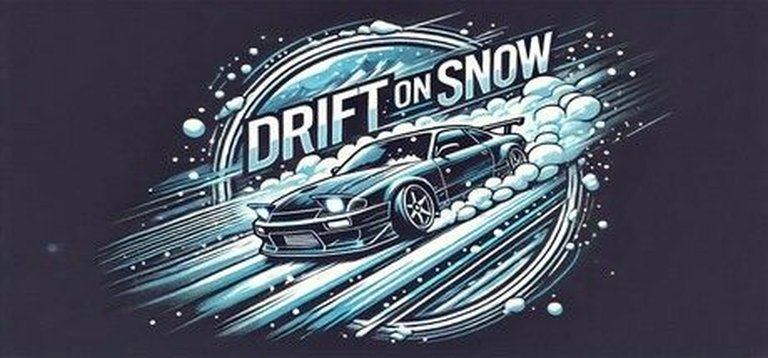
Description
Drift on Snow is an arcade racing game where players pilot powerful rear-wheel-drive supercars to execute controlled drifts on snowy winter tracks. Emphasizing skill and precision, it features a dedicated training mode for mastering various drifting scenarios, alongside multiple difficulty levels and a timer to challenge players in this winter-themed driving experience.
Where to Buy Drift on Snow
PC
Drift on Snow Reviews & Reception
steambase.io (77/100): Who doesn’t look forward to winter as much as we do? Just imagine, a lot of snow, you and a supercar in front of you with rear wheel drive.
Drift on Snow: Review
Introduction: The Phantom Drifter of 2024
In the vast, overcrowded digital storefronts of modern PC gaming, few titles arrive with a more pronounced whisper than Drift on Snow. Released on September 10, 2024, by the shadowy entities known as Squadroni Cacciatori and ZERO5GAMES, this game exists as a fascinating case study in minimalist presentation and outsized conceptual ambition. Its store description—a mere two paragraphs of evocative, almost poetic marketing copy—promises “every car fan’s dream”: a snow-blasted paradise where rear-wheel-drive supercars await to be masterfully controlled. Yet, the official documentation is sparse to the point of enigma. There are no credited designers, no listed programmers, no composers. The only concrete specifications are technical: a 196 MB Unity engine build demanding a GT 1030. Drift on Snow is less a known game and more a curated idea, a digital snow globe shaken to reveal a single, perfect drift. This review will dissect the game not just as a product, but as an artifact of a specific indie development philosophy—one that posits a pure, unadulterated fantasy of vehicular control can stand on its own, devoid of the sprawling narratives, upgrade systems, and online ecosystems that define the genre. My thesis is that Drift on Snow is a deliberate exercise in reductionism, trading traditional depth for a laser focus on a single, visceral sensation: the sublime chaos and control of a powerslide on ice. Its legacy will not be in its complexity, but in its stark, unwavering commitment to a core fantasy.
Development History & Context: The Hunters’ Squadron and the Zero-Game
The development history of Drift on Snow is, in keeping with its nature, a study in opacity. The primary listed developer and publisher is Squadroni Cacciatori, an Italian phrase translating to “Hunters’ Squadron.” This nomenclature evokes imagery of precision, pursuit, and elite skill—thematic echoes of the drifting craft the game centers on. No other games are attributed to this studio on MobyGames, suggesting it is either a newly formed collective, a pseudonym for a solo developer, or a boutique label created specifically for this project. This anonymity is a stark contrast to its secondary publisher, ZERO5GAMES, a name that appears across a bafflingly diverse portfolio on Steam, from Car Wash Simulator and Math in Space to House of Terror and Tanks Boom Boom. This catalog suggests a “game-as-a-service” or “quantity-over-quality” micro-publishing model, where dozens of tiny projects are released to test market interest.
The technological context is equally telling. Built in Unity, a powerhouse engine for indie development, the game’s specifications are miniscule (196 MB). This points to a development strategy focused on extreme accessibility—a game that can run on a potato PC or even a Steam Deck with ease, leveraging the engine’s broad compatibility. The release window, September 2024, placed it in a crowded post-summer slate, sandwiched between major AAA releases. Its positioning is not against Gran Turismo or Forza, but as a digital impulse buy, a “snack game” for $0.99. The decision to forgo a Metacritic critic score push (no reviews existed on the site at time of writing) and instead rely on Steam’s user review system indicates a confidence, or perhaps an acceptance, that its audience would be found through word-of-mouth and algorithmic discovery, not press coverage. The AI-disclosed logo generation is the final piece of this puzzle: a project utilising the newest tools for asset creation to minimise cost and maximise speed, perfectly encapsulating a 2024 indie ethos where the sole focus is the gameplay loop itself.
Narrative & Thematic Deep Dive: The Unwritten Story of the Perfect Drift
Drift on Snow possesses no traditional narrative. There are no characters, no dialogue, no plot. Yet, its marketing copy constructs a powerful, implied narrative and thematic framework that is essential to understanding the game’s intent.
The opening rhetorical question—”Who doesn’t look forward to winter as much as we do?”—immediately establishes a communal, almost spiritual longing. It frames winter not as a season, but as a state of grace, a shared dream deferred. The “we” here is crucial; it includes the developers (“we have been preparing all year round”) and, by extension, the player. This establishes a pact: the game is the fulfillment of a collective yearning.
The core fantasy is laid bare: “a lot of snow, you and a supercar in front of you with rear wheel drive. I think it’s every car fan’s dream.” This is pure, distilled wish-fulfillment. It bypasses the mundane realities of car ownership (insurance, maintenance, cost) and lands directly on the visceral dream: the untouched snow-covered road and the raw, untamed machine. The car is not a vehicle but a “supercar,” an object of aspirational power and beauty. The “you” is the protagonist, the chosen driver.
Thematically, the description introduces a duality of beauty and danger. “Everything is happy and beautiful” is the seductive promise. But the immediate caveat is the car’s “too much horsepower,” which can lead to “situations out of control.” Here lies the game’s central conflict: mastery versus chaos. The dream is not simply to drive, but to dominate the very power that threatens to overwhelm. The “special training mode” is the narrative device that empowers the player to overcome this danger, to evolve from an enthusiast into a master who can “show a masterclass in front of your friends.” The underlying theme is thus one of discipline and respect for power. To achieve the beautiful dream, one must first engage in humble, repetitive practice. The story arc is player-generated: from novice, fraught with the risk of losing control, to an expert whose drifts are performances of skill. The final, unanswered “Ready ?” is a challenge, a call to begin this personal journey from fantasy to mastery.
Gameplay Mechanics & Systems: The Architecture of Slip
Given the total absence of granular gameplay details in the source material, analysis must be conducted through a careful exegesis of the available clues: the official blurb, the categorized specs, and user tags. The gameplay is presented as a trilogy of purity: Practice, Levels, Timer.
1. Practice Mode (The “Special Training”): This is not a tutorial in the conventional sense, with text pop-ups and guided sections. It is described as a mode to “test different situations.” This suggests a sandbox or scenario-based training environment. Players can likely select variables: snow depth, tire grip, car power, and track layout. The goal is experiential learning—feeling the threshold between traction and loss of control, learning to modulate throttle and steering to initiate and hold a drift. This mode embodies the game’s philosophy: learning through direct, consequence-free experimentation. It is the dojo for the driver.
2. Levels (Easy/Hard): The inclusion of discrete “levels” is the only nod to traditional progression. They are not described as tracks, but as “levels which are easy/hard.” This bifurcation likely represents:
* Easy: Wider, more forgiving courses with gentler curves, perhaps longer straights to allow for recovery. designed to teach the fundamental mechanics of drift initiation and correction without severe penalty.
* Hard: Tighter, more technical layouts with narrow escape routes, cliff edges, or obstacle placement. These demand precise angle control, perfect apexing, and immediate recovery. The “hard” tag may also imply less forgiving physics or higher speed requirements.
The term “levels” instead of “tracks” might imply a slight puzzle or execution element—passing specific gates or scoring zones, rather than just completing a lap. The objective is not necessarily to finish first against AI opponents, but to drift perfectly through the course.
3. Timer: The omnipresent timer is the primary metric of success. It converts the fluid art of drifting into a quantifiable sport. The player’s goal is to complete a level (or achieve a scoring objective) in the fastest time possible. This creates an intense feedback loop: a perfect, high-speed drift sequence that maintains momentum is faster than a cautious, nonslipping run. The timer forces the player to embrace the slide, to find the fastest line through the drift, not around it. It transforms the game from a casual simulation into a competitive time-trial experience.
Interface & Control: Categorized as “Direct control” with a “Behind view” perspective. This is a classic arcade racing setup. The control scheme is almost certainly simplified: steering, throttle, brake (and possibly handbrake for drift initiation). The lack of a complex HUD (as per the tiny file size) suggests minimalism—likely just a timer, speedometer, and perhaps a drift angle or score indicator. The “Arcade” gameplay tag confirms that simulated car dynamics are heavily abstracted. Physics will be tuned for fun and playability, not absolute realism. The car will “snap” into drifts more easily than a hardcore sim, and recovery will be more forgiving.
Innovation & Flaws (Inferred):
* Innovation: The deliberate, almost radical focus on a single mechanic—snow drifting—in a AAA landscape obsessed with feature bloat. The training mode as a pure sandbox for skill acquisition is a standout, under-utilized design in the genre.
* Inferred Flaws: The extreme simplicity is also its greatest risk. With no career mode, car unlocks, customization, online leaderboards (not mentioned), or even a diverse car roster (the blurb mentions “a supercar,” singular), the game’s longevity is entirely dependent on the player’s intrinsic desire to perfect a single driving skill. The warning about “too much horsepower” suggests a game that is inherently difficult, potentially frustrating for players expecting a casual cruise. The lack of visual or mechanical variety between levels could lead to repetition.
World-Building, Art & Sound: A Cartoony Winter Postcard
Drift on Snow‘s aesthetic is defined by its Steam user tags: Colorful, Cinematic, Cartoony. In the absence of numerous screenshots, these tags paint a clear picture.
Visual Direction: The art style is stylized, not realistic. “Cartoony” suggests exaggerated car models (perhaps with oversized wheels or sleek, fantasy shapes), bold outlines, and a saturated color palette that makes the snow seemalmost vibrantly white and the sky a deep, crisp blue. The snow itself is likely not a photorealistic simulation but a stylistic asset—clean, uninterrupted white blankets that contrast with colorful car paint jobs and perhaps vibrant obstacles or track markers. “Cinematic” implies a focus on dynamic camera angles during drifts: possibly slow-motion replays of perfect drifts, sweeping wide shots as a car carves through a turn, or a chase cam that exaggerates speed. The visual goal is not simulation, but spectacle and emotional resonance—making each drift feel like a moment from an action film.
World-Building & Atmosphere: The setting is a “winter paradise,” an idealized, almost meditative version of a snow-covered landscape. There is no narrative lore, no towns, no environmental storytelling. The world is a pure, abstract playground. It is clean, silent (barring engine noise), and focused solely on the relationship between car and surface. This emptiness is a design choice: the world exists only to facilitate the core activity. The atmosphere is one of serene focus punctuated by explosive power. The “beautiful” in the description is a serene, cold beauty, the kind found in a fresh snowfall before any tracks mar its surface.
Sound Design: With only a single audio track mentioned (“Full Audio” in Steam features), sound is likely a concentrated effort. Expect a roaring, exaggerated engine note for the “supercar”—a deep, bass-heavy rumble that shifts in pitch dramatically with revs. The sound of tires on packed snow will be a crucial audio cue: a satisfying crunch-scrape that changes in pitch and volume as a drift begins and holds. The soundscape will be minimalist, perhaps with only ambient wind and the engine, reinforcing the solitary, focused experience. There may be a dynamic music track that swells during a successful, lengthy drift or during a perfect run, but the primary audio feedback will be mechanical and environmental.
Together, these elements create an experience of hyper-focused sensory stimulation. The bright colors provide visual clarity for reading the track, the cinematic angles deliver satisfaction, and the raw audio provides constant feedback on the car’s state. It is a world built not for exploration, but for a single, repeated act.
Reception & Legacy: The Cult of the 94%
The critical and commercial reception of Drift on Snow is a microcosm of the modern indie landscape. Officially, it is a phantom. Metacritic lists it with a “tbd” Metascore and no critic reviews. MobyGames shows “n/a” for its score. There is a profound absence of professional coverage. This is not a game that sought the spotlight of the press; it was released into the wild to find its audience organically.
That audience, however small, is enthusiastic. Steam data shows a “Player Score” of 77/100, calculated from 26 reviews, with a summary rating of “Mostly Positive.” More tellingly, the current visible front-page reviews show 17 reviews with a 94% positive rating. This is a remarkable approval rate. Digging into the qualitative feedback (only one visible thread titled “BEST ♥♥♥♥♥♥♥ GAME I EVER PLAYED” with hyperbolic, meme-tinged praise) suggests a cult-like devotion from its players.
This dichotomy—zero critical attention vs. fervent user praise—is its legacy-in-forming. Its influence will not be seen in AAA studios, but in the indie and “game jam” scenes. Drift on Snow is a testament to the power of a single, well-executed idea. It validates a development model where scope is ruthlessly curtailed to perfect a core fantasy. Its success (positive user scores at a $0.99 price point) demonstrates there is a market for hyper-focused, mechanics-first experiences that lack the trappings of modern games.
Its lineage, as seen in MobyGames’ “Related Games” list, is fascinating. It sits between Snow Drift (2007, Browser), a primordial Flash-era concept, and a myriad of other “Drift” and “Snow” titled games, most of them mobile or obscure PC titles. Drift on Snow can be seen as the culmination of this niche subgenre’s “arcade purity” branch, stripping away any added features (like zombies in Zombie Drift or bikes in Snow Bike Drift Rider) to return to the fundamentals: car, snow, drift. Its legacy will be as a proof-of-concept for extreme minimalist design, a game that asks “What is the absolute minimum we need to make this fantasy feel real?” and answers with a $1, 200 MB executable. It may inspire developers to identify their game’s single “hero moment” and build a game that exists solely to deliver that moment, repeatedly and perfectly.
Conclusion: A Flawed Gem of Pure Intent
Drift on Snow is not a great game by conventional metrics. It lacks content, variety, narrative, and features. It is, by almost any standard, a shallow experience. Yet, to dismiss it on these grounds is to miss its point entirely. It is a deliberate, high-concept piece of interactive design. It is the video game equivalent of a single, perfect chord on a well-tuned piano—simple, but capable of profound resonance if you are listening for it.
Its strengths are its monomaniacal focus and its flawless execution of its promised fantasy. The sensation of initiating and holding a drift on snow, amplified by cinematic flair and minimal UI, is likely exactly as advertised: “every car fan’s dream” distilled into code. Its training mode is a genuinely smart, player-centric tool rarely seen in more bloated titles.
Its weaknesses are equally inherent. Without more tracks, more cars, or a robust online system, its lifespan is measured in hours, not hundreds. The “too much horsepower” warning is a design philosophy that will delight masochists and frustrate casuals. It has almost no discoverability features.
In the canon of video game history, Drift on Snow will not occupy a chapter. It will be a footnote, or perhaps an asterisk. But it is a crucial footnote. It stands as a beacon of restraint in an era of excess. It argues that a game can be a pure, potent experience without being a sprawling world. Its 94% positive rating proves that for a specific, hungry segment of players, the dream of sliding a supercar through an empty winter landscape is enough. More than enough. For that unwavering commitment to a single, snow-covered dream, Drift on Snow earns its place not on the mantle with the classics, but in the glovebox of every minimalist designer—a reminder that sometimes, the deepest snowdrifts come from the smallest, most focused storms.
Final Verdict: 7/10 – A brilliant, blinkered experience. A masterpiece of a single idea, and a game that is exactly what it promises, for better and for worse.