
- Release Year: 2010
- Platforms: Windows
- Publisher: Black Chicken Studios, Inc.
- Developer: Black Chicken Studios, Inc.
- Genre: Role-playing, Simulation
- Game Mode: Single-player
- Gameplay: Adventure, Choose-Your-Own-Adventure, Crafting, Magic, Random events, Simulation, Skill training, Text-based, Visual novel
- Setting: Fantasy, Steampunk
- Average Score: 86/100
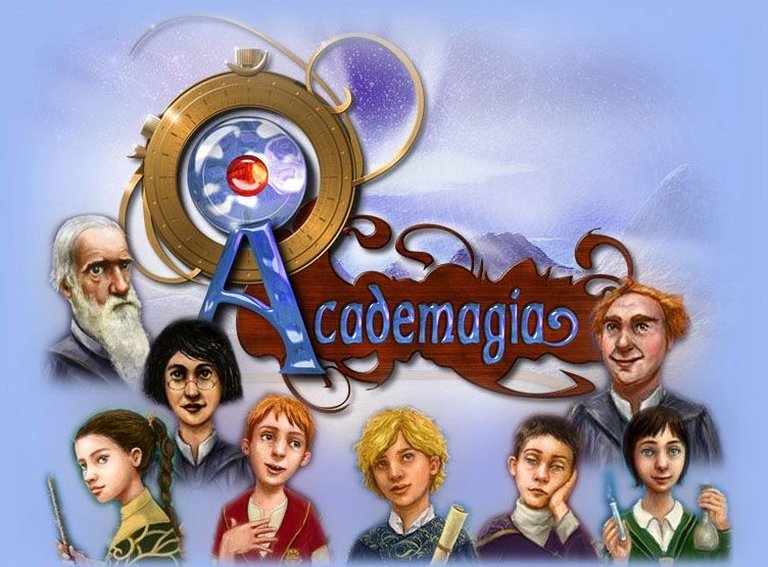
Description
Academagia is a fantasy role-playing game that simulates the life of a first-year student at a magical academy, blending text-based choose-your-own-adventure quests with RPG-like skill training. Players customize their character with hundreds of options, manage daily schedules, forge friendships, and explore over 100 adventures and 800 random events in an open-ended sandbox, where success depends on skills, preparations, and interactions within a richly detailed magical world.
Gameplay Videos
Where to Buy Academagia
PC
Academagia Guides & Walkthroughs
Academagia Reviews & Reception
metacritic.com (81/100): If you’re a fan of fantasy novels, RPGs, Choose Your Own Adventure, Harry Potter, life simulators or all of the above, Academagia will probably feed your need while not draining your bank account (at least, not until you’re hooked and the next four games come out).
jayisgames.com (92/100): Being of the generation that grew up with a certain bespectacled wizard, I expected Academagia to be awesome, and to let me play out my wizardly fantasies, and it is, and it does… mostly.
Academagia: The Making of Mages — A Deep Dive into a Wizard School Simulator’s Ambitious, Flawed Magic
Introduction: A Universe in a Text Box
In the overcrowded annals of “wizard school” video games, few titles have dared to capture the sheer busyness of magical education quite like Academagia: The Making of Mages. Released in 2010 by the tiny, determined Black Chicken Studios, this game posits a deceptively simple question: what if your Hogwarts letter arrived, but the curriculum was a sprawling, 700-page encyclopedia of possibilities, the social hierarchy was a viper’s nest, and every day was a Choose-Your-Own-Adventure book with 100 endings? It is a game of profound ambition, a life simulation that aspires to be a narrative sandbox where the only true limit is the player’s imagination and the unforgiving tick of the academic calendar. Its legacy is not one of blockbuster acclaim, but of a cult phenomenon—a dense, impenetrable, and ultimately rewarding text-based labyrinth that asks more of its players than any mainstream title would dare. This review will argue that Academagia is a landmark of granular, systems-driven storytelling, a game whose greatest strengths are inextricably linked to its most frustrating weaknesses, and whose vision of a “living” magical world remains uniquely compelling despite its brutal interface.
Development History & Context: The Indie Dream of a Lifetime
Academagia was the brainchild of Larry Sawh and Black Chicken Studios, a small independent team operating on a shoestring budget. The project’s scope was, from the outset, colossal. The official description promises “over 100 adventures,” “800 possible random events,” and “hundreds of skills.” This wasn’t hyperbole; it was a design document. The technological constraints of 2010 are evident in the game’s presentation: a static, low-resolution 2D interface, minimal environmental art, and a reliance on pure text to conjure its world. In an era increasingly dominated by 3D graphics and voiced dialogue, Academagia was a defiant throwback to the golden age of text adventures and early computer role-playing games, yet infused with the complex, schedule-driven mechanics of Japanese life sims like Princess Maker.
The gaming landscape of its release was witnessing an indie renaissance, fueled by digital distribution platforms like Steam and Impulse (where it originally launched). Games like Mount & Blade and Dwarf Fortress had proven that depth and complexity could find a passionate audience, even without AAA production values. Academagia fit squarely into this emerging niche: a game for readers, for tinkerers, for players who wanted to live in a world, not just complete it. Its development was iterative and community-engaged; the developers released a staggering 17 free downloadable content (DLC) packs post-launch, steadily patching content, fixing bugs, and, most importantly, expanding the adventure library. This commitment to a living game, sold at a fixed price, was revolutionary for its time and speaks to a vision far larger than a single product. The game was explicitly titled “The Making of Mages” and understood as “Year One” of a planned five-year curriculum, a promise that both excited early adopters and left a permanent question mark over its long-term narrative completion.
Narrative & Thematic Deep Dive: The Lore is the Game
To discuss Academagia’s narrative is to discuss its entire mechanical framework, for the plot is not a linear path but an emergent property of the systems. The premise is straightforward: you are a new first-year student at the Academagia, the premier school of magic on the floating island of Mineta. The “main plot” exists—mysteries tied to your past, conspiracies within the school, threats from pirates and cultists—but it is almost entirely optional and easily missed. The true narrative is the story of your year, forged in the interactions between your character’s skills, their relationships, and the hundreds of scripted events.
The World & Its Politics: The setting is a masterclass in suggestive world-building. As the TV Tropes page notes, the land of Elumia consists of floating islands separated by the Maelstrom, created by Dragons to escape human revolt. This “Abusive Precursors” lore permeates random events and adventure texts. Culturally, Mineta sits at a crossroads between late-medieval fantasy and fledgling steampunk (“cannons and clockwork creations”). This isn’t just aesthetic; it informs factions like the air pirates (default villains), the rival guilds, and the tense relationship with the “surface” world of Cvye. The seven colleges of the Academagia—each with its own focus, personality, and bitter rivalries (Aranaz vs. Durand, Avila vs. Godina, Morvidus vs. Vernin)—are microcosms of this societal strife. They are not just dormitories but ideological houses, shaping your curriculum and your social alliances from day one.
Characterization Through Systems: The 80+ students are not defined by a few dialogue trees, but by a complex web of hidden stats: relationships, cliques, personal goals, and unique “bonuses” they provide to friends. A bully like Philippe Marchant (Morvidus) will harass you based on your perceived weakness, while a gossip like Rikildis von Kiep (Aranaz) will spread rumors that alter your reputation. The genius Zoe Melis (Hedi) has an adventure line where you can market her as a homework tutor, evolving into a plot to boost her social standing. These are not static quests; they are dynamic stories that can succeed, fail, or be abandoned, with lasting consequences for NPC behavior. Teachers, too, have secret histories and rivalries (e.g., the ongoing conflict between Aranaz’s Regent, Sixt von Rupprecht, and Durand’s ideals), which can be leveraged or become obstacles.
Themes of Knowledge & Power: At its heart, Academagia is about the transformative, and dangerous, nature of knowledge. The magic system, detailed on TV Tropes, is a “Functional Magic” framework based on “phemes” (symbols) combined into spells. The five “Pillars”—Astrology, Enchant, Enspell, Incantation, Revision—and the forbidden arts of Gates (summoning) and Mastery (mental domination) represent different philosophies of power. The game constantly asks: what is the ethical cost of knowledge? Using Mastery to control another student is powerfully beneficial but socially and spiritually damning. The theme is reinforced by mechanics: studying History reveals the Dragons’ tyranny; exploring the ruins of the Old Empire shows the hubris of past civilizations. Your character’s growth is a literal accumulation of lore entries, many of which are poignant fragments of a lost world.
The “Adventure” as Narrative Engine: Adventures are the game’s scripted highlights. They are multi-stage, text-heavy sequences where choices are color-coded (green for certain success, purple for certain failure). Their genius lies in their non-linearity and contingency. An adventure might require high Revision to repair a magical artifact, but also high Glamour to deceive a guard, and a specific spell component found only after befriending a particular shopkeeper. Failure is often informative, unlocking new pathways or revealing character backstory. The infamous “botanical adventure” that suddenly demands a “Rimbal” (the game’s chaotic, magical sport) or “Courtly Fashion” check exemplifies a double-edged design: it makes the world feel interconnected and unpredictable, but can feel like a frustrating “gotcha” if you’ve specialized narrowly. This reinforces the theme that a true wizard must be a polymath, a “Red Mage” who can, in theory, master all disciplines within a single year.
Gameplay Mechanics & Systems: A Beautiful, Unwieldy Mess
The core loop is deceptively simple: each week, you schedule three daily actions (morning, afternoon, evening) from a vast list. These actions—Train, Study, Explore Location, Befriend, Cast Spell, Use Item—are the verbs of your life. The depth comes from their combinatorial possibilities and the skill checks that underlie them.
Character Progression & Specialization: Progression is entirely skill-based. Attributes (Intelligence, Finesse, etc.) and sub-skills (Botany, Calligraphy, Rimbal, etc.) grow through use or training. The character creation is a masterpiece of emergent identity, with backgrounds (e.g., “Center of Attention,” “Grifter”), family relations, and familiar choice (from cats to exotic platypuses) granting unique starting bonuses and entire adventure chains. This creates staggering replayability; a Morvidus student focused on Zoology and Revision will experience a completely different Academy than an Avila student researching Astrology and Geometry.
The Adventure & Event System: This is the game’s soul. Over 100 adventures, unlocked by college, familiar, relationships, and hidden triggers, weave personal, college-wide, and global plots. Random events (800+) fill the days, simulating campus life—from witnessing bullying to finding a haunted diary. The color-coded chance of success is a core tension. A “black” (neutral) option might have a 50% chance, but you never know the exact number. This embraces the “Guide Dang It!” trope; planned optimization is nearly impossible, forcing a philosophy of adaptation and save-scumming (which the Let’s Play archives confirm is a common player behavior to see more content).
Interface: The Achilles’ Heel: Here lies the game’s most universally criticized flaw. The interface is a relic. Actions are buried in long, unscrollable lists without search or categorization. To understand what an action does, you must exit to a separate “Action Info” screen. As the seminal user review by Alex Z states, “it’s virtually impossible to get something done without having the Academagia wiki in another window.” Crucially, you cannot search for actions that train a specific skill. Want to improve your “Revision” skill? You must manually scan every “Train” option’s description. As you unlock dozens of spells, locations, and abilities, this becomes a paralyzing chore. The 2017 Steam re-release attempted a “major UI overhaul,” but the fundamental design—a flat list of hundreds of options—remains a barrier.
Balance & Useless Skills: The sheer volume of skills (Diplomacy, Persuasion, Oratory, Negotiate, Manipulation, Bluff, Lie as separate skills) creates deep specialization but also bloat. Skills like “Dueling” (with four sub-skills) or “Courtly Fashion” are almost never required for core adventures, making them “trap” options for the unwary. The game’s occasional, brutal “skill tax”—where a late-stage adventure suddenly demands proficiency in one of these peripheral skills—forces players to either abandon a near-completed adventure or waste precious time grinding irrelevant abilities. This is poor game design disguised as hardcore realism. Similarly, “Artifice” (item crafting) and offensive magic are mechanically underutilized; as Alex Z notes, why duel when you can befriend? Why craft when you can buy? The systems exist in isolation, rarely intersecting with the main adventure paths in meaningful ways.
The Ending & The Sequel Hook: The ultimate failure is the ending. After 70 in-game days, you receive a generic reflection with no tally of your accomplishments, no epilogue for your relationships, no assessment of your college’s standing. For a game about building a legend, it offers no legend to build upon. This is defensible only as a placeholder for the planned sequels (Year 2, etc.), which remain unreleased over a decade later, leaving the first year’s story fundamentally unfulfilled.
World-Building, Art & Sound: The Alchemy of Text
Academagia understands that its primary medium is prose. The sparse, static 2D art—a few dozen environmental portraits, basic character sprites—is functional at best, dated at worst. The official site’s description acknowledges this: “you’ll embark on adventures great and small… the choice is yours!” The visuals are an index card; the imagination is the canvas.
Atmosphere Through Prose: The world is built entirely through descriptive text. A walk to the lake might be a simple screen, but the event description can evoke a haunting, glamored mausoleum carpeted in skeletal remains (as seen in the “A Walk by the Lake” adventure). The lore entries, accessed through studying in libraries, are fragments of poetry, history, and myth that feel genuinely ancient. The tone is whimsical yet dark, mixing schoolboy humor with existential threats. This is the “whimsical fantasy” the developers promised.
Sound Design: Sound is minimal, likely consisting of a few ambient loops and UI clicks. It plays no significant role, leaving the audio landscape to the player’s imagination—a missed opportunity, but perhaps intentional in a game so focused on the written word.
The City of Mineta & The Academy: The setting is a character. Mineta, the “oldest, greatest, meanest city in the world,” is a boiling pot of pirates, thieves’ guilds, rogue mages, and vampire conspiracies. The Academy itself is a 1,700-year-old nexus of magical history, with towers frozen in collapse and professors plotting in the shadows. The sense that everything is a potential adventure source is palpable. The floating island archipelago, separated by the magically stormy Maelstrom, provides a perfect, isolated sandbox where the sky is the limit (literally).
Reception & Legacy: A Cult Classic Forged in Ambition
Critical Reception: Critics were cautiously impressed, yielding a MobyGames average of 70%. Reviews oscillated between euphoria and frustration.
* The Praise: GameZebo (90%) called it an absorption “like no other,” praising its depth. 411mania (88%) highlighted its incredible niche appeal, stating, “you need to read a lot. This is one of those games in which you get as much out of it as you are willing to invest.” GamingTrend (81%) and GameShark (75%) echoed the sentiment of a “spellbinding” experience for the right audience.
* The Criticism: Brash Games (60%) found it “grotesquely huge, almost to the point where it’s overwhelmingly daunting.” ZTGameDomain (44%) was harshest, calling the content “not very compelling” and citing a “confusing interface” and “boring game progression.” The Swedish GameElite.se (50%) noted its appeal was firmly tied to a love of text-based gaming, alienating younger audiences raised on The Sims.
Player Reception: Community scores are “Mixed” (69% positive on Steam from 271 reviews, Steambase score 71/100). The player review by Alex Z (highly rated on Moby) is a definitive, balanced analysis that has become a canonical summary: “A lot of potential, but in dire need of improvement.” It brilliantly articulates the game’s “wonderful new world” versus its “serious problems” with interface, bloat, and lack of payoff.
Legacy & Influence: Academagia never achieved mainstream success, but its influence is felt in the niche of “text-heavy life sims.” It proved a dedicated audience would endure terrible UI for unparalleled systemic depth. Later games like Cultures – 8th Wonder of the World or the narrative complexity of Disco Elysium (with its skill-based dialogue) echo its philosophy, though with vastly improved interfaces. Its most direct legacy is the model of sustained, free post-launch support via DLC, a practice now common but rare for a one-time-purchase indie game in 2010. It remains a touchstone for “wizard school” game designers, a cautionary tale about scope and accessibility, but also an aspirational benchmark for world density and player agency.
Conclusion: The First Year That Lasts a Lifetime
Academagia: The Making of Mages is not a game for the casual reader. It is a 400-page novel you have to write yourself, one scheduling decision at a time. Its place in video game history is secure as a monumental achievement in emergent, text-based world simulation—a game that truly makes you feel like a student in a vast, ancient, and dangerous institution because it systematizes every facet of that experience, from thestress of exams to the politics of cliques.
Its verdict is inherently dualistic. As a piece of design, it is often a failure. The interface is an active antagonist. The skill bloat creates false choices. The lack of feedback and the “sequel hook” ending leave fundamental goals unsatisfied. These are not minor nitpicks; they are core gameplay wounds.
As an experience, it is occasionally transcendent. The moment you successfully navigate a multi-part adventure using a combination of a buffed spell, a borrowed item from a friend, and a lore-based insight you discovered weeks prior—the moment the text describes your clever solution and rewards you with unique loot and a deepened relationship—is a peak few games offer. The world feels real because it remembers your actions and reacts with granular specificity.
For the patient, masochistic, or obsessively curious player, Academagia is a treasure. It is a game that respects your intelligence by overwhelming it, that trusts you to find your own fun in a sandbox where the sand is made of thousands of interlocking narrative and mechanical grains. It is the ultimate “imagination engine,” a flawed, sprawling, text-rich testament to the idea that the most powerful graphics card is the human mind. Its first year may never be finished, but for those who survive the initial weeks of failure and frustration, it becomes a year that lasts a lifetime. Final Verdict: 8/10 – A landmark of ambitious, narrative sandbox design, crippled by a user-hostile interface, but whose sheer, staggering depth rewards those who daringly dive into its magical, messy depths.