
- Release Year: 2010
- Platforms: PlayStation 3, Wii, Windows, Xbox 360
- Publisher: 1C Company, Activision Publishing, Inc.
- Developer: XPEC Entertainment Inc.
- Genre: Action
- Perspective: Diagonal-down
- Game Mode: Co-op, Single-player
- Gameplay: Combat, Item collection, Puzzle-solving, Reality swapping, Skill upgrades
- Setting: Alternate reality, Fantasy
- Average Score: 57/100
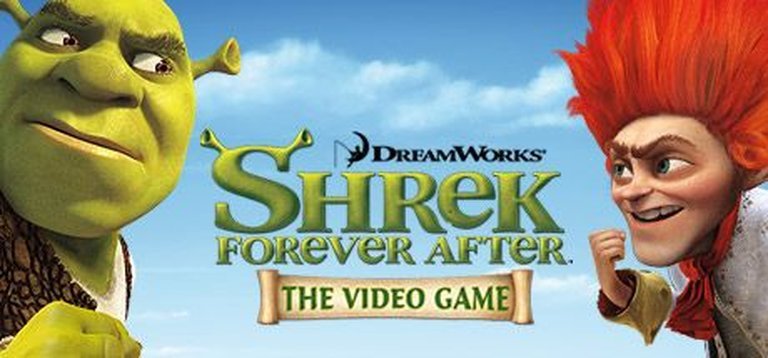
Description
Shrek Forever After: The Final Chapter is an action-adventure game based on the fourth Shrek film, where Shrek, bored with domestic life, makes a pact with Rumpelstiltskin that strands him in an alternate Far, Far Away—a world where he never married Fiona, ogres are hunted, and Rumpelstiltskin reigns. Players explore both the normal and twisted realities, solving puzzles, upgrading skills, collecting coins, and executing combo-based combat, with up to four-player co-op featuring characters like Fiona, Donkey, and Puss in Boots.
Gameplay Videos
Shrek Forever After: The Final Chapter Reviews & Reception
mobygames.com (62/100): Another decent familiy tie-in from Activision, maybe not quite enjoyable as Kung-Fu Panda or Ice Age, but still entertaining for a childish audience.
metacritic.com (62/100): Another decent familiy tie-in from Activision, maybe not quite enjoyable as Kung-Fu Panda or Ice Age, but still entertaining for a childish audience.
Shrek Forever After: The Final Chapter Cheats & Codes
Nintendo DS
| Code | Effect |
|---|---|
| 62387fdc eba005a6 | Fix Code (Must Be On) |
| 023fffe8 00000000 | Fix Code (Must Be On) |
| 02001038 e8bd4038 | Fix Code (Must Be On) |
| 02387fdc eba005a6 | Fix Code (Must Be On) |
| d2000000 00000000 | Fix Code (Must Be On) |
| 02067728 60012140 | Infinite Health (Always ON) |
| 1206772c 00001c08 | Infinite Health (Always ON) |
| 94000130 000001fb | Infinite Health (Select+L ON, Select+R OFF) |
| 02067728 60012140 | Infinite Health (Select+L ON, Select+R OFF) |
| 1206772c 00001c08 | Infinite Health (Select+L ON, Select+R OFF) |
| d2000000 00000000 | Infinite Health (Select+L ON, Select+R OFF) |
| 94000130 000002fb | Infinite Health (Select+L ON, Select+R OFF) |
| 02067728 ffd2f025 | Infinite Health (Select+L ON, Select+R OFF) |
| 1206772c 00000300 | Infinite Health (Select+L ON, Select+R OFF) |
| d2000000 00000000 | Infinite Health (Select+L ON, Select+R OFF) |
| 120704ec 000062e8 | Moonjump |
| 94000130 fffd0000 | Moonjump |
| 120704ec 00002000 | Moonjump |
| d2000000 00000000 | Moonjump |
Nintendo Wii
Go to the cheat column and press A, then enter codes at the cheats menu.
| Code | Effect |
|---|---|
| Up, right, down, left, down | Unlimited health |
| Down, up, right, left, up | Coin multiplier |
| Right, down, left, up, left | Upgrade all Power-ups |
Shrek Forever After: The Final Chapter: A Fond, Flawed Farewell to a Licensed Era
Introduction
In the landscape of licensed video games, few franchises have been as consistently—and paradoxically—present as Shrek. From the swampy platforming of the early 2000s to the mini-game collections of the late 2010s, DreamWorks’ green ogre has been a perennial, if uneven, staple on store shelves. Shrek Forever After: The Final Chapter, released in 2010, arrives at a fascinating crossroads: it is the final game under Activision’s long-running licensing deal with DreamWorks Animation, the only Shrek title for the PlayStation 3, and the digital curtain call for a series that had already begun to feel creatively exhausted. Adapted from a film that itself was a meta-commentary on legacy and appreciation, this game becomes an accidental thesis on the licensed game itself—a competent, sometimes charming, but fundamentally constrained experience that reflects its source material’s midlife crisis. It is not the ogre’s glorious roar but a weary, familiar grumble, offering just enough nostalgic fun to satisfy a young fan while underscoring why the era of simplistic movie tie-ins was waning.
Development History & Context
The game was developed by XPEC Entertainment Inc., a Taiwanese studio with a portfolio heavy on licensed titles and budget-conscious action games (notably Blur and various Transformers games for Activision). Their approach was functional and familiar, building upon the established template of previous Shrek games: a 3D action-adventure with light platforming, puzzle-solving, and brawling. This was not a studio tasked with redefining the medium but with efficiently translating a blockbuster film into a product that could sit on a Walmart shelf alongside Kung Fu Panda and Ice Age games—all published by Activision under the same licensing umbrella.
The technological context of 2010 is crucial. The game launched on the Xbox 360 and PlayStation 3, systems entering the latter half of their lifecycle with a vast library of technical showcases. Shrek Forever After does not compete with them. Its graphics, as noted by multiple critics (most caustically by 4Players.de‘s observation that it “looks like a PS2 game on the Xbox 360”), are serviceable but dated even for the time. Character models are blocky, textures flat, and environments lack the lush detail of DreamWorks’ own cinematic work. This points to a constrained budget and a tight development cycle—common ailments of film tie-ins, where the primary asset is the IP’s name, not the development budget. The game also notably uses the Wwise sound middleware, a professional tool, suggesting a focus on delivering the film’s iconic voice clips and a functional, if unremarkable, score by composers like David Buckley.
Culturally, the Shrek franchise was in a state of managed decline. Shrek the Third (2007) was critically panned, and while Shrek Forever After the film was a box office success, it was seen as a competent but uninspired finale. The game, then, had the unenviable task of adapting a film that was itself a commentary on diminishing returns. It was the last game under Activision’s 2002 licensing agreement with DreamWorks, a partnership that produced a dozen titles across multiple platforms. Its removal from digital storefronts in 2014, as noted on MobyGames, marks the end of an era for these specific tie-in games, which would soon be eclipsed by more ambitious, level-based adaptations like Lego games or the high-quality mobile efforts from Gameloft (who developed separate Shrek games for iOS).
Narrative & Thematic Deep Dive
The game’s plot is a direct adaptation of the film’s “alternate reality” premise, but with significant expansion to serve gameplay. The film’s story—where a discontented Shrek signs a contract with Rumpelstiltskin, erasing his birth and creating a dystopian Far Far Away—provides the perfect framework for a video game: a familiar world turned strange, requiring exploration and puzzle-solving to restore the status quo.
The game’s narrative excels in world-building within the alternate reality. While the film quickly establishes the new rules, the game dwells in them. Players experience the oppressive rule of Rumpelstiltskin firsthand, navigating rundown versions of iconic locations like the Duloc prison and the Dragon’s Keep. The resistance camp, led by a hardened, non-romanticized Fiona, is given more screen time and interactive space. This allows the game to explore themes of loss, rebellion, and rediscovered purpose more slowly than the film’s brisk 93-minute runtime permits. The emotional core—Shrek’s desperation to regain his family and his realization that his “perfect” life was already perfect—is handled competently through in-game dialogue and cutscenes, though it lacks the film’s emotional punch.
A critical creative divergence is the treatment of Fiona. In the film, she is the fierce, distrustful leader of the ogre resistance from the start. The game, by necessity of having her as a playable character, softens this somewhat. She is still a warrior, but the narrative requires her to be found and convinced, which slightly undermines the agency the film grants her. However, the game does correctly preserve the film’s crucial, powerful moment: Fiona’s kiss is not a magical fix but a choice she makes only after genuinely falling in love with Shrek again through their shared struggle. This adherence to the film’s “true love’s kiss” loophole—where emotion, not just the act, matters—is a nuanced touch often missed in adaptations.
The supporting cast is used for comic relief and co-op functionality. Donkey’s fear of ogres and Puss’s obesity are faithfully recreated, and their dialogue exchanges with Shrek are the primary carriers of the franchise’s signature humor. The inclusion of characters like the Pied Piper as a bounty hunter and the Gingerbread Man as a cynical information broker adds depth to the world. Yet, the narrative’s reliance on gameplay-mandated fetch quests (“Find the 10 waffles for Donkey,” “Collect the 5 shield parts for Brogan”) inevitably weighs down the plot, transforming a tight fairy tale parody into a checklist-driven errand run. This is the fundamental tension of the adaptation: the film’s story is a cause-and-effect chain of events, but the game’s story must be a cause-and-effect chain of item collections and puzzle solutions.
Gameplay Mechanics & Systems
Shrek Forever After is an action-adventure with heavy puzzle elements, structured around hub areas (the alternate-reality Far Far Away, the ogre resistance camp) that connect to linear, objective-based levels. The core loop is: enter level, navigate environment, solve environmental puzzles using character-specific abilities, defeat minor enemies, collect coins/items, fight a boss, return to hub with new ability/plot progression.
The puzzle design is the game’s strongest suit. Reviews consistently praise its cleverness and variety (Bonusweb, Games.cz). Puzzles often involve:
* Character-swapping: Using Shrek’s strength to move objects, Fiona’s agility to climb, Donkey’s “talking” to solve sound-based puzzles, and Puss’s wall-jumping. This encourages thoughtful team composition, especially in co-op.
* Reality-swapping: The central mechanic. Certain platforms, enemies, or pathways exist only in the “normal” or “Rumpelstiltskin’s” reality. Switching between them (often via specific portals or magic mirrors) is required to progress. This is a genuinely interesting twist on the Jak and Daxter/Ratchet & Clank formula, adding a layer of spatial reasoning.
* Environmental interaction: Using the environment (e.g., redirecting water, activating gears, avoiding traps) is common and generally intuitive.
However, the combat system is simplistic and repetitive. The on-screen combo counter encourages stringing together light/heavy attacks, but enemy variety is low (witches, guards, chickens, spiders). Fights are seldom challenging, serving as brief interludes between puzzle sections. As Gaming Nexus notes, it’s “solid” but “limited by its own source material”—the combat lacks the depth of a God of War or the chaotic fun of a Lego game. It exists to be inoffensive.
Progression is handled via a skill tree accessed at camp. Coins collected in levels can be spent on permanent upgrades—more health, stronger attacks, longer combo chains. This system encourages some replayability (“subsequent playthroughs,” as the Moby description states), though the upgrades are modest and the game’s difficulty curve is so flat that they feel unnecessary for most players. This speaks to the game’s primary audience: younger or “budding” gamers, as Cheat Code Central astutely notes. The skill tree offers a sense of growth without true penalty for failure.
The four-player co-op is the game’s defining feature and saving grace. Each player controls one of the four main characters, and the puzzle design requires their combined abilities. This transforms the game from a solitary chore into a chaotic, communicative social experience. As Hrej! describes it, it’s “the ideal situation for a dedicated gaming family.” The lack of online play (only local/split-screen) is a significant limitation for 2010 but aligns with the family-living-room vision. The co-op mode validates the game’s existence; a solo playthrough, as Game Vortex implies, reveals its fragility and brevity (~5-6 hours).
Flaws are numerous: camera issues in tight spaces, occasional unresponsive controls, and a pervasive sense of padding. The game outstays its welcome with repetitive puzzle types and backtracking. The hint system (buying info from NPCs with coins) feels like a tacit admission that some puzzles are obtuse or poorly telegraphed. The user interface is functional but clunky, a hallmark of XPEC’s work.
World-Building, Art & Sound
The visual presentation is the game’s most glaring weakness. Environments are broadly recognizable—the swamp, Duloc castle, the forest—but lack detail, atmospheric lighting, or visual storytelling. The alternate-reality versions (e.g., the decrepit, witch-patrolled Far Far Away) are conceptually interesting but rendered with a dreary,统一的 brown-and-gray palette that feels more lazy than “dystopian.” Character models are passable but stiff, with animations that often repeat. The real-time cutscenes, as savaged by 4Players.de, are particularly ugly, with flat lighting and expressionless faces that do a disservice to the film’s renowned vocal performances. This is not a game that makes you feel the Shrek universe; it merely checks off its landmarks.
The sound design is a relative bright spot. The game uses the film’s original voice cast (or sound-alikes) for key lines, which is a major plus. Hearing Mike Myers’ Shrek grumble or Eddie Murphy’s Donkey ramble provides constant nostalgic reinforcement. The soundtrack, composed by David Buckley, is functional fantasy-adventure fare that shifts appropriately between action, exploration, and puzzle-solving cues, though it lacks the memorable sting of Harry Gregson-Williams’ film scores. The use of licensed songs from the film (like “I’m a Believer”) is minimal but effective when used. The Wwise engine ensures clear, balanced audio, a technical bright spot in an otherwise visually dim package.
The atmosphere is one of muted familiarity. The game captures the settings of Shrek but misses the spirit. The film’s humor—satirical, meta, rapid-fire—is largely absent outside of scripted character quips. The world feels empty of the film’s bustling fairy-tale cameos (beyond a few token appearances). This is a Shrek world stripped of its personality, leaving only platforming challenges and combat arenas. It’s a functional theme park with no crowds.
Reception & Legacy
Shrek Forever After: The Video Game received mixed to average reviews at launch, with a MobyGames average of 62% and Metacritic scores ranging from 57 (PS3/Wii) to 62 (Xbox 360). The reception was fractured along a clear generational and critical line.
Praise focused on:
* Co-op Fun: Universally cited as the game’s best feature. It provided a rare, accessible four-player experience for families.
* Puzzle Variety: Reviewers like those at Bonusweb and Games.cz found the puzzles “well-designed” and “non-repetitive.”
* Faithfulness to Film: The narrative and character portrayals were seen as accurate.
* A Step Up: Many considered it the best Shrek game since Shrek 2, a low bar but a meaningful improvement over Shrek the Third.
Criticism centered on:
* Aesthetic Datedness: The graphics were frequently compared to PlayStation 2 titles, a fatal flaw on next-gen platforms.
* Shallow Combat & Pacing: “Long, dull stretches” (Official Xbox Magazine), simplistic fights, and overall lack of depth.
* Short Length & Padding: A 5-6 hour campaign with little replay value beyond coin-collecting for upgrades.
* Derivative Design: Heavily criticized by outlets like Jeuxvideo.com and 4Players.de for copying the Lego game formula without the wit or polish, calling it “inspiratieloos” (inspirationless) and “gemakzuchtig” (lazily executed).
* Camera & Control Issues: Technical snafus that marred the platforming.
Commercially, it sold 54,000 units in the United States in 2010, a modest figure that likely met Activision’s low expectations for a licensed title in a crowded market.
Its legacy is one of quiet finality. It was the last Shrek game under Activision’s license, the only main-series Shrek game on PlayStation 3, and among the last of the “budget movie tie-in” model on consoles. Its removal from digital storefronts in 2014 sealed it as a physical-media relic. In the broader history of licensed games, it represents a transitional dead end. Just a year later, Lego Batman 2 and Lego The Lord of the Rings would demonstrate a new standard for quality in family-friendly licensed adventures—games with depth, charm, and content. Shrek Forever After lacks that ambition. Its reputation has not improved with time; it is now seen as a competent but unexceptional capstone to a fading era, saved from obscurity only by the enduring affection for its characters and the utility of its co-op mode.
Conclusion
Shrek Forever After: The Final Chapter is a game of missed potential and quiet competence. It wisely adapts the film’s best narrative idea—the alternate reality—into a functional gameplay mechanic and provides a genuinely enjoyable four-player cooperative experience. Its puzzle design is thoughtful and varied, a rare highlight in the licensed game space. However, it is ultimately a prisoner of its license and its era. Visually plain, mechanically shallow, and padded to a brief runtime, it cannot escape the perception of a product made on a deadline for a specific audience—young fans of the movie—with little regard for anyone else.
As a historical artifact, it is significant. It is the final act of Activision’s Shrek licensing deal, the last conventional console game in the series for nearly a decade, and a symbol of the “good enough” mentality that plagued many film tie-ins. It does not ascend to the heights of Shrek 2 (the game) or achieve the genre-defining status of the Lego games that would follow. Instead, it settles into a comfortable, forgettable middle ground: a game that is perfectly adequate for a Saturday afternoon with the kids, a trip down a very familiar, very green memory lane, but one that offers no discoveries, no surprises, and no reason to return once the credits roll. It is, in the end, the perfect video game analogue to its parent film—a professionally executed, emotionally sincere, but fundamentally uninspired farewell. The ogre’s final roar on consoles is more of a tired sigh, and we should all be grateful that the subsequent years proved we could get so much more from this world.