
- Release Year: 2011
- Platforms: Macintosh, Windows
- Publisher: Big Fish Games, Inc, HH Games
- Developer: Meridian’93
- Genre: Action
- Gameplay: Time management
- Setting: Fantasy
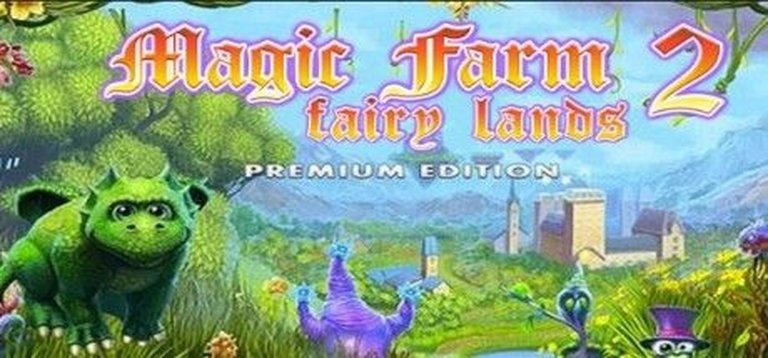
Description
Magic Farm 2: Fairy Lands is a time management game set in a whimsical fantasy world where players help the protagonists, Iris and Robin, prepare for and compete in the Magical Tournament. Through farm-based activities like growing and gathering crops and flowers, utilizing unique upgrades, and winning mini-games, players must efficiently manage resources to succeed amidst enchanting fairy tale settings.
Gameplay Videos
Where to Buy Magic Farm 2: Fairy Lands
PC
Magic Farm 2: Fairy Lands Guides & Walkthroughs
Magic Farm 2: Fairy Lands Reviews & Reception
mgrgaming.com : A real little gem, I cannot fault this game and encourage you to try it.
Magic Farm 2: Fairy Lands Cheats & Codes
PC
Enable cheats by editing the config.cfg file to set cheat_enabled=”true” (there may be multiple entries), then press the corresponding key during gameplay.
| Code | Effect |
|---|---|
| E | Grants Exp between 115 to 140 |
| F | Ends the current day |
| Z | Zeros Medals/Leaves/Coins depending on the location |
| B | Shows or hides Robin’s/Pest’s path |
| M | Grants 100 Medals/Leaves/Coins depending on the location |
Magic Farm 2: Fairy Lands: Review
Introduction: The Bloom in the Casual Garden
In the vast, ever-expanding ecosystem of casual video games—a genre often dismissed as frivolous digital filler—certain titles cultivate a quiet, enduring charm. Magic Farm 2: Fairy Lands, released in 2011 by the Russian studio Meridian’93 and published by Big Fish Games, stands as a fragrant perennial in this garden. It is a game that understands its core mandate with botanical precision: to provide a soothing yet engaging loop of cultivation, collection, and gentle challenge wrapped in a whimsical fantasy package. This review argues that while Magic Farm 2 may not have reshaped the time-management genre, it represents a near-textbook execution of its form—a polished, content-rich, and mechanically satisfying experience that perfected the formula its 2008 predecessor established. Its legacy is not one of revolutionary design but of steadfast refinement, offering a case study in how to build a compelling casual game through iterative improvement, vivid aesthetic design, and a clear, unwavering focus on player satisfaction.
Development History & Context: Cultivating a Niche
The Studio and the Vision: Meridian’93, the developer behind the Magic Farm series, was and remains a studio deeply embedded within the Eastern European casual game development scene of the 2000s and 2010s. This era was defined by the Rise of the “Casual” market, fueled by platforms like Big Fish Games, WildTangent, and later, Steam’s burgeoning “Casual” category. The studio’s vision for Magic Farm 2 was one of expansion and polish. Building on the foundational farm-setup-and-grow mechanic of the first game, the team explicitly aimed to broaden the fantasy setting, introduce more diverse environments (“Fairy Lands”), and layer in additional minigame variety and character-driven quests. The goal was not to reinvent the wheel but to make the ride smoother, prettier, and more substantial.
Technological Constraints & Aesthetic Choices: Operating within the technological constraints of the early 2010s PC casual market—targeting low-spec machines (a 1.0GHz CPU, 128MB RAM as a minimum)—Meridian’93 made a conscious stylistic decision. They opted for a bright, flat, and highly saturated 2D art style. This was not a limitation but a strategic choice: it ensured the game ran smoothly on virtually any home computer, maximized visual clarity for its target audience (often older players or children), and created a timeless, storybook-like aesthetic that avoided the pitfalls of attempting low-poly 3D that would have aged poorly. The art direction, described by reviewers as featuring “bright colours and intricate details,” was a direct product of this smart constraint management.
The Gaming Landscape: Magic Farm 2 arrived in September 2011. This was a peak period for the casual time-management/strategy hybrid. Games like Diner Dash, Cake Mania, and Plantasia had established the core loop. The market was increasingly saturated, demanding differentiation. Magic Farm 2’s differentiation came from its cohesive fantasy theme, the introduction of a persistent companion character (Robin the dragon), and a more structured narrative progression tied to a “Magical Tournament.” It competed directly with other fantasy-themed casual titles like the Rune Factory series (on consoles) but carved its niche on PC with a lower price point, wider accessibility, and a pure, unadulterated focus on its core loop without RPG complexities.
Narrative & Thematic Deep Dive: The Academic Gauntlet
The narrative框架 of Magic Farm 2 is elegantly simple, serving primarily as a contextual scaffolding for the gameplay. The official blurb establishes the premise: players support “Iris and Robin” to “win the Magical Tournament.” Deeper context from sources like Zarium reveals the inciting incident: “Professor Imerius’ flower meadows are under threat” from pests, and he is “looking for an apprentice to help destroy the vermin and preserve the floral beauty.” This sets up the tournament as a competitive apprenticeship examination.
Plot Structure & Progression: The plot is not driven by cinematic cutscenes or voiced dialogue but through text-based dialogues with non-player characters (NPCs) encountered between levels. The progression is episodic and quest-based. Each level or “area” presents a specific order or set of orders from a client (a fairy, a gnome, a royal figure) that the player must fulfill by growing, protecting, and harvesting specific flowers or bouquets. The overarching narrative thread is the player’s journey through different “Fantasy Lands,” competing in the tournament and advancing towards the goal of becoming Professor Imerius’s apprentice. Community discussions on Steam reveal players engaging with specific quest goals, such as “Vanquish the Centipede” or finding specific items like a “magnifying glass” or a “mirror,” indicating a quest log system with varied objective types beyond simple flower delivery.
Characters: The protagonists, Iris and Robin, are presented as a duo. Robin is a pet dragon, a “wonderful little addition” per MGR Gaming’s review, who assists in tasks, providing a cute companion and a minor gameplay aid (likely in pest control or fetching). Their personalities and backstories are, by necessity of the genre and the game’s text-only delivery, lightly sketched. They are vessels for the player’s agency. The supporting cast consists of the various NPC clients and perhaps a rival or two, existing primarily to dispense the next set of timed chores.
Themes: The game’s themes are woven directly into its mechanics. The primary theme is Responsible Cultivation & Nurturing. The constant need to water plants, defend against pests (butterflies, flies, worms), and meet deadlines reinforces a message of attentive care and time stewardship. A secondary theme is Competition & Mastery, framed through the tournament. Success is measured by efficiency, creativity in bouquet-making (“The more original your creation, the higher its price”), and overcoming environmental challenges. The fantastical setting introduces a theme of Harmony with Nature’s Magic, where plant care is intertwined with magical upgrades (special pots, defensive measures). It’s a gentle, pastoral fantasy where conflict is against insects and deadlines, not dark lords.
Gameplay Mechanics & Systems: The Engine of Addiction
Magic Farm 2 is a masterclass in the “just one more level” design philosophy of casual time-management games. Its systems are interlocking, intuitive, and provide constant, gratifying feedback.
Core Loop: The fundamental loop is: Receive Order -> Prepare Soil & Plant Seeds -> Water/Protect Plants -> Harvest -> Fulfill Order -> Earn Money/Points -> Upgrade Farm -> Repeat. This loop is旺盛 and tight, typically compressed into a 5-10 minute in-game day cycle. The pressure is constant but never overwhelming, a hallmark of the genre done right.
Key Mechanics:
* Cultivation: Players click to prepare plots, select seeds from a shop, and plant them. Different flower types (violets, orchids, lilies, lotuses) have different growth times, water needs, and values. This creates a constant prioritization puzzle: do I plant quick-growing, low-value flowers for immediate cash, or invest in a long-grow, high-value orchid for a bigger payoff later?
* Resource Management: The primary resources are Time (the relentless day/night cycle) and Water. Water is a consumable resource that must be replenished, often by clicking on a well or purchasing more, creating a crucial “economy of watering” that some Steam users have puzzlingly queried about—it’s simply the strategic use of a limited water can/refill to maximize crop health.
* Pest Control: The “vermin” threat is a dynamic obstacle. Bugs appear randomly and will destroy plants if not clicked away quickly. Some varieties may require special items or upgrades to defeat. This adds a reactive, frantic layer to the otherwise methodical cultivation.
* Upgrades & Progression: Earnings are spent on a robust upgrade tree: better watering cans (more efficient), pest control items (flycatchers, as hinted in the Zarium description), larger plots, new flower varieties, and decorative items. This provides a clear, long-term progression path and a tangible sense of farm improvement.
* Minigames & Quests: The game breaks up the farming with integrated minigames. The Steam store description mentions “hidden object” moments and “mixing magical recipes.” The MGR Gaming review confirms “seek and find moments” and “mixing of magical recipes using different items you need to gather.” These serve as palette cleansers and add variety. Quest variety is also key, as seen in community posts about item-finding missions (“magnifying glass”) and boss-like encounters (“Vanquish the Centipede”).
UI & UX: The interface is a point-and-click paradigm, entirely mouse-driven as noted in reviews. For its target audience, this is perfect. The UI is presumably clean, with clear icons for actions, a visible orders panel, a clock, and resource counters. Its effectiveness is evidenced by the game’s high replayability scores from players who returned to it repeatedly.
Innovation vs. Flaw: The innovation lies in the seamless integration of a pet companion (Robin) and the consistent framing of the entire experience within a “magical tournament” that gives purpose to the tasks. A noted flaw, frequently mentioned in Steam community discussions, is technical instability on modern systems. Users report “broken graphics” (missing character heads, non-disappearing menus, invisible plants), save file loss after system reformatting, and other rendering glitches. This suggests a porting or compatibility issue with the original 2011 codebase, particularly when run through Steam’s compatibility layers on newer Windows versions. This is the single most significant blemish on an otherwise expertly designed casual game.
World-Building, Art & Sound: A Pastoral Fantasy
Setting & Atmosphere: The world is a series of disconnected, idyllic “Fairy Lands.” Each area has a distinct visual theme—a flower meadow, a mystical forest, a luminous glade—that tells a story through its palette and plant life. The atmosphere is consistently serene, magical, and inviting. The threat of pests provides necessary tension without breaking the overall peaceful vibe. The tournament framework gives the exploration a purposeful, academic feel, as if the player is on a magical field trip.
Visual Direction: As praised by MGR Gaming, the graphics are a major strength. The “bright colours and intricate details” on the flowers, the distinct designs of the fairy and creature NPCs, and the varied landscapes create a cohesive, attractive world. The choice of a non-realistic, illustrative style ensures the game’s visuals have not degraded with time; it looks as fresh today as it did in 2011. The character of Robin the dragon adds a touch of personality and visual intrigue.
Sound Design: The audio complements the visuals perfectly. The MGR review notes a “depth” in the soundscape, with specific audio cues for critical events: the annoying buzz of pests, the splashing of water, the urgent ticking of the clock. The background music is described as “not monotonous and… quite upbeat,” providing a cheerful, driving soundtrack that encourages productivity without being intrusive. The lack of voice acting is a standard cost-saving measure in the genre, replaced by text boxes, and is not a significant drawback given the game’s pace and style.
Reception & Legacy: A Beloved Quiet Success
Critical & Commercial Reception at Launch: Upon its 2011 release, Magic Farm 2 landed in a crowded but receptive market. It does not appear to have garnered widespread attention from mainstream gaming press (no critic reviews exist on MobyGames as of this writing), but it found its audience through dedicated casual game portals like Big Fish Games and WildTangent. The Steam “Premium Edition” release in 2019 was a re-packaging for a new storefront, not a new game. Its current player score of 86/100 on Steambase, based on 43 reviews with a 90% positive ratio on Steam, indicates a strong, satisfied player base that has discovered it over time, particularly through bundles. Many reviews, like MGR Gaming’s, are effusive in their praise, calling it an “all-round enjoyable little masterpiece” and a “real little gem.”
Evolving Reputation: The reputation has solidified as a cult favorite within its niche. Players who enjoy time-management games frequently recommend it. The Steam community, while small, is active, with discussions centered on gameplay help (quest items, boss fights) and, negatively, on technical troubleshooting. The positive reviews consistently highlight its addictive quality, beautiful graphics, and perfect difficulty curve. The negative reviews (10% of Steam total) are almost exclusively about the aforementioned technical bugs, not the core game design.
Influence & Legacy: Magic Farm 2 did not exert a wide influence on the broader games industry. It did not spawn clones or redefine genres. Its legacy is internal to the series and its publisher. It represents the peak of the original Magic Farm formula, leading to a significant gap until Magic Farm 3: The Ice Danger in 2019. Its success (implied by the sequel and continued re-releases) likely validated for Meridian’93 and HH-Games that a polished, content-rich, aesthetically pleasing casual game could have a long tail. It stands as a benchmark for quality in the “time-management with fantasy theme” subgenre, a title against which others of its kind might be measured by discerning fans of the casual space. Its inclusion in massive bundles like the “CASUAL GAMES MEGA BUNDLE” speaks to its status as a reliable, desirable filler title that guarantees a certain level of player satisfaction.
Conclusion: A Verdant Triumph of Form
Magic Farm 2: Fairy Lands is not a game that aims for the stratosphere. It does not seek to provoke, to narratively dazzle, or to mechanically revolutionize. Instead, it achieves something deceptively difficult: it perfects a specific, beloved form. From its foundations in a constrained but clever art style to its deeply satisfying and balanced gameplay loops, from its coherent fantasy world to its cheerful and functional audio design, every element serves the core purpose of making the player feel like a capable, successful magical gardener.
The caveats are real and must be stated: the game’s technical state on modern Windows systems is problematic, with graphical bugs and potential save issues that can mar the experience. One must go in prepared for that possibility. Yet, when the game works as intended—and for the vast majority of its likely intended low-spec audience, it always did—it is a near-flawless specimen of its kind. It is a game that understands the psychology of casual play: the need for clear goals, incremental progress, sensory rewards, and a world that is a pleasure to inhabit for 15-minute sprints or hour-long sessions.
In the grand museum of video game history, Magic Farm 2: Fairy Lands will not occupy a marquee hall. It belongs in a beautifully curated side room labeled “The Art of the Casual Masterpiece.” It is a testament to the skill required to build a simple, repeating loop that remains engaging for dozens of hours, wrapped in an aesthetic that feels both magical and grounded. For anyone seeking a stress-relieving, visually charming, and mechanically sound time-management game, Magic Farm 2 remains, over a decade after its bloom, a highly recommended and enduringly pleasant harvest.
Final Verdict: 8/10 – A quintessential, polished casual time-management game held back from a higher score only by persistent technical compatibility issues on modern systems. Its design is excellent; its execution in the present day is imperfect.