
- Release Year: 2023
- Platforms: PlayStation 4, PlayStation 5, Windows Apps, Windows, Xbox One, Xbox Series
- Publisher: tinyBuild LLC
- Developer: Do My Best Oy
- Genre: Adventure
- Perspective: Diagonal-down
- Game Mode: Single-player
- Gameplay: Graphic adventure, Point-and-click, Puzzle elements, Turn-based combat
- Setting: Fantasy
- Average Score: 69/100
Description
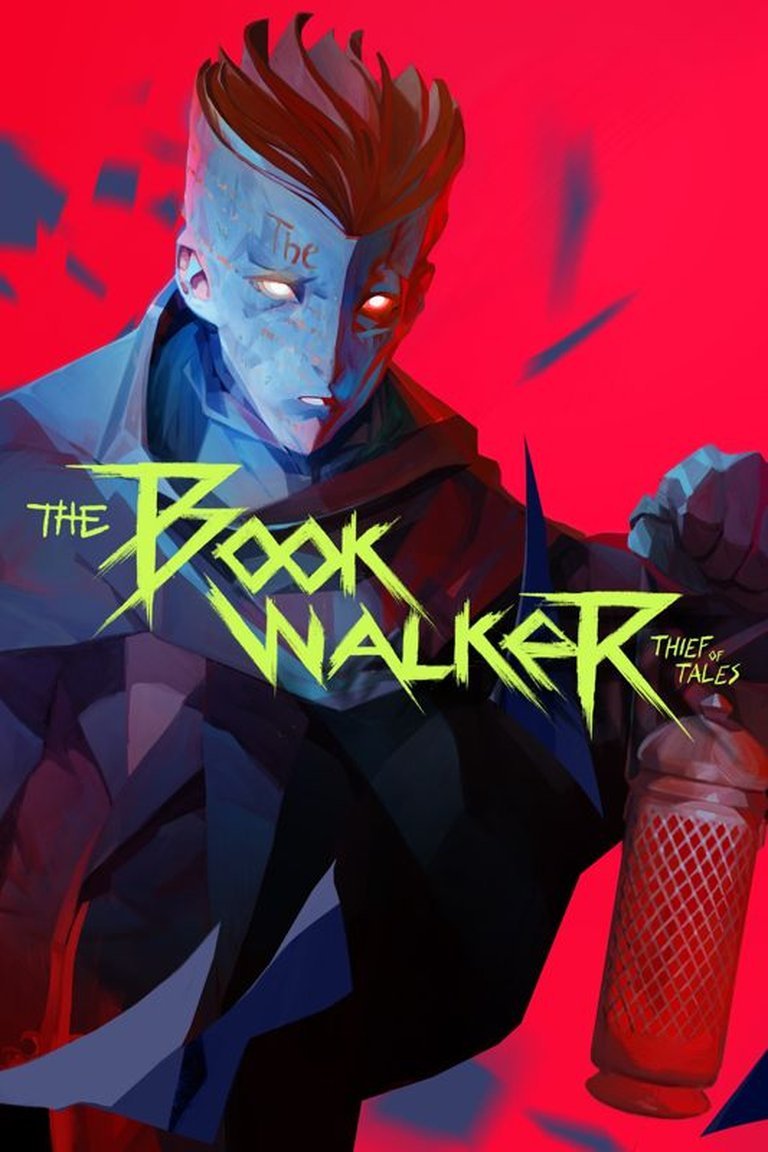
In The Bookwalker: Thief of Tales, players embody a Bookwalker in a fantastical 2D realm, tasked with infiltrating and manipulating the stories contained within books. This point-and-click adventure blends puzzle-solving with a meta-narrative that explores themes of creation and control, as you steal tales to reshape destinies amid a visually striking, fantasy-fueled journey.
Gameplay Videos
Where to Buy The Bookwalker: Thief of Tales
The Bookwalker: Thief of Tales Free Download
The Bookwalker: Thief of Tales Mods
The Bookwalker: Thief of Tales Guides & Walkthroughs
The Bookwalker: Thief of Tales Reviews & Reception
metacritic.com (80/100): The choices lose a bit of their variety as the story goes on and the combat can be a tad simplistic, but The Bookwalker is a beautiful exercise in exploring the humanity of fiction and why we, the audience, should feel for the characters on the page.
opencritic.com (69/100): With a strong and engaging play structure, The Bookwalker: Thief of Tales is certainly an interesting game. The story impacts and gives value to the meaning of words and the essence of books. Too bad for some bugs, because it is an absolute must have.
thexboxhub.com (60/100): Turn based RPG with limited options, combined with unresponsive action choices at times make for a frustrating part of the experience.
The Bookwalker: Thief of Tales: Review
Introduction: The Literary Thief’s Gambit
In an industry often saturated with sequels, remakes, and iterative sequels, The Bookwalker: Thief of Tales arrives as a startlingly original and conceptually audacious proposition. It asks a deceptively simple question: what if you could not only read a story but enter it, reshape it, and pilfer its most iconic artifacts? This 2023 release from the Russian indie studio Do My Best Games, published by the ever-eclectic tinyBuild, is more than a vehicle for a clever premise; it is a dense, melancholic, and often hilarious meditation on authorship, autonomy, and the ontology of fiction. It is a game that fundamentally understands the power of narrative and uses its interactive medium to stage a philosophical drama about the relationship between creator and creation. My thesis is this: The Bookwalker is a flawed masterpiece—a game whose occasionally clunky systems and uneven execution are consistently rescued, and often transcended, by its profound thematic ambition, its achingly beautiful world-building, and one of the most compelling central relationships in recent indie gaming. It is a testament to the idea that a game’s heart and mind can outweigh the sum of its mechanical parts.
Development History & Context: From cramped apartments to boundless literary dimensions
Do My Best Games, the four-person core team behind The Bookwalker, emerged from the Russian indie scene with their 2016 debut, The Final Station, a tense, atmospheric survival-horror title that garnered a cult following. Their sophomore effort, however, was a monumental pivot in scope and concept. According to developer interviews and credits, the project was shepherded by a core creative trio: Oleg Sergeev (Game Design, Writing, 3D Modeling), Andrey Rumak (Programming), and Stanislav Dikolenko (2D Art, Music). The game represents nearly six years of development, a significant gestation period for a small team, hinting at the ambition and complexity of their vision.
The technological foundation was the Unity engine, a workhorse for indie developers seeking a balance of capability and accessibility. The game’s visual style—hand-drawn isometric dioramas for the book worlds and stark first-person environments for the “real” world—reflects a pragmatic artistry. The isometric views allow for richly detailed, painterly scenes with atmospheric lighting, while the first-person sequences utilize simpler, low-poly geometry and texture work to convey a grim, oppressive dystopia. This contrast is a deliberate design choice, not a budgetary compromise. The 2023 release date placed it in a post-pandemic landscape where narrative-driven indies (Disco Elysium, Norco) had raised audience expectations for thematic depth, but also in a market still recovering from layoffs and consolidation. Its publication by tinyBuild, known for spotting and nurturing quirky, high-concept indies (Hello Neighbor, SpeedRunners), provided a crucial platform for visibility on Steam and console storefronts.
Narrative & Thematic Deep Dive: The Anatomy of a Curse
The narrative of The Bookwalker is its unequivocal core, operating on three simultaneous levels: the personal tragedy of Etienne Quist, the meta-commentary on creative theft, and the existential debate over sentience in fiction.
The Protagonist’s Sin: Etienne Quist is not a rogue with a heart of gold; he is a convicted criminal. His sentence—30 years of magical shackles that induce crippling pain upon any attempt to write—is the penalty for the “worst crime a writer can commit”: bringing a character from a book into the real world. This act, born of love, has rendered him a pariah in a dystopian society where “Writer’s Law” is enforced by a ubiquitous “Thought Police.” The game slowly, subtly reveals the specifics of this crime through environmental storytelling, dialogue with the suspiciously inept landlord, and the reactions of others. It’s a brilliant hook, framing Etienne not just as a thief but as a repentant transgressor against the very order he now serves.
The Collector’s Deal & The Heist Structure: Contacted by the cryptic, mob-like “Collector,” Etienne’s path to potential freedom is paved with six literary thefts. Each book—A Drop of Infinity, The Spark of a Hammer, The Kornelius Paradox, The Black River Drifters, Timeless Mansion, and Heart of Sand—is a fictional work within the game’s universe, offering Do My Best a sandbox to riff on genres: Nordic corporate mythology, post-apocalyptic rail travel, AI-god worship, and gothic horror. The repetitive structure (find item, escape) is subverted by the unique lore and moral quandaries of each world.
The Heart of the Matter: Etienne and Roderick: The game’s true emotional axis is the relationship between Etienne and Roderick. Roderick is a “sentient page,” a character torn from his unknown original book and now caged, possessing the meta-ability to “read ahead” in any narrative. Their dynamic is the game’s comedic and philosophical engine. Roderick is the ethical counterpoint to Etienne’s pragmatism. He criticizes Etienne for treating book characters as props, arguing for their sentience and reality. Their bickering, grounded in their respective natures (writer vs. character), provides levity while relentlessly probing the central thesis: “Do Androids Dream?” applied to the written word. The moment Etienne realizes Roderick’s Cage is made of “Unobtainium,” a metal that lets a displaced character retain self-awareness, is a quiet revelation that deepens their bond from convenience to shared trauma.
Underlying Themes:
* Metafiction & Authorial Responsibility: The game constantly asks what a writer’s power entails. Etienne’s ability to “rewrite” using Ink is a literal manifestation of authorial omnipotence, and his choices to help or harm book characters force the player to confront the ethics of storytelling.
* Dystopian Creative Stagnation: The real world is a gray, authoritarian nightmare where most authors are uncreative “hacks” who steal from other books via Bookwalkers. This is a scathing satire of modern reboot/remake culture and a lack of originality.
* The Value of Stories: By giving the book characters distinct personalities, desires, and fears, the game argues that their internal reality is what matters. Stealing an artifact isn’t just looting; it’s potentially destroying a narrative’s integrity and the “lives” within it.
* Redemption & Love: Etienne’s ultimate crime was an act of love. His journey is a reluctant, grudging path toward understanding that same profound connection, mirrored in his growing care for Roderick.
Gameplay Mechanics & Systems: A Clash of Genres
The Bookwalker deliberately eschews a single genre identity, blending systems that sometimes harmonize and sometimes jar.
Core Dual-Perspective Loop: The gameplay is bifurcated.
1. First-Person (Reality): Exploring Etienne’s decrepit apartment building. This serves several functions: building the dystopian atmosphere through interactions with unseen neighbors (notes on doors, muffled sounds), providing a source for real-world items needed to solve book-world puzzles (a sledgehammer from the landlord, a fuse from a neighbor), and showing the passage of time as his flat slowly furnishes with earnings. The low, inconsistent framerate noted in reviews here is a technical sore point.
2. Isometric (Book Worlds): The primary gameplay space. This perspective, reminiscent of classic CRPGs like Baldur’s Gate or Fallout, allows for detailed environmental storytelling and clear puzzle layout.
Puzzle-Solving & Item Crafting: Puzzle design is largely traditional point-and-click: examine, combine, use. The innovation is the Cross-Dimensional Inventory. A brick wall blocking your path in the book world might require a crowbar found in Etienne’s basement. A corrupted data file in a sci-fi book might need a “clean” one from the real-world internet cafe. This mechanic is conceptually brilliant, making the two worlds feel interconnected. A simple Crafting system allows melting down “junk” (found in books) to create Ink, the universal resource, or to build specific tools (lockpicks, crowbars). While appreciated, some critics found this system underdeveloped and reductive.
The Ink System & “Magic”: Ink is the game’s MP-equivalent. It powers two things:
* Combat Skills: Stun, Shield, Drain attacks.
* “Story Manipulation”: A massively underutilized mechanic. In theory, Ink can rewrite small environmental elements or dialogue options. In practice, its use outside combat is extremely limited and rarely feels impactful, a significant missed opportunity to deepen the meta-narrative power fantasy.
Turn-Based Combat: This is the game’s most consistently criticized element. Encounters are fixed, not random, but they feel tacked-on. The system is simple: select a skill (using Ink) or basic attack, enemy attacks. Difficulty is low; enemies have poor accuracy, and Etienne can become overpowered quickly. It serves as a pacing interruption rather than a meaningful challenge. Critics and players widely agree this aspect feels like an obligation to include “RPG elements,” undermining the pure narrative-philosophical focus. The ability to sometimes avoid combat via dialogue is a good band-aid, but the combat’s existence at all remains puzzling.
Player Agency & The Illusion of Choice: Dialogue choices and moral decisions (e.g., leave part of the immortality potion for a dying character) have immediate chapter consequences but no long-term narrative branching. The game has one ending. This is not inherently bad—many great stories are linear—but the game prompts you with choice icons and dialogue trees that ultimately funnel you back to a single path, which can feel disingenuous. The “Pacifist By Day” achievement highlights the possibility of non-violence, but it’s an optional constraint, not a path-altering choice.
World-Building, Art & Sound: A Diorama of Dreams and Dust
The Book Worlds (Isometric): This is where The Bookwalker achieves unequivocal greatness. Each of the six primary books is a stunning, hand-crafted diorama. The art style uses a muted, earthy palette with sharp, realistic details and dramatic, cinematic lighting.
* A Drop of Infinity: A Nordic-inspired industrial castle, blending medieval stone with roaring furnaces and cute, battery-powered robots (Thor’s “children”).
* The Black River Drifters: A vast, sandy desert with a colossal, rusted train, inhabited by fanatical pilgrims and a messianic AI.
* Timeless Mansion: A decrepit, snowbound manor with shifting, impossible geometry and Lovecraftian overtones.
* The environments feel lived-in and written. You see the tools of the world’s inhabitants, the remnants of their stories. The isometric view allows the player to survey these stages as a reader surveys a page, appreciating the composition and detail.
The Real World (First-Person): A purposeful counterpoint. Etienne’s apartment building is a maze of gray, peeling wallpaper, flickering fluorescent lights, and oppressive silence (other tenants are never seen, only heard or communicated with via doors). It embodies the dystopian “Thought Police” regime: sterile, fearful, and creatively barren. The visual downgrade from the lush isometric worlds is intentional, making every jump into a book feel like escaping a monochrome prison into a vibrant, dangerous dream.
Sound Design & Music: Stanislav Dikolenko’s soundtrack is atmospheric and somber, consisting largely of ambient, melodic pieces that underscore melancholy and tension. It is effective but deliberately subdued, never leaping to the forefront with memorable melodies. The sound design is functional—creaks, door hinges, the chime of crafting—but some reviews noted occasional audio sync bugs, particularly in the first-person sequences. The lack of full voice acting (only Etienne’s mumbles) is a stylistic choice that fits the solitary, literary vibe but may feel sparse to some.
Reception & Legacy: A Cult Classic in the Making
Launch Reception (2023): The Bookwalker received a mixed-to-positive critical reception, with a notable platform divide. On Metacritic, the Windows version holds a Metascore of 80 (Generally Favorable), while the PlayStation 5 and Xbox Series X/S versions scored 70 and 54 respectively. This disparity points to technical and control issues specific to console ports, including the noted framerate problems and potentially clunky UI adaptation.
- Praise: Universally lauded for its premise, world-building, art direction, and the Etienne/Roderick relationship. Critics from Hooked Gamers (90%), GamesCreed (94%), and Adventure Game Hotspot (74%) highlighted its “engaging,” “refreshing,” and “thought-provoking” core. The diversity of the book worlds and the dark, satirical writing were consistent highlights.
- Criticism: The combat system was the single most frequent point of derision, described as “bland,” “tacked-on,” “unnecessary,” and “too easy.” The linearity and lack of meaningful consequence for choices disappointed those expecting a branching narrative. Some felt the overarching plot and ending were less compelling than the individual book vignettes. Technical hiccups on console marred the experience for some.
Steam & Player Reception: Player sentiment is more positive than the aggregate Metacritic might suggest. Steam reviews sit at “Very Positive” (92% of 1,783 reviews). Player praise echoes critic acclaim for the “fascinating world” and “story,” while complaints frequently target the combat (“fights shouldn’t have been added”) and linearity (“very-very-very linear”). The game has found a dedicated audience, particularly among subscribers to Xbox Game Pass and PC Game Pass, where its short (6-10 hour) and high-concept play fits the “try something unique” model.
Legacy & Influence: As a 2023 title, its long-term legacy is still forming. Its most significant contribution may be as a proof-of-concept for a very specific subgenre: the “narrative heist game set within literature.” It directly channels the spirit of metafictional novels like Inkheart or The Neverending Story but filters them through an adventure-game lens. It joins a small but growing vanguard of games (like Telling Lies or Her Story) that use game mechanics to explore the nature of stories themselves. Its greatest influence may be inspirational: demonstrating that a small team can create a game of immense thematic weight and visual splendor by focusing on a singular, powerful idea. The “Bookwalker” concept—a person who traverses and manipulates fictional worlds—is a rich mechanic ripe for further exploration by others.
Conclusion: The Verdict on a Literary Larceny
The Bookwalker: Thief of Tales is not a flawless gem. It is a rough-edged, occasionally clumsy artifact, much like the ancient, powerful objects its protagonist steals. Its turn-based combat feels like an unnecessary concession to genre conventions, its systemic promise (the Ink manipulation, the crafting) is underdeveloped, and its narrative branches are illusory. The ending, while thematically consistent with Etienne’s journey of accepting a limited, prescribed freedom, can feel like a narrative deflation after the soaring creativity of the book worlds.
And yet, I must champion it. The game’s achievements are so fundamental and potent they overshadow its flaws. It presents one of gaming’s most fascinating dystopias—a world that fears creativity and polices narratives. It crafts six distinct, memorable book-realms that are each a small masterpiece of environmental storytelling. It builds one of the medium’s most effective platonic partnerships in Etienne and Roderick, whose debates about reality and fiction are the game’s true soul. Its central metaphor—that stories are worlds, and characters are beings deserving of ethical consideration—is executed with a gravity and warmth rarely seen.
It is a flawed masterpiece. It is a game you should play for the journey, not the destination; for the worlds visited, not the final boss; for the conversations had, not the combat won. Do My Best Games did their best, and in doing so, they created something special: a poignant, witty, and visually stunning metafiction that asks you, the player, to consider the weight of your actions as both a gamer and a reader. In an industry increasingly comfortable with remixing existing IP, The Bookwalker is a powerful argument for original, idea-driven creation—and for treating the stories we love, and the characters within them, with a little more respect.
Final Score: 8/10 – Remarkable, with noticeable flaws that are ultimately forgivable given its visionary core. It belongs in the same conversation as Disco Elysium as a landmark indie narrative experience that prioritizes philosophical inquiry and character over polished mechanics. It is a book you will not soon forget, even if you occasionally stumble over its prose.