
- Release Year: 2022
- Platforms: Windows Apps, Windows
- Publisher: THQ Nordic GmbH
- Developer: Logic Artists ApS
- Genre: Role-playing
- Perspective: Diagonal-down
- Game Mode: Single-player
- Gameplay: Army battles, Character development, Crafting, Decision-making, Looting, Management, Strategy, Tactical RPG, Turn-based combat
- Setting: Classical antiquity
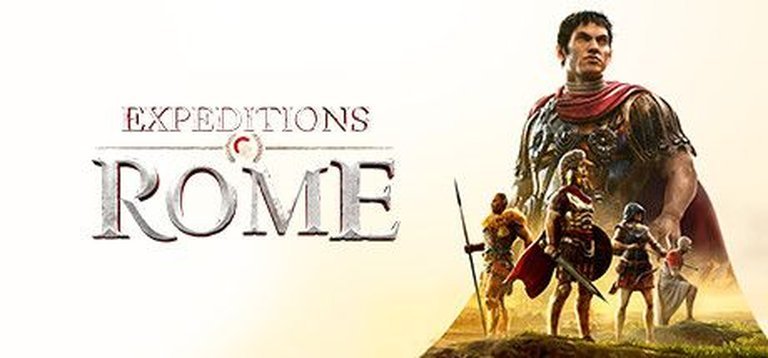
Description
Expeditions: Rome is a tactical role-playing game set in classical antiquity, where players command a Roman legion through historical campaigns. The game features turn-based tactical combat and narrative choices that allow players to interact with historical figures like Mithridates, shaping the outcome of Rome’s military expeditions in an engaging blend of strategy and storytelling.
Gameplay Videos
Where to Buy Expeditions: Rome
Expeditions: Rome Free Download
Expeditions: Rome Mods
Expeditions: Rome Guides & Walkthroughs
Expeditions: Rome Reviews & Reception
ign.com : A tactical RPG worthy of a Roman triumph.
pcgamer.com : An uneven epic whose historical richness guides it through some awkward pacing.
Expeditions: Rome: A Critical Review of an Ambitious, Flawed Triumph
Introduction: The Eagle and the Quill
In the crowded pantheon of tactical role-playing games (tRPGs), few titles dare to weave the intimate narrative of a personal revenge quest with the sprawling, continent-spanning machinations of empire. Expeditions: Rome, the third entry in Logic Artists’ Expeditions series, attempts exactly this, placing the player in the caligae of a young legatus navigating the treacherous political and military landscapes of the late Roman Republic. It is a game of profound ambition, seeking to merge the deep systemic complexity of a strategy title with the character-driven storytelling of a classic CRPG, all while meticulously recreating a pivotal historical era. The result is not a flawless masterpiece, but an “uneven epic”—as PC Gamer sardonically noted—whose staggering historical richness, exceptional tactical combat, and compelling, consequence-laden narrative often guide it through patches of awkward design, obtuse systems, and pacing issues. This review will argue that Expeditions: Rome stands as one of the most significant and ambitious historical tRPGs of the 2020s, a flawed gem whose core vision is so potent it transcends its considerable mechanical inconsistencies, ultimately deserving of recognition as a pivotal, if imperfect, milestone in the genre.
Development History & Context: From Viking Legacies to Roman Ambitions
Expeditions: Rome did not emerge from a vacuum. Its DNA is deeply intertwined with the legacy of its predecessors, Expeditions: Conquistador (2013) and Expeditions: Viking (2017), and the broader evolution of the CRPG. Developed by Danish studio Logic Artists, the Expeditions series had already carved a niche for itself by combining turn-based, grid-focused tactical combat with overland exploration and resource management in historical settings. Following the well-received Viking, pre-production for Rome began almost immediately in 2017.
The studio’s path crossed with a titan: Larian Studios. Logic Artists had been enlisted to co-develop Divinity: Fallen Heroes, a project set in the Divinity: Original Sin II universe. Although that project was ultimately put on hold (presumably to allow Larian to focus on Baldur’s Gate 3), the experience proved invaluable. The team gained firsthand expertise in crafting deep, systemic CRPGs with Larian’s signature attention to emergent gameplay and player agency, influences that clearly permeate Rome’s dialogue system and quest design. This cross-pollination explains the game’s more polished, “streamlined” feel compared to Viking, as noted by critics like COGConnected.
In 2018, publisher THQ Nordic acquired the Expeditions IP, providing the financial backing for Logic Artists’ most ambitious project yet. Full development ramped up, with the team split between Copenhagen (programming, design) and Istanbul (art), a structure that proved fortuitous when the COVID-19 pandemic hit. As reported in post-release interviews, the existing remote setup allowed for a relatively smooth transition to full remote work, minimizing major delays.
A significant post-launch shadow was cast by the fate of Logic Artists itself. Shortly after Rome‘s release in January 2022, it was announced that the studio’s founders were establishing a new company, Dynasty Studios, dedicated to NFT gaming, and were winding down Logic Artists. This sparked immediate concern among fans about the future of Rome‘s support. THQ Nordic swiftly issued a statement confirming planned DLC (Death or Glory) and that Logic Artists would maintain technical support, while explicitly stating the game “does not include any kind of NFT and has no links to the blockchain.” This controversy, while not directly affecting the core game, irrevocably stained the studio’s legacy and cast a pall over the game’s long-term prospects, linking it to a notoriously unpopular industry trend.
Narrative & Thematic Deep Dive: A Republic in Crisis
The narrative framework of Expeditions: Rome is its most compelling and historically resonant element. The player assumes the role of a legatus—a high-ranking military officer—from a minor but noble Roman family. The inciting incident is the politically motivated murder of the player’s father, the paterfamilias, by the scheming Vitellius brothers. Forced to flee Rome, the protagonist joins the campaign of Consul Lucius Licinius Lucullus in the Third Mithridatic War (74 BC), vowing to earn enough dignitas and auctoritas to reclaim their birthright and enact vengeance.
This setup masterfully intertwines a personal, almost Shakespearean drama of family and betrayal with the grand, existential crisis of the late Republic. The game is structured into four acts: Asia Minor (the Mithridatic War), Africa (against Egyptian pirates and rebels), Gallica (the Gallic Wars), and Rome (the final political confrontation). Between each major campaign, the player returns to Rome, transforming the city from a distant goal into a tangible, corrupt, and vibrant hub—a “historical playground” as IGN’s Leana Hafer described it, rivaling Assassin’s Creed’s settings in immersive detail.
The narrative’s greatest strength is its cast of “Historical Domain Characters.” Figures like Julius Caesar, Marcus Tullius Cicero, Cato the Younger, and Pompey the Great appear not as distant statues but as active, politically maneuverable agents. The game’s central, brilliant “what if” premise: Julius Caesar is killed early (in an ambush during the Mithridatic War). This single alteration creates a fascinating vacuum, allowing the player’s legatus to step into the power vacuum Caesar historically occupied. The narrative is acutely aware of this, with loading screens acknowledging the deliberate anachronism for narrative convenience (e.g., a teenage Cleopatra appearing as a grown woman).
The plot is propelled by a series of high-stakes political and military decisions. The player must navigate Senate hearings, broker alliances, manage legion morale, and confront a primary antagonist: the populist demagogue Lucius Cornelius Lurco. Lurco represents the cynical, authoritarian underbelly of Roman politics, a man who will操纵 the mob and violate sacred Republican norms to seize power. The game’s climax forces a binary, yet nuanced, choice: preserve the Republic through legal, political maneuvering (a path fraught with sacrifice and potential betrayal) or cross the Rubicon with the legion, embracing dictatorship to save Rome from itself—a literal reenactment of Caesar’s historical act.
Thematically, the game explores the corrosive nature of power, the tension between Republic and autocracy, and the personal cost of political ambition. It does not shy from Rome’s moral ugliness—slavery is an accepted, systemic resource, and the player can perpetrate or mitigate cruelty. The writing, while occasionally criticized for pacing (GameStar) or predictability (IGN), is generally praised for its nuance and lack of clear “good” or “evil” paths. As Hafer noted, “there are very few real ‘good guys.'” Your companions—a diverse group including a Mauretanian ex-gladiator (Bestia), a Greek philosopher-soldier (Syneros), and a Vandal scout (Caeso)—have rich backstories and reactions to your choices, though PC Gamer’s Robert Zak found their personal arcs often sidelined by the main plot. The romantic subplots, particularly with figures like Cleopatra or Julia, are integrated but can feel perfunctory, with notable exceptions for gender (e.g., the “Bait-and-Switch Lesbians” trope regarding Cleopatra’s romance being male-PC-only).
Ultimately, the narrative succeeds by making the player feel the weight of history. Your decisions on which senators to support, which slaves to free or punish, whether to show mercy or brutality in war, ripple forward, shaping not just your companions’ fates but Rome’s destiny. The multiple endings—Republic (political or retired), Empire (dictator), Exile, or Execution—are genuinely bifurcated and carry profound thematic weight.
Gameplay Mechanics & Systems: A Tale of Two Combat Systems
Expeditions: Rome’s gameplay is a study in dichotomy, a Jekyll-and-Hyde structure where one half is celebrated and the other often lamented. The systems are layered and interconnected, leading to praise for depth and criticism for complexity.
1. The Praetorian Pentad: Tactical Combat (The Hero)
This is the game’s undisputed crown jewel. When not on the campaign map, the player commands a squad of 1-6 specialized Praetorians (including the five story companions and generic recruits) in turn-based, hex-grid tactical engagements. The class system, a return to the Conquistador model after Viking’s stat-based approach, is clear and synergistic:
* Princeps: The tank, wielder of large shields (scutum), excelling at defense and protecting allies.
* Triarii: The “mage”/support class, often spear-wielders, capable of healing, buffing, and powerful area-of-effect attacks from the back row.
* Velites: The agile skirmisher/assassin, using light armor and melee weapons (often daggers) to flank, debuff, and deliver high burst damage.
* Sagittarius: The dedicated ranged class, using bows to damage and apply status effects from safety.
* Gladiator (DLC): A hybrid tank/damage class with retributive attacks and arena-specific mechanics.
This is a textbook “Strength, Sorcery, Finesse” (or Tank, Healer, DPS) trinity, but with Roman flavor. The tactical depth comes from the interplay of these classes, positioning (flanking for backstabs), terrain (cover, elevation, destructible elements), and a vast array of weapon-specific and class-specific skills. Weapon choice isn’t merely aesthetic; a pilum (javelin) has a different skill set than a gladius (short sword) or a spiculum (spear), encouraging careful loadout planning. Crafting and looting provide tangible upgrades, and the “Instant-Win Condition” (achieving mission objectives like stealing a trophy or rescuing a hostage ends the battle immediately) cleverly rewards clever, non-combative solutions.
Critics universally praised this system. IGN called the tactical battles “a real highlight,” presenting “a significant challenge” with “huge variety of scenarios,” including multi-stage sieges where injuries persist. GameGrin called the gameplay “perfect,” and TechRaptor highlighted the “brain-bending smaller-scale scenarios.” The difficulty is sharp but fair, and the satisfaction of using a Triarii’s heal to save a bleeding Velite, or a Princeps’ shield wall to block a volley of arrows, is immense.
2. The Legion: Strategic Campaign & Army Battles (The Hydra)
Where the tactical combat soars, the strategic “legion battle” system frequently stumbles. Commanding the thousands-strong Legio Victrix is framed as a core fantasy—”controlling a legion is makes the player feel powerful,” as Softpedia observed—but its execution is widely criticized as shallow, obtuse, and ultimately unsatisfying.
On the campaign map, you conquer regions by moving your army, managing resources (food, lumber, stone, slaves) to upgrade your legionary camp (which provides bonuses), and engaging in “legion battles” to secure strongholds. These battles are abstracted mini-games. You select a Centurion commander (each with passive bonuses), choose 4 “Stratagems” (card-like tactical options drawn from a deck), and then watch icons representing units clash on a simple map. The outcome is determined by hidden dice rolls and comparative numbers, influenced by your stats (Legion Morale, Experience, Discipline), commander skills, and Stratagems.
The systemic failure here is one of feedback and transparency. As IGN’s Hafer frankly stated: “many of the army stats aren’t ever actually explained… I would often lose a bunch for no discernible reason… the tooltips aren’t very helpful and none of the in-game tutorials do much better.” PC Gamer’s Zak concurred, calling the mass combat “vexing enigma.” The sense of agency is minimal; unlike the chess-like tactics of squad combat, legion battles feel like playing a slot machine with convoluted rules. Critics and players alike reported frequently auto-resolving these encounters due to their lack of engagement and lengthy animations. This is the game’s most significant mechanical flaw—a profound disconnect between the fantasy of supreme command and the reality of waiting for numbers to tick.
The campaign layer also suffers from repetition. Pacifying regions often involves identical sequences of move-attack-conquer, and random enemy attacks when your legion is near full strength (a “Disproportionate Retribution” mechanic) can feel punitive and arbitrary.
3. Progression, Crafting & UI
Character progression is streamlined: experience levels up grant skill points for active abilities. Unlike Viking, there is no sprawling passive skill tree. Skills are intrinsically tied to equipped weapons, adding a layer of strategic depth to loot. Crafting requires schematics and dismantled materials, a more involved system than Viking‘s skill-based crafting.
The User Interface (UI) is a point of contention. While functional in combat, the campaign map and menu navigation are often criticized as “clunky” (RPG Site) and “flickwerk” (Computer Bild Spiele). Managing the legion camp, while conceptually interesting, is hampered by a lack of clear overview. The “Guide Dang It!” trope is in full effect, with crucial mechanics (like the free money from the Greek slave trader) not properly explained.
World-Building, Art & Sound: A Vibrant, Authentic Canvas
Where Expeditions: Rome absolutely shines is in its presentation of the ancient world. The isometric graphics, while not pushing technical boundaries, are colorful, detailed, and thematically cohesive. The team eschewed the grim, desaturated “serious history” look for a palette that captures the bright blues of the Aegean, the golden sands of Africa, and the misty greens of Gaul. The environmental variety is a constant delight, from temple ruins to dense forests to fortified hilltops.
The art direction’s commitment to historical authenticity extends to character design and armor. While not immune to “Artistic License – History” (see TV Tropes for a exhaustive list, from anachronistic lorica segmentata to the “Egypt Is Still Ancient” depiction), the game gets a staggering amount of detail right: Roman naming conventions, the structure of the Republic’s political bodies, and even historically accurate Latin pronunciation (a point Nate Crowley of Rock, Paper, Shotgun geeked out over). Loading screens often provide historical context or explain deliberate anachronisms, signaling a developer proud of its research.
The soundscape is equally committed. The soundtrack is serviceable and occasionally stirring, but the voice acting is a standout. Performances are generally strong, with a “historically accurate diverse cast” including voices of color for Roman and North African characters (a deliberate choice reflecting the Empire’s diversity). The ambient sounds of marching legions, clashing swords, and bustling Roman markets add tremendous immersion. The one major black mark is the widely panned Italian dubbing mentioned by The Games Machine, but the original English track is a consistent high point.
Reception & Legacy: Critical Acclaim, Divided Players, and a Clouded Future
Upon release in January 2022, Expeditions: Rome was greeted with generally favorable reviews. It holds a Metacritic score of 80 and a MobyGames critic average of 82%, with many outlets placing it in the 80-90% range (Softpedia, GameGrin, TechRaptor, Digitally Downloaded, IGN all gave 80-90%). The consensus praised: 1) The deep, satisfying tactical combat. 2) The strong, historically-grounded narrative with meaningful choices. 3) The world-building and attention to detail. 4) The voice acting and character writing.
The criticisms were remarkably consistent:
* Legion Battle System: Universally cited as underdeveloped, confusing, and unengaging.
* Pacing & Length: A 60-70+ hour campaign that can feel bloated, with slower exploration and repetitive campaign map tasks.
* UI/UX Issues: Clunky menus, lack of a minimap, poor tooltips.
* Companion Depth: Side quests and character impact sometimes feel secondary to the main plot.
User reception, as sampled on Steam (Multiple “Very Positive” but a lower aggregate score) and Metacritic (User Score 7.8), is more polarized. While many echo the critic praise, a vocal minority decries the repetition, the punishing difficulty spikes, and the persistence of bugs (like the infamous “enemy turn freeze”). The later revelation about the developers moving to NFT gaming soured some players on the title’s legacy, though THQ Nordic’s commitment to DLC and patches was assured.
In terms of legacy and influence, Expeditions: Rome solidifies the Expeditions series as the premier historical tRPG franchise. It learned the right lessons from Viking (streamlining, clearer class roles) while expanding in scope. Its most significant impact may be in validating the “historical sandbox” approach within the CRPG space—a niche previously dominated by fantasy or sci-fi. It demonstrated that a game could be both a deeply tactical squad simulator and a grand strategy-adjacent political epic, albeit with uneven results. It likely influenced subsequent games seeking to blend these genres, standing as a direct, more narrative-focused contemporary to the Pathfinder CRPGs’ approach to mass combat. However, its legacy is permanently tinged by the post-launch studio transition, serving as a cautionary tale about developer instability and the precariousness of niche single-player game support in an era of live service and blockchain hype.
Conclusion: A Triumphant Yet Flawed Legacy
Expeditions: Rome is a game of magnificent contradictions. It is a triumph of historical imagination and tactical design, hobbled by a strategic layer that fails to capture its own grandeur. It offers a powerfully reactive narrative set against one of history’s most dramatic turning points, yet sometimes struggles to make its own supporting cast feel central. It is meticulously researched yet liberally, sometimes bafflingly, anachronistic.
To play Expeditions: Rome is to experience a constant push and pull between exhilaration and frustration. The moment-to-moment combat is some of the best in the genre—tactical, weighty, and deeply satisfying. The political drama in the Senate is engaging and witty. The act of exploring a beautifully rendered, alternate-history Mediterranean is a joy. Yet, these highs are inevitably undercut by the grindy chore of managing a legion through a blur of identical conquests, or by a UI that hides crucial information.
Does it deserve a “Roman triumph”? In the literal sense, no—the flawed legion system and pacing issues prevent it from achieving seamless greatness. But in the symbolic sense, absolutely. It achieved what it set out to do: make the player feel the weight of history, the thrill of tactical command, and the peril of political intrigue. It is the best game in the Expeditions series by a significant margin, and one of the most compelling historical RPGs ever made. Its ambition is its greatest asset and its primary flaw. For the patient player willing to wade through the mud of its campaign map, the rewards are a rich, nuanced, and unforgettable journey through the dying days of the Republic. Expeditions: Rome is not perfect, but it is, in the grand and flawed tradition of Rome itself, profoundly, enduringly interesting. It is an essential, if demanding, experience for any fan of historical gaming or tactical RPGs, and its place in the genre’s history is secure—not as an unimpeachable classic, but as a bold, brilliant, and deeply human artifact of its time.