
- Release Year: 2017
- Platforms: Macintosh, Windows
- Publisher: Yobowargames
- Developer: Yobowargames
- Genre: Strategy, Tactics
- Perspective: Top-down
- Game Mode: Hotseat, Single-player
- Gameplay: Wargame
- Setting: World War II
- Average Score: 46/100
Description
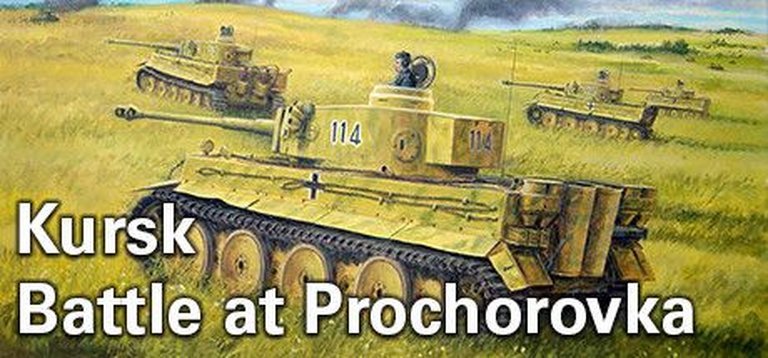
Kursk: Battle at Prochorovka is a turn-based strategy wargame set during World War II, specifically recreating the historic Battle of Prochorovka—a pivotal tank engagement within the larger Battle of Kursk on the Eastern Front. Players command Allied and Axis forces in tactical, top-down combat using a point-and-select interface, emphasizing historical accuracy and strategic depth in solo or split-screen multiplayer modes.
Gameplay Videos
Where to Buy Kursk: Battle at Prochorovka
PC
Kursk: Battle at Prochorovka Guides & Walkthroughs
Kursk: Battle at Prochorovka Reviews & Reception
store.steampowered.com (47/100): ..the game meets its goals of translating a simpler system to computers with an accurate and enjoyable result. Bravo and encore!
Kursk: Battle at Prochorovka: A Critical Review of a Niche Historical Wargame
Introduction: The Weight of History in a Modest Package
In the vast landscape of World War II strategy games, few battles carry the mythic weight of Prochorovka. The July 1943 clash, often called the largest tank battle in history, represents the bloody, grinding zenith of the German offensive at Kursk and the decisive moment where the Soviet Union irrevocably seized the initiative on the Eastern Front. It is a subject ripe for digital interpretation, demanding a design that balances operational-scale complexity with the visceral, claustrophobic horror of armored warfare. Kursk: Battle at Prochorovka, developed and published by the small French studio Yobowargames and released in July 2017, attempts this formidable task. As a title that exists almost entirely in the shadow of its own historical gravity and the more polished, high-fidelity wargames that have come before it, this review will dissect whether the game successfully mines this rich historical seam or remains a curious, underdeveloped artifact of niche game development. My thesis is that while the game demonstrates a clear, respectable passion for its subject and a functional understanding of core wargame mechanics, it is ultimately hamstrung by a lack of resources, polish, and innovative design, rendering it a title primarily for completists and dedicated students of the Eastern Front rather than a recommended entry point for modern wargamers.
Development History & Context: The Constraints of a Small Studio
Kursk: Battle at Prochorovka emerges from the specific context of the mid-2010s indie wargame scene. Yobowargames, the sole listed developer and publisher, represents a category of small, often one- or two-person studios that sustain the “hardcore” wargame genre between major releases from giants like Slitherine, Matrix Games, or Battlefront.com. Their business model, as seen on platforms like Steam (where it retailed for $6.49), is based on low overhead, direct distribution, and serving a dedicated, if small, customer base.
The technological constraints of the era are evident. The game was built for Windows and Macintosh using what appears to be a relatively simple 2D engine, as indicated by its “Top-down” perspective and “Point and select” interface from the MobyGames specs. There is no evidence of 3D terrain modeling, sophisticated particle effects, or dynamic lighting. This is not inherently a flaw—many acclaimed wargames (e.g., Panzer Command: Ostfront) thrive on clear, functional 2D interfaces—but it places the title in a specific aesthetic bracket: one of informational clarity over sensory immersion.
The gaming landscape at the time was crowded with competitors directly addressing the same historical period. Titles like Sudden Strike 4 (also 2017) offered more accessible, action-oriented real-time tactics. Battle Academy 2 provided a more polished, approachable turn-based experience. Panzer Campaigns: Kursk ’43 and the long-running Theatre of War series targeted the hardcore simulation audience with greater depth. Kursk: Battle at Prochorovka entered this field without a clear differentiating feature beyond its hyper-specific focus on the single, famous tank engagement at Prochorovka on July 12th. Its stated vision, implied by its title and mechanics, was a tightly focused, tactical-scale simulation of that one day of fighting, eschewing the broader operational campaigns of its competitors.
Narrative & Thematic Deep Dive: History as a Framework, Not a Story
The most striking aspect of Kursk: Battle at Prochorovka from a narrative perspective is its almost total absence of traditional storytelling. There is no campaign, no branching storyline, no character arcs. The “narrative” is the operational history itself: the German Wehrmacht‘s last great offensive in the East, encountering the deeply prepared Soviet defenses. The player is not a protagonist but an omniscient commander, re-enacting a historical dilemma.
The game’s thematic core is therefore one of historical determinism and attrition. The mechanics, as glimpsed in the instruction manual fragments, enforce this. The manual discusses “turn-based” “point and select” combat, “character progression” likely referring to unit experience and XP, and a detailed “UI” for managing formations. The setting is explicitly “World War II” and the “Battle of Kursk.” The theme is not heroism but logistics, positioning, and the brutal mathematics of steel and ordinance.
The lack of human elements—no named commanders, no individual soldier stories, no dialogue—is a deliberate, if stark, design choice. This is not a game about men but about machines and formations. The “characters” are the Panzer IVs, Tiger Is, T-34s, and KV-1s; the “plot” is the ebb and flow of the engagement as dictated by command decisions and the fog of war. The underlying theme becomes a chilling simulation of industrialized warfare, where individual valor is subsumed by the needs of the line. The game implicitly asks: given the forces, terrain, and historical constraints, could you alter the outcome? It’s a question of operational geometry rather than human drama.
Gameplay Mechanics & Systems: Functional but Uninspired
The core loop of Kursk: Battle at Prochorovka is classic turn-based wargame: move, engage, manage resources, end turn. The manual fragments provide the only concrete clues. The game uses a “top-down” perspective with a “point and select” interface, a standard approach for tactical wargames that prioritizes clarity. The “wargame” genre tag on MobyGames confirms its focus on simulation over action.
Combat and Systems: The combat system is likely based on a traditional “attack-defense” ratio model, factoring in armor values, range, morale, and suppression. The manual mentions “XP” and “character progression,” suggesting a basic experience system where veteran units perform better. However, the depth of these systems is questionable. There is no indication of a complex supply system, detailed crew management, or intricate command and control mechanics beyond what is standard in the genre. The “innovative” claim is hard to substantiate from the evidence; it appears to be a competent, by-the-numbers implementation of established wargame formulas.
UI and Flaws: The UI is described as functional (“point and select”), but the complete lack of critic or player reviews (noted on its MobyGames page) is a massive red flag. It suggests the game either flew completely under the radar or, more likely, attracted a community so small that no one felt compelled to write a public review. This points to potential issues: a clunky interface, unclear tooltips, poor pathfinding, or a lack of adequate tutorials—common pitfalls for small-studio wargames. The manual’s existence in English suggests an attempt at accessibility, but without user feedback, its efficacy is unknown.
The game’s most significant systemic “flaw” may be its extreme narrowness. By focusing solely on Prochorovka, it removes the strategic context of the larger Kursk salient. There is no operational layer to manage reserves, decide where to commit the Grossdeutschland division, or handle the Soviet deep defenses. This laser-focus could be a strength for purists wanting a detailed tactical sandbox, but it also limits the game’s scope and replayability, reducing it to a single, static historical puzzle.
World-Building, Art & Sound: Functional Ambiance
Given the complete absence of visual assets in the provided materials—no screenshots, no promotional images—the artistic presentation must be inferred from genre conventions and the technical specs. The “Top-down” perspective and 2D engine suggest a map composed of colored hexes or grid squares, with unit counters featuring stylized icons for different tank types (e.g., a distinct icon for a Tiger I vs. a T-34). This is the visual language of the board wargame, translated to the screen.
The setting’s atmosphere is therefore derived entirely from the historical scenario and the manual’s text. The “world” is the sun-baked Ukrainian steppe around the village of Prochorovka, defined by gentle rises, sparse woods, and the infamous Selentsovka stream. The game’s world-building is purely cartographic and historical. It succeeds if the map accurately reflects the terrain that funneled tanks into a killing zone, but fails to convey the choking dust, the heat, the smell of cordite and oil, or the sheer terror of the encounter. There is no “art” in the cinematic sense.
Sound design, if present at all, is not mentioned and is almost certainly minimal: perhaps a few stock gunfire and engine sounds. The immersive, brutal soundscape of clanging metal, radio chatter, and screams is absent. The experience is one of cold, silent calculation on a digital map. The art and sound, therefore, contribute to a sense of detached, abstract command rather than visceral presence. This is a strength for hardcore simulationists who prefer data to drama, but a profound weakness for anyone seeking to feel the battle.
Reception & Legacy: A Whisper in the Archives
The critical and commercial reception of Kursk: Battle at Prochorovka is, for all intents and purposes, non-existent. The MobyGames page for “Critic Reviews” explicitly states “Be the first to add a critic review for this title!” The same is true for “Player Reviews.” This is the clearest possible signal: the game was a commercial and critical non-event.
Its sales figures are unknown, but the “Collected By” stat on MobyGames shows only “1 player,” a devastatingly low number that suggests minuscule sales. It was a commercial failure by any mainstream measure, surviving only on the modest revenue from Steam’s global reach to a niche audience.
Its influence on the industry and subsequent games is equally negligible. It left no mark on design trends, inspired no clones, and is not cited in discussions of great Eastern Front wargames. Its legacy is purely archival: it exists as a data point in the MobyGames database, a testament to a small studio’s attempt to tackle a grand historical subject with limited means. It represents the “long tail” of wargame development—the countless titles that cater to a handful of enthusiasts but fail to penetrate broader consciousness. Compared to the impactful Company of Heroes series or the enduring IL-2 Sturmovik simulations, it is a historical footnote about a historical footnote.
Conclusion: A Curio for the Dedicated, Not a Classic
Kursk: Battle at Prochorovka is a game defined by its limitations. It is a passion project that never transcended the constraints of its budget and ambition. Its strengths are its respectful, focused subject matter and its adherence to the rigid, logical grammar of turn-based wargaming. For a scholar or consummate enthusiast of the Battle of Kursk, it offers a specific, tactical-scale scenario that can be painstakingly re-created and experimented with. The value lies in the “what-if” sandbox, using the historical setup as a starting point.
However, as a complete video game experience, it is profoundly lacking. The absence of any recorded commentary, a vibrant modding community, or even basic user reviews speaks volumes. It lacks the polish, tutorials, and dynamic elements that make modern wargames like Command: Modern Operations or even the older but more beloved Combat Mission series accessible and engaging. The art is functional, the sound likely negligible, and the gameplay, while mechanically sound, offers little in the way of innovation or compelling hooks beyond its historical setting.
In the pantheon of video games about the Eastern Front, Kursk: Battle at Prochorovka holds a place of obscurity. It is not a forgotten classic waiting to be rediscovered; it is a functional, obscure tool. Its place in history is as a curious artifact—a digital boardgame with a narrow scope and no audience to speak of. It serves as a reminder that passion and historical accuracy alone do not make a great game. Without the resources for presentation, the design for engagement, or the luck for discovery, even the most momentous of battles can be rendered a private, silent endeavor. It is ultimately a game for the one player who, according to MobyGames, has “collected” it—and perhaps for them alone.