
- Release Year: 2023
- Platforms: Nintendo Switch, PlayStation 4, Windows, Xbox One, Xbox Series
- Publisher: OverGamez
- Developer: MaxMedia
- Genre: Action
- Perspective: Side view
- Game Mode: Co-op, Single-player
- Gameplay: Platform, RPG elements
- Setting: Fantasy
- Average Score: 76/100
Description
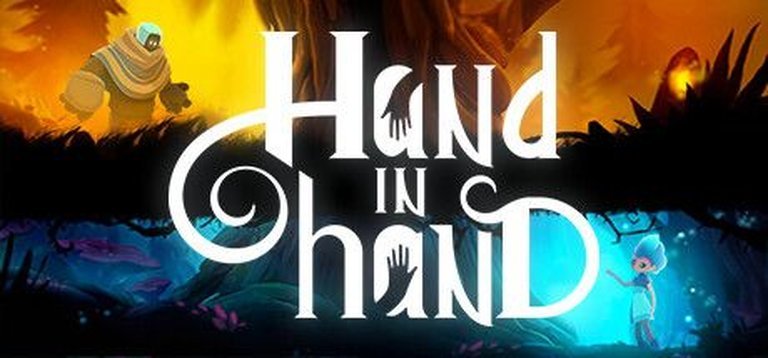
Hand in Hand is a local co-op platformer set in a enchanting fantasy world where two friends navigate parallel light and dark realms to confront an invading evil. With split-screen gameplay emphasizing teamwork, players solve puzzles, encounter bosses, and progress through an emotionally driven narrative that highlights cooperation as the key to saving their realm.
Gameplay Videos
Where to Buy Hand in Hand
PC
Hand in Hand Guides & Walkthroughs
Hand in Hand Reviews & Reception
metacritic.com (60/100): Hand in Hand is a gorgeous walk through an intriguing world, even if I wasn’t always sure what was going on. It has a great central gameplay idea but fumbles the execution with simplistic puzzles and frustrating boss fights.
metacritic.com (60/100): MaxMedia manages to create an enjoyable experience near the end of Hand in Hand, but its simplicity and gameplay contradictions in split-screen co-op make it hard to recommend it confidently.
moviesgamesandtech.com : Hand in Hand is a gorgeous experience but its puzzles are a little unbalanced and, fatally, much too simple.
monstercritic.com (100/100): Hand in Hand is a beautifully created game with a narrative which is sure to warm the hearts of young and old alike. It’s challenging without being frustrating, and I absolutely loved playing it.
monstercritic.com (85/100): Hand in Hand is a masterfully crafted gaming experience that seamlessly integrates split-screen gameplay with an emotionally charged narrative. Its enchanting world, compelling characters, and emphasis on cooperation make it a standout atmospheric platformer.
Hand in Hand: A Tale of Two Games, One Noble Experiment
In the vast and often confusing taxonomy of video game titles, few are as generically functional as Hand in Hand. A search for this phrase yields a bizarre bifurcation: one entry is a 2023 indie platformer about separated lovers in a fantastical world, and the other is a much earlier, obscure RPG Maker horror title centered on cursed kokeshi dolls. This review unequivocally concerns the former—MaxMedia and OverGamez’s 2023 release—a game whose very existence is predicated on the literal and metaphorical act of connection, yet finds itself in a curiously isolated position, critically sandwiched between commendable ambition and frustrating execution. Hand in Hand is not a forgotten classic nor a notorious failure, but a poignant case study in how a singular, innovative mechanical core can be both a game’s greatest strength and its most暴露的 weakness when enveloped by underdeveloped surrounding systems.
Introduction: The Promise of Two Screens
Hand in Hand arrives with a premise so elegantly simple it feels inevitable: a 2D platformer where two characters exist in parallel, side-by-side worlds on a split screen, their actions and abilities intrinsically linked. It is a game explicitly designed for cooperation—both as a local co-op experience and as a demanding solo challenge requiring a player to mentally and physically split their focus. The Steam store description poetically frames it as a “story about how we can help one another even when you’re apart, and be far from one another even when you’re nearby.” This thesis of interconnectedness is the game’s foundational pillar. However, a critical analysis reveals that while the narrative thematically echoes this idea, it is the gameplay wherein this concept is both ingeniously realized and, ultimately, circumscribed by design choices that prevent it from achieving true masterpiece status. Hand in Hand is a beautiful, heartfelt, and clever game that constantly reminds you of the deeper, more complex experience it could have been.
1. Development History & Context: A Modest Studio’s Hopeful Leap
Hand in Hand was developed by MaxMedia, a Russian studio whose prior portfolio is not widely documented in Western gaming press. The project was helmed by a very small, core team: Alexey Borisov served as Game Designer, Illustrator, and Animator, while Eugene Ryabinin and Alex Zakharov shared programming duties. Audio was crafted by Paweł Petrowski (music composition/production) and Svyatoslav Morozov (original music), with a handful of session musicians rounding out the credits. The project management fell to Max Fedorov. This is a textbook independent development structure: a handful of multi-hat-wearing creatives driven by a specific, focused vision.
The game was built in Unity, a staple engine for 2D indies, which allowed for the core split-screen mechanic to be implemented across multiple platforms (Windows, Switch, PS4, Xbox One/X) with relative consistency. The technological constraint was not raw power, but the design challenge of making two simultaneous playfields feel coherent and intentional. The 2023 release date places it in a post-pandemic indie landscape where local co-op games saw a resurgence in popularity (titles like It Takes Two, Unravel Two), but the “split-screen puzzle platformer” niche had quieter waters. Hand in Hand sought to stand out not through sheer scale, but through its primary mechanical gimmick and its earnest, hand-drawn aesthetic. The developer’s vision was clear: to create an experience where cooperation wasn’t an optional mode but the fundamental language of play.
2. Narrative & Thematic Deep Dive: A Story Told in Fragments
The narrative of Hand in Hand is presented with a minimalist, almost impressionistic touch. The protagonists are Lina (the blue-haired girl with invisibility) and Minho (the stocky young man with a slashing ability). They are “soulmates” in a “fairytale world.” An “evil” force—often represented by a meteor and encroaching darkness—shatters their world and separates them. Their goal is to journey toward one another through fractured, parallel realms to reunite and defeat this shadow.
Analysis of Execution:
The story’s greatest strength is its thematic alignment with the gameplay. Their separation is literal (two screens) and metaphorical, and the entire puzzle-solving enterprise becomes a enactment of mutual reliance. The narrative is delivered sparsely through short interstitial cutscenes and environmental details. This has two effects. First, it allows the player to project their own interpretation onto the characters’ relationship, enhancing the universal “connection” theme. Second, as noted by critics like Josh Blackburn of Movies Games and Tech, it often results in a story that feels “a little vague.” Key plot points—the nature of the evil, the backstory of the world, the exact reason for their separation—are not explicitly detailed. The game trusts the emotional throughline (love conquers separation) to carry the weight, which it largely does due to the inherent pathos of the core mechanic. However, this vagueness also means the world feels less like a lived-in place and more like a symbolic obstacle course. The “deeper meaning” promised in the store blurb remains tantalizingly out of reach, a shadowy presence just like the game’s antagonists.
3. Gameplay Mechanics & Systems: The Brilliant Core and Its Flimsy Frame
This is the arena where Hand in Hand both shines and stumbles. Its systems are a study in contrasts.
The Split-Screen Paradigm:
This is the game’s revolutionary core. In single-player mode, one player controls both Lina and Minho simultaneously with one controller (typically using the left stick for movement and buttons for actions for one character, and the right stick/buttons for the other). This is an immediate and profound cognitive shift, requiring the player to think in two parallel streams. In local co-op, each player controls one character, necessitating constant communication and shared spatial awareness. This duality is conceptually brilliant and works wonderfully in theory.
Character Abilities & Puzzle Design:
Lina can turn invisible, allowing her to pass through certain hazards and reveal hidden objects/mechanisms in her own world. Critically, her invisibility can also affect Minho’s world by hiding threats. Minho can slash to break specific rock obstacles. The puzzles are built around this asymmetry. A classic example: Minho must pull a lever that raises a platform in Lina’s world, or Lina must use her invisibility to reveal a safe path through a laser grid for Minho.
The genius lies in puzzles that require simultaneous action. This is where the solo mode becomes a frantic, brain-bending exercise and co-op becomes a dance of coordinated effort.
Critical Flaws and Imbalances:
1. Character Utility Imbalance: This is the most significant mechanical flaw. As repeatedly observed in reviews (notably by Movies Games and Tech and implied in the Nindie Spotlight critique), Lina’s power is vastly more impactful. Her ability to affect both screens and interact with hidden elements makes her the primary problem-solver. Minho, with his more localized slashing ability, often feels like support. In co-op, this creates a dynamic where one player is doing the heavy cognitive lifting while the other handles simpler platforming, undermining the ideal of equal partnership.
2. Puzzle Simplicity & Unfulfilled Potential: The puzzle concepts are strong, but their execution is frequently shallow. Many challenges are solved by the simple, repeated application of Lina’s invisibility. Promising new mechanics—like platforms that appear for one character when the other steps on a switch—are introduced and then abandoned within a level or two. The game never builds to the complex, multi-step, Rube Goldberg-esque puzzles its system could support. As Movies Games and Tech noted, achievements would pop for solutions that felt obvious, indicating a lack of meaningful challenge.
3. The Boss Battle Schism: This is a catastrophic design decision that directly contradicts the game’s core philosophy. All boss fights shift into a single-character, single-screen arena, forcing the player controlling that specific character to face a traditional, demanding platforming challenge alone. For co-op, this means one player is sidelined entirely, forced to watch. For solo players, it means halting the dual-control flow for a segment that often feels like a different, more generic game. These battles are also criticized as frustrating, relying on memorization over the collaborative problem-solving that defines the rest of the experience. They are not climaxes of partnership but abrupt, disruptive solo chores.
4. Control and Accessibility: The single-player control scheme is non-rebindable and, on a standard controller, places awkward functions (like jump) on shoulder buttons. This creates an unnecessary physical barrier to the mode’s already high mental demand.
4. World-Building, Art & Sound: A Gorgeous, Atmospheric Limbo
Where the gameplay systems falter, the presentation consistently excels.
Visual Direction:
The game is universally praised for its “gorgeous” and “painterly” aesthetic. The world uses a palette of deep, muted colors—creamy beiges, forest greens, and pervasive, encroaching shadows. The hand-drawn art style gives environments (fairy forests, ancient ruins, crystalline caves) a tactile, storybook quality. The lighting is soft and atmospheric, and the contrast between the warm, detailed backgrounds and the simplistic, often shadowy antagonists (the “bosses”) is visually and thematically effective. The split-screen layout is framed by ornate, wooden-border effects, reinforcing the fairytale motif. It is a world you want to linger in, even when the puzzles are simple.
Sound Design:
The soundtrack, composed by Paweł Petrowski and Svyatoslav Morozov, is described as “reserved” and “nice,” with ethnic-inspired melodies that underscore the mystical, ancient forest setting. It is generally relaxing and supportive, never overwhelming. Sound effects are crisp and functional. The audio successfully builds the desired contemplative, slightly eerie atmosphere without resorting to horror tropes, perfectly complementing the visual tone.
5. Reception & Legacy: A Modest Success with an Uncertain Future
Critical Reception:
Aggregated scores are modestly positive but revealing. On MobyGames, the average is 82% from two critics. Rectify Gaming awarded 85%, praising its “masterfully crafted” integration of gameplay and narrative. Nindie Spotlight gave it 80%, calling it a “reasonably good co-op puzzler” that doesn’t do enough to “stand out” and criticizing the boss fights. Movies Games and Tech and GameGrin on Metacritic were harsher, both scoring it 60/100 and citing simplistic puzzles and frustrating bosses. The critical consensus is one of respect for the concept and artistry, but disappointment in the shallow execution and flawed balance.
User Reception:
Paradoxically, Steam user reviews are “Very Positive” at 92% (based on ~81 reviews at the time of writing). This gap suggests that the players who engage with the game on its own terms—particularly as a local co-op experience with a friend or child (as noted by LadiesGamers.com)—are more forgiving of its simplicity and are captivated by its charm and unique premise than critics evaluating it against broader genre benchmarks.
Commercial Performance & Legacy:
Exact sales figures are not public, but GameRebellion’s analytics estimate ~3,000 units sold in its first week, with a peak of 11 concurrent users. This suggests a modest, niche commercial performance typical for a small indie. Its legacy is currently being written. It has not yet sparked a wave of imitators, likely due to the very flaws that critics highlight. Its primary contribution may be as a proof-of-concept for dedicated split-screen cooperative design. It demonstrates that the “two brains, one problem” paradigm can be compelling, but also that it must be supported by equally deep puzzle design and, crucially, a commitment to the co-op ethos in all gameplay sections—something its solo boss battles fundamentally violate. It will likely be remembered by its small fanbase as a cult co-op gem and by designers as a cautionary tale about the importance of systemic consistency.
6. Conclusion: The Unfulfilled Promise of Togetherness
Hand in Hand is a game of profound and persistent contradictions. It is a game about unity whose design introduces significant imbalances between its two halves. It is a puzzle game whose puzzles rarely demand the complex synergy its mechanic allows. It is a narrative about emotional depth told with frustrating vagueness. Its boss battles are a direct betrayal of its core cooperative philosophy.
And yet, it remains a game worth playing, specifically for the experience it offers in co-op mode. The moments where two players, each on their own screen, must shout across the couch—”Jump now!” “I’m turning invisible, wait!”—are genuinely special. The atmospheric world is a pleasure to inhabit. For a player willing to forgive its shortcomings, Hand in Hand provides a short, beautiful, and uniquely social journey.
Its place in history is not that of a landmark title, but of a noble, heartfelt experiment. It proves that the split-screen co-op puzzle genre has unexplored potential, but also that potential must be mined with rigor and consistency. MaxMedia built a magnificent bridge between two worlds but left several planks missing. The result is a journey that is often enchanting and occasionally frustrating, but whose central idea—that we are stronger, and our problems more solvable, when we work in tandem—resonates long after the credits roll. It is a flawed gem, but a gem nonetheless, whose light shines brightest when shared.