
- Release Year: 2009
- Platforms: PlayStation 3, PS Vita, PSP, Windows
- Publisher: Alawar Entertainment, Inc.
- Developer: Wellore
- Genre: Puzzle
- Game Mode: Single-player
- Gameplay: Tile matching, Turn-based
- Average Score: 70/100
Description
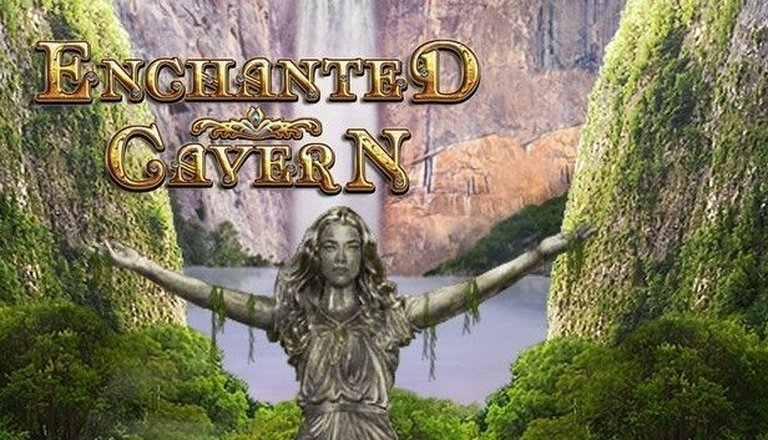
Enchanted Cavern is a turn-based tile-matching puzzle game set in a mystical, enchanted cave where players explore fixed-screen levels by matching tiles. The game incorporates a dark narrative revealed through journal entries, detailing a researcher’s experiments with necromancy and alchemy that transformed the cave, adding depth to its challenging match-3 gameplay.
Gameplay Videos
Enchanted Cavern Guides & Walkthroughs
Enchanted Cavern Reviews & Reception
metacritic.com (70/100): An entertaining little diversion.
Enchanted Cavern: A Subterranean Puzzle lost to Casual Gaming’s Quartz-Studded Past
In the vast, digitized archives of gaming history, certain titles shimmer like fool’s gold—bright, numerous, and ultimately forgettable. They are the prolific, workaday entries of a bygone casual boom, polished to a sheen but lacking the foundational weight to endure. Enchanted Cavern, released to little fanfare across multiple platforms between 2009 and 2012, is precisely such a title. Yet, to dismiss it as mere background radiation in the match-3 genre is to overlook its curious duality: a game that presents a cheerful, family-friendly facade over a narrative framework of profound, gothic horror. This review excavates that dichotomy, arguing that Enchanted Cavern is a fascinating case study in tonal dissonance and genre conformity, a technically competent puzzle game whose true story—one of necromancy, soul-harvesting, and atrocity—remains buried beneath layers of marketing whimsy and genre mechanics. It represents both the zenith and the stagnation of the casual puzzle boom, offering no innovation but providing a stark canvas upon which the era’s creative limitations and commercial imperatives are clearly drawn.
Development History & Context: A Product of the Alawar Assembly Line
Enchanted Cavern emerged from the Russian studio Wellore, a development house whose name appears infrequently but consistently in the credits of Alawar Entertainment’s extensive casual catalog. The credits, a scant sixteen names, reveal a tightly focused team: a producer, project manager, director, a single programmer (Mikhail Ostapenko), two graphics artists (Alexandra Krasnikova, Ekaterina Boyarnikova), and a localization team of four. This is not a large team; it is a dedicated unit, likely working on a specific contract or internal project for Alawar, the prolific Russian publisher that dominated the casual and “big box” PC game market in the 2000s and early 2010s with series like Farm Frenzy and Adventures of Sherlock Holmes.
The technological context is one of accessible, low-barrier tools. The system requirements trifle (600 MHz CPU, 256 MB RAM) place it squarely in the era of ubiquitous PC gaming and the rising handheld market. Its 2009 Windows release was followed by ports to the PSP, PlayStation 3, and PS Vita in 2012 as part of the “PSP Minis” and PlayStation Store digital push. This multi-platform strategy, years after its initial release, suggests Alawar saw a long-tail commercial life for the title, repackaging it for Sony’s nascent digital storefronts to capitalize on the still-thriving puzzle market on handhelds.
Creatively, the vision appears constrained by the publisher’s formula. The ad blurb—”exhilarating gameplay, stunning visuals… the entire family will enjoy!”—is boilerplate casual game copy. The director, Tatiana Kalyuzhnaya, and project manager, Maxim Kalyuzhny (likely a married pair given the shared surname), were tasked with delivering a Bejeweled-style experience with a unique hook. That hook, as we shall see, was not mechanical but narrative. Within the safe, profitable framework of tile-matching, Wellore and Alawar allowed a darker story to ferment, creating a game that is mechanically conventional but themologically bizarre.
Narrative & Thematic Deep Dive: The Gilded Atrocity Beneath the Earth
The official marketing describes a simple, magical treasure hunt: “the walls are lined with thousands of glittering jewels!” Yet, the game’s true narrative spine, preserved in the fandom wiki’s meticulous transcription of in-game journals, reveals a story of breathtaking cruelty and megalomania. This is not a story told through cutscenes or dialogue boxes, but through environmental storytelling—the scattered diaries of the cave’s architect, a nameless necromancer-sorcerer.
His descent begins with arrogant, misanthropic goals: “I will have to study on my own, in this cave… degrading humanity to a worthless state.” Experimentation begins with rats, but quickly escalates to murdering a farmer who discovers his theft. The journal entry for “Day 60” is chillingly matter-of-fact: “I couldn’t resist… an actual human soul.” This single act unlocks the cave’s “enchantment”: a self-sustaining ecosystem of terror. He doesn’t just create monsters; he engineers a mortal amusement park.
- The System of Greed: His core innovation is psychological. He uses conjured gold and silver to lure explorers (“blinded by their greed”). He establishes checkpoints every 10 floors, allowing survivors to set up shops and even an inn, transforming the cave into a macabre tourist destination. He monitors the “death toll,” keeping it under 1% to maintain interest—a God-like statistician of suffering.
- The Soul-Crystal Economy: By “Year 5,” he has built a massive crystal to store extracted souls. By “Year 7,” a town has sprung up outside, complete with a marker for the lost. The horror is administered with clinical precision.
- The Endgame: The ultimate goal is the conjuration of a “colossal demon” requiring 1,000 souls. The final entries, as he nears 999 souls, reveal his impatience and active escalation of danger: “I’ve made things more more dangerous to speed things up… but I don’t want to ruin everything.” The journal implies the player character is the final victim, the “one fool still exploring” on “Floor 80.”
Thematic dissonance is the game’s defining, unexamined feature. The player engages with a bright, colorful, musical match-3 game, all sparkling jewels and whimsical sound effects, while the narrative engine they are unknowingly fueling is one of the darkest in casual gaming history—a Saw-like trap built on centuries of predatory accumulation. The “enchanted cavern” is not enchanted; it is a necromantic battery farm. The disconnect between the playful UI (“match 3 glittering jewels!”) and the backstory of thousands of corpses is jarring, suggesting either a profound lack of self-awareness or a deliberately subversive, buried text that the developers assumed no one would read. It stands as a fascinating artifact of how cheap, downloadable games could contain expansive, grim lore that had zero impact on the advertised experience.
Gameplay Mechanics & Systems: Competent Conformity in a Saturated Field
Mechanically, Enchanted Cavern is a tile-matching puzzle game (removal), as categorized by MobyGames. Based on the standard formula of the era and the lone critic’s note, we can reconstruct its systems:
- Core Loop: The player is presented with a grid of colorful, jewel-like tiles. Matching three or more identical tiles in a row (horizontal or vertical) removes them, causing tiles above to fall in. New tiles replenish from the top. Tiles often have secondary effects (like clearing a row/column) after extended chains.
- Progression: The critic review states it is “probably too challenging” for those seeking a relaxing match-3. This suggests a pressure-cooker mechanic—likely a timed mode or a limit on moves per level, with “logic challenges” that require specific tile removal sequences. The 47 levels (as per GameHouse) are the primary progression unit, likely organized into “episodes.”
- Bonuses & Power-Ups: The promotional material mentions “four helpful bonuses.” These are presumably match-3 staples: a bomb-tile to clear a small area, a dynamite for wider destruction, a color-clearing tile, and a shuffle or wildcard.
- Innovation (or Lack Thereof): There is no evidence of mechanical innovation. No match-4/5 cascading bonuses that change the board state fundamentally, no integration of a character RPG layer, no narrative choices. The “special logic challenges” are likely board-specific goals (clear all ice blocks, collect X amount of specific tiles) thatmodify the core matching objective but not the core mechanic.
- Interface & Pacing: It uses direct control (mouse/touch to swap adjacent tiles) and is turn-based (the player moves, then the board responds; no real-time pressure while swapping). The fixed/flip-screen visual style suggests static, pre-designed levels rather than an infinite, procedural generator.
The critic’s primary complaint is revelatory: “having a level skip function or an untimed mode would have gone a long way to making the game better.” This encapsulates Enchanted Cavern‘s fatal flaw. It exemplifies the “difficult casual game” paradox. In an effort to provide “mental mettle” and “exhilaration,” it likely sacrificed accessibility—the very quality that defined the casual boom. It is a game that forgets its own audience, mechanically rigid where other titles (like Puzzle Quest or later Candy Crush Saga) offered adjustable difficulty or life systems that softened blows. It is a pure, unadorned skill test, which in the puzzle space of 2009-2012, made it a hard sell against more forgiving competitors.
World-Building, Art & Sound: A Pretty Prison
The visual and auditory presentation is where the game most successfully executes its brief. The ad blurb’s “stunning visuals” and “vivid Full-Screen Graphics” are relative, but for a 2009 download-sized title, they hold up as competent.
* Art Direction: The world is the “glittering jewel” cave. Tiles are brightly colored, polished gems. Backgrounds are dark cave walls with subtle, shimmering highlights, creating high contrast. The aesthetic is generic fantasy-casual, avoiding the darker implications of its own lore. The “secret rooms” with journals are likely just differently textured screen areas, their narrative weight entirely text-based.
* Atmosphere: The atmosphere is aestheticized, sanitized peril. The music is likely upbeat, magical chiptune or orchestral loops. Sound effects are crisp, satisfying clinks and chimes for matches. There is no sonic hint of the necromantic horror in the journals. This creates a profound cognitive dissonance for the player who seeks out the lore. The world building exists in two parallel, non-intersecting tracks: the bright puzzle interface, and the grim text logs.
* Contribution to Experience: The art and sound serve to domesticate the horror. They make the soul-harvesting cavern feel like a fun, safe place to visit. This is either a massive creative failure (not aligning theme and gameplay) or a darkly ironic design choice—the cavern’s enchantment is so powerful it even obscures its own evil from the player’s sensory experience. The visuals scream “treasure hunt,” the narrative whispers “slaughterhouse.” The two are irreconcilable, leaving the player with a sense of unease that the game itself never acknowledges.
Reception & Legacy: The 60% Afterlife
Critical reception was minimal and lukewarm. The single aggregated critic score on MobyGames is 60%, from a review on PSP Minis stating: “Enchanted Cavern probably won’t wow anyone, but it’s a solid match-3-style game that’s a little different, but not too much.” This is the epitome of damning with faint praise. It acknowledges its derivative nature (“not too much” different) and its challenging, perhaps frustrating, difficulty (“too challenging” for relaxation). The Metacritic score for the PSP version is similarly inert (“tbd” based on one review), and the PlayStation Official Magazine UK called it “An entertaining little diversion” in a 2012 Christmas roundup—barely a mention.
Commercially, it existed in the crowded mid-tier of digital casual games. Its inclusion in The Treasures of Mystery Island: 6 Pack (2011) suggests it was bundled as value-add filler, not a headline title. Its multi-platform release years after the Windows version indicates a low-cost port strategy to fill storefronts, not a demand-driven re-release.
Legacy is virtually non-existent. It did not spawn a significant franchise (despite a wiki for “The Enchanted Cave” series, which actually refers to a different, unrelated indie rogue-like by DustinAux). It is not cited as an influence. It sits in a genre cul-de-sac: a game that added a dark narrative layer but no mechanical layer, thus failing to inspire copycats in either storytelling or gameplay. Its legacy is as a spectral example—a ghost in the machine of the casual puzzle boom. It demonstrates that even within the most formulaic genres, ambitious, thematically rich stories could be embedded (albeit clumsily), but without mechanical innovation or marketing push, they are destined to be ignored, their dark secrets lost in the noise of a thousand Bejeweled clones.
Conclusion: A Flawed Artifact of Unfulfilled Potential
Enchanted Cavern is not a “bad” game. It is a mechanically sound, aesthetically average, excessively difficult match-3 puzzle game. Its true significance lies entirely in the catastrophic dissonance between its presentation and its buried narrative. It is a game about a man who murders for power, builds a city of corpses, and aims to summon a demon, yet you spend your time happily matching pastel gems to a peppy soundtrack. This is not satire; it is a creative misfire of magnificent proportions.
Its place in history is as a cautionary tale. It shows the limits of the casual game model in the late 2000s/early 2010s: a focus on surface-level addictiveness and visual appeal that could not support or contain mature thematic content. The developers at Wellore perhaps imagined they were adding depth, but the depth was purely textual, a parallel narrative that the gameplay utterly failed to reflect or engage with. There is no “soul meter” to manage, no moral choice, no consequence for matching gems beyond level completion. The necromancer’s grand design is irrelevant to the puzzle solver’s experience.
Ultimately, Enchanted Cavern is a forgotten puzzle game that hides a forgotten story. It is the glittering, harmless-looking stone that, if you read the fine print, is actually a tombstone. For the historian, it is invaluable as a document of its era’s constraints and contradictions. For the player, it is a curious, frustrating, and thematically bizarre detour—a 60% scored cavern whose true treasures are the unsettling journal entries of a monster, left to gather digital dust in a corner of the internet, forever disconnected from the cheerful game they commissioned. It is a solid puzzle game with a soul-crushing secret, and that, in the end, is why it remains so profoundly enigmatic.