
- Release Year: 2015
- Platforms: iPad, iPhone, Windows
- Publisher: Slitherine Ltd.
- Developer: Cat Rabbit
- Genre: Strategy, Tactics
- Perspective: Diagonal-down
- Game Mode: Hotseat, Single-player
- Gameplay: Board game, Cards, Tiles, Wargame
- Setting: World War II
- Average Score: 69/100
Description
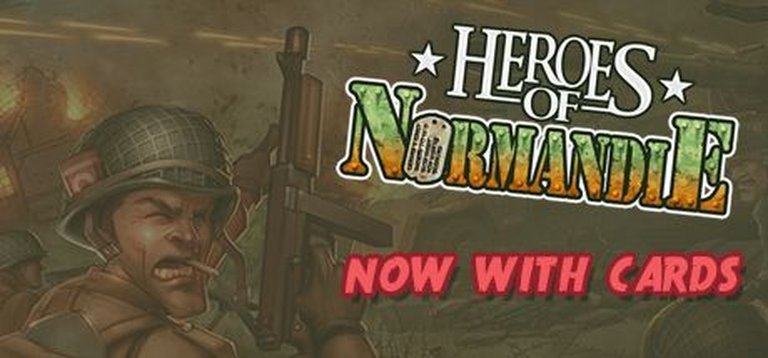
Heroes of Normandie is a digital adaptation of the popular board game, set during the D-Day campaign of World War II. Players command small squads in turn-based tactical scenarios, utilizing board game mechanics like cards and tiles in a fast-paced, bombastic, and humorous wargame experience with a vibrant art style.
Gameplay Videos
Where to Buy Heroes of Normandie
PC
Heroes of Normandie Cracks & Fixes
Heroes of Normandie Patches & Updates
Heroes of Normandie Guides & Walkthroughs
Heroes of Normandie Reviews & Reception
metacritic.com (65/100): It might appear as an easy game to play, but there’s depth in the mechanics, and the visual style is just right.
gamewatcher.com : Heroes of Normandie is a solid surprise and a title strategy fans should consider.
chalgyr.com : Heroes of Normandie is a solid surprise and a title strategy fans should consider.
Heroes of Normandie: A Faithful Yet Forgettable Translation of Board Game Brilliance
Introduction: The Dice Roll of History
In an era saturated with gritty, hyper-realistic World War II simulations, Heroes of Normandie arrives with a cheeky smirk and a pair of loaded dice. Its very title, a purposeful mis-spelling of the iconic Normandy, signals a game more interested in the bombastic, trope-laden spirit of war films than in historical fidelity. Developed by Cat Rabbit and published by Slitherine Ltd., this 2015 digital adaptation of Devil Pig Games’ acclaimed 2014 board game sets out to capture a specific, light-hearted essence: the thrilling, chaotic, and often absurd tactical decisions of a squad-based conflict. This review will argue that while Heroes of Normandie succeeds admirably as a vibrant, content-rich translation of its tabletop ancestor, it ultimately struggles to transcend its origins and assert a compelling identity within the digital strategy genre. Its charm is undeniable, but its mechanical reliance on chance and its conservative design leave it standing as a competent, niche entry rather than a groundbreaking one.
Development History & Context: From Cardboard to Code
Heroes of Normandie emerged from a specific niche in the gaming ecosystem: the adaptation of modern, “beer-and-pretzels” board games into digital format. The original 2014 board game by Devil Pig Games was celebrated for its accessibility, fast pace, and humorous cartoonish aesthetic, offering a gateway into wargaming. The decision by Cat Rabbit, a studio with a portfolio including other Slitherine-published titles like Victory & Glory: Napoleon, to digitalize it was a logical step in a market hungry for such conversions. The technological constraints of the era (2015) were minimal for a 2D tactical title; the Unity game engine was more than capable of rendering the board’s vibrant art and simple animations. The gaming landscape at the time was dominated by complex real-time tactics (e.g., Company of Heroes 2) and dense turn-based hex-grid wargames (e.g., Battlefield Academy). Heroes of Normandie positioned itself as the antithesis: a fast, visually clean, and deliberately un-serious alternative. Its development vision was clearly preservationist—to replicate the tactile feel and rapid-fire decision-making of the board game—rather than transformative, aiming to expand the experience with digital-only features like a scenario editor and asynchronous multiplayer.
Narrative & Thematic Deep Dive: A Salute to War Movie Clichés
Where Heroes of Normandie truly carves its own niche is in its narrative framing. The plot is a thin veneer for tactical scenarios, but it is this veneer that defines the game’s personality. The campaigns for the Americans, British, and Germans are not told through somber cutscenes but via witty, anachronistic banter between the anonymous Field Commander (the player’s avatar) and a stereotypical General. This dialogue is the game’s secret weapon, peppered with references to iconic war films and pop culture. Characters are not historical figures but caricatures: “Clint,” an obvious Clint Eastwood homage; “Hans Gruber” from Die Hard; “Oddball” from Kelly’s Heroes. This creates a thematic through-line that is both absurd and endearing, treating the D-Day campaign not as a sacred historical event but as a playground for familiar tropes. The underlying theme is one of affectionate parody. It acknowledges the gravity of its setting—the bocage of Normandy, the pillboxes, the company-level engagements—but undercuts it constantly with humor. This creates a unique dissonance: you are making life-or-death tactical calculations for units with names like “The Rock,” a machine gun-loving US trooper. For some players, this is a fresh, relatable take on a “well-worn piece of history,” as one reviewer noted. For others, it can feel tonal whiplash, preventing any genuine immersion in the simulation of warfare. The writing, while praised for its charm, is also noted for containing typos and, critically, lacking voice acting—a missed opportunity that could have elevated this comedic element significantly.
Gameplay Mechanics & Systems: The Order-Activation-Supply Dance
The core gameplay loop of Heroes of Normandie is a direct and faithful translation of its board game parent, structured around a three-phase turn system that prioritizes tempo and tough choices.
-
The Core Loop: Order, Activation, Supply. Each turn, players first enter the Order Phase, where they assign a limited number of “order tokens” to their units, designating which will attack, move, or perform special actions. This is the critical planning stage, where resource (order) management meets tactical forethought. The Activation Phase follows, where units with attack orders resolve their combat simultaneously. Most units can either move or attack, creating agonizing trade-offs. Finally, the Supply Phase allows all units that did not receive an order to move freely, crucial for repositioning and setting up for the next turn. This structure creates a brisk, almost puzzle-like rhythm. Scenarios have a limited number of turns to achieve primary and secondary objectives, forcing players to plan several turns ahead. This “puzzle-strategy” hybrid is a significant strength, making each scenario a tight, self-contained tactical challenge rather than a sprawling operational map.
-
Combat & The tyranny of the Die. Combat resolution is where the board game’s DNA is most apparent and most divisive. Almost all attacks are resolved by rolling a six-sided die, with the target number determined by the attacking unit’s skill versus the defender’s armor. This introduces a high variance element. A poor roll in the critical first turn, where you need to eliminate an enemy tank before it fires, can be mission-ending. As one critic starkly put it, “getting bad dice rolls on your first few turns will probably end up forcing you to restart the mission.” A patch was released to tweak probabilities, but the fundamental reliance on luck remains. This is not a game of perfect information and deterministic outcomes; it is a game of managing risk and probability, where a single unlucky roll can unravel several turns of careful planning. For fans of the board game, this is part of the authentic charm—the tactile tension of the dice roll. For others, it feels frustratingly arbitrary, especially within the tight turn limits.
-
Progression, UI, and Innovation. Progression is campaign-based. Each of the three national campaigns (US, UK, Germany) has a introductory campaign teaching faction-specific tactics (e.g., German aggression vs. British defense) and a harder “Elite” campaign. Additional “Rogue-like” campaigns offer permadeath-style resource management. There is no persistent unit or soldier progression between scenarios; each mission is a fresh tactical problem. The user interface is a point-and-select system that is logically designed and generally clear, though a consistent critique is the tiny size of on-board icons and stats. Players frequently report needing to zoom in to read unit details, and terrain types can look visually similar, requiring clicks for confirmation. This is a significant usability flaw in a game where reading the board state at a glance is paramount. The game’s most notable “innovation” within its own genre is its tone and pace. It explicitly aims for a “bombastic and humorous” experience with “fast-paced” action, a deliberate contrast to slower, more earnest wargames. Its content offerings—a map editor for custom scenarios, robust skirmish mode, and asynchronous multiplayer—are substantial for a niche title but considered table stakes for a modern digital adaptation. The absence of the original board game’s card-driven command system at launch was a noted omission for purists, though updates may have addressed this.
World-Building, Art & Sound: A Board Game Come to Life
The game’s visual and auditory presentation is its most universally praised aspect and the primary vessel for its unique identity.
-
Visual Direction & Art Style: The art is a seamless translation of the board game’s cartoonish, clear, and colorful aesthetic. Units are stylized caricatures—the German soldier has a comically severe jawline, the British Tommy looks weathered but brave. Maps are beautifully rendered tableaus of the Norman countryside: bocage (hedgerows), wheat fields, rivers, bridges, sandbags, and pillboxes are all depicted with a pleasing, almost painterly clarity. The “board game” look is not a limitation but a core design choice, creating an immediately readable and inviting battlefield. The animation is simple but effective: units hop and lurch when moving, explosions are juicy and satisfying, and dice tumble visibly across the screen during resolution, enhancing the tactile feel. However, as mentioned, the small scale of elements on the default view is a persistent issue that hampers readability.
-
Sound Design & Music: The sound design punches above its weight. Weapon fire—from the crack of rifles to the deep thump of artillery—is distinct and反馈 provides crucial audio cues for combat events. The “hollow ping” of a missed shot is particularly noted. The soundtrack, however, is criticized as both sparse and repetitive. While appropriate for the setting, players report it becoming tiresemic quickly during longer play sessions. The most glaring audio omission is the lack of voice acting for the campaign’s witty dialogue. Hearing the banter between the Field Commander and the General, especially with the pop-culture character impressions, would have been a monumental boost to the game’s charm and narrative integration, a missed opportunity that several reviewers lamented.
Reception & Legacy: A Niche Success with Limited Reach
Upon release, Heroes of Normandie received a mixed-to-positive critical reception, but one that clearly delineated its audience. Aggregate scores are modest: MobyGames lists a 60% average from critics (based on one score), while Metacritic aggregates to a 65 (“Mixed or Average”) from 7 critic reviews. User scores are more polarized, with Steam data showing a “Mostly Positive” rating (74/100 from ~243 reviews) but a much lower Metacritic user score (3.7/10), indicating a divisive experience.
- Critical Consensus: Praises consistently landed on the charming art style, fast-paced and deep tactical puzzles, and the humorous writing. The content volume (multiple campaigns, skirmish, multiplayer, editor) was also appreciated. Criticisms were just as consistent: the tiny UI elements, the frustrating reliance on dice rolls that could undo strategic play, the repetitive music, and the fundamental critique that it “doesn’t really draw you in” or offer anything uniquely compelling compared to other strategy titles. The Dutch review from Gameplay (Benelux) stands out as a rare outright rave, calling the digital version “fantastic” and a perfect representation of the board game. In contrast, GameWorld Navigator bluntly stated the game “has no business appearing on PC,” implying a better fit for mobile.
- Commercial Performance & Legacy: Commercial data is sparse, but its continued presence on Steam and Slitherine’s store, along with the release of three DLC expansions (US Rangers, Bulletproof Edition, 21st Panzer Division) and a successful iOS port, indicates a sustainable, if not blockbuster, commercial life. Its legacy is that of a faithful, well-supported niche adaptation. It did not revolutionize the digital wargame genre but demonstrated that there was a market for lighthearted, board-game-style tactics. Its influence is indirect, part of a wave of digital board game adaptations (alongside titles like Through the Ages) that emphasized accessibility and aesthetic charm over simulation depth. It remains a beloved title among fans of the original board game and players seeking a quick, humorous tactical fix, but it has not spawned imitators or shifted industry trends. Its most lasting impact may be in proving that a WWII game could successfully wear its pop-culture references on its sleeve without descending into outright parody.
Conclusion: A Worthy but Limited Battlefield
Heroes of Normandie is a game of clear strengths and sobering compromises. It is a technically proficient and passionately crafted love letter to its board game source material. The art is gorgeous and functional (zoom issues aside), the core turn structure is brilliantly paced and puzzle-rich, and the comedic tone provides a refreshingly silly counterpoint to the somber genre it inhabits. For a player seeking a quick, flavorful tactical experience with a smile, it delivers in spades.
However, as a standalone video game critique, it falls short of essential status. Its mechanical dependence on high-variance dice rolls will alienate players who prioritize strategy over luck, and its conservative design—stick closely to the board game’s systems—means it lacks the “killer app” innovation that lifts a good adaptation to a great game. The missing voice acting and occasionally frustrating UI further keep it from elite company. In the grand canon of WWII strategy games, Heroes of Normandie is a delightful sidebar, not a main chapter. Its place in history is secure as a paradigmatic example of a faithful board-game-to-digital translation that prioritizes authenticity over transformation. It is a game you play for its specific, charming vibe, not because it redefines its genre. For those who align with that vibe, it’s a treasure. For everyone else, it’s a well-made but ultimately forgettable skirmish.