
- Release Year: 2010
- Platforms: Windows
- Publisher: Namco Networks America Inc.
- Developer: Namco Bandai Games Inc., Shanghai Mineloader Software Co., Ltd.
- Genre: Action
- Perspective: Diagonal-down
- Game Mode: Single-player
- Gameplay: Cooking, Match-three, Time management, Upgrades
- Setting: Pizza parlor
- Average Score: 70/100
Description
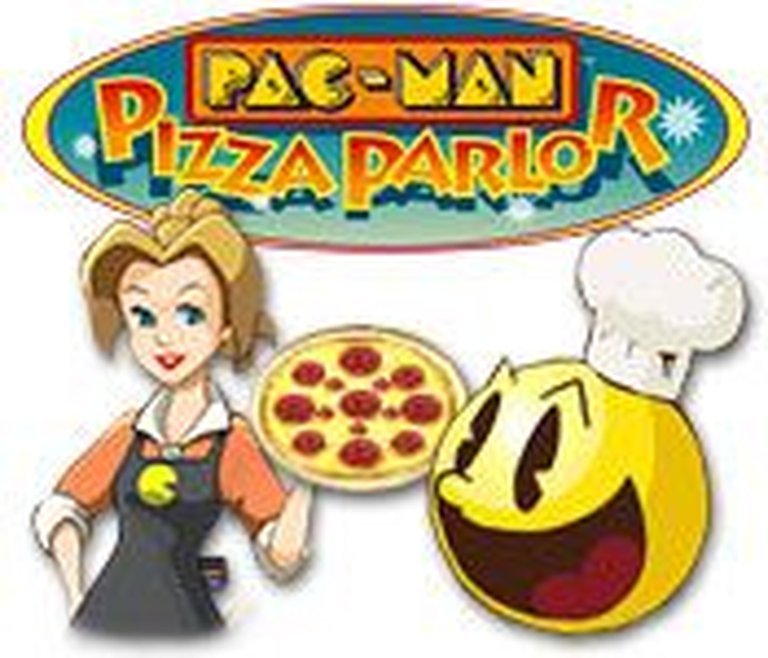
Pac-Man Pizza Parlor is a time management game where players help Cathy save her family’s pizza parlor after her father loses his memory. Set in a split-screen restaurant layout, Cathy takes customer orders at the counter while Pac-Man operates a conveyor belt to collect ingredients, prepare meals, and cook dishes in the oven, all under pressure to serve customers before they leave angry. The story mode advances through weekly levels with earnings goals, allowing upgrades to the restaurant, and includes a bonus match-three game and endless mode, with Pac-Man-themed elements like stationary ghosts that turn into fruit for bonus points.
Gameplay Videos
Pac-Man Pizza Parlor Free Download
Pac-Man Pizza Parlor Reviews & Reception
gamerdad.com : It only costs ten bucks to download, so it’s worth it if you like those kinds of games.
Pac-Man Pizza Parlor: A Culinary Detour Through Gaming History
Introduction: More Than Just a Pizza Topping
In the sprawling, multi-decade canon of Pac-Man—a franchise that has seen our hero chased through mazes, turned into a 3D platformer, and even starring in a syndicated cartoon—few entries are as tonally jarring, conceptually ambitious, and ultimately overlooked as Pac-Man Pizza Parlor. Released in 2010 to commemorate the iconic character’s 30th anniversary, this Windows-exclusive time-management game represents a deliberate, if perplexing, pivot away from the arcade action that defined its lineage. Instead of chasing dots, Pac-Man now fetches sausage; instead of evading ghosts, he navigates a conveyor belt. This review posits that Pac-Man Pizza Parlor is a fascinating case study in franchise adaptation: a game that confidently, and sometimes clumsily, grafts the emotional weight of a visual novel onto the mechanistic stress of a Diner Dash clone, all while making a meta-narrative nod to the very pizza slice that inspired its star. It is neither a lost classic nor a catastrophic failure, but a peculiar, earnest, and deeply flawed artifact that reveals as much about the anxieties of 2010’s casual game market as it does about the enduring elasticity of the Pac-Man mythos.
Development History & Context: A Pipeline to Shanghai
Studio Lineage and Overseas Development
The game’s credits, painstakingly documented on MobyGames, tell a story of early-2010s development geography. The primary developers listed are Shanghai Mineloader Software Co., Ltd., working in conjunction with Namco Bandai Games Inc.. This points to a common practice for Namco Networks America (the publisher) at the time: outsourcing development of smaller, digitally distributed casual titles to proficient studios in China. Lead Producer Kang Tian Hao and Director Hiroyuki Goto (also credited on Pac-Match Party) represented the Namco oversight, while Wu Wei served as Lead Programmer for the Shanghai team. This bifurcated structure—Japanese creative direction, Chinese implementation—was a standard pipeline for efficient, if sometimes creatively disjointed, budget titles.
Technological and Market Constraints
In 2010, the downloadable PC casual game market was dominated by giants like Diner Dash, Cake Mania, and Cook, Serve, Delicious!. The formula was proven: frantic point-and-click multitasking, charming aesthetics, and escalating difficulty curves. Technologically, these games ran on lightweight, often proprietary engines, optimized for mouse input and fixed-screen resolutions. Pac-Man Pizza Parlor fits this mold perfectly with its diagonal-down perspective and fixed/flip-screen visuals. The constraint was not hardware power but design fidelity—how to make a kitchen service sim feel distinct. The game’s answer was to graft the Pac-Man IP onto the skeleton of the genre, a low-risk, high-(brand)-recognition strategy.
The 30th Anniversary Landscape
This release existed within a broader 30th-anniversary strategy for Pac-Man. It arrived in the same year as Pac-Man Battle Royale (a multiplayer maze game) and the general “30th Anniversary of Pac-Man” branding. The goal was multifaceted: celebrate the legacy, appeal to nostalgic adults, and capture the burgeoning “casual” audience (often female and older) that Diner Dash had cultivated. Pac-Man Pizza Parlor was the narrative-driven, “story-mode” pillar of this effort—a conscious attempt to add emotional stakes to a genre often dismissed as mindless clicking.
Narrative & Thematic Deep Dive: Amnesia, Ghosts, and a Boat Named Nancy
This is where Pac-Man Pizza Parlor ventures into unprecedented territory for the franchise, and its story, as详述 on the Pac-Man Wiki, is surprisingly dense.
Plot Deconstruction: From Slip-and-Fall to Sentimental Debt
The narrative框架 is a fish-out-of-water dramedy. The inciting incident is not a maze challenge but a physical accident: Blinky (the red ghost) spooks Cathy’s father, Bob, causing him to fall and lose his memory. This establishes a direct, causal link between the supernatural antics of Pac-World and the “real” human world, a lore connection rarely made in the series. Cathy, a “sweet lady” with no prior experience, is thrust into managing the family “Pizza Cafe.”
The magical realism escalates when her father, pre-accident, instructs her to insert a coin into an old Pac-Man arcade cabinet. This action summons Pac-Man (in his Pac ‘n Roll design) and a small fairy (the “Tutorial Fairy”) into her world. Here, Pac-Man is not a playable avatar but a non-speaking, magical pet/helper—a significant departure. The backstory is revealed: Pac-Man once taught Bob how to make great pizza, creating a familial bond between the character and the business.
The first act concludes with a classic casual-game narrative twist: the discovery of crippling debt. Loan sharks reveal Bob took a $5,000 loan for a “cabin boat,” a frivolity that now threatens the business. This introduces the central dramatic question: Can Cathy save the parlor and her father’s life’s work?
The second act expands the scope. Cathy finds Bob’s recipe book and works with Tom the honey farmer to diversify the menu beyond pizza (baked potatoes, desserts). This represents gameplay progression (new dishes) and narrative progression (expanding the business’s identity).
The third act brings the story to its emotional climax. Visiting Bob in the hospital with his favorite smokepipe fails, but a model boat jog his memory. The boat’s backstory: it was the same vessel he shared with his late wife, Nancy. He sold it after her death to keep the business afloat, and now, in his amnesiac state, he borrowed money desperately to repurchase it as a tangible link to her. This is a moment of unexpected pathos for a game about serving pizzas. Cathy and Pac-Man are “moved to tears.” The subsequent rain scene introduces a romantic subplot with Brian, who gives her an umbrella and later pays the debt, proposing a future marriage. The resolution sees Bob released from the hospital, visiting Nancy’s grave with Cathy and Brian, and finally returning to the pizzeria, his memory and spirit restored. The loan sharks, hiding nearby, are implied to be won over by the family’s happy ending.
Themes: Legacy, Memory, and the Weight of the Past
The game explores several themes rarely associated with Pac-Man:
* Memory as Identity: Bob’s amnesia is the core conflict. His memory, tied to objects (the boat, the locket with Nancy’s photo, a Pac-Man mug), is what makes him whole. Cathy’s quest is to restore his past so they can have a future.
* The Pac-Man Origin Story as In-Universe Lore: The game explicitly references the famous pizza-slice origin myth (detailed in the Fine Dining Lovers and Mario Street sources). Bob learned pizza from Pac-Man; Cathy’s world is saved by Pac-Man. The character is retroactively made the deus ex machina of his own creation myth, creating a charmingly circular narrative.
* Debt and Sacrifice: The boat represents a debt not just financial, but emotional. Bob’s sacrifice (selling the boat) was for the business, and his reckless reacquisition is an attempt to reclaim personal happiness. Cathy’s struggle is against this compounded burden.
* Found Family and Community: The “Pizza Cafe” is saved not just by Cathy and Pac-Man, but by Tom (employee), Brian (romantic interest/savior), and even the loan sharks (who show mercy). It’s a story about communal support.
Disconnect Between Narrative and Gameplay
This is the game’s fundamental tension. While the story is a melodramatic serial, the gameplay is purely mechanical time management. There is no narrative integration during levels—no dialogue between Cathy and customers about Bob’s debt, no ghost-related plot points on the conveyor belt (ghosts are just obstacles). The emotional beats exist entirely in textual cutscenes between weeks. This creates a strange whiplash: you spend 15 minutes frantically clicking ingredients, then a 30-second text box delivers a gut-punch about a dead mother. The Tutorial Fairy is the only narrative presence during gameplay, underscoring how separate the systems are.
Gameplay Mechanics & Systems: The Conveyor Belt Conundrum
Core Dual-Loop Architecture
The screen is split diagonally: the left side is Cathy’s counter; the right is Pac-Man’s conveyor belt maze. This creates a constant dual focus.
* Pac-Man Loop: Players click ingredients on the conveyor belt. Pac-Man moves automatically along the Belt’s paths (reminiscent of a Pac-Man maze rotated 90 degrees) to collect them. These are “chained”: a pizza requires dough → cheese → topping. Clicking a completed meal sends it to Cathy.
* Cathy Loop: Players click prepared meals on her counter, then the customer who ordered them. Some meals (pizza, baked potatoes) require a trip to the oven first, adding a third step and a timing element.
Obstacles and “Ghost” Mechanics
The conveyor belt introduces hazards that disrupt Pac-Man’s efficiency:
1. Moving Belt Sections: Parts of the conveyor rise and fall. If Pac-Man is on a section when it retracts, he gets “squished” with the iconic ‘bew-wew-wew-woop-woop’ death sound (a nice audio nod), incurring a point penalty but no failure state.
2. Stationary Ghosts: Ghosts (Blinky et al.) appear as static sprites on the belt. Contact = penalty.
3. Ghost-to-Fruit Transformation: Periodically, ghosts turn into fruit (like in the original game). At this moment, Pac-Man can eat them for bonus points, fulfilling the “eating ghosts” fantasy but only as an optional, risky bonus. As the GameZebo review astutely notes, this mechanic “doesn’t have a huge impact on the gameplay”—it’s a thematic afterthought, not a core strategic element.
Progression and Upgrades
Story Mode is structured in weeks. Six days of levels with specific targets (e.g., “Earn $500, Serve 15 pizzas”). Success unlocks money spent in a shop on:
* Counter Space: More room for meal tickets.
* Extra Oven: Reduces cooking bottlenecks.
* Speed Upgrades: For both Cathy and Pac-Man.
The seventh day is a bonus match-three puzzle mini-game (similar to Bejeweled), where matching items reveals a power-up. This is a jarring genre shift, explicitly borrowed from other casual franchises.
Endless Mode removes goals, serving customers indefinitely for a high-score chase.
Critical Assessment of Systems
The GameZebo critique is precise: the upgrades are “not very creative” (speed, space, oven—standard fare). The ghost interaction is vestigial. The core challenge is classic time-management multitasking: juggling chains, oven timing, and customer patience. The addition of Pac-Man navigating a mini-maze adds a unique layer of spatial awareness to the formula, but the ghost mechanics feel tacked on to justify the license. The match-three bonus level is a transparent attempt to add “minigame variety,” but it has zero narrative or mechanical connection to the pizza parlor. The control scheme—point-and-select with queued commands—is responsive but becomes a blur of frantic clicking in later levels, aligning with the GamerDad review’s note that it “gets pretty hard later on” and requires significant multi-tasking skill.
World-Building, Art & Sound: A Quietly Quaint Establishment
Visual Direction and Atmosphere
The game employs a softly rendered, 2D illustrative style. The restaurant is cozy and mundane—warm wood tones, checkered floors, a classic Pac-Man arcade cabinet in the corner. Cathy is an everywoman in modest clothes; Pac-Man is the only fantastical element, rendered faithfully but with slightly softer edges. The ghosts are the standard four-color crew, but they are passive environmental hazards, not active pursuers. The conveyor belt is a clever visual compromise: it functions as both a kitchen workspace and a Pac-Man maze, complete with tiny pellet-sized spice icons. The fixed-screen presentation means each level is a single, detailed room, reinforcing the “parlor” feel.
Sound Design: Nods and Nostalgia
Composed by Yoshie Arakawa, the soundtrack is unassuming generic casual-game tunes: light piano, upbeat melodies. Its significance lies in diegetic sound effects. The aforementioned ‘waka-waka’ death chime when Pac-Man is squished is a perfect, brief auditory callback. The GamerDad review also mentions the “famous ‘bew-wew-wew-woop-woop’ death sound effect,” confirming its use. These are the only direct Pac-Man audio references; there is no iconic chase music. The soundscape prioritizes restaurant ambiance—diner chatter, oven dings—over franchise nostalgia.
Contribution to Experience
The art and sound create a deliberately low-stakes, homey atmosphere. This contrasts sharply with the high-pressure gameplay, creating a dissonance that mirrors the gameplay/narrative disconnect. You are managing a frantic business, but it looks and sounds like a quiet, friendly town cafe. The Pac-Man elements (our hero, ghosts, arcade machine) are integrated as quirky, accepted parts of this world, not disruptions of it. It presents a world where Pac-Man is mundane—a helper, not a legend.
Reception & Legacy: A Blip on the Radar
Critical and Commercial Reception at Launch
Pac-Man Pizza Parlor was met with profound silence. The aggregate Moby Score is n/a; on the critic front, it has a single recorded review: 70% from GameZebo. This one review is telling: it acknowledges the game’s competent execution of its hybrid formula (“players who have mastered that should find some more challenge”) but delivers damning faint praise: it “won’t go down as a classic” and criticizes the “uncreative” upgrades and “doesn’t have a huge impact” ghost mechanics. The summary verdict is that it’s merely “worth it if you like those kinds of games.”
Commercially, its exclusive initial sale on pacman.com (per Pac-Man Wiki trivia) severely limited its reach. The subsequent, fleeting appearance in Steam’s API in 2013 followed by removal suggests a failed or abortive Steam release attempt. The My Abandonware listing and the fact it’s only “collected by 2 players” on MobyGames paint a picture of a game that vanished without a trace, available now only through archival sites.
Evolution of Reputation and Influence
Its reputation has not evolved; it has fossilized as a deep-cut curiosity. It is rarely, if ever, mentioned in discussions of great Pac-Man games or great time-management games. Its influence on the industry is negligible. No seemingly successful Diner Dash clone incorporated a franchise mascot as a dual-control sidekick. The idea of using a narrative with genuine emotional stakes (amnesia, deceased spouse, debt) to frame casual gameplay was not adopted by the genre, which largely stayed in the realm of light, inconsequential themes.
Place in Pac-Man History
Within the franchise, it is a culinary dead-end. It is the first Pac-Man game to feature humans as central characters in 16 years (since Pac-Man 2: The New Adventures, 1994), but this return was not sustained. Its unique setup—Pac-Man as a non-speaking summoned ally—was not revisited. It represents a specific, failed experiment in the 30th anniversary year: an attempt to marry the icon’s brand to a hot casual genre while injecting a surprisingly somber family drama. The later, successful Pac-Man Championship Edition DX+ (2013) doubled down on pure, abstracted arcade action, implicitly rejecting Pizza Parlor‘s narrative path.
Conclusion: A Well-Intentioned Mess
Pac-Man Pizza Parlor is a game of profound contradictions. It possesses a narrative ambition that most casual games of its era—and many Pac-Man titles—dare not approach, weaving a tale of grief, memory, and financial peril that feels imported from a different genre. Yet, this narrative is utterly compartmentalized from the repetitive, mechanical gameplay it frames. Its central mechanical innovation—controlling both a time-management heroine and a maze-navigating mascot—is clever in theory but hobbled by vestigial ghost mechanics and standardized upgrades. The art direction creates a cozy, integrated world where Pac-Man feels natural, but the sound design’s nostalgia-baiting callbacks highlight how little the core gameplay engages with the character’s legacy.
In the grand lexicon of Pac-Man, it is not a classic like the 1980 arcade original, nor a beloved evolution like Ms. Pac-Man, nor a brilliant modern reinvention like Championship Edition. It is, instead, a noble misfire—a game that aimed higher than its genre and its budget allowed, crashing into the harsh wall of gameplay/narrative dissonance. Its legacy is that of a historical footnote: the game that tried to make Pac-Man cry over a memory-laden boat, while simultaneously making you frantically click for virtual pepperoni. For the historian, it is an essential study in franchising gambles and the perils of thematic overreach. For the player, it is a forgettable, occasionally frustrating time-management game with an unexpectedly moving story playing out in the pauses between orders. Its true verdict is that of the GameZebo reviewer: it will not be remembered, but for those few who stumble upon it, it offers a bizarre and brief window into what a pizza-obsessed, story-driven Pac-Man might have been. 70% is generous; it is, perhaps, a 60% idea executed with 80% competence, resulting in a product that never coheres into a satisfying whole.