
- Release Year: 2023
- Platforms: Windows
- Developer: Eric Jiang
- Genre: Action
- Perspective: Side view
- Game Mode: Single-player
- Gameplay: Collecting, Platforming
Description
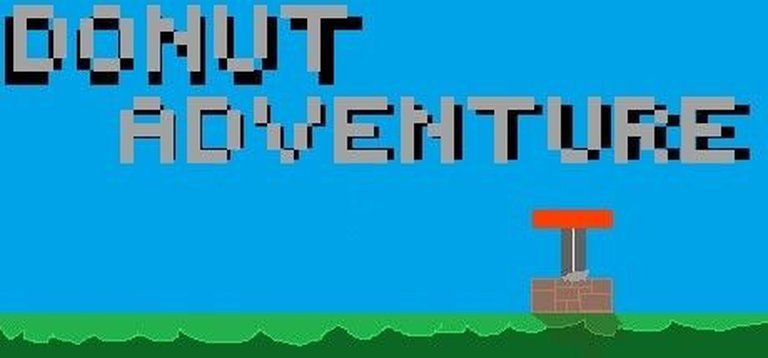
Donut Adventure is a 2023 kids-friendly 2D platformer where players control a donut through 12 single-screen levels. The goal is to navigate each stage by avoiding obstacles like forks and ovens while collecting coins for extra points, all featuring vibrant hand-drawn visuals and an upbeat soundtrack for simple, addictive gameplay.
Where to Buy Donut Adventure
PC
Donut Adventure: A Bite-Sized Testament to Indie Passion and Childhood Ingenuity
Introduction: The Hole in the Market
In the vast, often-cynical landscape of contemporary video gaming, where blockbuster budgets compete with algorithmic-driven live-service models, a game like Donut Adventure emerges not as a contender, but as a curiosity—a perfectly formed, frosted confection in an aisle of hyper-sugared monstrosities. Released on Steam in March 2023 by a developer identified only as Eric Jiang, this title presents a fundamental paradox: a game of profound simplicity, created by a child, that sparks disproportionate discourse about the nature of development, accessibility, and what we truly value in interactive experiences. My thesis is twofold: Donut Adventure is, on its surface, a rudimentary and technically flawed platformer, yet it stands as a culturally significant artifact that challenges critical paradigms, embodying the pure, unadulterated joy of creation that often gets lost in the industrialized game-making process. It is less a game to be reviewed against the metrics of Elden Ring and more a human interest story rendered in code—a story that forces us to ask: what is the true measure of a video game’s success?
Development History & Context: A Solo Project Forged in Pygame
The studio behind Donut Adventure is, in the traditional sense, nonexistent. The credits on MobyGames and the Steam store page list a single person: Eric Jiang. The Steam store page provides the crucial, humanizing detail: “Eric Jiang is a 11 year old boy who has passion for game development. This is his first Pygame based game and he already has many plans for future development.” This context is not an aside; it is the central pillar of the game’s existence.
Donut Adventure was built using Pygame, a popular set of Python modules designed explicitly for game development and widely favored in educational and hobbyist circles for its accessibility. This technological choice speaks volumes. In an era where independent developers often grapple with the sheer complexity of engines like Unreal or Unity, Jiang’s selection of Pygame represents a pragmatic, learnable path. The technological constraints are therefore those of a beginner’s toolkit: 2D graphics, basic collision detection, and simple event loops. The “fixed / flip-screen” perspective noted by MobyGames aligns perfectly with the capabilities of a first project, where scrolling physics may be a frontier too far.
The gaming landscape of early 2023 was dominated by discussions about engine scalability, live-service monetization, and the rising cost of AAA development. Into this milieu, a free-to-play, single-screen platformer starring a donut appeared. It exists in a genre lineage, as seen in MobyGames’ “Related Games” list—a curious family tree of titles like Donut Dilemma (1984), Donut Dodo (2022), and the critically acclaimed Donut County (2018). While Donut County used its titular hole as a core mechanic for physics-based destruction, Donut Adventure uses the donut as pure iconography, a vessel for platforming. Jiang’s game is not in conversation with these titles mechanically, but its title slots it into a bizarre, niche sub-genre, highlighting how even the most basic premise can spawn a decentralized franchise of ideas.
Narrative & Thematic Deep Dive: A Story as Simple as its Protagonist
Narrative in Donut Adventure is, by conventional standards, absent. The Steam store description provides the entire lore: “In Donut Adventure, you play as a delicious and adventurous donut who must navigate through a variety of obstacles to reach the end of each level.” The MobyGames description is even more sparse: “Guide the donut to the end of the level, but avoid forks and ovens.”
Yet, to dismiss this as “no story” is to miss the foundational thematic resonance. The narrative is one of perilous journey and symbolic consumption. The protagonist is not a hero; it is an edible item. The antagonists are its natural predators—forks (the tool of consumption) and ovens (the tool of cooking/transformation). The objective is to reach a “destination point.” The player guides a piece of food to safety, avoiding the very implements that define its purpose in the real world. This creates a subtle, almost existential layer: a donut striving for agency, to complete its “adventure” before its inevitable fate. The collection of coins—inanimate objects of pure point-value—further abstracts the journey into a classic game-scoring loop, divorcing the action from any deeper meaning.
The dialogue is non-existent, the character development nil. The theme, therefore, is not woven through plot but through mechanic and metaphor. It is a game about a pastry overcoming its destiny, a simple, potent allegory for the developer himself: a young person (the donut) navigating the hazardous obstacles of game development (forks as critical pitfalls, ovens as the pressure of release) to reach the goal of a finished project. The “adventure” is the act of creation itself.
Gameplay Mechanics & Systems: The Architecture of Simplicity
Donut Adventure is classified as an “Action” platformer with a “Side view” and “Fixed / flip-screen” visual style. This is the game’s core DNA, and the source material provides a clear, if brief, blueprint.
Core Loop & Level Structure: The game comprises 12 single-screen levels. This is a critical design decision that eliminates scrolling complexities and focuses all design energy on spatial puzzle-platforming within a confined space. Each screen is a self-contained challenge. The loop is: Load level > Observe layout (spikes, gaps, forks, ovens, platforms) > Navigate to destination > Collect coins (optional, for score) > Complete level. There is no stated lives system, no complex physics, no power-ups beyond the implied “coinst,” and no boss fights.
Controls & Interaction: According to the Steam page, controls are minimalist: “Use arrow keys to move and jump.” There is mention of “roll, and slide” in the store description, but the specific implementation isn’t detailed in the source material, suggesting either a very simple physics implementation or perhaps a slight exaggeration in marketing copy. The “Direct control” interface noted by MobyGames confirms a simple, responsive—or at least immediate—input scheme, crucial for a game targeting “young players.”
Systems Analysis:
* Progression: Linear level-by-level unlocking. No character stats, skill trees, or equipment. Progression is purely the player’s skill growth.
* Hazards: The enemy/obstacle design is telling. Forks (likely static spikes or moving hazards) and ovens (likely stationary deadly zones, perhaps with a visual heat effect) represent the two primary threats. Their designs are literal, whimsical, and immediately comprehensible to a child.
* Innovation/Flaws: By traditional metrics, there is no innovation. However, the innovative act is the radical reduction of scope. In a market saturated with games that have 50-hour campaigns and 100-hour endgames, a 12-level, single-screen platformer is a deliberate rejection of scale. Its potential flaws are inherent in its simplicity: likely minimal depth, no replayability beyond score-attacking, and very basic collision detection (a common hurdle in first Pygame projects). The Steam store’s promise of “more levels on the way” speaks to a development roadmap typical of a solo developer learning as they go.
World-Building, Art & Sound: The Aesthetics of First Efforts
The sensory presentation of Donut Adventure is its most immediately tangible aspect, and the sources provide clear, if promotional, tags: “Vibrant and colorful graphics,” “fun, upbeat soundtrack,” and “Hand-drawn.”
Visual Direction: The “Hand-drawn” tag is paramount. This suggests 2D sprite art created outside of procedural generation, likely painted or sketched by Jiang. Its aesthetic is part of a long tradition of “childlike” or “naive” art in indie games, evoking a sense of earnestness. The “vibrant and colorful” descriptor points away from a gritty or minimalist palette, aiming for a cheerful, primary-color-heavy look that would appeal to the “young players” it targets. The fixed flip-screen perspective means each level is a carefully composed, static illustration. There is no parallax, no sophisticated lighting—just clean, functional, and cheerful level layouts.
Sound Design: The “fun, upbeat soundtrack” is described in generic terms, but its role is clear: to provide a non-intrusive, positive auditory backdrop that matches the visual tone. Given the developer’s age and the Pygame framework, the music is almost certainly royalty-free library tracks or very simple original compositions using the engine’s basic sound modules. Sound effects for jumping, coin collection, and hazards would be similarly rudimentary—beeps, boops, or simple sampled sounds.
Atmosphere & Contribution: Together, these elements create an atmosphere of unpretentious fun. There is no attempt at horror, melancholy, or complex narrative world-building. The world is a series of bright, candy-coated stages where a donut jumps on platforms. The atmosphere is one of pure, gameplay-focused play. The hand-drawn aesthetic, regardless of technical polish, carries an emotional weight of authenticity; it looks like a game a kid would draw, which it is. This bridges the gap between player and creator in a way polished AAA art rarely does.
Reception & Legacy: The Chasm Between Metrics and Meaning
This is where Donut Adventure reveals its most complex identity, exhibiting a stark schism between different metrics of “reception.”
Critical & Commercial Reception:
* MobyGames: The entry shows an average player score of 1.0 out of 5, based on 1 rating with 0 reviews. This is a data point of near-total obscurity and, in that single vote, profound dislike. The MobyScore is listed as “n/a” due to insufficient critic reviews.
* Steam (via Store & Steambase): Here, the picture is radically different. Steambase, aggregating Steam data, shows a Player Score of 89/100, calculated from 18 total reviews, with 16 positive and 2 negative, yielding an 88% positive rating. The Steam store page itself advertises this “All Reviews: Positive (88% of the 18).” This vast discrepancy (1.0/5 vs ~4.4/5) is not a statistical error but a symptom of two entirely different audiences sampling the game.
* Metacritic: Has no critic reviews listed, placing it in the vast ocean of unrated games.
Analyzing the Disparity: The 1.0 on MobyGames likely comes from a curious, perhaps jaded, user who stumbled upon the obscure entry and rated it without context, judging it solely on its bare-bones description against the entire history of gaming. The Steam audience, however, found it on Steam, likely through tags like “Free to Play,” “Casual,” “Kids Friendly,” or “Hand-drawn.” They downloaded it knowing what to expect—a simple, free, child-made game. Their reviews, therefore, are evaluations of the experience on its own terms. Phrases like “perfect for my 5-year-old,” “so charming,” or “amazing for an 11-year-old’s first game” dominate. They are not reviewing it as a platformer but as a project and as a tool for play.
Legacy & Influence: Donut Adventure will not influence the mechanics of Super Mario or Celeste. Its legacy is not one of direct design lineage but of inspirational precedent. It is a data point in the “anyone can make a game” narrative. It demonstrates the efficacy of Pygame as a tool for quick, shareable projects. Its presence on MobyGames—a database dedicated to preserving all games—is its true enshrinement. It ensures that a game created by a child is cataloged alongside Doom and Disco Elysium. Its related games list, connecting it to 40 years of “Donut” titles, absurdly places a child’s Pygame project in a lineage that includes commercial releases, creating a bizarre, democratized franchise history.
Evolution of Reputation: Currently, its reputation is bifurcated. In the small, aware circles that discuss it, it’s a heartwarming story of youth in dev. The Steam community has embraced it as a fun, gratis curiosity. The wider critical world remains largely unaware, as evidenced by the empty Metacritic page. Its reputation will likely stabilize as a niche example of “first game” successes, cited in articles about young developers or minimalist game design.
Conclusion: A Verdict Beyond the Score
To assign Donut Adventure a traditional score is to fundamentally misinterpret it. Evaluated against the pantheon of great platformers, it is a technical failure and a design minimalism—rudimentary, fleeting, and simple. Evaluated as a cultural artifact, a learning milestone, and a functional piece of software released to the public, it is a resounding, unexpected success.
Eric Jiang, at 11, did what countless dreamers only talk about: he finished a game and put it in the hands of players. He used a free engine, created all the content himself, and achieved a clear, if narrow, goal: to make a “kids friendly platform game.” On that metric, he succeeded. The 88% positive rating on Steam from its target audience is a validation that a game need not be complex to be enjoyed. The 1.0 on MobyGames is a reminder that not all context is created equal.
In the grand history of video games, Donut Adventure will be a footnote—a tiny, sweet footnote. But it is a vital one. It represents the democratization of development, the purity of creating for the sake of creation and sharing, and the simple, enduring power of a well-defined, achievable game loop. It is proof that a game’s value is not solely in its complexity, but in its existence, its accessibility, and the story it tells about its maker. For that, it deserves not a score, but a place in the archive, a toast from the community, and a hopeful eye on the “future development” its young creator promises. It is, in the end, a perfect donut: not gourmet, not innovative, but perfectly, harmlessly satisfying for what it is.