
- Release Year: 2023
- Platforms: Windows
- Publisher: Coatsink Software Ltd., Thunderful Publishing AB
- Developer: Coatsink Software Ltd.
- Genre: Puzzle, Simulation
- Perspective: Side view
- Game Mode: Single-player
- Gameplay: Physics-based, Platforming, Puzzle, World Editor
- Setting: Futuristic, Sci-fi
Description
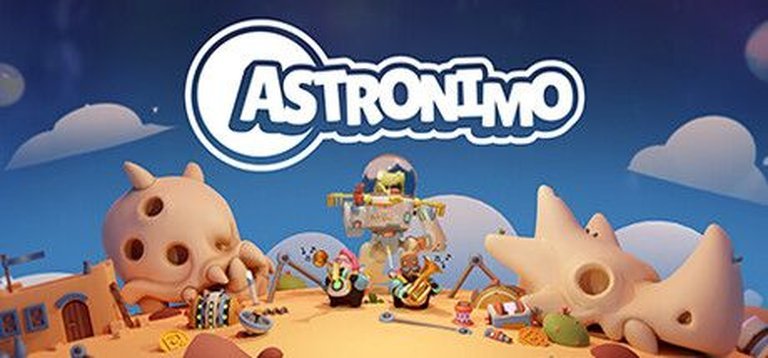
Astronimo is a side-view physics-based puzzle platformer set in a sci-fi futuristic universe, where players, often in co-op, crash-land on an alien planet and must use creative building and destruction mechanics to escape. With an accessible campaign suitable for all ages and a robust world editor for custom levels, it blends comedy, creativity, and chaotic engineering in a family-friendly adventure.
Gameplay Videos
Where to Buy Astronimo
PC
Astronimo Free Download
Astronimo Guides & Walkthroughs
Astronimo Reviews & Reception
mp1st.com : clunky controls and an elongated tutorial that seems never-ending
en.senses.se : Astronimo offers an engaging and creatively rewarding experience, making it a worthwhile recommendation.
Astronimo: A Chaotic Cosmos of Creative Potential and Clunky Realization
Introduction: Crash-Landing into a Galaxy of Ideas
In the vast, often homogenous expanse of the indie puzzle genre, Astronimo arrives with a proposition both熟悉 and refreshingly peculiar: a co-op-centric, physics-based construction platformer set across a whimsical, handcrafted solar system. Developed by UK studio Coatsink—a team known for charming, mechanically inventive titles like PHOGS! and Cake Bash—and published by Thunderful, the game entered Early Access in September 2023 before its 1.0 launch in December 2023. At first glance, its vibrant, rounded art style and premise of stranded miners suggest a title for younger audiences. Yet, beneath this accessible veneer lies a complex, often frustrating, but ultimately rewarding systems-driven sandbox. Astronimo’s true legacy may not be defined by its campaign’s narrative, but by the sheer, unadulterated joy of chaotic collaboration it can facilitate, and the profound depth of its user-generated content ecosystem. This review argues that while Astronimo is hampered by inconsistent physics and occasionally bewildering design choices, its commitment to player creativity and social experimentation cements it as a significant, if flawed, evolution of the “build-a-thing-to-cross-a-gap” paradigm pioneered by titles like LittleBigPlanet and Human: Fall Flat.
Development History & Context: From Humble Beginnings to Galactic Ambition
Coatsink Software Ltd., founded in 2009 and later acquired by Thunderful Group in 2021, has consistently carved a niche for itself with games that prioritize playful physics, local multiplayer, and a distinct, often British, sense of humor. Their portfolio—from VR experiment Jingle Pop to the canine co-op adventure PHOGS!—reveals a studio fascinated by social interaction and systemic play. Astronimo represents the culmination of these interests, scaling up from arena-style brawlers to an open-ended, solar-system-spanning “construction platform puzzler.”
The technological context is one of accessible, robust physics engines and the increasingly mainstream adoption of Steam Workshop for user-generated content. Astronimo utilizes FMOD for its audio and was built for a reasonably modern PC audience (minimum spec requiring an i7-4790K/Ryzen 5 1400). Its development spanned an Early Access period of roughly three months, a notably short cycle for a game of this scope. This accelerated timeline, as hinted by patch notes addressing “hundreds of bugs,” suggests a launch that was functional but rough around the edges, with the team relying heavily on community feedback to polish the experience post-launch. The gaming landscape of late 2023 was saturated with co-op and building games, but Astronimo distinguished itself by marrying a persistent, explorable world map with a granular, in-level contraption editor—a combination reminiscent of Zelda‘s overworld meeting LittleBigPlanet‘s popit.
Narrative & Thematic Deep Dive: The Banality of Corporate Spacefaring
The narrative of Astronimo is deliberately thin, serving primarily as a skeleton for the gameplay. The lore, pieced together from environmental storytelling and the character of Captain Croc, posits that four employees of the omnipresent “Hypergiant Inc.” have crash-landed on a remote planet. Their goal is not heroism, but corporate reunification: to rebuild a shuttle, collect “antimatter,” and power a “Nova Gateway” portal to rejoin their fleet.
This setup is thematically rich in its mundanity. These are not astronauts or soldiers; they are blue-collar space miners, a satirical nod to the gig economy and corporate exploitation. The recurring environmental details—abandoned Hypergiant infrastructure, mysterious ruins, the ever-present “Ox” statues—hint at a deeper, potentially sinister history of the planets they explore (as the dev blog for Turilia playfully muses, “where are the residents now?”). Captain Croc, a recurring NPC who lounges in a paddling pool, embodies the game’s tone: absurd, lazy, and deeply humorous. His role as a guide and benefactor is less about epic quests and more about completing menial tasks for him (like collecting “antimatter” to motivate him to “fix that Nova Gateway”).
The themes are those of creative perseverance and collaborative absurdity. The story is not about saving the galaxy, but about using one’s imagination to escape a corporate-sponsored hellscape. The customization options—being a dog, wearing a Santa hat, playing a trumpet—reinforce the theme that in this corporate void, the only meaningful rebellion is through joyful, pointless creativity. The narrative’s true “plot” is generated by the player’s own stories of failed rocket constructions and accidental teammate ejections into lava.
Gameplay Mechanics & Systems: The Beautiful Mess of Contraption Building
Astronimo’s core loop is bifurcated: Overworld Exploration and Contraption Construction.
1. Overworld & Platforming:
The game is presented as a 2D side-scroller across a nonlinear solar system map. Players navigate lanes (typically three deep planes) on planetary surfaces, jumping between them to avoid hazards and reach workshop icons. This lane-system, directly compared to LittleBigPlanet, is a critical and divisive mechanic. While it creates a sense of depth and allows for simple foreground/background puzzles, it often leads to frustration. As the MP1st review notes, discerning an obstacle’s lane position can be difficult, leading to cheap-feeling collisions. The physics-based movement, with independent control of arms for grabbing/pulling, is powerful but “clunky” and “hit and miss” (MP1st), requiring significant acclimation. The “bubble” mechanic—a teleport to a nearby player—is a cleverQuality-of-life feature for co-op, mitigating the time spent walking.
2. Workshop & Building System:
This is the game’s heart. Upon finding a workshop, players enter a grid-based editor to construct vehicles from components: rods, wheels, thrusters, buttons, claws, seats, and more. The system is deceptively simple on the surface—drag, drop, connect—but reveals immense complexity. The freedom is absolute; as the Steam description states, “Gravity is optional. Sanity is not.”
- Strengths: The persistence of saved contraptions is revolutionary for this genre. Players can design a basic rover in one workshop, save it, and then call upon it in a future, more complex puzzle. Multiple creations can be combined, fostering a modular engineering mindset. The tools are “weirdly intuitive” (Steam news) for basic shapes but become a deep puzzle themselves for automating functions or creating stable, multi-part vehicles.
- Weaknesses: The building interface is the primary source of the “clunky” feeling. The lack of an instant undo button (only a delete function) is a baffling omission for a game about iterative design, highlighted in the MP1st review. Connecting components can be obscure; the review notes players may “struggle to understand why something isn’t connecting.” The physics of the constructed vehicles are unpredictable—”strange reactions and mechanical issues clashing” is both a bug and a feature. This unpredictability is the source of chaotic fun but also immense frustration, especially in time-sensitive challenges.
3. Progression & Campaign:
The campaign is structured around a “20+ hour” journey across distinct planets (Turilia, Acara, Zaroth IV, Nixnillon) and mini-moons (Ore Moon, Lava Moon, Yule Moon). Each biome introduces new hazards and mechanics: Acara’s desert and caves, Zaroth IV’s ice and wind, Nixnillon’s swamp and gas. Progression is gated by “antimatter,” collected by completing puzzles and challenges. The campaign serves as a lengthy tutorial for the editor, gradually introducing components and environmental interactions. The 3rd Strike review correctly identifies it as “not challenging by any seasoned gamer’s standards” if one is solely focused on completion, but the real challenge is in efficient, elegant, or simply ridiculous engineering.
4. Co-op:
The game’s definitive mode. Up to four players can join online or via local/split-screen. The shared creative process is where Astronimo shines. The communal laughter when a meticulously built machine collapses, or the triumphant moment a cobbled-together multi-vehicle pulley system works, is the core experience. The “Remote Play Together” feature extends this to online friends. However, the learning curve is steep, and the game warns that it “isn’t entirely easy to pick up and play” (MP1st). Navigating the build interface with multiple people can be chaotic, but that chaos is often the point.
World-Building, Art & Sound: A Quirky, Cohesive Aesthetic
Astronimo’s world is a standout feature. The art direction, led by Gareth Davies, opts for a soft, rounded, and colorful style reminiscent of LittleBigPlanet but with a more deliberately “low-poly” and goofy flair. The environments are handcrafted with a clear, charming identity for each planet: the autumnal grasslands of Turilia with its “Ox” statues, the hot deserts and caves of Acara (including the secretly named “Swinger’s Den”), the icy, windy wastes of Zaroth IV, and the murky swamps of Nixnillon. The mini-moons, like the festive Yule Moon with its “giant skeleton reindeer serpent,” showcase the artists’ ability to inject strong themes into small spaces.
This aesthetic perfectly complements the gameplay. The simple, readable shapes make platforming and building components clear. The humor is visual—the Hypergiant Corp. logos, the goofy employee animations, the ability to be a literal dog in space. It feels cohesive and intentionally silly.
Sound design, powered by FMOD, is functional and whimsical. The score is light and adventurous, with satisfying audio feedback for building, moving, and the glorious (or tragic) physics of contraption failure. The mention of a “joyous ending credits song” in the 1.0 launch notes adds character. The sound of a trumpet taunt becoming an ear-offending discord is a perfect audio joke.
Reception & Legacy: A Cult Classic in the Making
Astronimo’s reception has been mixed but leans positive, with its reputation evolving positively post-launch.
- Critical Reception: Extremely limited. MobyGames aggregates a single critic score of 75% from 3rd Strike, which praised its accessibility and co-op but noted clunky controls and a non-challenging campaign. IGN has no score. The MP1st review (7.5/10) provided the most in-depth critical analysis, praising its creative potential and co-op while lamenting the lane system and unintuitive building complexity.
- User Reception: Significantly warmer. Steam reviews show “Very Positive” with an 81-84% positive rating from 83+ reviews (Steambase). Many praise the creative freedom, fun co-op, and charm. Negative reviews frequently cite technical issues (black screens, crashes, especially at launch), the difficult tutorial, and the steep learning curve of the building system. The patch notes from December 2023 to January 2024 demonstrate Coatsink’s rapid response to feedback, fixing networking desync, tutorial blockers, and numerous UI bugs.
- Commercial Performance: Sales data is private, but its inclusion in bundles (Coatsink Collection, Co-Op Fun Bundle) and consistent promotional discounts (like the 74% off sale mentioned in 2025 news) suggest it’s found a stable, if niche, audience. The “Collected By 11 players” stat on MobyGames (as of March 2024) indicates a smaller but dedicated player base compared to blockbuster titles.
- Legacy & Influence: Astronimo‘s legacy is currently being written in the Steam Workshop. Its most significant impact will likely be as a creative tool platform. By providing a persistent save system for player-built contraptions and robust Workshop support, it encourages the same kind of community-driven content that defined LittleBigPlanet. It stands alongside games like Besiege and Teardown as a title where the player’s imagination is the true game. Its influence may be seen in future titles that blend open-ended overworld exploration with granular, shareable building tools. It proves that the “construction platformer” niche still has room for innovation, specifically in marrying that construction to a persistent, explorable world and seamless co-op.
Conclusion: A Flawed Masterpiece of Collaborative Chaos
Astronimo is not a perfectly polished game. Its lane-based platforming can be imprecise, its control scheme takes getting used to, and its building interface, while deep, lacks some basic quality-of-life features like a true undo function. For a solo player seeking a tight, challenging puzzle experience, it will likely disappoint.
However, to judge it on those terms is to miss its point. Astronimo is a social engineering toy disguised as a game. Its genius lies in its systems’ capacity for emergent, hilarious, and genuinely clever play when shared. The moment a friend’s janky, thruster-strapped bus successfully ferries the entire crew across a chasm, or when a community-created workshop level forces you to combine three of your saved inventions in a Rube Goldbergian cascade, the game’s vision crystallizes. The 20+ hour campaign is merely the training grounds.
Its place in video game history is as a passionate, player-centric evolution of the build-and-play genre. It prioritizes long-term creativity over short-term polish, and communal experience over solitary challenge. With its active modding community and developer commitment (evidenced by substantial patches and dev blogs), Astronimo has the potential to grow into a enduring platform. It is a testament to Coatsink’s design philosophy: that the most fun in outer space isn’t in following a script, but in failing spectacularly, rebuilding, and laughing together until something, against all odds, works.
Final Verdict: 7.5/10 – A Bumpy Ride to a Brilliant Destination.
Recommended for: co-op enthusiasts, tinkerers, LittleBigPlanet fans, and anyone who finds joy in systemic failure. Approach with patience, a gamepad, and at least one friend.