
- Release Year: 2021
- Platforms: Windows
- Publisher: Synodic Arc, LLC
- Developer: Abyssmal Games, Synodic Arc, LLC
- Genre: Adventure
- Perspective: 1st-person
- Game Mode: Single-player
- Gameplay: Puzzle elements, Scuba diving, Snorkeling, Stealth, Survival horror
- Setting: Aquatic, Underwater
Description
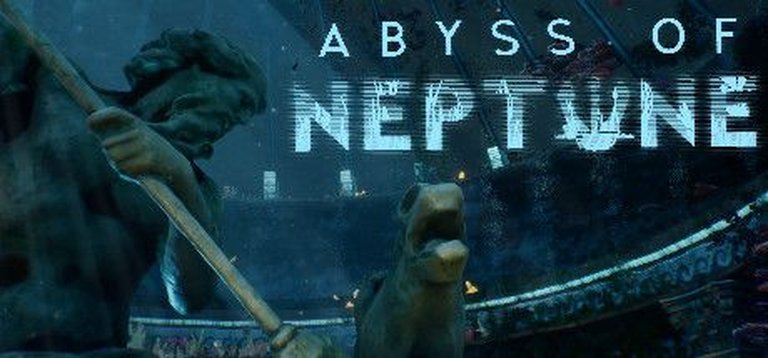
Abyss of Neptune is a first-person survival horror adventure set in the treacherous depths of the Bermuda Triangle. Players assume the role of an agent from the government-funded organization D.I.V.E.S., sent to investigate a mysterious underwater signal. Equipped with a specialized suit featuring a jet booster and flashlight, you must navigate the claustrophobic abyss, solve environmental puzzles to uncover the truth, and evade or confront grotesque aquatic creatures in a tense fight for survival.
Gameplay Videos
Where to Buy Abyss of Neptune
PC
Abyss of Neptune Guides & Walkthroughs
Abyss of Neptune Reviews & Reception
zedgamesau.net : In summary, the game is fantastic.
Abyss of Neptune: A Descent into Constrained Brilliance
Introduction: The Calm Before the Abyssal Storm
In the crowded ecosystem of indie survival horror, where jump-scares are commodified and formulaic, Abyss of Neptune emerges not with a roar, but with the chilling, pressurized silence of the deep ocean. Released in April 2021 by the collaborative forces of Synodic Arc and Abyssmal Games, this free-to-play title presents a deceptively simple proposition: investigate a mysterious signal in the Bermuda Triangle, only to become ensnared in a claustrophobic, aquatic nightmare. Its legacy is not one of blockbuster sales or widespread critical acclaim, but of potent, constrained game design that turns limitation into its greatest strength. My thesis is this: Abyss of Neptune is a masterclass in atmospheric horror built upon a clever, if at times frustrating, core loop of resource scarcity and environmental puzzle-solving. It demonstrates how a focused vision, a keen understanding of player psychology, and an unwavering commitment to a singular theme can create an experience more haunting than many of its higher-budget contemporaries, even as its technical shortcomings and abrupt pacing reveal the constraints of its independent origins.
Development History & Context: A Two-Studio Deep Dive
The genesis of Abyss of Neptune is a story of strategic synergy. The project was born from Abyssmal Games, an outfit whose name perfectly foreshadows their thematic ambition, starting with the evocative two-word concept: “underwater horror.” Recognizing the scope of their vision, they entered a partnership with Synodic Arc, a studio previously known for the narrative-driven The Book of Regrets. This union created a complementary development ecosystem: Abyssmal’s level designers and artists crafted the tangible, oppressive spaces of the flooded facility, while Synodic Arc’s programming and audio teams built the systems and soundscapes that brought the abyss to life. This division of labor is evident in the final product; the environments are dense with detail and narrative decay, while the underlying mechanics, though sometimes rough, are functional and deliberate.
Technologically, the game was built for the accessible Windows PC platform, utilizing the Wwise sound engine (as noted on MobyGames) to craft its critical auditory experience. The system requirements—a modest Intel Core i3 and GTX 1050—speak to its indie roots, targeting a broad audience without demanding high-end hardware. It launched into a 2021 gaming landscape still沉浸在 the reverberations of the Resident Evil remakes and the ambient dread of titles like Visage and Layers of Fear. Where those games often relied on psychological ambiguity or supernatural menace, Abyss of Neptune anchored its horror in a tangible, physically simulated environment: water. This was its unique selling point and its greatest technical challenge, requiring the team to simulate buoyancy, drag, and limited visibility in a way that directly impacted gameplay, not just aesthetics.
Narrative & Thematic Deep Dive: Logs, Liens, and Lethal Isolation
The plot is a slender branch upon which the game’s恐怖果实 hang. You are an unnamed diver for D.I.V.E.S. (Divers Investigating Various External Signals), a government-funded body. Your mission: investigate an anomalous signal in the Bermuda Triangle. The inciting incident is brutally efficient: you use dynamite to blast into an underwater cave, only to be cut off by a collapse, your radio rendered useless by rock. You are now alone, trapped within a vast, partially flooded research facility of unclear origin.
The narrative unfolds through environmental storytelling and collectible logs. There are ten logs in total (as meticulously documented in community guides), ranging from panicked scratchings like “IT’S KILLING US” to more cryptic entries like “Failed Rituals” and a poignant “I’m so tired.” These fragments paint a picture of a crew succumbing to paranoia and a mysterious force, hinting at experiments gone awry and a supernatural entity tied to the “Neptune” signal. The thematic core is classical Lovecraftian: the insignificance of humanity against an ancient, unknowable power, and the way isolation and resource scarcity erode sanity. The facility itself is a character—a decaying monument to human curiosity, now a coral-encrusted tomb.
The most intriguing narrative detail comes from the developer’s “Behind The Scenes” page: the AI companion, D-NA, whose robotic voice guides you, was “fully fabricated artificially! There was no human actor!**” This meta-detail is profound. It means the player’s only tether to the outside world, their digital “partner,” is itself a product of the game’s world—an echo of the facility’s own systems, potentially complicit in the tragedy. Is D-NA a remnant of the dead crew’s tech, or something else entirely? This subtle choice deepens the theme of deceptive communication and utter solitude.
Gameplay Mechanics & Systems: The Tightrope Walk of O2 and Ammo
Abyss of Neptune‘s gameplay is a delicate and often tense balancing act built on three primary, intertwining loops: navigation/resource gathering, puzzle-solving, and combat/stealth.
-
The Underwater Navigation & Resource Loop: Movement is first-person and fully 3D, governed by a jet booster that allows swimming in all directions. The physics are intentionally “floaty“—a consistent descriptor in player reviews—which simulates water resistance but can make precise maneuvering, especially in combat, a source of frustration. Your two lifebars are Health and Oxygen. Oxygen is the constant, dripping metronome of dread. Each area has O2 canisters to refill, which also serve as de facto checkpoints. This creates a natural rhythm: scout an area, find a canister to secure a checkpoint, then push forward. The pressure of the descending oxygen timer forces efficient play and makes backtracking a calculated risk.
-
The Voltage Puzzle Loop: The facility’s progression is gated by a clever battery-based voltage system. Doors and machinery require specific voltages (e.g., 15V, 20V) to activate. Batteries of varying voltages (5V, 10V) are scattered throughout. You must collect them and insert them into central panels, where they are added together. A 5V and 10V battery at a 15V door will open it. The genius is that these panels are often in rooms opposite the doors they unlock, forcing you to traverse the maze-like, oxygen-starved facility in a nonlinear fashion, always conscious of your dwindling air. As one Gamesense review astutely notes, “These rooms are either on different levels or on the same floor, and they are often polar opposites. This would not normally be an issue if you weren’t continuously running out of O2.”
-
Combat & Stealth: Your primary tool is the harpoon gun, found early in a cafeteria. Ammo (bolts) is extremely limited, and firing is difficult due to the aquatic physics. Enemies come in two forms: smaller, agile creatures and a large, lumbering brute. The combat philosophy is pure survival horror: evade, conserve, and prioritize. Hiding in submerged lockers (a direct homage to Alien: Isolation) is a viable and often necessary tactic. The sound design is crucial here; enemies emit “bloodcurdling noises” that signal their proximity, building tension before visual confirmation. The Steam guide for “Abyss of Grit” (completing without healing items) confirms that players can typically take about 4 hits, making each encounter a deadly gamble.
Innovations & Flaws: The fusion of Metroidvania-style key (battery) collection with real-time survival resource management is the game’s most innovative system. It makes exploration meaningful beyond curiosity. However, the floaty controls can turn combat from tense to frustrating, and the nonlinear backtracking, while logical, can occasionally lead to disorientation. The most commonly cited pacing flaw (from the Gamesense review) is the jarring difficulty spike in the final sequence. The game’s slow-burn exploration and puzzle-solving suddenly gives way to a more intense, action-focused final confrontation, which, while mechanically sound, feels tonally distinct from the preceding 90% of the game.
World-Building, Art & Sound: The Beautiful, Crushing Weight of the Deep
The atmosphere of Abyss of Neptune is its undisputed champion. The setting—a sunken, derelict government facility in the Bermuda Triangle—is rendered with a surprising amount of visual detail and”richness” (Zed Games). Corals grow over control panels, paperwork is scattered in the silt, and the skeletons of the previous inhabitants are a grim constant. The art direction uses a murky, blue-green palette with pockets of stark, artificial light from emergency fixtures and your flashlight, creating pockets of terrifying visibility in an otherwise consuming dark.
This visual design is inextricably linked to the soundscape, which is arguably the game’s most accomplished feature. The constant, bubbling ambient noise of water is a soothing yet persistent reminder of your predicament. The creaking of metal, the distant, echoing calls of creatures, and the sharp thwump of a harpoon bolt hitting a wall create an acoustic map more reliable than sight in the murk. The voice of D-NA is a perfectly calibrated piece of sound design: robotic, calm, and isolating, its monotone guidance becoming increasingly eerie as the situation deteriorates.
The paradox noted by reviewer Zahra Pending is key: the game can be “soothing at times.” The rhythm of swimming, the drifting air bubbles, the muffled world—this can induce a trance-like state. This makes the moments of horror—a sudden shape in the kelp, a roar from the dark—all the more effective, as they shatter the fragile calm. It’s a brilliant manipulation of player expectations, using the very thing that should be terrifying (the deep) to lull you into a vulnerable state.
Reception & Legacy: A Niche Success Built on Value
At launch, Abyss of Neptune was met with a “Mixed” reception on Steam (69% positive from 220 reviews). The praise consistently centered on its atmosphere, value (it’s free), and effective horror pacing. Criticisms focused on the short playtime (2-3 hours), the unrefined controls, and the aforementioned difficulty spike at the end.
Its commercial impact is minimal, but its cultural footprint lies in the “free indie horror gems” circles. Its legacy is that of a successful proof-of-concept. The Gamesense review captures this sentiment perfectly: “The plot itself is intriguing and could easily be expanded into a full game… The conclusion gives me hope that this isn’t the end of this game concept.” It demonstrates that a small team can create a compelling, mechanically interesting horror experience without resorting to cheap scares or bloated content. Its influence is likely to be seen not in direct clones, but in the continued exploration of environment as antagonist—where the setting (water, oxygen) is as much a villain as the creatures.
Conclusion: A Flawed Gem of the Deep
Abyss of Neptune is not a flawless masterpiece. Its controls will occasionally betray you, its runtime is brief, and its final act may leave you feeling whiplashed. Yet, to dismiss it on these grounds is to miss its remarkable achievement. Within its modest budget and scope, it crafts an experience of sustained, systemic dread. The battery puzzles are smarter than they first appear. The oxygen management is a constant, gnawing anxiety. The sound design is a masterpiece of subtle terror. It understands that horror thrives on player agency and consequence—every harpoon bolt fired, every oxygen canister visited, is a decision made under pressure.
Its place in video game history is not as a genre-defining blockbuster, but as a shining example of indie horror done right. It prioritizes mood and mechanical cohesion over spectacle, and it offers its entire experience for free, a true labor of love from Synodic Arc and Abyssmal Games. For those who can acclimatize to its floaty swimming and embrace its pacing, Abyss of Neptune offers a descent into a uniquely terrifying and beautifully realized aquatic abyss—a brief, brilliant nightmare that lingers long after you surface. It is, ultimately, a testament to the power of a clear, focused vision: the abyss is not just a setting; it is the game itself.