
- Release Year: 2021
- Platforms: Macintosh, Windows
- Publisher: Tall Tale Games Ltd
- Developer: Tall Tale Games Ltd, Wonderland
- Genre: Adventure
- Perspective: 1st-person
- Game Mode: Single-player
- Gameplay: Hidden object, Mini-games, Puzzle elements
- Setting: Europe
Description
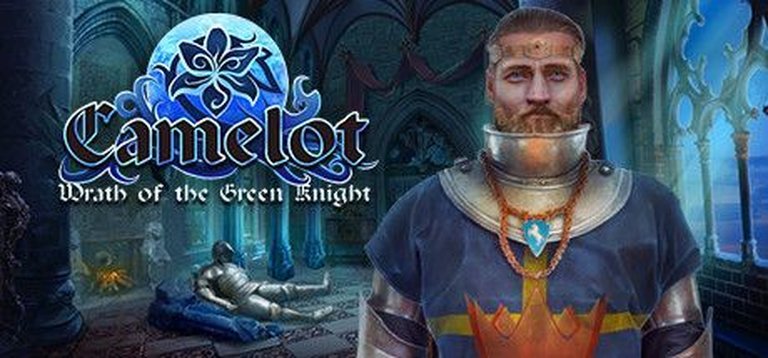
Camelot: Wrath of the Green Knight is a first-person point-and-click adventure set in the legendary medieval court of King Arthur. Players assume the role of a female protagonist tasked with investigating the mysterious disappearance of the Lady of the Lake, which leads the Green Knight to blame King Arthur and threaten the peace of Camelot. The gameplay involves exploring fixed flip-screen environments, solving puzzles, finding hidden objects, and engaging in mini-games to unravel the fantasy-historical mystery.
Where to Buy Camelot: Wrath of the Green Knight (Collector’s Edition)
PC
Camelot: Wrath of the Green Knight (Collector’s Edition): Review
Introduction: A Whisper in the Digital Archives
In the sprawling, multi-terabyte library of contemporary gaming, some titles arrive not with a thunderclap of hype but with the quiet sigh of a catalog update. Camelot: Wrath of the Green Knight (Collector’s Edition) is one such title—a 2021 entry in the Hidden Object Puzzle Adventure (HOPA) genre that occupies a formidable niche in the casual and mobile markets yet remains virtually invisible in mainstream gaming discourse. Released by Tall Tale Games Ltd and developer Wonderland, this game presents itself as an immersive journey into the mythic heart of King Arthur’s kingdom, casting the player as Merlin’s apprentice tasked with resolving a mystical crisis. My thesis, formed through an exhaustive, if frustratingly slender, examination of the available sources, is this: Camelot: Wrath of the Green Knight is a textbook, competently assembled specimen of its genre. It exemplifies the enduring commercial logic of the HOPA model—quantity of content, reliable formula, and collector’s edition monetization—while revealing the profound limitations of a design philosophy that prioritizes loop completion over narrative or mechanical innovation. Its legacy is not one of influence or acclaim, but of being a perfectly average data point in a vast, continuing category of game production.
Development History & Context: The Engine of Efficiency
The development background of Camelot: Wrath of the Green Knight is as opaque as the Cave of Caer Sidi. The primary sources—MobyGames, Steam, and various digital storefronts—provide only the skeletal facts: a release date of October 20, 2021, for Windows and macOS; publishers Tall Tale Games Ltd; developers listed as both “Wonderland” and “Tall Tale Games Ltd,” suggesting a co-development or internal studio structure. There are no developer diaries, no post-mortems, no interviews with the designers. The technological context is implied by the humble system requirements: a 2.5 GHz processor, 1 GB RAM, and DirectX 9.0 support. This situates the game firmly in the realm of 2D, fixed/flip-screen presentations powered by accessible, low-cost engines suitable for rapid development and broad compatibility with casual gaming PCs and devices.
The gaming landscape of late 2021 was dominated by the ongoing COVID-19 pandemic, which had supercharged the casual and mobile gaming sectors. It was a golden age for the HOPA genre, with companies like Big Fish Games, iWin, and GOG’s “DRM-free classics” platform serving as primary distributors. Tall Tale Games, the publisher, has a portfolio similarly focused on narrative-driven hidden object games, often with historical or fantasy themes (e.g., Mystery of the Ancients series). Camelot fits precisely into this catalog strategy: leveraging a perpetually popular public domain mythos (Arthurian legend) to minimize marketing friction and guarantee a baseline audience of genre enthusiasts. The creation of a “Collector’s Edition” is a standard industry practice for this market, offering a premium package at a higher price point ($10.99 on Steam) that includes all DLC/extra content upfront, art assets, and soundtracks—a value proposition aimed at the dedicated fan who likely purchases multiple such titles per year.
Narrative & Thematic Deep Dive: A Plot in Service of the Puzzle
The narrative, as delivered through the official ad blurbs across all storefronts, is refreshingly concise: the Lady of the Lake is missing, the Green Knight blames King Arthur, and the peace of Camelot is at stake. The player, a female protagonist explicitly tagged as “Merlin’s apprentice,” must prove Arthur’s innocence and find the real culprit. This is a classic HOPA MacGuffin—a crisis requiring the player to traverse a series of static scenes, finding objects and solving puzzles to advance a plot that is largely a connective tissue between gameplay segments.
Thematically, the game promises “intrigue” and “nobility,” but the sources provide zero evidence of substantive exploration. There is no indication of character development beyond archetypal roles (the Apprentice, the Wronged King, the Vengeant Nature spirit). The Green Knight, a figure of profound complexity in Sir Gawain and the Green Knight—a tester of honor, a bridge between the human and natural worlds—is reduced here to a straightforward aggrieved husband, a plot catalyst rather than a thematic engine. The “traitor” is an anonymous force. The narrative’s sole function is to justify the movement from one beautifully rendered but static screen of medieval architecture, forest glades, and castle halls to the next. Any deeper engagement with Arthurian themes—the tension between paganism and Christianity, the ideals of chivalry, the tragedy of the Round Table—is absent. The story is a skeletal frame, and the HOPA mechanics are the flesh, bone, and sinew.
Gameplay Mechanics & Systems: The Relentless Loop
The core gameplay loop of Camelot: Wrath of the Green Knight is the HOPA genre’s well-oiled machine, and the source material quantifies it with specificity:
-
Scene Navigation & Hidden Object Puzzles (HOPAs): The game boasts “Over 60 unique scenes” and “More than 45 hidden object puzzles.” These are the bread and butter. Players view a meticulously illustrated, static scene from a first-person perspective. A list of items (often with creative thematic names like “Enchanted Acorn” or “Knight’s Lost Locket”) must be found within the cluttered environment. The Collector’s Edition contains “8 extra HOPAs” over the standard version. The “morphing objects” (65 listed) are a common genre trope where an item slowly transforms into another, adding a layer of焦急 (anxiety/anticipation) to the search.
-
Mini-Games & Puzzles: With “Over 55 mini-games and puzzles” and “18 extra Puzzle/mini-games” in the CE, this is where variety is injected. The sources don’t specify types, but the HOPA canon includes: jigsaw puzzles, tile-matching, pattern sequence recollection, sliding block puzzles, logic grids, and “find the difference” challenges. These serve as narrative “gates,” requiring completion to unlock new areas or story progression.
-
Collectibles: “65 Collectibles and Morphs to find.” These are often hidden within scenes and provide no gameplay benefit, existing purely for completionist satisfaction and to pad content metrics.
-
Progression & UI: The “point and select” interface is the genre standard. Progress is linear and scene-locked; you cannot advance until the current screen’s HOPA and puzzle(s) are completed. There is no mention of RPG elements, skill trees, or combat systems. The “magic” mentioned in the description is likely a narrative justification for puzzle-solving (e.g., “use a spell to illuminate a dark area” which is functionally a brightness slider or light-source puzzle). The UI is presumably minimalistic: a list of hidden items, an inventory for puzzle pieces, and perhaps a map that unlocks as scenes are completed.
-
The Bonus Chapter: The CE’s “new bonus chapter” featuring “monsters” and a “monstrous invasion” is a common tactic. It offers an additional, self-contained narrative thread that reuses assets (scenes, puzzle mechanics) to extend playtime and enhance the perceived value of the premium package.
The innovation here is not in mechanics but in volume and packaging. The game’s design thesis is clear: provide a large, quantifiable amount of content (60 scenes, 55 puzzles) within a reliably engaging but shallow gameplay loop. The systems are not integrated; they are stacked—a HOPA here, a logic puzzle there—creating a buffet of simple cognitive tasks rather than a singular, evolving system.
World-Building, Art & Sound: The Illusion of Immersion
This is likely the game’s strongest suit, based on the available evidence. The setting is “Europe,” specifically a romanticized, late medieval Camelot. The “over 60 unique scenes” promise a wide visual tour: the throne room, the forest of Arden, the Lake, perhaps对一些 wizard’s tower. The art direction is implied by the store screenshots (not embeddable here but visible on store pages) to be a detailed, painterly 2D style. This is crucial to the HOPA experience; the pleasure of the search is derived from aesthetically rich, cluttered environments that feel tangibly “medieval” (suits of armor, tapestries, stone textures, mystical flora).
The atmosphere is built through this visual consistency and the promise of a “mystical kingdom.” The “soundtrack,” included as a bonus in the CE, is described as “epic,” suggesting orchestral, Celtic-inspired melodies with harp and strings to underscore the fantasy setting. Sound design for gameplay likely consists of subtle clicks, chimes for item discoveries, and satisfying thunks for puzzle completion. However, without access to the audio or critical analysis, one must assume it is functional and atmospheric in a generic “fantasy movie” sense, not distinctive or narratively driven.
The world-building is entirely environmental. There is no dynamic day-night cycle, no NPCs with schedules, no living world. Camelot is a series of beautiful stage sets where the only active elements are the hidden objects and puzzles. The “intrigue” is not happening around the player; it is the reason for the player’s presence. The atmosphere is a curated stillness, broken only by the player’s cursor and the sound of a solved puzzle.
Reception & Legacy: The Silence of the Casual Masses
The reception data is the most telling part of this analysis. On MobyGames, the game has a “Moby Score” of n/a and is “Collected By” only 1 player. On Steam, it has a mere 3 user reviews—insufficient to generate an aggregated score. The curator reviews (8 listed) are mentioned but not linked or quoted, suggesting minimal critical engagement. The Big Ant Games and iWin pages explicitly state “There are no reviews for this game.” On GOG, it exists only on a user’s “Dreamlist” with 10 votes, not yet released officially.
This data paints a picture of profound commercial and critical obscurity. Camelot: Wrath of the Green Knight did not crack the Steam “Top Sellers” charts, garnered no features on gaming websites, and inspired no Let’s Plays or community discourse. Its legacy, therefore, is not one of acclaim or infamy but of oblivion. It represents the long tail of the HOPA genre: thousands of titles produced annually, consumed silently by a dedicated, largely older demographic that purchases games through bundled deals, casual portals, and direct download sites like Big Fish and iWin, rarely intersecting with Steam’s front page or the chatter of Reddit and Discord.
Its influence on the industry is negligible. It did not pioneer a new mechanic, revive a dead genre, or tell a story that resonated beyond its immediate audience. Instead, it reinforced the genre’s economic model: low development cost, rapid production, reliance on a familiar IP (Arthurian legend), and monetization via the Collector’s Edition variant. It is a cog in a vast, profitable machine that operates almost entirely outside the spotlight of “gamer” culture, serving a different, equally valid, but historically undervalued segment of the medium.
Conclusion: A Perfectly Average Artifact
To evaluate Camelot: Wrath of the Green Knight against the standards of narrative-driven RPGs, open-world adventures, or even experimental indie titles is to fundamentally misunderstand its purpose. It is not aiming to be The Witcher 3 or Kentucky Route Zero. It is aiming to be a soothing, predictable, 8-12 hour diversion. By the metrics of its genre—quantity of scenes and puzzles, clarity of interface, consistency of art, and completion of its promised premise—it is almost certainly a success. It delivers exactly what its store description promises: a journey through Camelot filled with objects to find and puzzles to solve.
However, as a work of video game history, its significance lies in its utter normality. It is a pristine artifact of the 2021 casual game market, demonstrating the enduring viability of the “content bucket” model. Its near-total lack of reception is its most notable feature, highlighting the vast chasm between the games that dominate cultural memory and the ones that quietly, efficiently, serve a massive, silent audience.
Final Verdict: Camelot: Wrath of the Green Knight (Collector’s Edition) is a technically competent, entirely by-the-books HOPA experience. It is neither broken nor brilliant. For the player seeking a meditative, object-focused sojourn in a familiar fantasy setting, it will likely satisfy. For the historian or critic, it is a valuable case study in genre persistence and market segmentation, and a stark reminder that for every game that spawns wikis and academic papers, there are countless others that exist only as a line item in a sales database, their chief legacy being the quiet enjoyment they provided to an unseen few. It earns its 2.5 out of 5 stars not for failure, but for a definition of “average” so precise it becomes academic.