
- Release Year: 1994
- Platforms: Amiga, DOS, Windows
- Publisher: Ascon GmbH, Kalypso Media Digital Ltd.
- Developer: ASCARON Entertainment GmbH
- Genre: Compilation
- Game Mode: Hotseat, Single-player
- Gameplay: Football simulation, Management
- Setting: Real world, Sports
- Average Score: 89/100
Description
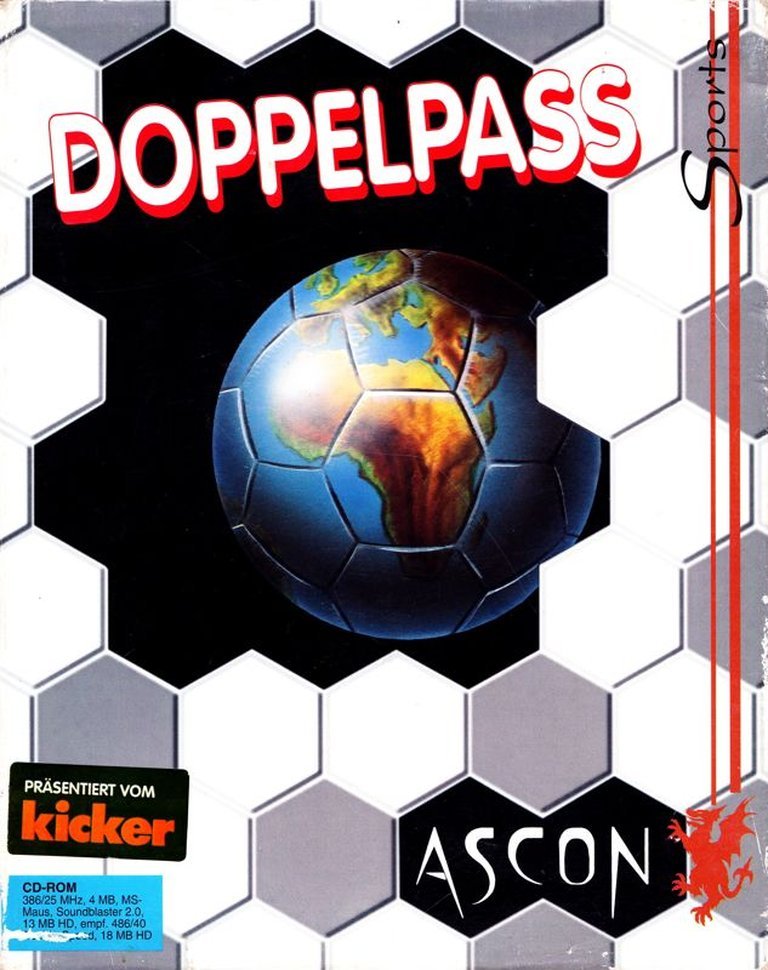
Anstoss, also known as Doppelpass, is a 1994 football management simulation compilation featuring ‘On the Ball’ and ‘On the Ball: World Cup Edition’. Players assume the role of a manager, strategically building and training teams to compete in domestic leagues like the Bundesliga and international tournaments such as the World Cup, with deep tactical systems and team management mechanics characteristic of 1990s sports simulations.
Where to Buy Anstoss
PC
Anstoss Free Download
PC
Anstoss Patches & Updates
Anstoss: The German Pitch That Mastered Management, Psychology, and the Beautiful Game
Introduction: More Than a Manager Sim, a Cultural Artifact
In the annals of football management simulation, two names have historically dominated the global consciousness: Championship Manager from the UK and, later, Football Manager from Sports Interactive. Yet, parallel to this Anglo-Saxon dynasty, a formidable, philosophically distinct, and wildly popular franchise thrived in the heart of continental Europe. That franchise was Anstoss (literally “Kick-Off”), and its 1994 compilation release—bundling the original On the Ball (Anstoss) and its World Cup Edition (Anstoss: World Cup Edition)—stands as a watershed moment for the genre. This review argues that Anstoss was not merely another sports manager game but a profound, system-driven exploration of football as a nexus of sporting, psychological, and business imperatives. Its legacy is twofold: as a genre-defining masterpiece in German-speaking markets and as a poignant “what-if” for global simulation design, its core innovations tragically diluted in its own long-running series and lost on an international stage until its recent digital revival. This is an excavation of a classic, a dissection of its brilliant, idiosyncratic mechanics, and a testament to its enduring, if understated, influence.
Development History & Context: Ascon’s Ambition in the DOS Era
The Studio and The Visionary
The Anstoss series was the brainchild of Gerald Köhler, a designer with a passion for the intricate, often overlooked, realities of football club management. Under the banner of Ascon GmbH (later ASCARON Entertainment GmbH), Köhler and his team set out to create a simulation that moved beyond mere player trading and formation tweaks. Their vision was holistic: to model football as a business where sporting success was inextricably linked to public perception, player morale, and the delicate art of man-management. This was a deeply German approach, emphasizing Ordnung (order), Planung (planning), and Psychologie (psychology) over the more visceral, match-day focus of its British contemporaries.
Technological and Market Landscape (1993-1994)
Released for DOS (with an Amiga version following) and distributed on CD-ROM, Anstoss arrived at a pivotal time. The CD format allowed for richer presentation—more screens, potential for audio—but the underlying technology was still firmly rooted in the text-and-menu-driven paradigm of early ’90s management sims. The market was crowded, dominated by the seminal Championship Manager (1992) fromSports Interactive. While CM focused on the gritty, data-driven world of English football, Anstoss distinguished itself immediately through scope and tone. It offered a German league (!) as a primary focus and, crucially, a World Cup Edition that shifted the scope to international management, a novel twist at the time. The compilation reviewed here, released in 1994, cleverly bundled both experiences, offering unparalleled value and depth.
The USK rating of 0 (ohne Altersbeschränkung) speaks to its accessible, family-friendly presentation, a stark contrast to the sometimes arcane complexity of rival sims. The support for 1-4 local players in hot-seat mode also highlights a design philosophy centered around shared, social tabletop-style gaming in an era before widespread online play.
Narrative & Thematic Deep Dive: The Drama Off the Pitch
Anstoss possesses no traditional narrative with scripted characters and plot arcs. Its “story” is emergent, generated entirely by the player’s actions. Yet, its thematic depth is where it excels. The game posits that the true drama of football is not in the 90 minutes, but in the 168 hours between matches. It is a thesis on the psychology of power and the business of glory.
The Psychology of the Touchline: Pep Talks and Press Conferences
The most revolutionary system, highlighted across all contemporary reviews, is the psychological management layer. The player is not just a tactician but a motivator, a spin doctor, and a psychiatrist. The half-time “pep talk” is a pure dialogue tree. Your choice of words—whether to praise, berate, or calmly analyze—directly impacts player morale, confidence, and subsequent performance. This is a profound simulation of a real-world manager’s most tenuous moments. Similarly, PR moves allow you to shape public perception. Do you attack a referee’s decision in the press? Do you promise a “youth revolution”? Each decision sways fan opinion, sponsor satisfaction, and board confidence. This transforms the game from a spreadsheet exercise into a delicate balancing act of egos, expectations, and media narratives.
The Business of Football: Beyond the Transfer Market
Following the theme of a “much broader business sense” (as noted in the MobyGames series description), Anstoss models financial management with a sophistication rare for its era. It’s not just about buying low and selling high. You manage stadium expansions, negotiate sponsorship deals, and balance the books against a backdrop of fan demands. The psychological state of your chairman and supporters is a key performance indicator. A winning streak can be undone by a single inflammatory press statement or a refusal to address a star player’s contract demands. The game’s theme is holistic stewardship—you manage a football organization, not just a team.
Gameplay Mechanics & Systems: A Dance of Data and Dialogue
Core Loop and Modes
The primary loop is the classic manager cycle: Scout > Transfer/Train > Match (simulate or watch) > Review/Manage Morale > Repeat. The compilation provides two distinct, extensive sandboxes:
1. “On the Ball” (Anstoss): The club management mode. You take charge of a team in a playable league (with the German Bundesliga as the centerpiece), aiming for promotion, cups, and European glory.
2. “On the Ball: World Cup Edition” (Anstoss: WCE): The national team mode. You select a host nation (a significant strategic choice affecting fan pressure and facilities) and guide your selected country from World Cup qualifiers through the final tournament. This mode strips away club finances but amplifies the psychological pressure of international tournaments and media scrutiny.
Innovative Systems:
- The Psychological Engine: The game’s beating heart. Morale is a multi-faceted stat influenced by match results, playing time, your pep talks, and PR.
- Three-Dimensional Tactics: While not as visually detailed as later 3D engines (a feature added in Anstoss 3), the match simulation uses a sophisticated text-based/icon-driven system where you set tactical instructions (defense line, pressing intensity, creative freedom) that interact with player attributes.
- Multi-Layered Scouting: Scouting reports provide detailed, sometimes quirky, psychological profiles of players (“Pressure-resistant?” “Team player?”), making transfer decisions more nuanced than simple attribute numbers.
- Hot-Seat Multiplayer: Up to four players can take control of different clubs in the same league, creating a persistent, competitive narrative of rivalry and one-upmanship, perfectly suited for the “sports bar” atmosphere of German PC gaming cafes of the era.
Flaws and Period Limitations:
- Interface & Text-Heavy Menus: The game is navigated almost entirely through dense, text-based menus. While logical, the sheer volume of data and options presents a steep learning curve. The “novel emphasis” on psychology comes with a cost: managing it requires constant attention to obscure menu screens.
- Match Visualization: The match engine is a minimalist, often cryptic scrolling text commentary or a simple top-down tactical view (depending on version). It lacks the dramatic, cinematic flair of Kick Off or Sensible Soccer, focusing purely on tactical outcomes over spectacle. This was a deliberate design choice to emphasize the management side but could feel detached.
- Data Transparency: Player attributes and morale are not always clearly quantified. The player must learn to interpret the game’s unique feedback language (e.g., “The team is satisfied with your recent decisions”), leading to a trial-and-error period that could frustrate newcomers.
World-Building, Art & Sound: A Stark, Functional Germanic Aesthetic
Anstoss‘s world is the German football landscape of the early 90s, rendered with stark, functional clarity. There’s no ornate fantasy here; the atmosphere is one of professional efficiency.
Visual Direction and UI:
The VGA graphics (DOS) and Amiga AGA/ECS versions are products of their time. Menus are organized, color-coded for readability (often using national team colors), but visually sparse. Screenshots from the era show a focus on information density over artistic flourish. The world is the data. The presentation of the league table, squad roster with detailed stats (including psychological traits), and financial ledgers is clean, if utilitarian. The art style reflects its subject: serious, no-nonsense, and deeply systemic.
Sound Design:
Utilizing AdLib, General MIDI, or Sound Blaster, the soundscape is minimal but effective. The primary audio feedback comes from the distinct, reassuring click of menu navigation and the occasional, understated league anthem. The lack of dramatic soundtrack or crowd roar during matches reinforces the text-sim nature. The sound design’s purpose is to facilitate thought, not emotion—a perfect complement to its cerebral gameplay. The German-language localization (with an English version released as On the Ball) is integral to its cultural identity, with authentic team and player names from the Bundesliga and beyond.
Reception & Legacy: A Critically Crowned, Cultishly Cherished Phenomenon
Contemporary Reception (1994-1995):
The critical reception for the compilation was stratospheric, as evidenced by the MobyGames aggregated critic score of 93%.
* PC Joker and Amiga Joker awarded perfect scores (100%), hailing it as an essential purchase for football fans, praising its comprehensive management and “schicke Präsentation” (slick presentation). The famous PC Joker blurb (“Ihr seid Fußballfans? Ihr habt noch 119,-DM im Sparstrumpf?”) perfectly captured its pitch as a worthwhile investment for serious fans.
* Amiga Games and Play Time gave 89%, noting that since both included titles were already chart-toppers, the bundle was a no-brainer.
* PC Games (Germany) was slightly more cautious at 85%, warning that owners of both individual games should skip the compilation due to its “ungenutztem Platz” (unused space) on the CD-ROM. This highlights the product’s nature as a value-pack for newcomers, not an upgrade for veterans.
The scores indicate a consensus: this was a genre pinnacle, a “Megahit” that successfully merged two excellent titles into one definitive package.
Evolution of Reputation and Influence:
Anstoss‘s reputation followed a unique trajectory:
1. Domestic Legend: In Germany and Central Europe, it became the undisputed benchmark for football management for a decade. Its series (Anstoss 2 in 1997, 3 in 2000, etc.) consistently scored in the high 70s/low 80s on MobyGames, indicating strong, if not epochal, sequels. The series’ defining characteristic—that “peculiar kind of humour and a much broader business sense”—remained intact.
2. The “What If” of Global Design: Internationally, it remained a curiosity. The English localization (On the Ball) saw limited distribution. Consequently, its core innovation—the deep simulation of psychology and public relations—never permeated the dominant UK/US management sim discourse, which remained fixated on tactics and transfers. When Gerald Köhler left Ascaron for EA Sports, he brought this philosophy with him, manifesting in the Total Club Manager series. This can be seen as the direct spiritual successor to Anstoss‘s DNA on a global stage, though it too was eventually overshadowed by the FIFA/FM juggernaut.
3. Modern Rediscovery: The series’ commercial decline culminated in Ascaron’s bankruptcy in 2009. The license was eventually acquired by Kalypso Media. Its true resurrection came in July 2021, when Kalypso, in partnership with GOG.com, re-released the original Anstoss compilation (and later Anstoss Classics) pre-packaged with DOSBox. This move made the game legally and easily accessible to a new generation of retro enthusiasts and historians, cementing its status as a preserved classic. The fact that 11 players on MobyGames have “collected” it in 2024, decades after release, is a testament to its enduring cult appeal.
Conclusion: The Manager’s Manager, Undeservedly Niche
Anstoss (the 1994 compilation) is a masterpiece of constrained, intelligent design. It achieved what so many larger-budget, flashier games fail to do: it accurately simulated a complex, non-visual domain—the psychology and business of football management—through elegant, interconnected text-based systems. Its 93% critical score was not for graphical fidelity or match engine realism, but for depth, originality, and systemic coherence.
Its limitations are clear through a modern lens: an intimidating interface, a lack of visual match drama, and a cultural specificity that hindered its global penetration. Yet, these are also its strengths, born from a focused vision that refused to chase cinematic trends. The game’s legacy is secure in two realms: first, as the foundation of one of Europe’s great sports simulation series, a direct competitor to Championship Manager in its home market for years. Second, and more importantly, as a lost lighthouse of design philosophy. Its emphasis on the “psychological aspects” was a full two decades ahead of the broader industry’s focus on narrative and character in simulation games.
For the historian, Anstoss is an essential study in how to simulate a “soft” domain like human morale and public perception using “hard” game systems. For the player, it remains a deeply rewarding, if demanding, experience that asks you to think like a CEO, a psychologist, and a publicist, not just a coach. In the pantheon of football games, Anstoss is not the flashy striker who wins the Balon d’Or; it is the astute, unassuming defensive midfielder who dictates the tempo and wins the ball back—absolutely fundamental to the team’s success, and revered by those who understand the game’s deeper structures. Its re-release is not just an act of preservation, but a re-education for a genre that could still learn from its Germanic precision.
Final Verdict: 9/10 – A foundational, philosophically profound management sim that sacrificed global fame for depth and integrity. An essential artifact for any student of game design or football simulation history.