
- Release Year: 2017
- Platforms: Windows
- Publisher: Dagestan Technology
- Developer: Grizlikyt Studio
- Genre: Action
- Perspective: Top-down
- Game Mode: Single-player
- Gameplay: Puzzle elements
Description
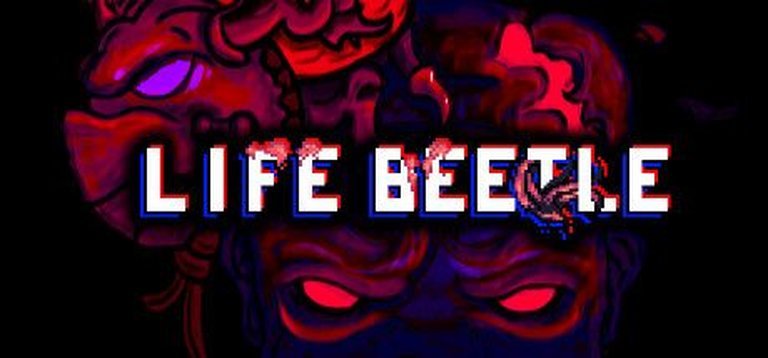
Life Beetle is a top-down 2D action-puzzle game that uses metaphorical storytelling to explore themes of depression and mental illness. Players control a beetle symbolizing the will to recover, navigating a bleak, abstract environment while being tormented by the character ‘Despair’ and fighting creatures called ‘hopelessness’ to find keys and exits, with narrative choices that reflect dark psychological struggles and symbolic endings.
Life Beetle Guides & Walkthroughs
Life Beetle: A Chamber of Asylum and Insect – A Critical Autopsy of an Obscure Indie Enigma
Introduction: The Whisper from the Ward
In the sprawling, digitized archives of video game history, certain titles exist not as celebrated pillars but as faint, enigmatic whispers—ghosts in the machine whose presence is felt more in their absence than their execution. Life Beetle (2017), developed by the shadowy Grizlikyt Studio and published by Dagestan Technology, is one such specter. Released into the teeming ecosystem of Steam’s Early Access with little fanfare and vanishingly scant critical analysis, it presents itself through a surreal, almost antagonistic store description that promises “original gameplay” and a “lack of fourth wall,” while wrapping its core in the cryptic imagery of an asylum, a talking entity “over the wall,” and a suicidal noose. My thesis is this: Life Beetle is not merely a failed or forgotten game; it is a fascinating, albeit tragically incomplete, case study in conceptual ambition drowning in a sea of technical and narrative vagueness. It represents a specific, poignant failure mode of the indie boom—a game whose thematic depth is inversely proportional to its mechanical clarity and whose legacy is defined less by players than by a single, haunting community interpretation that has become its de facto narrative.
Development History & Context: The Dagestan Oddity
The Studio and Vision: Grizlikyt Studio is, for all intents and purposes, a phantom. No developer website, no LinkedIn profiles, no prior or subsequent game credits are readily apparent in the public domain. The name itself suggests a possible Eastern European origin (“Grizlikyt” has a Slavic phonetics), and its publisher, Dagestan Technology, names a region in the North Caucasus. This geographic and cultural context is utterly absent from the game itself, which adopts a universal, psychologically abstract setting. The vision, as pieced from the Steam store blurb, was one of meta-textual horror and existential puzzle-solving. The stated goal—to create a game where “you are the main character, not the guy on the screen”—points to a desire to break the immersive spell of gaming, to make the player complicit in a narrative of despair. This was an avant-garde aspiration in 2017, a year dominated by polished AAA sequels and increasingly refined indie darlings.
Technological Constraints & Engine: Life Beetle was built using Scirra’s Construct game engine, a popular, accessible HTML5-based tool favored by beginners, educators, and rapid prototypers. This choice is profoundly telling. Construct’s strength lies in its ease of use for 2D games, but its limitations become apparent in complex physics, nuanced AI, and creating a truly cohesive, atmospheric experience. The engine’s asset store aesthetic often leaks through, potentially explaining the “oldschool graphic stylistic” mentioned in the description—a phrase that likely masks a reliance on default or low-budget assets. The ambition of “gravitational puzzles” and indirect character control would have been non-trivial to implement convincingly in Construct, suggesting a development cycle hampered by technical ceiling and a small, possibly solo, development team.
The 2017 Gaming Landscape: April 2017 saw the release of major titles like Persona 5, The Legend of Zelda: Breath of the Wild (on Switch), and Prey (2017). Against this backdrop, Life Beetle was a speck of dust. The indie space was crowded with narrative-driven experiences (Night in the Woods, What Remains of Edith Finch had released the prior year), but these were lauded for their polish and emotional resonance. Life Beetle offered none of that. It emerged as a raw, unfiltered idea—a game that asked profound questions about agency, depression, and suicide but seemingly lacked the craft to answer them in a satisfying interactive form. Its context is one of obscurity, a title that flew so far under the radar it wasn’t even blipped on most indie radar screens.
Narrative & Thematic Deep Dive: The Asylum as Mind
The narrative of Life Beetle is not told; it is inferred from a handful of cryptic lines and one masterful piece of player-driven exegesis. The Steam discussion post by user “Gottdammit Claire” (July 2018) has become the canonical reading of the game, a Rosetta Stone for its opaque symbolism.
Plot as Psychological Allegory: The player awakens in an “asylum ward.” A character called Despair (or “the Stranger,” depending on player action) resides “over the wall” in the next ward. Despair acts as a “doctor” figure who offers a “Secret” hidden in a box under the bed and proposes an escape route involving a noose. The player controls a beetle, which is tasked with finding keys and shooting entities called “hopelessness.” The ultimate choice presented is to use the noose, leading to the beetle’s transformation into a gravestone and a revert to the main menu.
This is not a plot but a psychological tableau. The asylum is the mind, specifically a mind consumed by severe depression. The “ward” is a state of being. Despair is the internalized voice of depression—smooth, persuasive, present (“I am always there in places like that”), and dangerously seductive. Its “Secret” is the suicidal ideation that feels like a profound, hidden truth. The “doctors” are external help (therapy, medication, societal pressure), whom Despair (the illness) claims “are afraid of our friendship”—a classic depressive tactic to isolate the sufferer from potential aid.
Characters as Archetypes:
* The Player/Patient: An undefined entity, the “you” of the experience. Their lack of identity makes them a vessel for the player’s own psyche, forcing a confrontation with the themes.
* Despair: The antagonist and false ally. Its dialogue (“are you worried about the voices inside your head?”) directly references auditory hallucinations or the overwhelming noise of negative rumination. Its offer of friendship is a trap, a parasitic bond.
* The Beetle: This is the game’s central and most potent metaphor. The beetle is the “will to live” or the “fragile spark of agency” within the depressed mind. It is small, vulnerable, tasked with menial, almost futile chores (finding keys) and actively fighting manifestations of “hopelessness.” Its control method—”turning the space” (likely meaning rotating the environment or using a gravitation mechanic)—suggests that maintaining this will requires constant, disorienting effort and perceptual shifts. The beetle’s transformation into a gravestone upon choosing the noose is the ultimate, brutal visual metaphor: when the will to live succumbs to Despair’s counsel, it is extinguished, leaving only a marker of what was lost.
Dialogue & Fourth Wall Breach: The store description’s claim of a “lack of fourth wall” is literalized. Despair speaks to the player, not to an on-screen avatar. “You” are the patient in the bed. The game thus collapses the diegetic and extra-diegetic layers. The player is not controlling a character in a story; they are implicated as the subject of the story. This is a daring, immersive technique that, if executed with nuance, could be powerfully transgressive. Here, it feels more like a theoretical blueprint than a realized narrative engine.
Themes in Extremis:
* Depression as Gaslighting Reality: Despair’s constant undermining of the doctors and its own manipulative friendship reframes the entire environment. Is the asylum “real,” or is it a construct of the ill mind? The game suggests the latter.
* Suicide as a “Choice” Within a Captive System: The noose is presented as an “escape.” The thematic horror is in the framing—within the prison of this depressive state, suicide is the only apparent agency left, a final, terrible act of control.
* Hopelessness as Active Antagonist: The enemy isn’t a monster; it’s the abstract, pervasive force that must be actively shot down by the tiny, struggling beetle of the self.
Gameplay Mechanics & Systems: A Blueprint Without a Foundation
The official description provides a list of features that read like a design document for a game that never quite cohered.
Core Loop & Beetle Control: The player controls the beetle. The primary mechanic mentioned is “gravitational puzzles” and the ability to “control the beetle by turning the space.” This implies a top-down, 2D scrolling game where the environment or the beetle’s orientation can be rotated to solve puzzles, likely to move objects, activate mechanisms, or reach keys. The “old-school graphic stylistic” and Construct engine suggest a minimalist, possibly tile-based aesthetic.
Indirect Interaction & “The Stranger”: The “original gameplay” is the indirect interaction with Despair. The player does not converse through dialogue trees but likely through actions within the beetle’s world that have consequences in Despair’s narrative. Choosing to “ignore” the Stranger (as per the Steam user’s note) may trigger different paths. This is a fascinating, almost theater-of-the-absurd concept: your puzzle-solving in a tiny world informs the philosophical monologue of a voice in your head. However, there is zero evidence of a robust system here. It feels more like a few scripted triggers tied to key items or room states.
Combat & “Hopelessness”: “Shooting the creatures called ‘hopelessness'” suggests a basic shooter element. Given the context, “hopelessness” are likely abstract, floating enemies that the beetle must eliminate, possibly with a limited resource or cooldown. This could be a metaphor for actively fighting depressive thoughts, but mechanically, it would be a simple, repetitive task.
UI & Systems: The “lack of fourth wall” implies a minimalist or diegetic UI. There is little to no traditional HUD; information is conveyed through the environment and Despair’s narration. Character progression is not mentioned and is presumably absent. The game is likely a short, linear experience focused on delivering its allegorical payload.
Innovation vs. Flaw: The core innovation—the metacognitive layering where player action feeds a psychological narrative—is brilliant in theory. The flaw is the chasm between theory and practice. Without deep, meaningful puzzles that feel like they represent internal struggle, and without a responsive, evolving narrative from Despair that reacts to player choice, the system becomes a thin veneer. The gameplay risks becoming a mundane, if weirdly themed, top-down puzzle shooter, with the profound allegory feeling like a disconnected skin rather than an integrated mechanic.
World-Building, Art & Sound: The Aesthetic of the Ward
Setting & Atmosphere: The setting is one room, or a small series of interconnected rooms: an asylum cell and possibly the “next ward” (which may be non-interactive). This extreme spatial limitation is not a budget choice but a thematic imperative. The depression mind is claustrophobic, repetitive. The world is the mind, and it is a small, grimy, institutional space. The mention of a “box under the bed” with a “Secret” is a classic horror/madness trope—the Pandora’s Box of the subconscious.
Visual Direction: Described as “oldschool graphic stylistic” on a Construct engine, the visuals are almost certainly low-resolution, pixelated, or minimalist vector graphics. This aesthetic serves a dual purpose: it evokes the limitations of early PC gaming (a time when psychological horror games like Alone in the Dark或 Silent Hill used technical limits to their advantage), and it creates a sense of remove, abstraction. The asylum is not photorealistic; it is symbolic, a stage set for the internal drama. The beetle itself is a simple sprite, an every-insect that the player projects meaning onto.
Sound Design: There is no direct information on sound design, but one can extrapolate from the themes. A successful implementation would use oppressive, minimalist soundscapes: distant, echoing PA announcements of an empty institution; a low, throbbing hum of anxiety; the skittering, amplified sounds of the beetle. Despair’s voice would be the key audio element—calm, measured, intimate, perhaps slightly distorted, emanating from “over the wall.” Music, if present, would be sparse, ambient, and dissonant. The sound design’s success would be measured by its ability to make the player feel the suffocating silence of the ward and the invasive closeness of Despair’s voice.
Reception & Legacy: The Echo in the Void
Critical & Commercial Reception at Launch: There is no evidence of any critical reception. Metacritic and OpenCritic have no reviews. Major gaming sites like Kotaku only have a listing page with a one-sentence summary (“Watching the insect world give you soothing…”) that seems to be either a machine translation or a bizarre misreading of the game’s actual tone. Commercially, its presence on Steam with “Early Access 2017” and no user reviews (as of the last MobyGames update) suggests catastrophic obscurity. It sold perhaps a few dozen copies, mostly to the curious or to bots. It was a non-event.
Evolution of Reputation: Its reputation, if it can be called that, has evolved entirely through communal interpretation, primarily the single Steam discussion thread from 2018. This post is the game’s real text. The fact that a player, “Gottdammit Claire,” felt compelled to write such a detailed, psychologically astute analysis points to the game’s greatest success: it provoked a profound reading, even if the game itself was too vague to confirm or deny it. In niche corners of the internet—forums discussing games as art, subreddits about mental health in media—Life Beetle is occasionally cited as a “cryptic indie game about depression,” a title that is more myth than experience.
Influence on the Industry: Life Beetle has had zero measurable influence on the industry. Its ideas—meta-narrative, psychological allegory, minimalist horror—were explored more competently and accessibly by other games (Doki Doki Literature Club!, Hellblade: Senua’s Sacrifice, Isolation). Its specific, impoverished execution on the Construct engine served as no blueprint. Its legacy is purely as a cautionary tale: a game whose conceptual daring was not matched by the resources, design acuity, or (perhaps crucially) the emotional safety nets to handle its subject matter with the gravity it deserved. It stands as a monument to the risks of an “idea-first” development approach with insufficient follow-through.
Conclusion: A Gravestone for an Unlived Life
In the final accounting, Life Beetle is a profound failure but a fascinating one. It is a game that attempted to place the player inside the suffocating logic of suicidal ideation, using the interaction itself as the metaphor for the struggle of the will (the beetle) against the voice of Despair. The ambition is worthy of scholarly attention. The execution, however, is so sparse, so technically rudimentary, and so narratively opaque that it amounts to a collection of evocative props without a play. The player is given a beetle, a noose, a voice in the wall, and a room, but not the coherent, escalating, interactive argument that would make the metaphor land with the devastating force it conceptually promises.
Its true verdict is written not by critics, but by that lone Steam commentator, whose interpretation is more coherent, more emotionally resonant, and more complete than the game itself. This makes Life Beetle a unique artifact: a game whose definitive “story” and “meaning” were authored by its community because the developers failed to provide one. Its final, ironic twist is that in trying to make the player the “main character” of a depressive narrative, it abdicated its own responsibility as the author of that narrative, leaving the patient—the player—to diagnose the condition from the few, distressing symptoms on display.
Final Verdict: As a game, Life Beetle is a 2/10—a non-functional shell. As a cultural symptom, a text of anxiety from the indie sphere’s dark unconscious, it is a 7/10—a compelling, tragic curiosity. In the museum of video game history, it does not belong on a pedestal. It belongs in a small, dimly lit case, accompanied by a single sheet of paper explaining the community’s interpretation, with a footnote: “Here was a game that knew what darkness felt like but forgot how to build a world you could believe in.” Its place is not as a classic, but as a warning and a wonder—a stark reminder that even the most vital themes can be rendered inert by a lack of craft, and that sometimes, a game’s most important legacy is the story its players have to tell about it.