
- Release Year: 2015
- Platforms: PlayStation 3, PlayStation 4, Windows, Xbox 360, Xbox One
- Publisher: 2K Games, Inc.
- Developer: Visual Concepts Entertainment, Inc.
- Genre: Sports
- Perspective: Diagonal-down
- Game Mode: Online PVP, Single-player
- Gameplay: Card Collecting, Character customization, Practice mode, Realistic Physics, Story choices, Team Management
- Setting: Basketball, Urban
Description
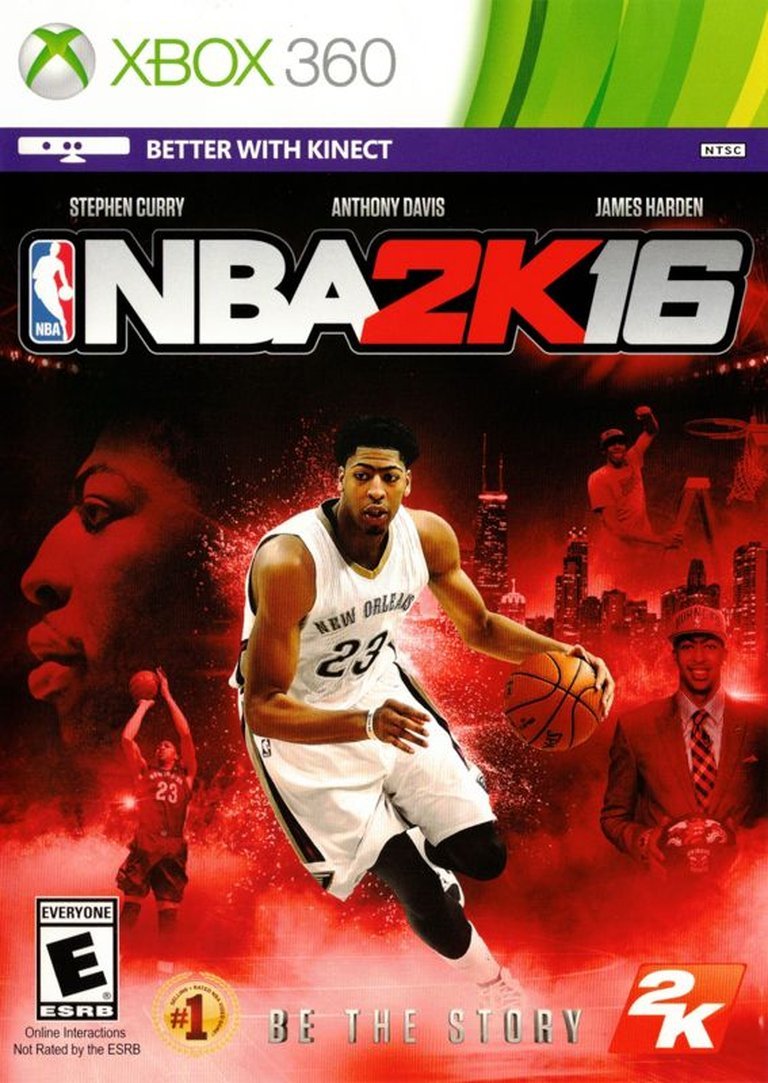
NBA 2K16 is the 17th main entry in the annual NBA 2K series, providing a detailed basketball simulation based on the 2015-2016 NBA season with all competing teams, classic teams, and 25 European Euroleague squads. It features enhanced player models, realistic ball and rim physics, and new controls, alongside diverse modes like the cinematic MyCareer mode ‘Livin’ Da Dream’ (developed with Spike Lee) where players guide a custom character from high school to the NBA, management modes MyGM and MyLeague with expanded customization, and the card-collecting MyTeam mode.
Gameplay Videos
Where to Buy NBA 2K16
PC
NBA 2K16 Free Download
NBA 2K16 Cracks & Fixes
NBA 2K16 Mods
NBA 2K16 Guides & Walkthroughs
NBA 2K16 Reviews & Reception
bleacherreport.com : It seems safe to say, most people really like NBA 2K16.
ign.com : NBA 2K16 is a great representation of the sport of basketball, and it plays like a dream.
NBA 2K16 Cheats & Codes
PC
Enter codes in Locker Codes menu: Options > Features > Locker Codes.
| Code | Effect |
|---|---|
| PAYRESPECT | Unlocks the ABA ball |
| FZV7P FQ9SU SRNZZ 9AB27 9ZUUT | Unlocks Michael Jordan |
| GSUM3 ESARX GXD3T S3QJQ FIETU | Unlocks Shaquille O’Neil |
| XFQDT TMQ6Z I1TM6-8Q8J5 WNJGQ | Unlocks Isaiah Thomas |
| WR9KL 6NQ9Z CWWGF MVG4C T3L8P | Unlocks Paul George |
| 9BUQS QTKDU ASYJU 3W183 QVXBC | Unlocks LeBron James |
| ZG9QQ VYAVK I2ZUD TU2VL ZFYLQ | Unlocks Larry Bird |
| AMIB1 95PFL FD7LB DQXHX S7RBT | Unlocks Carmelo Anthony |
| Q1585 CPEWU HZNWY WK2EW V1E4C | Unlocks Karl Malone |
| NXYJ4 WQCRD C2DQN S36GF TJMZ4 | Unlocks Stephen Curry |
PlayStation 3
Enter codes in Locker Codes menu: Options > Features > Locker Codes.
| Code | Effect |
|---|---|
| PAYRESPECT | Unlocks the ABA ball |
| FZV7P FQ9SU SRNZZ 9AB27 9ZUUT | Unlocks Michael Jordan |
| GSUM3 ESARX GXD3T S3QJQ FIETU | Unlocks Shaquille O’Neil |
| XFQDT TMQ6Z I1TM6-8Q8J5 WNJGQ | Unlocks Isaiah Thomas |
| WR9KL 6NQ9Z CWWGF MVG4C T3L8P | Unlocks Paul George |
| 9BUQS QTKDU ASYJU 3W183 QVXBC | Unlocks LeBron James |
| ZG9QQ VYAVK I2ZUD TU2VL ZFYLQ | Unlocks Larry Bird |
| AMIB1 95PFL FD7LB DQXHX S7RBT | Unlocks Carmelo Anthony |
| Q1585 CPEWU HZNWY WK2EW V1E4C | Unlocks Karl Malone |
| NXYJ4 WQCRD C2DQN S36GF TJMZ4 | Unlocks Stephen Curry |
PlayStation 4
For locker codes: Options > Features > Locker Codes. For shoe codes: Main > Features > Cheat.
| Code | Effect |
|---|---|
| PAYRESPECT | Unlocks the ABA ball |
| FZV7P FQ9SU SRNZZ 9AB27 9ZUUT | Unlocks Michael Jordan |
| GSUM3 ESARX GXD3T S3QJQ FIETU | Unlocks Shaquille O’Neil |
| XFQDT TMQ6Z I1TM6-8Q8J5 WNJGQ | Unlocks Isaiah Thomas |
| WR9KL 6NQ9Z CWWGF MVG4C T3L8P | Unlocks Paul George |
| 9BUQS QTKDU ASYJU 3W183 QVXBC | Unlocks LeBron James |
| ZG9QQ VYAVK I2ZUD TU2VL ZFYLQ | Unlocks Larry Bird |
| AMIB1 95PFL FD7LB DQXHX S7RBT | Unlocks Carmelo Anthony |
| Q1585 CPEWU HZNWY WK2EW V1E4C | Unlocks Karl Malone |
| NXYJ4 WQCRD C2DQN S36GF TJMZ4 | Unlocks Stephen Curry |
| unbcrqlop | Unlocks Derrick Rose 6 Shoes |
| ybnmafct | Unlocks LeBron 13 Shoes |
Xbox One
Enter codes in Locker Codes menu: Options > Features > Locker Codes.
| Code | Effect |
|---|---|
| PAYRESPECT | Unlocks the ABA ball |
| FZV7P FQ9SU SRNZZ 9AB27 9ZUUT | Unlocks Michael Jordan |
| GSUM3 ESARX GXD3T S3QJQ FIETU | Unlocks Shaquille O’Neil |
| XFQDT TMQ6Z I1TM6-8Q8J5 WNJGQ | Unlocks Isaiah Thomas |
| WR9KL 6NQ9Z CWWGF MVG4C T3L8P | Unlocks Paul George |
| 9BUQS QTKDU ASYJU 3W183 QVXBC | Unlocks LeBron James |
| ZG9QQ VYAVK I2ZUD TU2VL ZFYLQ | Unlocks Larry Bird |
| AMIB1 95PFL FD7LB DQXHX S7RBT | Unlocks Carmelo Anthony |
| Q1585 CPEWU HZNWY WK2EW V1E4C | Unlocks Karl Malone |
| NXYJ4 WQCRD C2DQN S36GF TJMZ4 | Unlocks Stephen Curry |
NBA 2K16: Review
Introduction
In the long and storied lineage of the NBA 2K franchise, few entries represent a more ambitious, confident, and simultaneously divisive leap than NBA 2K16. Released in 2015 at the zenith of the series’ cultural penetration and technical prowess, it wasn’t merely an annual roster update but a declared manifesto. With a development team led by Visual Concepts and an unprecedented creative partnership with filmmaker Spike Lee, the game sought to fundamentally re-envision narrative in sports simulations, asserting that “Story is Everything.” This review will argue that NBA 2K16 stands as a pivotal, if imperfect, landmark in sports gaming history—a technical masterpiece that achieved unprecedented heights in on-court simulation, presentation, and content breadth, but whose marquee story-driven experiment succumbed to cliché and restriction, revealing the inherent tensions between cinematic narrative and player agency. Its legacy is one of breathtaking ambition that both defined an era and exposed the vulnerabilities of a dominant franchise.
Development History & Context
The development of NBA 2K16 was shaped by a confluence of creative audacity and iterative refinement. By 2015, Visual Concepts had been iterating on the NBA 2K formula for over a decade, with each annual release tasked with justifying a full-price sequel. The technological foundation was the latest iteration of their proprietary engine, allowing for significant graphical leaps. A landmark technical achievement was the implementation of full-body scanning for NBA players, moving beyond unique faces to model entire physiques, which dramatically improved the realism of player movement, proportions, and tattoo detail—a frequent criticism in prior games. This was extended to coaches, cheerleaders, and fans, creating a more immersive and less generic crowd environment.
The defining contextual factor was the high-profile involvement of Spike Lee as director, writer, and co-producer of the central MyCareer mode, now rebranded as “Livin’ Da Dream.” This partnership was a strategic coup, leveraging Lee’s cultural capital to market the game not just as a sim, but as an interactive cinematic experience. As 2K spokesperson Ryan Peters stated, the directive to Lee was: “You transform the narrative, and we’ll change that into digital polygons.” Lee immersed himself in the process, following real high school and college prospects to document their lives, aiming to capture the “trials and tribulations” beyond the court. This vision aligned with a broader industry trend toward narrative-heavy, single-player experiences in traditionally multiplayer-focused franchises.
The gaming landscape of 2015 was fiercely competitive, particularly in the sports genre. NBA Live 16, EA Sports’ rebooted basketball title, was its primary competitor, though NBA 2K had long established its reputation for superior simulation depth and presentation. The NBA 2K series had also successfully integrated a robust online ecosystem with modes like MyTeam (a direct competitor to EA’s Ultimate Team). The pressure was on to innovate, not just iterate, leading to the dual-focus: pushing narrative boundaries with Lee while expanding the already vast suite of franchise modes.
Narrative & Thematic Deep Dive
The narrative core of NBA 2K16 is the Livin’ Da Dream MyCareer mode, a story that traces the journey of a predetermined protagonist: Frequency Vibrations (“Freq”), a talented basketball prospect from Harlem, New York, with an underprivileged upbringing. Despite allowing players to customize superficial attributes like name, height, and position, the narrative firmly anchors the character as a specific African American male experience, complete with a predefined family background and personality arc. This immediately created a fissure between player agency and directorial intent.
Spike Lee’s story is a familiar sports movie archetype: the “underdog from the ‘hood” navigating the pitfalls of fame, wealth, and temptation on the path to NBA stardom. The plot unfolds through a series of cinematic cutscenes and scripted interactions, moving from high school to a college of the player’s choice (featuring accurate university branding and arenas like Kansas’ Allen Fieldhouse) and finally to the NBA Draft. Key narrative beats involve managing relationships with agents, coaches, teammates, the media, and endorsers. Choices are presented, often with clear “good” or “bad” consequences for Freq’s “Publicity” and “Teammate” relationship meters, attempting to simulate the off-court pressures of modern stardom.
Thematically, the story grapples with ambition, authenticity, and racial identity. Lee’s touch is evident in the focus on community, family loyalty, and the corporate pressures of the NBA machine. The “Be The Story” marketing campaign emphasized player empowerment, yet the narrative structure is frequently restrictive and railroaded. Players have little meaningful impact on the central plot; Freq’s rivalry with a预设的 antagonist and his romantic subplot follow a predetermined script. Dialogue choices often feel superficial, affecting meters but not the story’s trajectory. This created a critical dissonance: a deeply cinematic presentation that simultaneously robbed players of true narrative agency, a core tenet of the MyCareer mode’s previous, more open-ended design. The mode was praised for its acting and production values (featuring real NBA players in cameo roles) but widely criticized for feeling like a “Spike Lee film you are occasionally allowed to play,” as noted by outlets like Hardcore Gamer and GameStar (Germany). The themes of struggle and success are potent, but their delivery is marred by clichéd plotting and a fundamental mismatch between interactive medium and passive filmic storytelling.
Gameplay Mechanics & Systems
Where NBA 2K16 achieved universal acclaim was in its on-court gameplay, widely regarded as the pinnacle of the series at that point. The core loop—playing basketball—was refined to an exceptional degree. Key improvements included:
* Physics & Animation: New ball and rim physics created more realistic and unpredictable bounces and layups. Full-body scans translated to thousands of new animations, including context-sensitive movements like mouth guards and photobomb celebrations after big plays.
* Controls & AI: Passing received a significant overhaul with dedicated buttons for lobs and bounce passes, adding strategic depth but also a learning curve that some critics found unnecessary. Defensive AI was notably improved, with opponents adapting to player tendencies, making games feel like tactical chess matches rather than reactive scrambles. The “shot contest” and defensive positioning systems were lauded for creating more logical and skill-based outcomes.
* User Interface: Menus were redesigned for clarity, and the broadcast presentation—with the TNT studio show hosted by Ernie Johnson, Shaq, and Kenny Smith, and commentary from Kevin Harlan, Clark Kellogg, and Greg Anthony—was considered the industry standard for sports game presentation, immersive and seamless.
Beyond the core game, the title’s depth was staggering:
* MyCareer (Livin’ Da Dream): As analyzed, it functioned as a heavily scripted RPG-lite. The hub world was the customizable MyCourt, where players could upgrade attributes (using earned VC or purchased VC), practice, and invite friends. The mode also included MyPark for casual streetball.
* MyTeam: The collectible card mode was refined with a tiered card system (Bronze, Silver, Gold, Amethyst, Diamond), introducing greater stratification and chase rare cards. Customization was expanded, allowing for dynamic team building. However, its reliance on Virtual Currency (VC) and random pack purchases entrenched the microtransaction model that would become increasingly controversial.
* MyGM & MyLeague: These franchise modes saw perhaps the most significant expansions. MyGM added a “story” layer with owner goals and team morale, but its killer feature was the ability to relocate the team to any North American city, complete with new arena designs and jerseys. It also introduced three-team trades, summer leagues, and a mini-game during sims. MyLeague was positioned as the “sandbox” counterpart, removing many MyGM restrictions, allowing for a fully customizable, often online-based league with 30 user-controlled teams.
* Other Modes: Play Now (quick games), 2K Pro-Am (custom team online 5v5), and a full suite of historical Classic Teams (12 new additions, including the 1999-2000 Raptors and 2007-08 Celtics) and 25 EuroLeague teams provided immense longevity.
World-Building, Art & Sound
NBA 2K16 presented a world that felt meticulously authentic to the modern NBA experience. The visual direction prioritized realism and broadcast fidelity. Player models, benefiting from full-body scans, were incredibly detailed, capturing individual physique, tattoos, and signature styles. Arenas were replicated with stunning accuracy, from the LED lighting to the specific crowd animations. The game’s use of cameras, replays, and overlay graphics perfectly mimicked a national television broadcast, a hallmark of the series.
The soundscape was equally ambitious and culturally resonant. For the first time, the soundtrack was curated by three high-profile DJs—DJ Premier, DJ Mustard, and DJ Khaled—resulting in a 50-track compilation split into themed playlists (including a “2K Classics” mixtape). This blend of hip-hop, electronic, and rock created a dynamic, contemporary atmosphere that played during menus and gameplay, distinct from the licensed stadium anthems of previous years. The commentary was extensive, with separate teams for studio shows and in-game, featuring real personalities like Shaquille O’Neal and Kenny Smith, whose banter added color and authenticity.
Together, these elements constructed a living, breathing NBA world. From the detailed player introductions to the post-game interviews, every surface contributed to the illusion of participating in a real NBA season. The inclusion of EuroLeague teams and the global reach of MyLeague‘s online associations subtly expanded this world beyond American borders, reflecting basketball’s growing international footprint.
Reception & Legacy
NBA 2K16 received widespread critical acclaim, with Metacritic scores of 87 (PS4) and 86 (Xbox One). Reviewers consistently praised its technical excellence, depth of content, and on-court gameplay. Game Informer called it “the first true classic sports game of this console generation,” while IGN hailed it as “one of the most complete packages I’ve ever seen.” The improvements to AI, physics, and presentation were near-universally lauded. Sales were record-breaking, with over 4 million copies shipped in its first week, doubling the digital sales of NBA 2K15 and making it the series’ fastest seller.
However, the reception was not without significant caveats that would come to define its legacy:
1. The MyCareer Divisiveness: The Spike Lee-directed narrative was the single most controversial element. While some appreciated its cinematic scale, many critics and players found it too restrictive, clichéd, and linear, stripping away the open-ended role-playing freedom of previous iterations. The fixed protagonist, Frequency Vibrations, was a particular sticking point.
2. Microtransactions & VC: The pervasive use of Virtual Currency to accelerate progress in MyCareer and MyTeam was criticized as a pay-to-skip model that devalued the core experience.
3. Online Instability: As with many live-service games, server issues at launch and ongoing connection problems, particularly in modes like 2K Pro-Am, were a persistent frustration.
4. Control Changes: The revamped passing controls, while deep, were seen by some as unnecessary and added complexity without sufficient in-game tutorialization.
Its legacy is multifaceted. On one hand, it represents the apex of pre-“games as a service” sports simulation. The sheer volume of licensed content, historical teams, and deep franchise modes set a benchmark that competitors struggled to match. The full-body scan technology became an expected standard. On the other hand, it is often cited as the beginning of the franchise’s “peak and decline” narrative for many fans. The ambitious but flawed MyCareer experiment was largely abandoned or scaled back in subsequent years. The aggressive integration of VC and the growing focus on MyTeam as a revenue driver shifted the series’ identity toward a monetization model that would become increasingly pronounced in NBA 2K17 and beyond. It is remembered as the last game where the core basketball simulation felt uncompromised and paramount before the escalating focus on Ultimate Team-style monetization and problematic online economies.
Conclusion
NBA 2K16 is a monumental entry in the history of sports video games. Technologically, it was a breathtaking achievement, delivering an on-court product of unparalleled realism, fluidity, and strategic depth. Its scope was dizzying, offering more modes, teams (including a deep EuroLeague contingent), and customization options than almost any competitor could dream of. The presentation saturated every sensory channel, from the pristine visuals and iconic commentary to the genre-defining curated soundtrack.
Yet, for all its pomp and technical brilliance, its defining creative gamble—Spike Lee’s Livin’ Da Dream—proved to be its greatest weakness. The friction between a prescribed, cinematic narrative and the interactive, player-driven spirit of a career mode created a fundamental dissonance that undercut its “story” premise. Coupled with the now-familiar growing pains of online infrastructure and the gauntlet of microtransactions, the game’s flaws are as memorable as its innovations.
Ultimately, NBA 2K16 belongs in the hall of fame not as a flawless classic, but as a definitive peak and a turning point. It is the last NBA 2K game that felt like an uncompromised sports simulation first and a monetization platform second. It pushed the boundaries of what a sports game could be in terms of production value and narrative ambition, even if it sometimes stumbled over those very boundaries. For historians, it marks the end of an era—the final, glorious, and complicated sigh of an annualized sports franchise operating at the height of its creative and technical powers before the gravitational pull of live-service economics permanently altered its orbit. It is a game of immense, memorable contradictions: ruthlessly deep yet superficially narrative, technologically supreme yet artistically constrained, a slam dunk that glanced the rim.