
- Release Year: 2001
- Platforms: Windows
- Publisher: Media-Service 2000, Suricate Software
- Developer: Suricate Software
- Genre: Action
- Perspective: Behind view
- Game Mode: Single-player
- Gameplay: Platform, Puzzle elements
- Setting: Fantasy
- Average Score: 84/100
Description
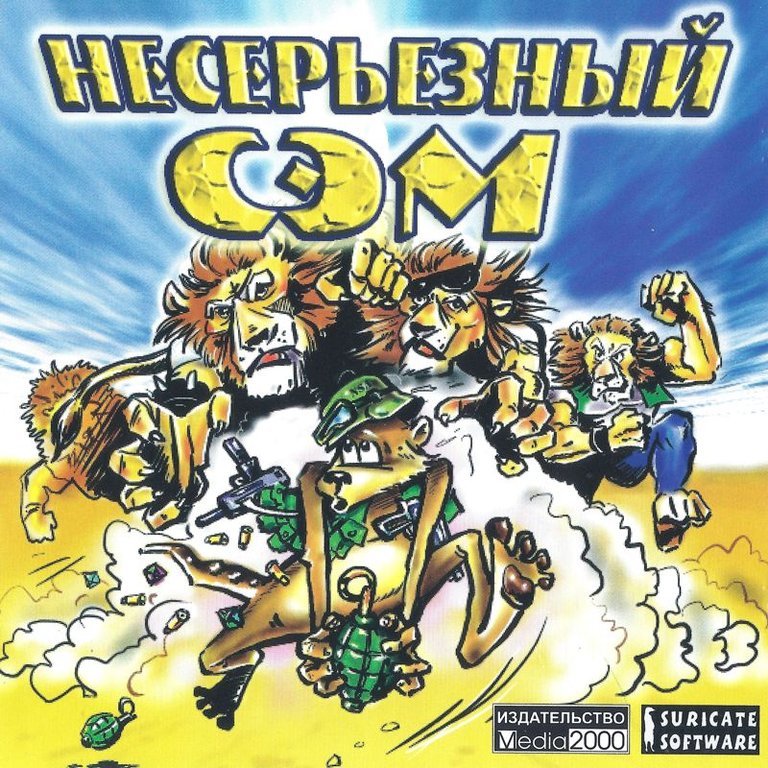
Sammy the Suricate in Lion Land is a 3D action game with puzzle and platform elements, where players control an anthropomorphic suricate named Sammy as he navigates through enclosed, fantasy-themed mazes. The goal on each of the 40 maps is to collect all gems while evading hungry lions, utilizing tools like elevators, teleporters, and collectible wasps as weapons to overcome obstacles and progress.
Gameplay Videos
Sammy the Suricate in Lion Land Patches & Updates
Sammy the Suricate in Lion Land Mods
Sammy the Suricate in Lion Land Reviews & Reception
myabandonware.com (90/100): Another great game from my childhood.
download.cnet.com (78/100): A lot of fun
Sammy the Suricate in Lion Land: A Forgotten Gem of Early 3D Puzzle-Platforming
Introduction: A Buried Treasure from the Dawn of 3D Indie Gaming
In the vast, often-overlooked archives of PC gaming history, certain titles shimmer with a peculiar, enduring light—not because they achieved blockbuster status, but because they embody a specific moment of creative ambition constrained by technology and market forces. Sammy the Suricate in Lion Land (known in German as Sammy im Land der Löwen and in Russian as Несерьёзный Сэм) is precisely such a title. Released in 2001 by the tiny German studio Suricate Software, this 3D action-puzzle-platformer is a fascinating artifact from the transitional era when 2D still dominated the indie space but affordable 3D engines like 3D GameStudio began to democratize development. It is a game of stark contrasts: charming yet technically raw, accessible yet deeply challenging, whimsical in premise yet mechanically rigorous. This review will argue that Sammy the Suricate is not merely a nostalgic curiosity but a significant, if flawed, experiment in merging family-friendly aesthetics with substantive puzzle design—a precursor to the more polished genre hybrids that would emerge years later. Its legacy lies in its pure, unadulterated focus on gameplay loops that demand both quick reflexes and strategic forethought, all wrapped in a bizarrely endearing fantasy world.
Development History & Context: The Suricate Software Story
To understand Sammy the Suricate, one must first understand its creators. Suricate Software was not a household name; it was a micro-studio, likely a collaboration of a handful of passionate developers, as evidenced by the core credits listing just three individuals: Rémi Valantin, Jörg Henseler, and Jérôme de Menou. The studio’s name, “Suricate” (French for “meerkat”), immediately signals a European, likely Franco-Germanic, origin, which aligns with the game’s initial German/English release and subsequent localizations for Russia (2002) and Poland (2003). Their business model was that of a classic late-90s/early-2000s shareware developer: create a compact, compelling demo to distribute freely (in this case, 20 levels), then entice players to purchase the full 40-level “Gold version” via nag screens—a practice now viewed as archaic but then standard for PC indie titles.
The technological context is critical. The game was built with 3D GameStudio (also known as Gamestudio), a German-developed engine that was a popular, accessible tool for small teams. This engine allowed for real-time 3D rendering but came with significant limitations: low polygon counts, simplistic textures, and a fixed perspective (the “behind view” mentioned in specs). The visual result is a world of blocky geometry, vibrant but flat textures, and a distinct lack of atmospheric effects. This was the reality of early 2000s indie 3D development—ambition was filtered through a technological lens that produced a charmingly crude aesthetic. The gaming landscape of March 2001 was dominated by powerhouse releases like Grand Theft Auto III (which would redefine 3D open worlds later that year) and Metal Gear Solid 2. In this environment, a small studio’s 3D action-puzzle game was a humble, almost defiant, proposition. Suricate Software’s vision, as gleaned from the developer description on CNET and the Internet Archive, was explicitly “family-friendly,” aiming for an “easy to learn, but hard to master” experience that could bridge the gap between children, “old people,” and “newbies.” This was a calculated design philosophy targeting a broad, casual audience underserved by the increasingly complex and violent mainstream market.
Narrative & Thematic Deep Dive: Minimalism as a Canvas for Play
Sammy the Suricate in Lion Land offers a narrative so skeletal it barely qualifies as story, yet its thematic and character choices are a window into its design ethos. The plot is summarizable in a single sentence: Sammy, an anthropomorphic suricate (meerkat), must traverse forty enclosed maze-like levels (“maps”) in a fantastical “Lion Land” to collect all gems and exit, all while being hunted by various tribes of similarly anthropomorphic, hungry lions.
There is no dialogue, no cutscenes, no overarching plot. The “narrative” is purely environmental and systemic. The true narrative battleground is the cultural characterization of the antagonists. The lions are not generic predators; they are subdivided into distinct, almost satirical tribes: “Rasta-lions,” “Rocker-lions,” and “Hippie-lions.” This is a deliberate, whimsical choice that injects a layer of surreal humor and personality into the enemy roster. They represent countercultural and musical archetypes of the late 20th century, transformed into feral antagonists. Their “two objectives” are tellingly simple and primal: “protecting the gems and finding out how suricates taste.” This reduces them to elemental forces of opposition—guardians of the player’s goal and embodiments of threat. Sammy, conversely, is the swift, clever underdog. The thematic core, therefore, is a classic tale of wit versus brute force, agility versus territorial dominance. The puzzle elements (“think&run” mode) elevate this from a simple chase to a strategic博弈 (博弈, bóyì—a strategic game), where Sammy’s intelligence is his primary weapon against the lions’ numerical and positional strength.
The lack of a traditional narrative is not a failure but a design choice. It strips away all distractions, focusing the player’s entire cognitive and mechanical investment on the immediate spatial problem of each level. The “fantasy” setting is a vague, cohesive sandbox for this conflict, a series of enclosed arenas where the rules of engagement are clear and consistent.
Gameplay Mechanics & Systems: The Dual-Heart Architecture
The genius and the challenge of Sammy the Suricate lie in its bifurcated structure. The 40 maps are explicitly divided into two conceptual and mechanical modes, creating what the developers termed a “dual-heart” gameplay loop.
1. The Jump & Run Heart: Pure Platforming Agility
This is the game’s straightforward, action-oriented core. Here, the player’s primary tools are spatial awareness, timing, and movement precision. The objective remains constant: collect all gems to open the exit. The threat is direct pursuit by the lion AI. The lions patrol set paths or react to Sammy’s presence, requiring the player to use the environment—platforms, pitfalls, elevators, and teleporters—to create separation. The introduction of collectible wasps as a projectile weapon is the key tactical layer. Wasps are limited, dropped by the environment or possibly lions, and can be thrown to temporarily stun or eliminate a pursuer. This creates a resource management sub-loop: do I use a wasp now to escape a tight spot, or conserve it for a later, more dangerous bottleneck? The “Jump & Run” levels test rhythm, route memorization, and reflexive combat.
2. The Think & Run Heart: Puzzle-Driven Progression
This is where the game distinguishes itself from countless other 3D platformers. The “Think & Run” levels transform the gem collection from a simple scavenger hunt into a logic puzzle with real-time execution. The critical mechanic is gem merging. Not all gems are equal; some are “magic gems” required to open “magic doors” (the exit). Crucially, certain exits can only be unlocked by a gem created by merging two specific lower-tier gems. Since Sammy can only carry one gem at a time, the player must plan a multi-step sequence: collect Gem A, deposit it in a special merger device, then collect Gem B to combine with the stored Gem A, creating the required exit key. This introduces a profound layer of planning. You must first learn the level layout, identify the merger points and the required gem types, and then orchestrate a route where your single-item inventory constraint doesn’t trap you. A misstep might mean collecting a gem that blocks the path to another needed component, forcing a restart. These levels are “pretty tricky,” as one source notes, and they demand a shift from instinctive platforming to deliberate, chess-like thinking while being chased.
Systems & Flaws:
* Progression & UI: The game uses a simple, functional interface. Level select shows a grid of maps, often with locked bonuses. The “nag screens” in the demo are a minor but notable friction point of its era. There is no character progression in an RPG sense; skill comes purely from player mastery.
* Physics & Controls: Based on contemporary accounts and the nature of 3D GameStudio titles, the controls are likely serviceable but not precision-tuned. The “direct control” interface suggests a direct keyboard/gamepad mapping, but camera issues (a common early 3D flaw) could impede navigation in enclosed mazes.
* Innovation: The seamless integration of inventory-limited puzzle logic into a real-time chase environment is its primary innovation. Most puzzle-platformers (like Kula World or Oddworld) separate puzzle-solving from combat. Sammy forces you to solve while under pressure.
* Flaws: The low-poly 3D can make depth perception difficult, a critical flaw in a game about judging jumps and avoiding pursuers. The lion AI, while effective, is likely simple pathfinding, leading to potential exploits once patterns are learned. The “enclosed mazes” can feel repetitive.
World-Building, Art & Sound: Charm in the Constraints
The game’s world is a masterclass in making the most of aesthetic limitations. The “fantasy” setting of Lion Land is expressed through a cartoonish, brightly colored 3D aesthetic. Environments vary (“various environments” per MobyGames), suggesting different themed tile sets: sandy deserts, rocky outcrops, maybe leafy jungles—all rendered in the low-detail style of the engine. The “beautifully rendered” claim from the developer description on CNET must be taken with a grain of salt; it was beautiful for its class and budget. The charm comes from its consistency and personality. The blocky models of Sammy (a upright suricate) and the lions, each with their distinct tribal accessories (dreadlocks for Rasta-lions, leather jackets for Rocker-lions), create a memorable, if crude, visual identity. It’s a world that feels like a child’s diorama come to life—simple, clear, and functional.
The sound design is described as having “exhilarating music and sound effects” (Gamepressure.com). This likely points to an upbeat, looping MIDI-based score and simple, cartoony audio cues: a pop for the wasp, a yelp for a stunned lion, a clink for gem collection. The audio’s primary function is to provide clear feedback in a visual environment where clarity can be questionable. The atmosphere is one of playful peril, not genuine horror or tension. The “enclosed maze” design, combined with the fixed camera, creates a pressure-cooker feel, but the bright colors and silly enemy designs keep it firmly in the family-friendly zone.
Reception & Legacy: The Cult of the Obscure
Sammy the Suricate’s reception is a study in niche appeal. Contemporary critic reviews are virtually non-existent—MobyGames shows zero critic reviews, and IMDb has a meager 6.2/10 from a tiny sample. Its life was lived in the trenches of shareware distribution and retail shelves in Europe, likely bundled with other casual titles or sold in small software stores.
Its commercial performance was almost certainly modest. The fact that it is now readily available on abandonware sites (MyAbandonware, Internet Archive) and requires community-made fixes like dgVoodoo 2 to run on modern Windows systems (as noted on PCGamingWiki) speaks to a dedicated but small fanbase. The user reviews that do exist are passionately positive. On MyAbandonware, it holds a 4.5/5 from 8 votes, with comments like “This game is half of my childhood” and “I kid you not: this is the BEST, bar none!” CNET reviews, while mixed, show a similar polarization: some find it too basic, others declare it a masterpiece of family entertainment. This divide is telling: it perfectly achieves its stated goal for its target audience (children, families, casual gamers) but offers little for those seeking AAA complexity.
Its influence is indirect but plausible. It sits in a lineage of anthropomorphic animal platformers that includes Croc: Legend of the Gobbos and, more distantly, the Sly Cooper series. Its specific blend of real-time chase with inventory-based puzzle logic feels like a precursor to later indie darlings that would fuse puzzles and action more seamlessly (e.g., The Witness‘s environmental puzzles, though far more sophisticated). More immediately, its developer, Suricate Software, continued with a series of casual match-3 and bubble shooter games (Jewel Match Solitaire 2, IncrediBubble), suggesting Sammy was an early, ambitious but ultimately commercially unviable departure for a studio that would settle into a safer casual genre. Its legacy is that of a cult classic—a game remembered with fierce fondness by a handful of players who encountered it in their youth, now preserved by the abandonware community precisely because it was forgotten by the mainstream.
Conclusion: A Niche Artifact of Pure Design
Sammy the Suricate in Lion Land is a game that cannot be judged by the metrics of its time or ours. It was never competing with Half-Life or Diablo II. Its success is measured in its flawless execution of a narrow design vision: a 3D puzzle-platformer that is genuinely accessible to young children yet contains layers of strategic depth that can challenge adults. Its technical limitations are inseparable from its aesthetic, which in turn is inseparable from its “family-friendly” identity. The dual-mode structure is a bold, clear framework that the game adheres to rigorously.
In the grand canon of video game history, it occupies a small but meaningful notch. It represents the democratization of 3D game development in the early 2000s, the persistent viability of the shareware model for niche genres, and a design philosophy that prioritized clear, learnable mechanics over narrative complexity or graphical fidelity. It is a game where the story is written not in text but in the path you carve through a maze while a Rasta-lion gives chase, where the theme is expressed not in dialogue but in the satisfying clunk of a gem slotting into a merger and the subsequent rush to the newly opened exit.
For the historian, it is a valuable case study in constrained development. For the player, it is a perfectly formed piece of interactive entertainment from a bygone era of PC gaming’s vibrant mid-tier. Its place in history is not on a pedestal, but in a cherished, well-worn shelf—a reminder that innovation often comes in small, quirky packages, and that a game about a suricate evading hippie lions can, against all odds, be a masterpiece of its kind. Verdict: A historically significant, deeply niche cult classic that achieves everything it sets out to do with charm, challenge, and unwavering focus.