
- Release Year: 2006
- Platforms: Windows
- Publisher: 1C Company, G2 Games
- Developer: Third Wire Productions, Inc.
- Genre: Simulation
- Perspective: First-person
- Game Mode: Single-player
- Gameplay: Aerial combat
- Setting: World War I
Description
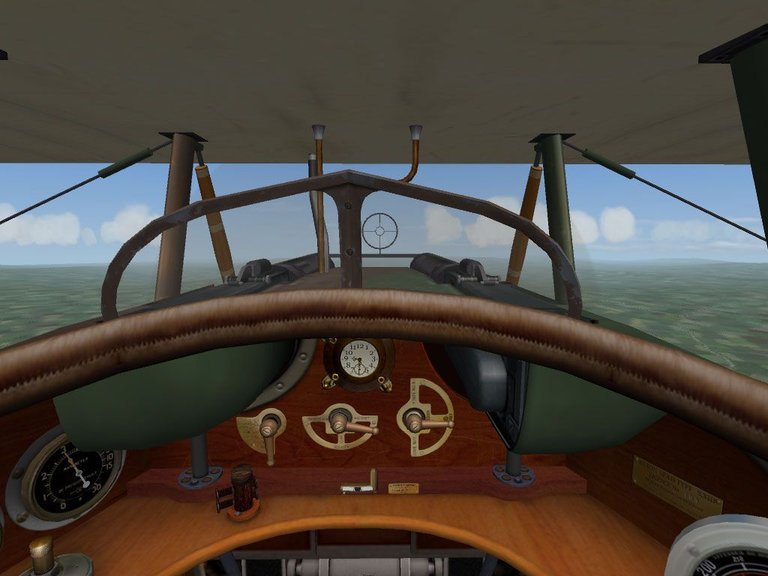
First Eagles: The Great War 1918 is a World War I flight simulation game where players pilot historically accurate biplanes, such as the Fokker D.VII and SPAD XIII, in aerial combat over the Western Front. Set in 1917-1918, the game emphasizes intense close-quarters dogfights without modern safety features like parachutes, capturing the sensory experience of early aviation. It offers single-player and multiplayer modes and supports community mods through its open architecture.
Gameplay Videos
First Eagles: The Great War 1918 Patches & Updates
First Eagles: The Great War 1918 Mods
First Eagles: The Great War 1918 Guides & Walkthroughs
First Eagles: The Great War 1918: Review – The Frail Beauty of Dawn Patrols
Introduction: A Sentimental Journey into the Birth of Aerial Combat
In the vast panorama of combat flight simulation, certain titles emerge not as blockbuster titans but as cherished, nichespecific monuments—games that capture a specific historical moment with such raw, unvarnished authenticity that they become indispensable artifacts for a dedicated few. First Eagles: The Great War 1918 is precisely such a monument. Released in December 2006 by the veteran boutique studio Third Wire Productions, it represents a deliberate and risky pivot: the developer’s first foray beyond the jet age into the perilous, fragile world of World War I aviation. This review argues that First Eagles is a game of profound contradictions—simultaneously a technical showcase of its era’s limitations and a timeless evocation of early aerial warfare’s visceral terror and triumph. Its legacy is not defined by mainstream acclaim or graphical prowess, but by its “open architecture” that fostered a living modding community and its unflinching commitment to the sensory and mechanical reality of flying a wooden, wire-braced biplane in a fight to the death. It is a flawed, demanding, and deeply atmospheric experience that deserves recognition as a crucial bridge between the hardcore military sims of the 1990s and the more accessible, community-driven historical simulations that followed.
Development History & Context: From jets to Jennies
The Studio and the Vision
Third Wire Productions, Inc. was an established, if niche, name in the combat flight simulation genre prior to 2006. The studio, led by designer Tsuyoshi Kawahito, had built a reputation with the Strike Fighters series, which modeled Cold War-era jet combat with a focus on accessibility and engagement alongside solid simulation. First Eagles was their fourth release and, most significantly, their “first non-jet based game.” This was not merely a change in setting but a fundamental redesign of core systems. Jet flight dynamics, governed by compressibility, afterburners, and missile envelopes, were replaced by the delicate, visceral physics of World War I “scouts” and “fighters”—aircraft where lift was precarious, engine power was meager, and control was a constant, physical negotiation with wind and momentum. The developer’s stated vision, as seen in the game’s evocative official description, was to immerse the player in the full sensory experience: “the smell of the air, the engine exhaust, the sounds of flight from the creaking of the aircraft.” This was a shift from the tactical, radar-oriented mindset of jet sims to a primal, visual, and auditory dogfighting experience.
Technological Constraints and the Strike Fighters Engine
First Eagles was built upon a heavily modified version of Third Wire’s proprietary “Strike Fighters” engine. This provided a solid foundation for 3D graphics, flight modeling, and mission structuring but also carried the baggage of its origins. The engine was designed for the higher speeds, altitudes, and radar-centric combat of later eras. Adapting it for the slow, low-altitude, turning battles of 1917-1918 required significant reworking of aerodynamics, damage models, and AI behavior. The result was a game that, by contemporary 2006 standards, was visually competent but not spectacular. Ground textures were described as an “earthy tapestry” but could appear monotonous, and detailpop-in at altitude was noted as a minor drawback. The technological constraint, however, may have been a blessing in disguise; the engine’s relative efficiency allowed for stable frame rates even with “dozens of planes fill[ing] the horizon,” a critical factor for the large-scale dogfights the game aimed to simulate.
The 2006 Gaming Landscape
The mid-2000s was a period of transition for the PC flight sim. The genre’s golden age of the 1990s (F-15 Strike Eagle, Falcon 4.0) had given way to a more diversified market. Major publishers were shifting focus to consoles, and hardcore simulations were increasingly the domain of smaller studios and dedicated communities. For World War I aviation specifically, the field was exceptionally sparse. The Eurogamer review explicitly states that First Eagles arrived “after almost a decade without a serious standalone WWI flight sim.” Its primary competition wasn’t another commercial release, but two grassroots projects: the high-quality Combat Flight Simulator 3 mod Over Flanders Fields and the upcoming Russian title Knights of the Sky. In this context, First Eagles’ release was a notable event solely for its commercial availability and official licensing, filling a glaring historical gap on store shelves.
Narrative & Thematic Deep Dive: The Story is the Sky
First Eagles does not possess a traditional, scripted narrative with defined protagonists and plot arcs. Instead, its storytelling is systemic, environmental, and emergent—a approach that perfectly suits the historical material.
The Framework of War
The game is set over the Western Front during the final, furious months of the war, 1917-1918, specifically during the Allied counter-offensives to push German forces out of France. Players align with one of four air services: the British Royal Air Force (RAF), the French Aéronautique Militaire, the American Air Service, or the German Luftstreitkräfte. There is no cinematic intro or voice-acted protagonist. The narrative is delivered through three primary channels:
- The Mission Briefing: Before every sortie, a text-based briefing provides sparse but potent context. It mentions strategic objectives (“escort reconnaissance planes,” “intercept enemy bombers”), expected threats (“anticipated Albatros interceptors”), and the broader military situation (“mustard-gas attacks,” “creeping barrages”). These briefings are functional but effective, rooting each abstract dogfight in the grim, earthbound reality of trench warfare. They are the connective tissue between the pilot in the cockpit and the millions suffering in the mud below.
- The Atmospheric Environmental Storytelling: The game’s greatest narrative strength is its world. As described in the marketing copy, you “can hear the sounds of battle as you near the front and see the troops entrenched in the mud.” The terrain itself is a character: a broken landscape of churned earth, barbed wire, and distant smoke puffs from artillery. The constant, low-level presence of anti-aircraft fire (“Archie”) when flying over enemy territory is not just a game mechanic; it’s a persistent reminder of the lethal, three-dimensional nature of the battlefield.
- Emergent Pilot Sagas: With no parachutes (“no ejection seats or even parachutes here”), every flight is a life-or-death proposition. The game’s random mission generator and dynamic campaign mean that your personal story is one of survival and skill progression. Success leads to better aircraft and more challenging missions; failure means your pilot is gone, and a new one must take his place. The AI wingmen, with their “varying skill levels (ranks),” become companions whose fates you witness in the heat of combat—seeing a wingman “spiral down in flames” is a moment of profound personal loss within the systemic chaos. The theme is pure existential combat: a “fight-to-the-finsh struggle” where your machine is fragile, your enemies are real, and the sky is a merciless arena.
Dialogue and Character
There is no character dialogue in the traditional sense. Communication is limited to radio calls from command (briefings) and basic, context-sensitive radio chatter from your flight—likely commands like “Break left!” or “I’m hit!” The characters are the aircraft themselves. Each flyable plane—the Fokker D.VII, SPAD XIII C.1, and RAF S.E.5a—is a distinct personality defined by its flight characteristics, armament, and historical reputation. The D.VII is the steady, high-altitude predator; the SPAD XIII is the raw, powerful diver; the S.E.5a is the agile, well-rounded all-rounder. The narrative is written not in words, but in the physics of these machines and the tactical choices they force upon the player.
Gameplay Mechanics & Systems: The Dance of Death
Core Gameplay Loop and Flight Modeling
The core loop is simple: take off, join formation (or go lone wolf), navigate to the objective area, engage enemy aircraft or ground targets, and return to base (or crash). The absolute heart of the experience is the flight model and combat. This is not an arcade shooter. Every turn costs altitude and speed (“energy management”). Stalling, spinning, and crashing are constant threats. The game demands an understanding of basic fighter tactics: the “boom and zoom” energy-fighting of the SPAD, the turn-fighting of the Fokker, the versatile scissors of the S.E.5a. The Eurogamer review correctly identifies the appeal: “it’s nice to be duelling at close quarters and snail speeds.” Combat happens at ranges of a few hundred yards or less, a blurring, desperate ballet of weaving, snapping rolls, and carefully aimed bursts.
Aircraft Roster and Damage Model
The player-flyable roster is historically focused and excellent, featuring the three most iconic Allied and Central Powers fighters of 1918: the Fokker D.VII and its high-altitude variant D.VIIF, the SPAD XIII C.1, and the RAF S.E.5a. AI-only aircraft include the reconnaissance Salmson 2 A.2, the Albatros D.Va scout, and the D.F.W. C.V recon plane, fleshing out the battlefield. The damage model is brutally simplistic and effective. There are no complex subsystem failures; a few hits to the wings, fuselage, or engine result in catastrophic failure. Bullets “snap through your fragile machine.” A smoking engine means you have minutes, if not seconds, to find a clearing. There are no second chances. This creates immense tension and makes every shot count.
Missions, Campaigns, and Progression
The game offers two primary modes:
1. Single Mission: A highly flexible “pick-up-play” mode. Players can customize nearly every parameter: mission type (dogfight, ground attack, bomber escort), aircraft, year (affects technology and opponents), nationality, weather, and time of day. A map of the mission area is provided. Squadron rosters are procedurally generated with varying skill levels.
2. Campaign Mode: Three historical campaigns set over specific sectors of France (though the Wikipedia entry notes an Expansion Pack added a Cambrai campaign). Critically, campaign missions are also randomly generated. This means the strategic objectives and enemy compositions change with each playthrough, ensuring that no two campaign runs are identical. Progression is performance-based; doing well unlocks better aircraft and tougher missions. This system prioritizes replayability over a curated story.
UI, Realism Settings, and Mod Support
The user interface is functional, prioritizing cockpit view and external views. Key information like airspeed, altitude, and compass is always visible. The game’s hallmark, as repeatedly noted across sources, is its “open architecture” or “open architecture for future expansions and user-mod support.” This is not a minor feature; it is the game’s most significant legacy. Third Wire released tools that allowed the passionate community to create new aircraft skins, entirely new plane models, new terrain sets, weapons, missions, and campaigns. The later Expansion Pack 1 (2007) and Gold edition (2008) were official manifestations of this philosophy, adding iconic aircraft like the Sopwith Camel and Fokker Dr.I. This openness effectively infinite the game’s lifespan and depth, turning it from a niche product into a platform.
World-Building, Art & Sound: Sensory Immersion over Graphical Fidelity
Visuals: Function Over Flash
By 2006 standards, First Eagles’ graphics were pleasant but dated. The strength lies not in texture resolution or polygon count, but in art direction and functional clarity. Cockpits are a standout feature—”highly functional, with period-correct instrumentation and hand-painted gauges that ooze charm.” Details like “smudged glass,” “scratched wood,” and a “canvas canopy” sell the authenticity. The external aircraft models are accurate and well-textured for their time. The landscape captures the “gritty atmosphere” of the Western Front: “churned mud, barbed-wire entanglements, and thin puffs of smoke.” While “ground textures [are] detailed enough to convey the drab monotony of trench warfare,” they can become repetitive. The game’s lighting effects—”muted golden glow” at dawn, “oppressive and damp” overcast skies—add significant mood. The most important visual cues for gameplay are clear: wing-tip wobble indicates stall, fabric tears show damage, and tracer fire streaks are visible, helping track enemy fire.
Sound Design: The Orchestra of Combat
If the visuals are competent, the sound design is arguably the game’s most successful atmospheric element. The official description’s promise—”the wind whips in your face… the sounds of battle… bullets snapping”—is largely fulfilled. The soundscape is a layered immersion:
* Aircraft: The distinct, raspy growl of rotary engines (on the Sopwith Camel, in mods) versus the inline purr of the Mercedes or Hispano-Suiza engines. The creaking and groaning of the airframe under stress.
* Weapons: The brutal, mechanical chatter of synchronized Vickers or Spandau machine guns. The sharp crack of bullets passing nearby.
* Environment: The distant, mumbled thunder of artillery, the hiss of wind, the crunch of a rough landing.
* Damage: The sickening sound of tearing metal, a sputtering engine, or the sudden silence of a dead prop.
This audio tapestry is critical for situational awareness in a game with minimal HUD clutter and reinforces the constant peril.
Reception & Legacy: The Cult of the Open Architecture
Critical and Commercial Reception
First Eagles received minimal mainstream critical attention, reflected in its Metascore being listed as “tbd” and its MobyGames score being based on a single critic review. The lone professional critique came from Eurogamer.net, which awarded it a 5/10. The review is mixed, acknowledging its rarity value (“After almost a decade without a serious standalone WWI flight sim, it’s nice to be peering out over a pair of chattering MGs again”) but immediately contextualizing it against superior competition. The score is “probably subconscious acknowledgement of FE’s rarity value,” but it concedes that in the presence of the Over Flanders Fields mod and the upcoming Knights of the Sky, its effect is “even more pronounced.” The criticism is implied: it was a good effort in a starved market, but not the definitive simulation.
Commercially, it had “fair success,” likely driven by the same niche demand. Its PEGI rating of “3” is comically at odds with its punishing difficulty and historical subject matter, highlighting its forgettable presence in the broader retail space.
Legacy and Industry Influence
The true legacy of First Eagles is not in sales figures or awards, but in its community-driven afterlife. Its “open architecture” is the single most important aspect cited in every source (Wikipedia, GamePressure, HandWiki). This design philosophy allowed a dedicated modding community to:
* Create hundreds of new aircraft skins and historically accurate liveries.
* Develop entirely new aircraft models beyond the base roster.
* Build new terrain sets, campaigns, and missions.
* Create editors and utilities to expand the game’s capabilities.
This effectively transformed First Eagles from a finite product into a persistent platform for WWI aviation enthusiasts. The official Expansion Pack 1 and Gold edition were testaments to this model’s viability.
Its influence is more philosophical than direct. It stood as a commercially available alternative to the modding scene for Combat Flight Simulator, proving there was a market for a dedicated WWI sim. It maintained the lineage of serious historical simulation from the 1990s (War Eagles, The Great War: 1914-1918) into the 2000s, a bridge to later titles like Rise of Flight (2009) and IL-2 Sturmovik: Battle of Verdun (2013). Most importantly, it demonstrated that a small studio could achieve longevity and depth not through brute-force marketing, but by empowering its user base to become co-creators. In an era before “games as a service” was a common buzzword, First Eagles practiced a form of it, driven by passion rather than corporate strategy.
Conclusion: A Noble, Flawed Flight
First Eagles: The Great War 1918 is not a masterpiece. Its graphics are dated, its single-player campaign structure is rudimentary, and its critical reception was tepid. Its most famous review calls it a product of “rarity value.” Yet, to dismiss it on these grounds is to miss its essential purpose and achievement. It is a historical simulation first and a video game second. It succeeds, often brilliantly, at its primary task: making you feel the terror, exhilaration, and fragility of flying a World War I fighter.
It achieves this through an unwavering focus on the core experience: the physical, challenging flight model; the deafening, close-range gunfire; the ever-present danger of a silent engine or a spinning world. Its minimalist narrative approach, conveyed through environment and systemic consequence, is arguably more authentic to the period than any scripted story could be. And its greatest strength, the “open architecture,” ensured that its life would be defined not by its 2006 release, but by the decade of community passion that followed.
In the grand museum of flight sims, First Eagles is not the spectacular, crowd-drawing Il-2 Sturmovik or the genre-defining Falcon 4.0. It is the lovingly maintained, slightly worn biplane in the corner, flown by those who appreciate the creak of the struts and the smell of castor oil. Its place in video game history is that of a cult classic and a crucial proof-of-concept: a testament to the enduring appeal of the World War I air war and a powerful argument for the creative potential of open-ended game design. For the historian and the hardcore sim enthusiast, it remains a required, poignant flight—a chance to soar in a machine of wood and wire, where every duel is a story and every landing is a victory.