
- Release Year: 2015
- Platforms: Linux, Macintosh, Windows
- Publisher: NuclearFirecracker
- Developer: NuclearFirecracker
- Genre: Simulation
- Perspective: 1st-person
- Gameplay: Business simulation, City building, construction simulation, Managerial, Space flight, Vehicular
- Setting: Futuristic, Sci-fi
- Average Score: 46/100
Description
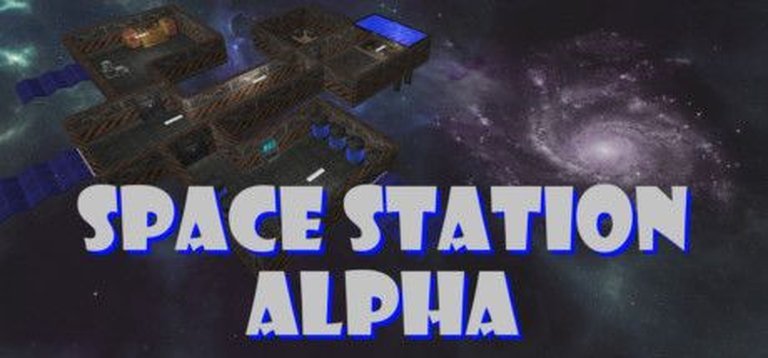
Space Station Alpha is a first-person simulation game set in a sci-fi future where players build and manage a space station in the outer reaches of the Milky Way. Starting with a small plot of space, limited credits, and a battered WorkerBot, players develop the station into various hubs like tourist centers or diplomatic epicenters, while contending with hazards such as oxygen leaks, asteroid showers, and alien blobs, and managing the diverse needs of alien customers.
Gameplay Videos
Where to Buy Space Station Alpha
Space Station Alpha Cracks & Fixes
Space Station Alpha Reviews & Reception
steambase.io (46/100): This score is calculated from 78 total reviews which give it a rating of Mixed.
Space Station Alpha (2015): A Ambitious, Flawed Odyssey in Station Management
Introduction: A Station Built on Shifting Sands
In the vast, often unforgiving cosmos of space simulation and management games, Space Station Alpha (2015) occupies a curious and poignant orbit. It is not a forgotten classic, nor a notorious failure, but rather a compelling case study of an indie developer’s soaring ambition colliding with the brutal realities of scope, technology, and sustainability. Released by the one-person (or very small) studio NuclearFirecracker, the game promised a dense, systemic experience: becoming the master of a burgeoning orbital outpost, juggling life support, alien diplomacy, and cosmic disasters. Its legacy, however, is inextricably tied to a pattern of promising ideas undermined by persistent technical debt and an eventual abandonment that left its community adrift. This review posits that Space Station Alpha is a fascinating “what could have been”—a game whose core conceits were often brilliant but whose execution was ultimately hamstrung by foundational instabilities, making it a crucial, if melancholic, data point in the history of the niche “space station sim” genre.
Development History & Context: The Solo Dev Dream Against the Unity Frontier
The Studio and Vision: NuclearFirecracker presented as a quintessential indie operation. The development history, pieced together from sparse Steam news posts and the IndieDB page, reveals a project that evolved through public iterations. From a “seventh iteration” in early 2015 featuring alien riots and rental income mechanics to the 1.01 patch just days after launch that “embiggened” the tutorial, it bears the hallmark of a passionate creator constantly reacting to player feedback. The stated vision, from the official blurb, was audacious: to create a fully 3D, first-person-accessible station builder where “the hardest thing will be managing the various needs and wants of your various squishy alien customers.” This wasn’t just another Oxygen Not Included in space; it aimed for a tangible, navigable 3D environment with a camera that could zoom from a strategic overview to an intimate, eavesdropping perspective.
Technological Constraints & The Unity Crucible: The choice of the Unity engine in 2015 was both a enabling factor and a potential chain. For a solo or tiny team, Unity offered accessibility and multi-platform deployment (Windows, Mac, Linux). However, the posts from Steam discussions from 2015 onward reveal a game struggling with the very basics of 3D simulation. The most infamous bug—”aliens dying while climbing stairs” (fixed in patch 1.01)—and the persistent reports of pathfinding failures (“bots stop working,” “get stuck under landing pads,” “robots-workers no build 2nd floor”) point to profound challenges with Unity’s NavMesh system or a custom implementation in a complex, multi-level 3D space. Managing a dynamic, three-dimensional grid with moving entities (WorkerBots, aliens, the player) is a classic hard problem in game AI. Space Station Alpha appears to have been broken by this complexity from the start.
The Gaming Landscape: 2015 was a fertile time for simulation. Kerbal Space Program was a celebrated success, and Starbound offered a different kind of sci-fi sandbox. However, the specific “build and manage a space station” niche was thin. The most direct contemporary competitor was Spacebase DF-9 (from Double Fine), which itself faced criticism for being released in an unfinished state and later abandoned. Space Station Alpha entered this space not just competing with other games, but with the high expectations set by the genre’s “legacy” titles like Dungeon Keeper and Theme Hospital, and the burgeoning demand for deep, systemic simulation. Its attempt to blend 3D navigation with deep management set it apart, but also placed it in a dangerously demanding technical bracket for its development scale.
Narrative & Thematic Deep Dive: Emergent Stories Over Written Script
Space Station Alpha has no traditional narrative. There is no campaign, no overarching plot, and no named protagonist. Its “story” is purely emergent, generated by the chaotic interactions of its systems. The thematic core is the struggle for order against entropy in a hostile environment.
- The Premise as Theme: You start with “a small bit of space… a handful of credits and a beat up old WorkerBot(tm).” This is the classic “blank slate” of the genre, but the setting—”the outer reaches of the Milky Way”—immediately establishes a frontier mentality. You are not managing a bustling core-world station; you are a pioneer in a lawless, dangerous void.
- The “Squishy Alien Customers”: The Steam description’s phrasing is key. Humans are “pioneers.” Aliens are stratified: “wealthy alien merchants,” “diplomats,” and “acid excreting monsters.” This isn’t just flavor; it’s a mechanical taxonomy. Each “squishy” race represents a different set of needs, tolerances, and potential disasters. A diplomat might require a pristine, quiet environment, while an acid monster might randomly damage hull segments. The theme here is cultural and biological conflict as a management puzzle. The station is not just a facility; it’s a fragile ecosystem of conflicting requirements.
- The Omnipresent Threat of Entropy: The narrative is written by the game’s relentless disasters. Oxygen is the primary currency of life, and it “escape[s] through every tiny hole in the hull.” This is more than a mechanic; it’s a constant, visceral reminder of your fragility. Asteroid showers are periodic, scripted cataclysms. Pirate attacks introduce external threat. The “nebulous alien blobs” from the Steam blurb likely refer to in-game hazards or hostile entities. The overarching narrative is one of perpetual crisis management, where every successful day is a temporary victory over the vacuum and violence of space.
There is no dialogue or character arc. The “characters” are the worker bots (reliable but flawed) and the alien visitors (profitable but problematic). The theme is pure systemic storytelling: your station’s layout, its success rate in keeping alive a wide array of aliens, and the frequency of hull breaches become the story of your specific playthrough.
Gameplay Mechanics & Systems: A Framework of Brilliant Ideas Burdened by Faulty Foundations
This is the section where Space Station Alpha’s noble aspirations crash most visibly into its implementation flaws.
Core Gameplay Loop: The loop is classic for the genre: Plan > Build > Manage > React. You receive periodic waves of visitors (aliens/humans). You must build private quarters, commercial centers (shops, food), utilities (oxygen generators, power), and defenses (turrets) in a 3D grid. Your income comes from rent and commercial sales. You spend on construction, maintenance, and worker bot salaries. The primary failure state is running out of money or having your entire visitor population suffocate.
Systems:
1. 3D First-Person Navigation & Camera: This was the game’s most touted innovation. You can “fly in” with a free camera to inspect your station, hear alien conversations (a nice touch mentioned in descriptions), and place modules with precision. This radically changes the feel from top-down (like RollerCoaster Tycoon) to something more akin to Viscera Cleanup Detail meets SimCity. The potential for immersion and tactical placement was huge.
2. Oxygen & Atmosphere Simulation: The “realistic airflow system” where oxygen moves through open doors and violently vents to space is a critical, elegant system. It creates natural chokepoints and risk areas. A poorly designed airlock becomes a death trap. This system is likely the most praised and well-implemented part of the game.
3. Alien Race & Needs System: The stratification of needs is conceptually strong. Managing a “Wolfman” (mentioned in patch notes) alongside a delicate diplomat creates competing demands for room type, security, and commercial offerings.
4. Disasters & Threats: Asteroid showers are a major, periodic challenge requiring active defense or rapid repair. Pirate attacks (mentioned in both Moby blurb and IndieDB) add an occasional combat/defense layer. The “acid excreting monsters” are likely a random hazard or a specific alien type that causes damage.
Innovative or Flawed Systems:
* The WorkerBot(tm) System: This is the game’s Achilles’ heel. The bots are your sole means of construction, repair, and possibly other tasks. The Steam forums are a graveyard of complaints about pathfinding. Bots “unable to head to the upper level,” getting “stuck under landing pads,” or simply failing to repair hull breaches are not edge cases; they are core, game-breaking failures. If your automated workforce ceases to function, the simulation grinds to a halt. This suggests the bot AI and the station’s navigation mesh were never truly robust. The patch note about aliens “dying while climbing stairs” and the persistent “bots not repairing” reports indicate these 3D navigation problems were fundamental and, based on the “abandoned since mid-2015” comment in a user guide, likely never fully resolved.
* Economic Balance: The descriptions imply a tightrope walk. The “handful of credits” start suggests a fragile economy. User discussions don’t delve deeply into whether the economy was too punishing or too easy, but the emphasis on “managing… wants” and the constant threat of oxygen loss suggests a game that leans toward the brutally difficult side—a trait that can be rewarding but often becomes frustrating when coupled with unreliable workers.
* UI & User Experience: The “Embiggened Tutorial” patch indicates the original tutorial was lacking. The addition of a full keymap and auto-save are quality-of-life features that arrived post-launch, hinting at an initially rough onboarding experience. The ability to “rotate the screen with middle mouse” was a requested feature, showing attentiveness to player comfort.
In summary, the gameplay is a dichotomy: a brilliant and tense oxygen/atmosphere simulation and a rich, thematic alien management system, all built upon a foundation of unreliable 3D pathfinding AI. You are given a stunningly complex toy where the pieces frequently fail to connect.
World-Building, Art & Sound: A Sparse but Evocative Vacuum
Given the game’s low poly count and modest scale (150MB install), the artistic aims are modest but thematically coherent.
- Setting & Atmosphere: The setting is pure, hard sci-fi frontier. The “outer reaches of the Milky Way” is a lonely, dangerous place. The core atmospheric tension comes not from jump scares but from the visceral fear of vacuum. The visual representation of oxygen—likely as a color-coded gas or particle effect—and the sight of a hull breach with air whooshing out is the game’s primary environmental storytelling. The station itself is a utilitarian mix of corridors, airlocks, and industrial generators.
- Visual Direction: Using Unity in 2015 for a fully 3D sim was a statement. The graphics are simple, low-poly, with a functional aesthetic. The ability to fly a camera through your creation is the visual prize. Screenshots from Steam show clean, geometric station modules against a starfield backdrop. There’s no artistic grandeur, only cold, functional geometry. This simplicity can be a strength, focusing the player on layout rather than texture, but it also contributes to a feeling of cheapness.
- Sound Design: This is a near-total blind spot in the provided sources. The patch note about changing the “Worker drill sound effect” and the mention of “volume controls” confirm a soundscape exists—likely consisting of hums, alarms, construction noises, and perhaps ambient space noise. The option to “turn off sounds” (Ctrl+M) is present in the itch.io version of a different game, suggesting it might be a common feature, but we have no analysis of its effectiveness or atmosphere-building capacity. It is a significant omission in understanding the game’s full sensory experience.
The world-building is systemic, not narrative. The station’s layout, its visible damage, the types of aliens milling about—these are the story. The art and sound serve this functional, tense atmosphere without embellishment.
Reception & Legacy: The Sound of a Station Losing Power
Launch & Critical Reception: Space Station Alpha slipped quietly onto Steam in February 2015. There is no Metacritic “Metascore” (listed as “tbd”), and no aggregated critic reviews are present on the provided sources. This indicates it operated entirely beneath the mainstream review radar. Its “Moby Score” is “n/a,” and only 15 collectors had it on MobyGames at the time of data collection—a tiny footprint. The Steam user reception is definitively Mixed (48% positive from 39 reviews at the time of data pull). This is a critical red flag; in the Steam ecosystem, a “Mixed” rating for a niche sim often signals a game with a dedicated but frustrated core audience.
Community & Post-Release Life: The Steam Community Hub is the primary source for understanding player experience. It is a museum of abandonment and bugs.
* The Status Question: Multiple threads from 2015 to 2018 directly ask the developer, “What is the development state?” The pinned post from “jakey” in February 2018 states: “I am currently working on the next update… The update should be u…” The ellipsis is ominous. The last major news post on IndieDB was the “Update 1.01” in March 2015. The user guide “Notes for the Late-Arriving Badgehunter” explicitly states: “This game has been abandoned since mid-2015.” This is the consensus on the ground.
* The Bug Catalog: Beyond pathfinding, users report: “bots keep getting stuck,” “bots not repairing asteroid holes,” “Took me two minutes to break the game.” These aren’t polish issues; they are catastrophic failures of core simulation loops. The fact that users are still in 2018 and 2020 asking how to do basic things (“How to Research and Protect From asteroids,” “How do you rotate a item”) points to an opaque or poorly explained UI, even post-tutorial update.
Legacy and Influence: In the strictest sense, Space Station Alpha has no discernible commercial or design influence. It was not a hit, it was not widely played, and it was not copied. Its legacy is cautionary.
1. The 3D Sim Pitfall: It demonstrates the immense difficulty of taking a traditionally 2D management genre (Theme Hospital, Transport Tycoon) and translating it into a full 3D space with free camera movement. The pathfinding alone seems to have been an insurmountable hurdle for the team.
2. Scope vs. Resources: It is a textbook example of an indie project whose scope—”realistic airflow,” “manage various squishy aliens,” “3D environment,” “asteroid showers”—exceeded what a single-dev or small-team project using a generalist engine like Unity could reliably deliver and support. It stands in a direct lineage with the tragic development of Spacebase DF-9, another ambitious space sim that faltered post-launch.
3. A Niche That Moved On: The genre it tentatively explores—complex station building—was later executed with vastly more resources and stability in games like Oxygen Not Included (2017), which handled gas/heat simulation and dupe (crew) AI with legendary depth and polish. Stationeers (2018) offered an even more hardcore, physics-based 3D station building experience. Space Station Alpha‘s specific blend of features was not unique enough to sustain interest against these better-realized competitors.
Conclusion: A Monument to Unfulfilled Potential
Space Station Alpha is not a “bad” game in the sense of being offensive or fundamentally broken on first glance. It is a sad game. Its vision—a tense, atmospheric, 3D-manageable space station where every breath is a resource and every alien is a puzzle—is compelling and, in flashes, successfully realized. The oxygen simulation stands as a genuinely smart, systemic piece of design.
However, this vision is grounded in sand. The game is brought to its knees by non-negotiable technical failures, primarily in AI pathfinding and station navigation. These are not “quirks”; they are fatal wounds to a management sim, where automated workers are the circulatory system. When your WorkerBots cannot reliably reach the upper deck to repair an asteroid breach, the entire simulation collapses. Coupled with a lack of post-launch support and a transparent abandonment by mid-2015, these flaws turned a rough-around-the-edges gem into a empty, unplayable shell for many.
Its place in history is as a gravestone on the path to Oxygen Not Included. It proves that the idea of a “3D oxygen management sim” is not inherently flawed, but that the execution requires a level of AI, optimization, and systemic stability that eluded NuclearFirecracker. For historians and collectors of ambitious failures, Space Station Alpha is a significant artifact—a stark reminder that in game development, a brilliant core loop is not enough. The scaffolding must be sound, or your magnificent station will not just lose oxygen; it will lose its reason to exist. It is a tribute to ambition that remains, frustratingly, forever stuck in the docking bay, its systems flickering uncertainly, waiting for a repair crew that will never come.
Final Verdict: 5/10 – A profoundly flawed artifact with a brilliant heart. A must-study for students of game design failures, but an unrecommended experience for players seeking a functional management sim.