
- Release Year: 2023
- Platforms: Macintosh, Windows
- Genre: Adventure, Simulation
- Perspective: First-person
- Setting: Contemporary
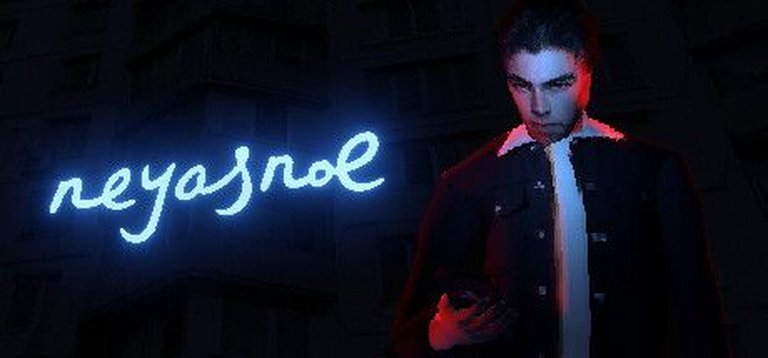
Description
Neyasnoe is a first-person adventure and simulation game set in a bleak, contemporary wasteland. Players explore grim environments like abandoned garages and a nightclub under a vast gray sky, guided by techno trance music and white poetic verses. With its stylized pixel graphics, 1990s aesthetic, and philosophical themes, it offers an atmospheric walking simulator experience for a lost generation.
Gameplay Videos
Where to Buy Neyasnoe
PC
Neyasnoe Guides & Walkthroughs
Neyasnoe Reviews & Reception
steamcommunity.com : The conversations with the NPCs are very thought-provoking and have a much deeper meaning most of the time.
Neyasnoe: A Stroll Through the Wastelands of the Soul
Introduction: The Gray Sky of a Generation
In the vast, often homogenous landscape of indie gaming, a title occasionally emerges that feels less like a product and more like a transmission—a distress signal or a melancholic postcard from a specific time, place, and state of mind. Neyasnoe, released in August 2023 by the Russian duo sad3d and ИЛЬЯМАЗО, is precisely such a transmission. It is not a game about grand quests or heroic victories, but about the quiet, desperate, and sometimes beautiful rituals of existence in a liminal, decaying world. From the creators of the similarly stark It’s Winter and Routine Feat, Neyasnoe refines their signature aesthetic into a potent, first-person exploration of post-Soviet melancholy, addiction, and the fragile search for meaning. This review argues that Neyasnoe is a pivotal work in the “ambient walking simulator” genre, using minimalist mechanics and a deeply specific atmosphere to create an experience that resonates as a profound cultural artifact—a digital fin-de-siècle painting come to life, where the gameplay is merely the vehicle for an overwhelming emotional and philosophical atmosphere.
Development History & Context: born from decay and godot
The development history of Neyasnoe is as elusive as its narrative. Created by the collaborative entity sad3d and the individual developer ИЛЬЯМАЗO (Ilya Mazo), the project follows their earlier works, most notably It’s Winter (2022), which established their reputation for crafting suffocatingly lonely, bureaucratic, and existential experiences from mundane settings. Neyasnoe represents a logical evolution: moving from the isolated, indoor despair of a single apartment to the sprawling, desolate urban landscape of a nameless post-Soviet city.
Technologically, the game was built in the Godot Engine, a choice that speaks to the independent, resourceful nature of its creators. The system requirements are notably minimal (a hallmark of many indie and “lo-fi” aesthetic projects), demanding only a DirectX 9-capable machine with 512MB of RAM. This technical austerity is not a limitation but a deliberate stylistic foundation. The developers embraced constraints to forge a visual language that is both retro and eerily contemporary, a topic explored further in the Art section.
Crucially, Neyasnoe emerges from a specific moment in Russian and Eastern European indie game development. It shares DNA with other “post-Soviet surreal” titles like Babbdi (mentioned in the Rock Paper Shotgun review) and the works of other Russian developers exploring similar themes of urban decay and existential drift. Its release in 2023 places it after the peak of the “walking simulator” boom (circa 2013-2017 with titles like Gone Home and Firewatch) but during a period where the form has matured, allowing for more experimental, niche, and culturally specific takes. Neyasnoe eschews Western, narrative-driven storytelling for a more fragmented, vignette-based approach heavily influenced by the literary and cinematic traditions of Russian melancholy and “smesh” (a complex sense of bleak absurdity).
Narrative & Thematic Deep Dive: White Verses in a Gray Sky
Neyasnoe possesses a narrative structure that is intentionally elusive, more akin to a collection of poetic fragments or a surrealist film than a traditional three-act story. The player is an unnamed protagonist navigating a nonlinear series of districts—suburbs, a nightclub, a kebab shop, a clinic, a bookstore—linked by overarching themes rather than a plot.
Plot as Atmosphere: There is no conventional “plot” to uncover. The “objective” in each area is simply to find the transition point to the next, often signaled by a light or an NPC’s hint. This design forces the player to engage with the world on its own terms. The narrative is not told; it is inhabited and accumulated through interactions and environmental storytelling.
Characters as Philosophical Vessels: The NPCs are the primary carriers of the game’s thematic weight. They are not fleshed-out individuals with backstories but exist as purveyors of profound, often devastating, existential dialogue. The taxi driver’s monologue, prominently featured in the NamuWiki entry, is a masterpiece of in-game writing:
“Look around, everything is the same. We’re all empty and lifeless, afraid to face the truth… I need to wake up now, someone needs to answer the bell, but I don’t know how.”
This speech encapsulates the core themes: existential inertia, societal decay, and the blurred line between waking life and a perpetual, drunken dream. Other conversations, as noted in the Rock Paper Shotgun review, delve into “the difference between helplessness and despair” and the hope for the world’s end. These are not naturalistic dialogues; they are philosophical white verses—stark, poetic, and brutally honest—set against the “flying plastic bags” and “huge gray sky.”
Core Themes:
1. Loneliness & Escapism: This is the central axis. The player’s stats—Loneliness, Reflection, and Corporeality—mechanize this theme. Interacting raises Loneliness (paradoxically), smoking lowers Corporeality. The nightclub, dancing, and drinking are presented not as joyful recreation but as desperate, communal rituals to stave off the crushing void. The game posits that in a “lost world,” these vices are the only available tools for connection and self-annihilation.
2. Addiction as Ritual: Smoking, drinking, drug use, and even “petting plague rats” (which gives “+1 Plague”) are framed as repetitive, meaningful actions. They are the gameplay loop, the way to “progress” numerically and emotionally. The autodancing mechanic—where intoxication triggers a clumsy, automatic dance—brilliantly translates the loss of motor control and temporary ego dissolution into a memorable, almost tragic, gameplay moment.
3. The Search for Meaning in a Meaningless System: The game’s world is a collection of functional, decaying places (a kebab shop, a clinic, a club). The search for “meaning” is presented as fruitless within these systems. The taxi driver’s lament about his endless route, “I just happened to do it. I had no other choice,” speaks to a post-Soviet generation trapped in cycles of economic and existential inertia. The “meaning” found is in the transient moments of connection, however bleak, and in the aesthetic appreciation of the decay itself.
Gameplay Mechanics & Systems: Simulating Despair
Neyasnoe operates as a first-person simulation sandbox with walking simulator underpinnings. Its genius lies in how its mechanics serve its themes, directly subverting traditional game design.
Core Loop & Interaction: The player explores interconnected, semi-open areas. Interaction is context-sensitive (a single button). Actions include: talking to NPCs, buying/stealing items (kebabs, drinks), smoking cigarettes, consuming drugs (which alters vision/movement), dancing on club floors, and petting giant plague rats. The objective is purely exploratory and experiential: to absorb the world and its emotional states.
Stat System as Theme: The three (or four, including Plague) hidden stats are the game’s most innovative system.
* Loneliness: Increases during conversations and certain actions. It’s a cruel mirror—the more you seek connection, the more isolated you feel measured to be.
* Reflection: Gained through contemplation, perhaps from observing the environment or certain items. Represents introspection.
* Corporeality: Lowered by smoking. Represents a detachment from the physical self, a numbing of the body.
* Plague: Incurred by interacting with the rats. A literal and metaphorical infection of the environment and self.
These stats have no visible “benefit” or “penalty” in a traditional sense. They don’t unlock abilities. They are *purely diagnostic and atmospheric. Tracking them turns the playthrough into a meta-commentary on the character’s psychological state. They ask the player: Are you aware of how your actions reinforce your despair?
Immersion & Flaws: The autodancing is a standout feature, hailed in reviews as superior to many AAA implementations. The drunk movement physics are praised for their authenticity. However, the Steam community discussions and the Saibot review note performance issues (“noticeable places where performance could be improved,” “rooftop framedrops”), a common challenge for small teams working with real-time 3D environments on a budget. The lack of clear objectives is a deliberate design choice but can read as a flaw to those expecting traditional structure. The short length (~1 hour) is a consistent point of critique regarding its $9.99 price point, though proponents argue its intensity justifies the cost per minute of impact.
World-Building, Art & Sound: The Brutalist Dreamscape
Neyasnoe’s world is its greatest asset, a masterclass in cohesive, thematic environmental design.
Visual Direction & The “PS1 Aesthetic”: The game employs a low-poly, low-resolution texture style reminiscent of late-90s/early-2000s 3D games (the “PS1 aesthetic” or “dot-matrix filter”). However, as the Rock Paper Shotgun review brilliantly observes, it combines this with the draw distance and detail density of modern games. This hybrid creates a striking visual paradox: the models are simple and blocky, but the world feels vast, detailed, and real. The Brutalist architecture—concrete blocks that “curl inwards at the edges like wilting leaves,” “spiralling corridors”—is not just a setting; it embodies the oppressive, decaying, and psychologically distorted nature of the city. The “huge gray sky” is a constant, oppressive character. The option to toggle the pixelation filter on or off allows players to choose their preferred level of abstraction, directly impacting the game’s “uncanny” or “dreamlike” quality. The NamuWiki notes it’s not truly “uncanny valley” but uses its techniques, situating it in a space of stylized, poetic realism.
Sound Design & Music: The techno trance music is not background ambiance; it is a narrative force. It pulses through the club scenes, representing the frantic, repetitive, and ultimately hollow beat of escapism. The “white verses”—the stark, poetic dialogue—are delivered with a flat, radio-announcer clarity (voiced by the developers themselves, per the credits), contrasting with the dense, melodic music and the environmental sounds of wind and city ambience. This audio palette creates a powerful dissonance that mirrors the thematic tension between inner turmoil and external numbness.
Atmosphere & Setting: The setting is explicitly contemporary post-Soviet (2010s-2020s), though with a surreal, possibly slight retro-futuristic edge that amplifies the feeling of everything being “old and worn-down.” The “wastelands” are not nuclear but emotional and societal. The “grim folks behind garages,” the “plague rats,” the flying plastic bags—these are the symbols of this decay. The world feels both hyper-specific (to a post-Soviet urban experience) and universally abstract (a city of the soul). It is this specificity that grants the game its profound cultural resonance, as noted in the Steambase analysis, where players from post-Soviet backgrounds feel a deep, personal connection.
Reception & Legacy: The Cult of the Melancholy
Neyasnoe was not a mainstream blockbuster but has garnered a significant cult following and exceptionally strong user reception. On Steam, it holds a “Very Positive” rating with 93% approval from over 380 reviews at the time of writing. This starkly contrasts with the near-total absence of official critic reviews (Metacritic shows “tbd” for both critic and user scores, and MobyGames lists a single player review). Its success is purely word-of-mouth and community-driven, a testament to its power within its target audience.
Critical Consensus (from available reviews): The Rock Paper Shotgun review called it “excellent,” praising its ability to conjure a “powerful mix of emotions” and its superior drunk mechanics. The Saibot review on Steam awarded it 8/10, calling it “a weird midnight snack” that is “visually striking and bizarre,” while critiquing its price-to-length ratio. The Steam community discussions are a mix of technical support queries (“Lagging :(” “Game crashes”) and profound, poetic reflections, such as the user “Je/s/us” stating “Neyasnoe is a glimpse into a young middle-class slav life.”
Legacy & Influence: Neyasnoe’s legacy is twofold:
1. Within the “Art Game” / Walking Simulator Genre: It stands as a prime example of the form’s potential for dense philosophical and cultural expression. It pushes further into systemic theme-expression (via the stat mechanics) than most. It will likely be studied alongside It’s Winter as a key work in the “post-Soviet indie” sub-category.
2. Cultural Artifact: Its most lasting impact may be as a digital anthropological document. It captures a very specific Zeitgeist—the existential mood of a certain generation in a certain region—with an authenticity that transcends its interactive medium. The famous dialogues from the NamuWiki entry function like modern folk poetry. Its influence will be less about gameplay mechanics borrowed and more about permission—it validates the exploration of deep melancholy, cultural specificity, and anti-escapist themes in interactive spaces.
The short playtime and high price-point are its main barriers to wider adoption, but for its adherents, these are features, not bugs. Its “replay value” is in returning to its atmosphere, much like revisiting a favorite album or film.
Conclusion: A Definitive Verdict on a Definite World
Neyasnoe is not for everyone. It offers no power fantasy, no clear resolution, and no traditional “fun” in the commercial sense. Its value lies in its unwavering commitment to a singular, desolate vision. It is a game that asks you to feel a place and a psychological state rather than to solve or conquer it.
From a historical perspective, Neyasnoe represents a maturation of the walking simulator into a pure atmospheric conduit. It discards even the light puzzle-solving or narrative framing of its predecessors to focus on the raw experience of being-in-a-world. Its use of minimalist mechanics to embody complex themes (the stat system), its fusion of retro aesthetic with modern scale, and its deeply rooted cultural specificity make it a landmark title in the canon of artful indie gaming.
It is flawed—performance could be smoother, its length feels brittle at its asking price. Yet, within its compact, gray-skied world is a universe of feeling. The final image—a lone figure, perhaps dancing drunkenly on an empty club floor, perhaps staring at the sky, perhaps just standing in a wasteland with a plague rat curled at their feet—is one of the most hauntingly complete conclusions in recent gaming. Neyasnoe is not a game you finish. It is a mood you carry with you. For its courage to be so definitively, uncompromisingly Neyasnoe, it earns its place as a minor, indelible classic.
Final Score: 8/10 – An essential experience for those seeking video games as a medium for profound atmospheric and philosophical expression, albeit a brief and expensive one.