
- Release Year: 2023
- Platforms: Nintendo Switch, PlayStation 4, PlayStation 5, Windows, Xbox One, Xbox Series
- Publisher: GameMill Entertainment LLC
- Developer: Bamtang Games SAC
- Genre: Action
- Perspective: 3rd-person
- Gameplay: Bending, Combat, Puzzles
- Setting: Fantasy
- Average Score: 43/100
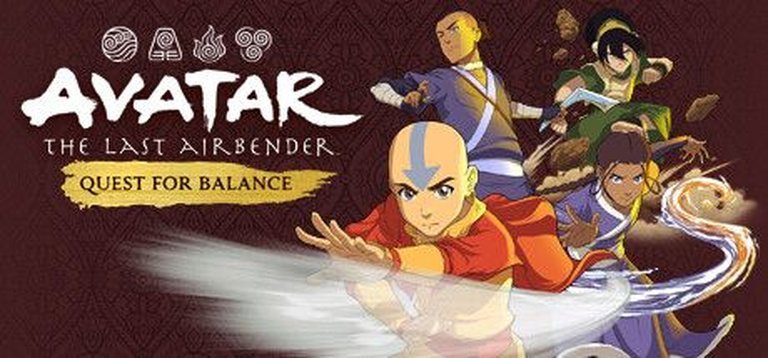
Description
Avatar: The Last Airbender – Quest for Balance is an action-adventure game set in the richly imagined fantasy world of the beloved animated series. Players experience pivotal moments from the show across 18 chapters, following Aang and his friends as they master elemental bending to maintain balance in a world threatened by conflict.
Gameplay Videos
Where to Buy Avatar: The Last Airbender – Quest for Balance
PC
Avatar: The Last Airbender – Quest for Balance Free Download
Avatar: The Last Airbender – Quest for Balance Guides & Walkthroughs
Avatar: The Last Airbender – Quest for Balance Reviews & Reception
ign.com : Quest for Balance is easily the worst adaptation of the series since M. Night Shyamalan’s abysmal live-action movie.
metacritic.com (40/100): We haven’t quite been waiting 100 years for an Avatar game that lives up to the potential of the show, but it’s certainly beginning to feel that way after playing Avatar: The Last Airbender – Quest for Balance.
opencritic.com (40/100): Avatar: The Last Airbender – Quest for Balance is a mess, with clunky combat, way too many pointless puzzles, and baffling choices for which scenes from the series to highlight.
comingsoon.net (50/100): While Avatar: The Last Airbender – Quest for Balance never really impresses, it winds up becoming aggressively fine as it goes on and expectations are lowered.
Avatar: The Last Airbender – Quest for Balance: A Missed Appointment with Destiny
For over a decade and a half, fans of Avatar: The Last Airbender have waited for a video game adaptation that could capture the essence of Michael Dante DiMartino and Bryan Konietzko’s masterpiece. From the simplistic beat-’em-ups of the mid-2000s to the competent but narrow action of The Legend of Korra by PlatinumGames, the promise has always been greater than the delivery. Avatar: The Last Airbender – Quest for Balance, developed by Peru-based Bamtang Games and published by GameMill Entertainment in September 2023, arrived with the tantalizing pitch of a full three-season retelling in aLEGO Star Wars-style action-adventure. It promised co-op, puzzle-solving, and a chance to master the elements. What it delivered, instead, was a profound lesson in squandered potential, a title that stands as a case study in how not to adapt one of modern animation’s most revered works. This review will dissect Quest for Balance not merely as a flawed game, but as a cultural artifact representing the low ebb of licensed software—a product of constrained ambition, disjointed design, and a fundamental misunderstanding of its source material’s soul.
1. Introduction: The Weight of a Hundred-Year Wait
The central, unshakable thesis of this review is this: Avatar: The Last Airbender – Quest for Balance is a failure not because it is technically broken (though it often is), but because it is thematically vacant. It possesses the literal plot points of its source material but none of its spirit. The game takes the epic, character-driven narrative of a nation at war, a boy’s journey to responsibility, and a profound exploration of balance, and reduces it to a repetitive, puzzle-box grind. It systematically replaces cinematic tension and emotional catharsis with environmental puzzles and fetch quests. In the pantheon of Avatar media, it occupies a space of profound disappointment, arguably the most ill-conceived major release since M. Night Shyamalan’s 2010 film. This analysis will argue that its failures are rooted in a catastrophic misalignment of design philosophy with narrative intent, exacerbated by a clear lack of development resources and a producer’s mindset focused on checklist completion over artistic coherence.
2. Development History & Context: A Studio Out of Its Depth
To understand Quest for Balance, one must first understand its creators. Bamtang Games, a studio based in Lima, Peru, had previously built a niche for itself with the Nickelodeon Kart Racers series. Their expertise lay in approachable, colorful, Family-friendly racing games with light combat elements. There is no evidence in their portfolio of any prior attempt at a third-person action-adventure game with a focus on narrative, complex ability-based progression, or intricate environmental puzzles. The shift from kart racing to a sprawling, 18-chapter epic is a monumental leap in scope and genre.
The publisher, GameMill Entertainment, has a well-documented reputation for producing inexpensive, licensed “shovelware” for younger audiences. Their catalog includes titles like Cobra Kai 2: Dojos Rising and Nerf Legends, games often criticized for being functional but profoundly unambitious cash-ins. The pairing of a studio inexperienced in the genre with a publisher known for low-budget, high-volume releases set a clear, pessimistic expectation for the project’s creative and financial scope.
The technological constraints are evident throughout. Released in September 2023 for current and last-gen consoles (PS4/5, Xbox One/Series X/S, Switch, PC), the game’s visual presentation is reminiscent of a late-PS3/early-PS4 title. Character models are stiff, animations are repetitive and often glitchy (with reports of NPCs using invisible tools), and environments range from bland to garish. The reliance on a small number of enemy types recycled across hundreds of encounters speaks to asset limitations. The decision to use a fixed, often obstructive camera, a common cost-saving measure in lower-budget 3D games, becomes a critical flaw in a game requiring precise platforming and combat targeting. The technological era did not excuse these issues; it highlighted them as symptoms of a project greenlit with insufficient resources for its stated ambitions.
3. Narrative & Thematic Deep Dive: Where the Story Goes to Die
If the core of Avatar is its story, then Quest for Balance commits a cardinal sin. The game structures its retelling around 18 chapters, spanning from the beginning of Book One: Water to the end of Book Three: Fire. The framing device involves members of the White Lotus (seemingly Iroh and others) narrating Aang’s tale. This is a promising start, evoking the series’ own flashbacks and historical weight. However, the execution is catastrophic.
Abridgment as Obfuscation: The narrative is not adapted; it is gutted. The IGN review provides the clearest example: Aang’s first entry into the Spirit World—a pivotal, metaphysical turning point—is reduced to a single paragraph of text between stages. This is not an isolated incident. Majorplot arcs, like the capture of Team Avatar by the Fire Nation or the entire Earth Kingdom liberation arc, are summarized in text boxes or brief, poorly animated 2D static cutscenes. The game replaces cinematic sequencing with expository telling. The lived experience of the show—the tension, the dialogue, the character moments—is stripped away, leaving only a skeletal plot outline. For newcomers, the story is utterly incomprehensible. For fans, it is an insult, highlighting the most banal elements while erasing the iconic.
Baffling Scene Selection & Repetition: The game’s level design reveals a profound lack of understanding of dramatic structure. Three of the first four chapters feature almost identical boss fights against Prince Zuko. The terrifying forest spirit Hei Bai is not a climactic battle of elemental fury but a sliding block puzzle. This pattern repeats: iconic set-pieces and villains are transformed into mundane, repetitive activities. The philosophy seems to have been “find a memorable location or character from the show and force a pre-existing gameplay template—usually a box puzzle—onto it.” The thematic weight of the Fire Nation’s invasion, the spiritual gravity of the Spirit World, and the personal stakes of Zuko’s redemption are all flattened into interchangeable mission objectives.
Character Absence & Misuse: Despite a roster of nine playable characters (Aang, Katara, Sokka, Toph, Suki, Blue Spirit/Zuko, Iroh, King Bumi), the narrative gives most of them short shrift. Characters like Suki and the Blue Spirit appear only in a handful of chapters, making investing in their skill trees feel pointless. The voice acting, provided by a cast of soundalikes (as per IMDb credits), is serviceable but lacks the iconic performances of the original series, further severing emotional connection. The only consistent narrative through-line is the White Lotus narration, which often feels like a lazy afterthought to paper over the gaps.
In essence, the game’s narrative is a greatest hits montage played on a broken jukebox. It has all the right notes but plays them in the wrong order, at the wrong tempo, and with the wrong instrument.
4. Gameplay Mechanics & Systems: The Grind of Elements
Gameplay in Quest for Balance is a trinity of flawed systems: clunky combat, pervasive puzzles, and a progression scheme undermined by both.
Combat: A Button-Masher’s Paradise (or Hell): The combat system is the game’s most consistent failure. It is described universally across reviews (IGN, Games Asylum, GameCreed) as clunky, messy, and chaotic. The core loop involves lock-on targeting, dodging, and light/heavy attacks, but the implementation is deeply unsatisfying.
* Lack of Fluidity: There is no sense of weight or impact. Hitboxes are notoriously inaccurate, leading to wild swings that miss their mark. The screen frequently becomes an illegible blur of particle effects from water, earth, fire, and air attacks.
* Strategic Vacuum: Depth is absent. The IGN review notes the optimal strategy was often “button bash to victory.” The only tactical considerations involved occasionally using a cooldown-based special ability (Katara’s ice trap, Sokka’s boomerang stun) or managing the party’s shared health, as any single KO means a game over. Swapping characters mid-battle has a noticeable, frustrating delay.
* The Sokka Paradox: The most damning indictment of the combat balance is that Sokka, the non-bender, is consistently the most powerful character. His attack speed and power surpass all benders, and his skill tree includes an ability making him immune to knockdowns—a status effect that plagues the rest of the cast. This isn’t just an imbalance; it’s a fundamental rejection of the series’ core power fantasy. Why would any player choose to be Aang, the Avatar, when Sokka is a more reliable fighter?
Puzzles: The Sisyphian Labor: If combat is the forgettable chorus, environmental puzzles are the never-ending, tedious verse. The game’s design is dominated by two types:
1. Block-Shoving/Pressure Plate Puzzles: The absolute staple. These range from trivial to mildly complex but are almost universally thematically irrelevant. The IGN review’s sarcastic refrain—”solve a sliding block puzzle”—becomes a mantra for the experience.
2. Torch & Elemental Pathway Puzzles: Labyrinthine sequences where the player must manipulate water jets, create ice ramps, or move fire sources to light braziers while holding a torch—a mechanic that laughably prevents jumping. These are not tests of bending mastery but of patience and spatial reasoning in service of padding.
The Games Asylum review calculated that “around half of Quest for Balance’s surprisingly lengthy 15-16 hour runtime is spent” on such puzzles. They increase in scale but rarely in satisfaction, becoming a monotonous chore rather than a welcome change of pace.
Progression & Systems: The skill tree system, using Pai Sho tiles collected from quests, is one of the few mechanically sound ideas. It offers meaningful choices between stat bumps and character-specific abilities. However, as IGN astutely noted, it ultimately didn’t matter because combat was so shallow that optimization was pointless. The system also includes “trap” options, letting you invest in characters like Suki who have minimal story presence. The in-game economy is broken; as multiple reviews (IGN, user reviews on Steam) noted, healing items sell for more than they cost, creating a trivial infinite-money exploit that nullifies the value of most exploration rewards.
Co-Op: A Well-Intentioned Afterthought: The 2-player local or online co-op is a significant selling point but is horribly implemented. As Games Asylum detailed, the second player cannot join mid-session; they must wait for a save statue and select a confusing “Change Character” option. More critically, the second player is often at a severe disadvantage, unable to upgrade their character or see crucial dialogue, making the experience functionally hostile for the guest.
5. World-Building, Art & Sound: A Cartoon Without Soul
The game’s presentation is a study in contradictory signals—moments of charming nostalgia buried under a mountain of technical mediocrity.
Visual Direction & Art Style: Bamtang attempted to replicate the show’s distinct anime-influenced, cartoon aesthetic. The bright color palette and character designs are recognizable. In certain environments, like the reflective waters of the Beifong estate or the aurora borealis at the North Pole, there is a flashes of beauty (noted by GameCreed). However, these are the exception. Most locales are drab, cavernous, or overly busy. Character animations are notoriously stiff and unfinished, with walk cycles described as desperate and facial expressions non-existent. The 3D in-game models lack the expressive simplicity of the 2D show, creating an uncanny valley effect for a cartoon. The UI and menus are competent but generic.
The Cutscene Dichotomy: This is the art’s greatest schism. The 2D animatic cutscenes used for chapter intros and key transitions, while brief, are actually praised as “pretty cute” (IGN) and effectively convey a storybook feel. They use a style reminiscent of the show’s production art. Conversely, the 3D in-game cinematics are “far from cartoon quality” (Games Asylum) and are used sparingly. The decision to rely on text boxes and static images for major plot points instead of even these subpar 3D scenes is a baffling cost-cutting move that destroys narrative momentum.
Sound Design & Music: The soundtrack is universally panned as forgettable background noise. It fails to capture the cultural inspirations and emotional range of Jeremy Zuckerman’s iconic series score. The voice acting, while performed by a new cast, receives mixed-to-positive notes from some quarters for being decent soundalikes (e.g., Azula’s essence captured). However, without the original cast and with so little spoken dialogue integrated into the gameplay itself (much is narrated), this element adds little value. The sound design for bending abilities and combat is adequate but unremarkable, blending into the chaotic mess of battle.
6. Reception & Legacy: The Critic and Player Verdict
Quest for Balance arrived to near-universal derision.
* Critical Reception: The aggregate MobyGames score is 5.0/10, ranking it in the bottom 8% of all games on the site. Individual critic scores ranged from 10% (Phenixx Gaming) to 70% (PS4Blog.net), with a clear cluster in the 30-50% range. IGN’s 4/10 and Metacritic’s “Generally Unfavorable” user score (4.1/10 from 35 ratings) reflect the consensus. Common critical pillars of critique were: disjointed storytelling (TheXboxHub), clunky combat (IGN, NoobFeed), excessive and irrelevant puzzles (Games Asylum), and a high price for low quality (GameCreed, The Koalition).
* Player Reception: Steam user reviews are “Mostly Negative” (33% positive) from over 220 reviews. The most helpful reviews echo the critics: complaints about bugs, poor combat, the $49.99 price tag, and the story being a mess for non-fans. A small contingent of defenders exists, typically citing nostalgia and a belief it’s “better than the previous games,” but they are outliers. The IMDb rating of 2.7/10 further underscores the disconnect between its existence and fan desire.
* Legacy & Industry Context: Quest for Balance has no meaningful legacy beyond serving as a cautionary tale. It demonstrates what happens when a beloved IP is handed to a studio without the mandate, resources, or vision to honor it. Its existence makes the superior (if flawed) The Legend of Korra by PlatinumGames look like a masterpiece by comparison. In the wider industry, it fits squarely into the “GameMill Entertainment shovelware” archetype—a product designed for store shelves, specifically to catch the eye of uninformed parents or impulse buyers during holiday seasons. With new Avatar projects (a live-action series, more comics) on the horizon, this game stands as a bizarre, low Point: Why does such a poorly executed adaptation exist at a time of peak franchise interest? The answer likely lies in the economics of cheap licensed deals and the relentless pursuit of a quick profit margin over brand stewardship.
7. Conclusion: The Search Continues
Avatar: The Last Airbender – Quest for Balance is not merely a bad game. It is a profound misunderstanding. It misunderstands that the power of Avatar lies not in its location names or character rosters, but in its pacing, its character relationships, and the feeling of bending—a fluid, graceful, integrated martial art. It replaced dynamic combat with stiff button-mashing, spiritual journeys with block puzzles, and epic war stories with fetch quests. The framework for a decent game is faintly visible: the chapter structure, the character variety, the occasional clever puzzle. But these bones are covered in a flesh of repetitive design, technical jank, and narrative vacuity.
Its place in video game history is secure, but not enviable. It is a benchmark for failure in licensed adaptations, a title that will be cited for years as an example of how to waste a golden opportunity. It argues powerfully that some properties are too rich, too nuanced, and too dearly loved to be entrusted to a factory-like development process. The wait for a truly great Avatar game continues, lengthened by the 15-16 hours (or nine, if you rush) of disappointing, puzzle-box mediocrity that is Quest for Balance. For dedicated fans, the only advice is to let this one sink into the Spirit World archives, unplayed. For the industry, the lesson should be clear: destiny is not a checklist. Balance is not achieved by shoehorning disparate mechanics together. And some legends deserve infinitely better.
Final Verdict: 2.5/10 — A catastrophically flawed adaptation that fails on every fundamental level: narrative, gameplay, and technical polish. It is an insult to its source material and a disservice to fans, representing the absolute nadir of Avatar video games.