
- Release Year: 2003
- Platforms: Windows
- Publisher: Twilight Software
- Developer: Twilight Software
- Genre: Adventure
- Perspective: 1st-person
- Game Mode: Single-player
- Gameplay: Conversation, Exploration, Inventory, Puzzles
- Setting: Bushlands, Oceania, Sydney
Description
The Sydney Mystery is a first-person adventure game with puzzle elements, set in Sydney, Australia. Players take on the role of the niece of a kidnapped retired private investigator, exploring over 17 authentic locations—including the Opera House, Harbour, and bushlands—through full-motion video, interactive exploration, and inventory-based puzzles to solve the mystery.
Gameplay Videos
The Sydney Mystery Free Download
The Sydney Mystery Guides & Walkthroughs
The Sydney Mystery Reviews & Reception
gameshub.com : Decades on, The Sydney Mystery is a surprisingly engaging game that carries a load of nostalgia.
gameboomers.com : I enjoyed the game footage that was used and would say that overall the graphics were a plus for the game.
The Sydney Mystery: A Cult FMV Artifact Forged in Blue-Chip Nostalgia
Introduction: The Unlikely Time Capsule
In the vast, oft-dismissed cemetery of full-motion video (FMV) adventure games, The Sydney Mystery (2003) resides as a curious, oft-overlooked headstone. Conceived not in a California studio but in the bedrooms and backstreets of Sydney, Australia, on a budget that wouldn’t cover a week’s catering on a AAA title, it is a game that defies easy categorization. It is neither a forgotten masterpiece nor a so-bad-it’s-good triviality. Instead, it stands as a poignant, deeply personal artifact—a passionate letter from a young developer to the adventure genre he loved, stamped with the indelible, unpolished charm of its era and locale. This review argues that The Sydney Mystery’s true significance lies not in its narrative coherence or mechanical innovation, but in its role as a raw, unfiltered document of early-2000s indie DIY spirit and a uniquely specific, frozen-in-amber portrait of Sydney. It is a game that must be understood through the twin lenses of severe constraint and profound local affection, a flawed gem whose value is measured more in historical texture than in polished gameplay.
1. Development History & Context: The $500 Dream
The Solo Auteur and His Engine
At the heart of The Sydney Mystery is Brendan Reville, a figure who embodies the archetype of the lone wolf developer. Inspired by the story-driven classics of Sierra and LucasArts, Reville set out in 2000 to create not just another FMV game, but “a first-person adventure game that just happened to have been photographed and filmed on location.” This philosophical distinction is crucial. While contemporaries like Phantasmagoria or The 7th Guest used video as cinematic spectacle, Reville sought to use it as environmental texture. To realize this vision, he built the entire game from the ground up, single-handedly programming the Adventure Game Engine (AGE)—a custom tool that handled the interface, video playback, inventory, and map systems. As documented in the Independent Games Festival submission and Wikipedia, this three-year odyssey saw Reville wear every hat: designer, writer, programmer, photographer, filmmaker, composer, sound designer, QA tester, demo-maker, webmaster, and PR agent.
The Austerity of Innovation
The project’s documented production budget of approximately $500 is not a rounding error; it is the central, defining fact of its existence. This constraint dictated every creative decision. Cameras were borrowed—a wide-angled SLR from Shanno Sanders, a digital video camera with a shotgun mic from Paul Fiore. The cast of 11 characters were friends and friends-of-friends, with only one having prior acting experience. Locations were secured through personal connections (“Locations Courtesy of” lists names like Eileen Shannon and Sam Tarlington). There was no money for professional lighting, continuity supervision, or soundstage control. The resulting technical “flaws”—the scorching white balance of early digital stills, the inconsistent time-of-day between adjacent locations, the ambient wind noise drowning dialogue—are not bugs but the inevitable, authentic features of a toolset born of necessity. This context transforms perceived shortcomings into evidence of a remarkable, resourceful execution.
The 2003 Gaming Landscape
Released in April 2003 for Windows, the game emerged into a transitional period. The golden age of classic point-and-click adventures had waned, and 3D graphics dominated the conversation. FMV, once revolutionary, had become a pariah sub-genre, synonymous with low-budget schlock and gameplay interruption. Against this tide, The Sydney Mystery was a stubbornly analog, photography-based homage to a fading form. Its simultaneous release window saw titles like The Legend of Zelda: The Wind Waker and Knight’s of the Old Republic, highlighting its niche, almost anachronistic positioning. It was a game for the dwindling tribe of pure adventure fans, and more specifically, for those with a connection to its setting.
2. Narrative & Thematic Deep Dive: A Plot Thickened by Reality
Synopsis and Structural Pacing
The plot, as summarized across MobyGames and Wikipedia, is straightforward: a woman returns to her home in the affluent Sydney suburb of Kirribilli after traveling abroad, only to find her uncle—a retired private investigator—missing following a disturbing voicemail. Concurrently, a series of mysterious bombings plagues the city, most notably at the Sydney Opera House. The player must explore Sydney, from the urban core to the bushlands, interviewing a cast of 11 characters to-piece together the conspiracy linking the two events.
The narrative is delivered through a combination of the narrator’s (Liz Bourke) flat, descriptive commentary and live-action dialogue scenes. Reviews consistently note its predictability and rushed climax. Just Adventure’s Alex Tait describes it as akin to “buying a CD after hearing a good song on the radio, only to find the rest of the songs are not near as good.” Adventure Gamers is more brutal, calling the story “more shockingly blunt than I could ever imagine,” with significant plot elements resolved hastily. This suggests a narrative that successfully establishes a compelling mystery hook but lacks the writerly depth or pacing to sustain it through a full game, potentially a casualty of Reville’s singular focus on production over script polishing.
Themes: Post-9/11 Anxiety and Local Identity
Where the narrative gains unexpected gravity is in its unintentional, yet potent, reflection of its time. As astutely noted in the GamesHub retrospective, the game’s backdrop of bombings taps directly into the post-9/11 and post-Bali (2002) atmosphere of fear and suspicion that permeated Australia in the early 2000s. The game doesn’t deeply interrogate this theme, but its mere presence—the visceral anxiety of a threatened iconic landmark—lends it a historical weight that many later, more fantastical games lack. This is juxtaposed with the game’s other primary thematic drive: tourism and civic pride. The entire enterprise functions as an interactive, pixel-hunting promo for Sydney. The narrative reason for travel—solving a mystery—is almost secondary to the act of visiting the Opera House, Circular Quay, The Rocks, and the Blue Mountains. The game’s legacy is thus dual: a detective story and a (very) early example of “tourism gaming.”
Character and Dialogue: The “Aussie Verité” Approach
The character archetypes are familiar: the missing uncle (Justin Downey), the mysterious Dame (Eileen Shannon), the suspicious associate (“Reg,” Ray Kearney). Their dialogue is functional, often serving as exposition delivery systems. The much-criticized acting—described by Adventure Gamers as making Phantasmagoria “seem like Oscar material”—is a direct product of Reville’s conscious choice. As he told PC Gameworld, he wanted “real Aussies in real places” rather than “professional actors taking everything very seriously.” This creates a deliberately uncanny, documentary-like quality. The performances are not bad in a fun, campy way (like The Curse of Monkey Island), but in a flat, earnest, matter-of-fact way that feels like overhearing neighbors. This “unintentional humor” Tait identifies is less about slapstick and more about the dissonance between dramatic context and amateur delivery, a surreal filter that paradoxically enhances the game’s dreamlike, time-capsule quality.
3. Gameplay Mechanics & Systems: The AGE of Simplicity
Core Loop and Interface
The gameplay is a pure, stripped-down point-and-click experience built on the AGE. As per Wikipedia and Moby specs, interaction is one-cursor: hovering over objects/people changes the pointer to an icon (look, take, talk, etc.), and left-clicking executes the action. Inventory is cycled with the right mouse button. This is a streamlined, console-lite approach compared to the verb menus of classic LucasArts games. The overworld map of Sydney is a critical, smart design choice. Unlocked locations appear on a stylized map, allowing instant travel and preventing aimless wandering in a game with limited scope. It respects the player’s time and the game’s geographic conceit.
The interface’s simplicity, however, has trade-offs. The static, fixed-perspective backgrounds (a point of criticism from Adventure Gamers) mean no panning or looking around corners. Objects must be meticulously scanned—a classic case of “pixel hunting.” The oversized cursor, noted by GameBoomers as actually helpful for spotting clickable zones, hints at this core challenge. A significant flaw, highlighted by multiple reviewers, is the lack of subtitles or volume controls, making crucial dialogue susceptible to being drowned out by ambient noise or the looping, moody synth soundtrack.
Puzzle Design: Logical but Obscure
The puzzles are inventory-based and generally logical in their real-world conceit. As GameBoomers praises, items are found in probable places (a screwdriver in a grate, coins in phone booths). The logic often recalls LucasArts’ occasionally obtuse but internally consistent puzzles (e.g., using beer to solve a grate puzzle, as mentioned in GamesHub). However, the obscuration of necessary items and the game’s reluctance to offer clear hints (it tells you what you need, not where) can lead to frustrating stalls. The infamous “all-green” clothing puzzle cited by Adventure Gamers exemplifies a challenge that feels arbitrary rather than integrated. The game’s short length (5 hours, per Quandary) is partly due to these often-easy puzzles, but player progress is artificially extended by the hunt for a single missed, tiny object.
The FMV Integration: Gimmick or Foundation?
Reville’s stated goal was to make the FMV subordinate to the adventure. Between-location travel triggers brief, filmed “establishing shots”—slow pans across Sydney landmarks. These are charmingly lo-fi, shot on the borrowed digital camera. Dialogue scenes use full-motion video of the actors against still backdrops. The system works because it’s sparse; videos are short, used for key interactions or transitions, not as long, unskippable cutscenes. This economical use respects the player’s agency more than many FMV games of the 90s, aligning with Reville’s criticism of that format as “hours of video footage with tiny bits of ‘gameplay’ thrown in.”
4. World-Building, Art & Sound: The Postcard from 2003
Sydney as the True Protagonist
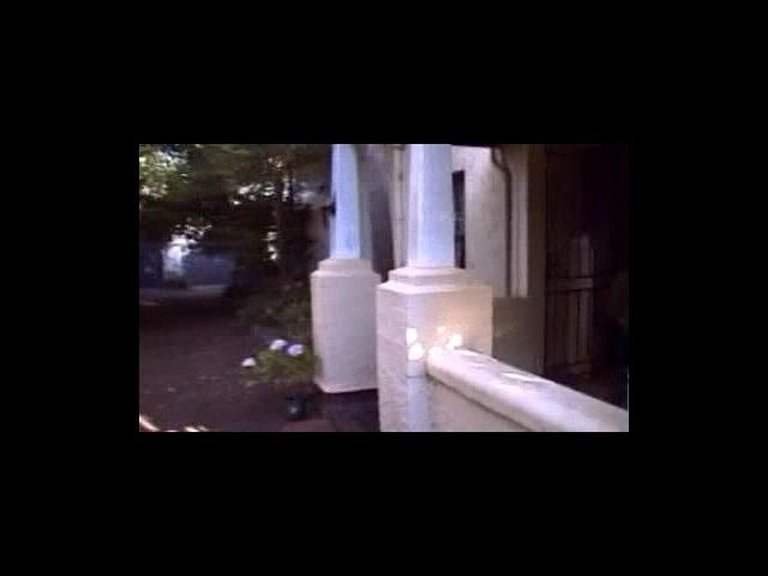
The game’s most celebrated and historically valuable aspect is its authentic, photographed depiction of early-2000s Sydney. This is not a generic city or a CGI approximation. It is a specific, pre-gentrification snapshot. The CBD is underdeveloped; Martin Place is quiet; the Opera House lacks the modern “Toaster” annex; the hated Crown Sydney doesn’t exist. Kirribilli is portrayed as a suburb of ordinary (if nice) homes, not the ultra-prime enclave it is today. For anyone familiar with Sydney, this is a powerful nostalgia engine. The 17 locations, from the urban core to the bushlands, create a cohesive, believable geography—even if, as GamesHub jokes, the Blue Mountains are placed “somewhere south of Padstow.”
The visual style is defined by the limitations of its tools. The still photographs, captured with a borrowed SLR, have a distinct, slightly washed-out, early-digital-camera “snapshot” aesthetic. There is no attempt at continuity; lighting changes jarringly between scenes. This inconsistency, rather than breaking immersion, reinforces the feeling of a personal photo album or home video. The access to private locations—like the palatial home of “Dame Gertrude”—is astonishing and speaks to Reville’s persuasive skills or community connections, adding a layer of voyeuristic realism.
Sound: Looped Synths and Wind Noise
The sound design is a study in budget constraints executed with moody effectiveness. Reville composed a looping, ambient synth score that Adventure Gamers found “somewhat enjoyable” in its droning, atmospheric quality, though it could become “annoying” and drown dialogue. The diegetic sound is a double-edged sword. The use of a shotgun mic aimed for quality, but on location filming meant battling wind, traffic, and boat noise. The result is a soundtrack that is often authentically Sydney (harbour sounds, city bustle) but sometimes renders dialogue unintelligible. The absence of subtitles is a glaring omission that exacerbates this issue. The narrator’s voice, while placid, is serviceable, though Adventure Gamers found her exclamations (“I’m really worried now”) monotonous.
5. Reception & Legacy: From Obscurity to Cult Reappraisal
Contemporary Critical Divergence (2003)
Upon release, reviews were polarized, reflected in the current MobyGames aggregate of 61% (6 critic reviews). The spectrum is stark:
* The Positive Camp (80%): Tap-Repeatedly/Four Fat Chicks and Christ Centered Gamer celebrated it as a labor of love and a charming indie effort. They praised its authentic locations, decent puzzles, and unique “real Aussies” approach, urging readers to support such independent passion projects.
* The Middle Ground (58%-70%): 7Wolf Magazine acknowledged it would appeal to fans of classic adventure “pixel-hunting,” while Just Adventure and Quandary found it a pleasant but shallow way to spend a few hours, noting its predictability and short length.
* The Harsh Camp (30%): Adventure Gamers issued a scathing 1.5/5, declaring it “just isn’t a very good game,” citing terrible acting, illogical puzzles, a shallow story, and the inherent flaws of the FMV format.
This divide essentially hinges on tolerance for low-budgetFMV aesthetics and the application of critical standards to microscopic productions. GameBoomers’ review (80%) explicitly wrestles with this, arguing for leeway given the budget and first-project status, praising the surprising acting quality and logical puzzles.
The 2020s Reappraisal: A Nostalgic Must-Play
The most significant shift in the game’s reputation has occurred in the 2020s, catalyzed by retrospectives like the GamesHub feature (December 2024). This piece reframes the game not as a failed adventure but as a must-play historical document. It highlights:
1. The Time Capsule Effect: The depiction of a pre-development-boom Sydney is now a primary attraction.
2. The DIY Spirit: The story of a 26-year-old Reville building an engine and filming with borrowed gear resonates deeply in an era of accessible tools like Unity and Godot. It’s an inspiration for “doing more with less.”
3. Stylistic Appreciation: The “surreal, dreamlike” quality from the non-professional cast and inconsistent lighting is now seen as a deliberate, artistic aesthetic rather than a flaw.
4. GitHub’s Observations on Genre: The analysis correctly positions it as an “Australian approach to FMV” that subverts the genre’s usual excesses.
Legacy and Influence
The Sydney Mystery had no measurable commercial impact or direct influence on major studios. Twilight Software (essentially Reville and Halford) appears to have disbanded shortly after. Reville’s subsequent career—working on the Xbox 360 team at Microsoft and now in nonprofit CS education—traces a classic path from scrappy indie to industry engineer. The game’s legacy is therefore cultural and inspirational rather than industrial. It is a cited example in discussions of:
* Ultra-low-budget game development (frequently mentioned alongside TwinBee or P.T.-style homebrew).
* Geographically-specific game tourism (preceding titles like Assassin’s Creed’s history tourism or Firewatch’s Wyoming).
* The final, quiet gasp of the FMV adventure as a locally-anchored format, before it was entirely eclipsed by 3D and later, independent narrative games.
Its availability on MyAbandonware ensures its preservation as a playable curiosity, a digital artifact requiring a compatibility tweak to run on modern systems—a fitting metaphor for its fragile, preserved status.
6. Conclusion: Verdict and Historical Placement
The Sydney Mystery is, by conventional metrics, a poor adventure game. Its story is thin and predictable, its acting is often laughably wooden, its sound design is technically flawed, and its puzzles, while logical, rely too heavily on obscuring key items. The static photography and linear pathing can feel restrictive. To judge it solely on these grounds, as Adventure Gamers did, is fair but incomplete.
To evaluate it within its historical and production context is to see a different, more fascinating object. It is a masterclass in constraint-driven creativity. Brendan Reville, with a budget lower than the price of a new AAA game, built a custom engine, filmed a entire city, and assembled a workable, if flawed, adventure game. Its greatest achievement is its overwhelming sense of place. This is not just a mystery set in Sydney; it is the Sydney of 2002-2003, captured in digital amber—from the architecture to the cars to the palpable post-9/11 anxiety. The “unintentional humor” is less a joke and more the sound of genuine, un-cynical life from a specific time and community.
Final Verdict: The Sydney Mystery is a 6/10 historically, but a 4/10 as a pure gameplay experience. Its place in video game history is not as a classic, but as a significant cult artifact. It is an endearing, frustrating, and deeply authentic time capsule that perfectly encapsulates a moment: the last stand of the solo FMV auteur, the specific anxiety of a post-millennial Australian city, and the unquenchable indie spirit that would later explode with platforms like Steam and itch.io. It should be played not for its mystery, but for its medium—to witness what one passionate developer could build with $500, a couple of borrowed cameras, and an unwavering love for his hometown and his genre. In that light, its rough edges are not flaws to be forgiven, but the very fingerprints of its creation.