
- Release Year: 2024
- Platforms: Android, iPad, iPhone, Windows
- Publisher: Beijing Beingfungames Technology Co., Ltd., Iwplay World Interactive Entertainment Technology Co., Ltd., Perfect World Co., Ltd., SEGA Corporation
- Developer: Perfect World Co., Ltd.
- Genre: RPG
- Perspective: Behind view
- Game Mode: Single-player
- Gameplay: Gacha, Social simulation
- Setting: Futuristic, Japan, Modern
- Average Score: 87/100
Description
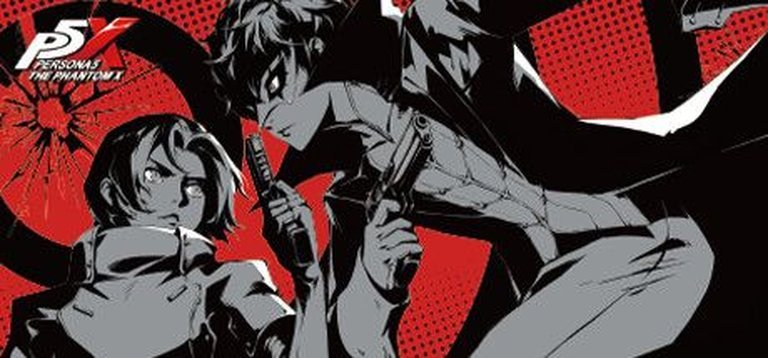
Persona 5: The Phantom X is a free-to-play Japanese-style RPG set in a modern and futuristic Japan, where players join a new cast of Phantom Thieves on stylish heists to combat crime and reform corrupted hearts. The game blends fast-paced turn-based combat, life-sim elements, and gacha mechanics for collecting Personas and characters, all within an urban narrative inspired by the Persona series.
Gameplay Videos
Persona 5: The Phantom X Mods
Persona 5: The Phantom X Guides & Walkthroughs
Persona 5: The Phantom X Reviews & Reception
metacritic.com (90/100): The combat flows quickly, the story grabs you and doesn’t let go, and the social systems remain engaging and fun.
ign.com : A carefully constructed imitation that fails to steal your heart.
pcgamer.com : The Phantom X is pretty freakin’ good.
nettosgameroom.com : I’ve already put in way too much time than I should probably admit.
game8.co (84/100): I never saw it coming, but Persona 5: The Phantom X is a gacha spin-off that keeps the rebellious and fun spirit of the Phantom Thieves alive.
Persona 5: The Phantom X Cheats & Codes
SEA Server
Complete the prologue, access the main menu, select ‘Exchange Code’, enter code, and confirm.
| Code | Effect |
|---|---|
| pancakes | Free rewards |
| RACEQUEEN | Free rewards |
| P5X0418OPEN | Free rewards |
| P5XGRANDOPEN | Free rewards |
| P5X2024041810 | Free rewards |
Chinese Server
Complete the prologue, access the main menu, select ‘Exchange Code’, enter code, and confirm.
| Code | Effect |
|---|---|
| 假面役者 | Free rewards |
| 天使重生 | Free rewards |
| P3R聯動開啟 | Free rewards |
Korean Server
Complete the prologue, access the main menu, select ‘Exchange Code’, enter code, and confirm.
| Code | Effect |
|---|---|
| 가면배우 | Free rewards |
| 환생천사 | Free rewards |
| P3R콜라보 | Free rewards |
June 2025 Active Codes
Complete the prologue, access the main menu, select ‘Exchange Code’, enter code, and confirm.
| Code | Effect |
|---|---|
| P5XJUNEBOOST | 100 Stamina + 2× 5★ Weapon Cores |
| PHANTOMSKILL25 | Gold x300K + Rare Upgrade Pack |
| DAILYDROPS515 | 5 Daily Drop Tickets + 10 EXP Books |
| HEATWAVESECRET | 20 Joker Skin Fragments + All Food x5 |
| MIDYEARMASK2025 | Gacha Coin x10 + 3★ Persona Pack |
Persona 5: The Phantom X: A Franchise’s Bold, Flawed Leap into the Gacha Era
In the storied annals of video game spin-offs, few arrive with the gravitational pull and inherent contradictions of Persona 5: The Phantom X. Officially sanctioned by Atlus and Sega, yet developed by China’s Perfect World via its Black Wings Studio, this 2025 release represents the flagship Persona franchise’s decisive, if contentious, colonization of the free-to-play mobile and PC gacha landscape. It is a game built upon the platinum-standard foundation of Persona 5 Royal, yet one that systematically deconstructs and rebuilds that legacy to serve a new economic and accessibility paradigm. To evaluate The Phantom X is to dissect a fascinating, often frustrating, synthesis of artistic reverence and calculated monetization—a title that captures the electrifying style and thematic core of its progenitor while inevitably diluting the very elements that made it a generation-defining JRPG.
Development History & Context: A Transpacific Collaboration Forged in Constraint
The genesis of Persona 5: The Phantom X (internally and in China, known as Nǚshén Yìwénlù: Yèmù Mèiyǐng, or “Alternate Tale of the Goddess: Phantom of the Night”) is a tale of two gaming powerhouses addressing a market gap. Following the unprecedented global success of Persona 5 and its expanded edition Royal, Atlus and parent company Sega faced a persistent reality: the core console JRPG audience is finite and saturated with their own backlog. The explosive growth of the mobile gacha market, dominated by titles like Genshin Impact and Honkai: Star Rail, presented an irresistible opportunity to monetize the Persona brand’s immense popularity among a broader, less time-constrained audience.
Perfect World, a major Chinese publisher with experience in operating Western MMORPGs and mobile titles, was the natural partner. Their subsidiary, Black Wings Game Studio, was tasked with adapting Atlus’s meticulous, hand-crafted JRPG formula into a live-service model. Crucially, Atlus did not abdicate creative control. Series producer Kazuhisa Wada served as project supervisor, and key staff from P5 Royal, Strikers, and Tactica—including scenario planner Yusuke Nitta (credited as development director) and composer Ryota Kozuka—were directly involved. Shigenori Soejima, the series’ iconic artist, designed the new protagonist, Wonder, ensuring visual continuity. This hybrid development model—Japanese creative oversight within a Chinese studio framework—was essential for brand integrity but also introduced unique pressures, most notably navigating China’s stringent content regulations, which led to the “Adaptational Modesty” censorship of several demonic Persona designs in initial releases.
The technological shift to Unity from the proprietary engines used for mainline Persona games was a pragmatic necessity for cross-platform (iOS, Android, Windows) development but immediately signaled a different kind of product. The constraint was no longer graphical fidelity on a home console, but optimizing a complex JRPG for varied mobile hardware while implementing the server-backed infrastructure required for live ops, gacha rolls, and live events. The result is a game that, in its international release, visually apes Persona 5 Royal almost identically, but operates on a fundamentally different architectural and business logic.
Narrative & Thematic Deep Dive: Desire in a World Losing Its Way
The Phantom X is not a direct sequel but a meticulously constructed alternate universe, a “what if” scenario where the fundamental crisis is not personal corruption but societal apathy. The prologue masterfully subverts expectations by opening with Joker’s infamous Casino Palace escape—only for reality to glitch and a mysterious, white-masked figure (Wonder) to ambush him. This dream sequence establishes the core mystery and thematic divergence: in this world, the Metaverse’s primary function has shifted. While Palaces (cognitive worlds built from distorted desires) still exist, the greater threat is Mementos, now a monolithic, Eldritch Location from which all Palace branches emanate. The central sin is not merely Wrath or Lust, but a pervasive “Apathy”—the systematic stealing or suppression of humanity’s ambitions and desires, leaving citizens as passive observers to their own lives and society’s decay.
The new protagonist, Nagisa Kamishiro (codename: Wonder), is a deliberate thematic counterpoint to Ren Amamiya (Joker). Where Joker is a rebellious spirit wrongly convicted, Wonder is initially apathetic to a fault. He lacks the initial strength to confront minor injustices, a narrative choice that visually and thematically underscores the world’s sickness. His awakening, catalyzed by the owl-like Lufel (Cattle), is less about proving innocence and more about discovering a lost spark. Their dynamic is core to the game’s identity: Lufel is a verbose, archaic-speaking guide (a running gag contrasting him with Morgana) whose mission is to nurture “desire” in potential rebels.
The first arc, targeting baseball coach Takeyuki Kiuchi (the “Subway Slammer”), immediately sets a distinct tone. While Kamoshida in P5 was a pure, monstrous Hate Sink representing Lust, Kiuchi’s pathology is more nuanced—a failures’ grudge manifesting as misogyny. His Palace is a baseball diamond, and his backstory, involving a scandal and a pivotal hit-by-pitch, is one of professional ruin and spite. His descent into a Cupid-like Shadow is a twisted inversion of love/desire. Critically, this arc introduces Motoha Arai (Closer), Wonder’s classmate and Kiuchi’s victim’s protector, who awakens her Persona alongside Wonder. Her goal is athletic (baseball), not social justice, grounding the rebellion in personal ambition.
Subsequent arcs deepen the world’s mystery. The second arc revolves around Hiromu Miyazawa, a celebrity chef whose Palace is a dam—a literal and metaphorical structure of repressed Wrath. The third arc is the narrative’s turning point, introducing Arashiyama (Akashi), a seemingly benign teacher who is actually the Consultant (a role analogous to the Conspiracy in P5). His Palace is a twisted school, and the reveal that he is investigating the Phantom Thieves’ identities while colluding with a greater force (Magatsukami, a being from the Shedim mythos) shifts the game from social rehabilitation thriller to cosmic horror. The climax of Chapter 4, where Shimotsuna’s Palace ruler is manipulated by Magatsukami via a spoofed Calling Card, introduces a “Wham Episode” level of stakes, directly threatening the team’s core method and forcing a desperate, nearly fatal confrontation.
The central theme crystallizes: “Finding your way” versus “breaking your chains.” In P5, the Phantom Thieves freed people from internal prisons. In P5X, they must reignite externalized ambition in a world whose very cognitive fabric is being leeched. The Velvet Room, now an underwater tunnel, symbolizes this flow of life—the “sea of the mind”—with those who have lost desire merely floating with the current. The Newton’s Cradle replacing broken chains as the Arc Symbol perfectly encapsulates this: the knock-on effect of one person’s rediscovered passion inspiring another.
The narrative structure, however, is a point of contention. Early arcs, particularly Kiuchi’s, were widely mocked (the “Subway Slammer” memes) for what critics saw as clumsy, laughable villainy. Director Yusuke Nitta later admitted the writer behind Kiuchi was no longer on the team. This uneven quality—capable of profound, unsettling moments (Shimotsuna’s grooming of Shoki, the eerie glimpses of other failed Phantom Thief teams in Wonder’s visions) alongside clunky, on-the-nose antagonists—is a defining characteristic. The “Crossroads of Fate” crossover events with P5 and P3 Reload are narrative masterstrokes, using interdimensional “Dimension Colliding” to explore what-ifs and provide nostalgic payoff, while laser-focused on character interactions (Joker mentoring Wonder, SEES’s muscle-brained Akihiko clashing with Makoto).
Gameplay Mechanics & Systems: The Gacha Engine Replaces the Calendar
The Phantom X’s most significant and divisive transformation is the replacement of P5’s ironclad Calendar system with a dual-energy model (Stamina for Metaverse activities, Action Points for City Life). This abolition of hard deadlines is a monumental shift. Palaces can no longer be failed by running out of time; they are vast, labyrinthine, and contain abundant Safe Rooms for progress saving. The tension shifts from a race against a real-world calendar to a management of real-world time gates via stamina regeneration or spending premium currency (Meta Jewels). This makes the game inherently more casual and accessible but removes the high-stakes, week-long planning that was the strategic backbone of P5.
The Confidant system is reborn as “Synergy”. It retains the core loop of spending time with characters to earn bonuses and unlock story, but with 15-20 ranks (vs. 10), the early ranks often lack unique dialogue, feeling like filler. The revolutionary change is its direct integration with the gacha system: every Synergy character (and many NPCs) can be summoned as a playable “Phantom Idol” or “Phantom Thief” via the Contracts system. Your social connections directly feed your combat roster. This creates a powerful feedback loop but also commodifies relationships.
Combat is streamlined yet expanded. The “One More!” system persists but is constrained: instead of a free choice, a specific follow-up skill is often pre-selected, emphasizing speed and combo-chaining over strategic variation. The introduction of a Break Meter on many enemies (especially Strong Shadows in Mementos) means weaknesses must be exploited repeatedly to down foes, adding a layer of endurance. The Highlight system (equivalent to Showtime) charges via attacking/Skill use and unleashes cinematic, character-specific super moves. Crucially, persona fusion and skill inheritance are liberated: skills from unequipped Personas are not lost, allowing immense tactical reshuffling without resource loss—a significant “Anti-Frustration Feature.”
The gacha model is two-pronged:
1. Phantom Idols/Thieves: The primary monetization. Pulling duplicates is essential for limit-breaking (raising level caps) and unlocking unique duplicate skills (e.g., a second copy of Tropical Motoha might reduce her skill cooldown).
2. Weapons & Personas: Separate gacha pools. Weapons are character-specific upgrades; a 5-star weapon for “Moko” is distinct from one for “Seaside Tomoko.” Personas are pulled from a general pool and fused.
Critically, the game implements severalPlayer-friendly” anti-monetization features common in ethical gacha design: 100% Completion rewards for Palaces, a free “Phantom Pass” with tiered rewards, and the ability to earn most premium currency through diligent play. However, the frequency of pop-ups for Meta Jewels and event banners, noted by nearly every critic, creates a persistent commercial pressure that fundamentally alters the contemplative pace of a Persona game. As IGN’s review states, the experience becomes a “beautiful but taxing slog” due to these “onslaught of low-stakes activities” and time-gated stamina.
World-Building, Art & Sound: A Stylish Masterpiece in a New Cage
Visually and aurally, The Phantom X is an unabashed love letter to Persona 5 Royal. It uses the same high-contrast, pop-art aesthetic, vibrant UI, andzy character designs. The Tokyo districts—Shibuya, Yongen-jaya, Shinjuku—are recycled with minor additions (Boom Bang Burger, the Velvet Room aquarium). This is both a strength and a weakness. For fans, it’s an immediately comfortable, stylishly rendered playground. For critics, it underscores the derivative nature of the project, a “New Work, Recycled Graphics” approach that can feel like a glorified expansion pack.
Where the game innovates visually is in its UI and presentation integrations. The “Painting the Medium” trope is heavily utilized: wearing swimwear changes the All-Out Attack splash screen to a beach theme; donning the Velvet Room outfit alters combat quotes and backgrounds to match the underwater motif; having a P3 Reload character in-party morphs the entire UI into Reload’s blue-and-white scheme. These are clever, immersive touches that reward franchise veterans.
The soundtrack, supervised by Ryota Kozuka and BlackWings Audio, is a careful blend of legacy and innovation. Iconic tracks like “Last Surprise,” “Will Power,” and “Bloomming Villain” return, often remixed for new contexts (e.g., “Last Surprise -new year-” with oriental instrumentation). New themes like the opener “Ambitions and Visions” (a fast-tempo J-pop evolution of P5‘s punk) and battle tracks “Wake Up Your Hero” and “Desire Surrender” successfully extend the series’ sonic palette while respecting Shoji Meguro’s foundational work. The vocal performances by Lyn and others maintain the series’ high standard.
The world’s atmosphere of apathy is visually communicated through NPC behavior. The opening scene, where a woman’s suicide attempt is met with bland, disinterested chatter, is a stark, chilling departure from P5‘s more reactive crowds. This “Apathetic Citizens” motif visually reinforces the central plot: society is broken not by overt villains alone, but by a collective loss of ikigai.
Reception & Legacy: A Moderate Critical Success, A Polarizing Cultural Moment
Persona 5: The Phantom X’s reception has been unequivocally mixed to positive, but sharply divided along tolerance for gacha mechanics. On MobyGames, it holds a 72% Critic score from 11 reviews, ranking #4,930 on Windows. The spectrum is telling:
* The Pro-Camp (80-90%): Critics like But Why Tho? and DBLTAP champion it as a “great job” of delivering P5-quality story content, with “quick” combat and “engaging” social systems, urging fans to accept the gacha compromises. PC Gamer (78%) succinctly states: “If you’re cool with gacha games… this game’ll carry you through at least a few months of fun.”
* The Lukewarm Camp (70-75%): The majority. Reviews from Siliconera, Worth Playing, IGN Italia, and Hey Poor Player all land at 70%. Their consensus: the core RPG is “well-made” and “fleshed-out,” but “the gacha elements have weakened a lot of what made the original game great.” The “pop-ups are pretty frequent,” the monetization “aggressive,” and the social simulation “deemphasized.” They see it as a product for the “die-hard fans… craving Persona 5 content.”
* The Critical Camp (60%): PC Games (Germany) and IGN (main) deliver scathing takes. The German outlet feels the developers “didn’t entirely understand what makes the Persona series special.” IGN’s Sarah Thwaites argues the game “struggles to feel sincere,” calling it a “beautiful but taxing slog” where “patience-testing roadblocks” and “artificially held” content make it inferior to the many excellent, complete Persona titles available elsewhere. The backlash was so severe upon global launch that reports of “worse rewards” for global players compared to the Chinese version flooded forums, a crisis of perceived fairness that Perfect World had to address.
Legacy is being written in real-time. Commercially, its success as a free-to-play title with a “Phantom Pass” subscription model is likely assured, given the Persona brand’s fervent fanbase. It won Mobile Game of the Year at the 29th D.I.C.E. Awards and was nominated for Best Mobile Game at The Game Awards 2025, signaling industry recognition of its technical and design achievements within the mobile JRPG space.
Its influence on the industry is twofold:
1. The Mobile Mainstreaming of Console JRPGs: It stands as a bold, high-profile example of translating a deep, narrative-driven console JRPG into a sustainable live-service model. Its hybrid monetization (gacha for characters/gear + energy systems for content access) is a template other franchises will study.
2. The “Atlus-Approved” Spin-Off Template: It establishes a new category of Persona game—not a direct sequel or genre spin-off (Strikers, Tactica), but a parallel-universe, gacha-based expansion. This allows Atlus to monetize the P5 engine perpetually without directly advancing the mainline narrative, effectively putting Persona 6 development in a holding pattern while this “eternal beta” runs.
However, its legacy is clouded by creative and ethical tensions. The criticism that it “stretched Persona 5 awfully thin” is valid. By reusing assets, story beats, and even character archetypes (the cast of Expies), it risks franchise fatigue. The aggressive monetization, even if “standard” for gacha, feels antithetical to the rebellious, player-first spirit of the Phantom Thieves. Furthermore, the narrative’s reliance on crossover events to deliver P5 and P3 characters feels like a canny acknowledgment that the new cast, while charming, lacks the instant, deep emotional resonance of Joker’s team.
Conclusion: A Flawed Gem, A Franchise Crossroads
Persona 5: The Phantom X is an event, not merely a game. It is the moment the Persona series fully embraced the live-service, multiplatform future, sacrificing its traditional cadence and integrity for scale and sustainability. As a playing experience, it is a paradox: it offers hundreds of hours of competent, stylish JRPG content—a faithful aesthetic replica of P5 with an expanded roster and new story arcs—yet it constantly reminds you of its transactional nature through stamina bars, pop-ups, and the siren call of the gacha banner. The brilliant thematic focus on apathy versus ambition is ironically undercut by a monetization model that encourages idle waiting and impulsive spending.
Its place in video game history is secure, albeit controversial. It is the most ambitious and high-quality adaptation of a premium JRPG into the gacha mold, a technical and design feat that demonstrates Atlus’s adaptability. It successfully introduced the Persona experience to a wider, mobile-first audience, potentially creating a new generation of fans. Yet, it also represents a creative compromise, a game that understands the surface of what made Persona 5 great (style, combat, social links) but struggles to replicate its substance—the tightly-woven, player-driven narrative with tangible consequences and deadlines.
For the historian, The Phantom X is a crucial case study in franchise evolution in the 2020s. It asks the question: can a game built on themes of personal rebellion and breaking free from systemic control be genuinely subversive when its own structure is a耐心-consuming, monetized system of artificial constraints? The answer, suggested by its own story, is bleakly ironic. The Phantom Thieves fight to restore desire in a world that has given up, while their game asks players to patiently wait for stamina to restore or spend to skip the wait. In the end, Persona 5: The Phantom X is not the heart-stealing revolution its narrative aspires to be. It is, instead, a immensely polished, stylish, and deeply conflicted product of its time—a testament to a franchise’s cultural power and a symptom of the gaming industry’s relentless drive to turn even our fantasies of rebellion into a service.