
- Release Year: 2023
- Platforms: Linux, Macintosh, Windows
- Publisher: Age of Fear
- Developer: Age of Fear
- Genre: Strategy, Tactics
- Perspective: Top-down
- Game Mode: Single-player
- Gameplay: RPG elements, Strategy, Tactics, Turn-based
- Setting: Fantasy
- Average Score: 87/100
Description
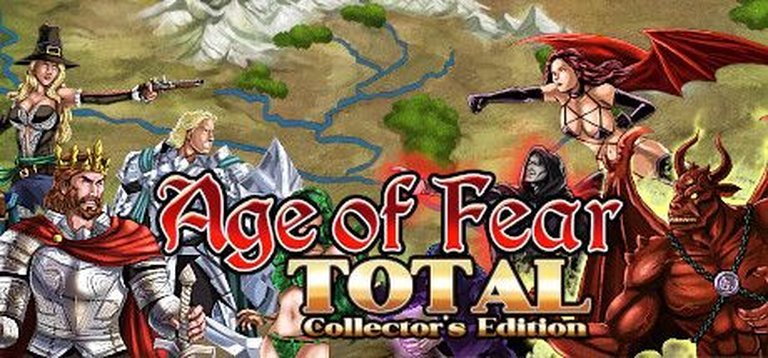
Age of Fear: Total is a comprehensive fantasy strategy bundle compiling over a decade of the beloved series into one massive package, offering players over 100 hours of story-driven campaigns across an open world with turn-based tactical combat. Command heroes and mercenaries from diverse factions like Dwarves and Orcs while managing alignments, crafting artifacts, and exploring hex-free battlefields with unique features such as invisibility spells, faction bases, and unexpected content like a mage’s furniture army. The bundle includes all current titles and future releases, ensuring ongoing updates with new quests, events, and lore in this deep, RPG-infused tactical adventure.
Where to Buy Age of Fear: Total
PC
Age of Fear: Total Mods
Age of Fear: Total Guides & Walkthroughs
Age of Fear: Total Reviews & Reception
steambase.io (87/100): This rich fantasy world loved by fans for its deep tactics and epic stories.
Age of Fear: Total: Review
Introduction
In the crowded pantheon of turn-based strategy games, Age of Fear: Total stands as a singular monument to indie tenacity and community-driven design. Released on June 9, 2023, this ambitious anthology bundle isn’t merely a collection but a living chronicle—a sprawling, decade-spanning saga distilled into a single, perpetually evolving package. Developed by the enigmatic Leslaw Sliwko, the Age of Fear series has cultivated a devout following since its inception in 2011 with The Undead King, earning renown for its punishingly deep tactical combat, darkly humorous narrative, and unwavering commitment to player feedback. Total crystallizes this legacy, bundling every campaign, expansion, and future DLC into a cohesive whole, anchored by a vision that treats strategy not as static rules, but as a dynamic dialogue between developer and player. This review posits that Age of Fear: Total is far more than a retrospective; it is a masterclass in iterative design, a testament to the transformative power of community engagement, and a potent contender for the crown of accessible yet profoundly complex fantasy strategy.
Development History & Context
Age of Fear: Total emerged from the singular mind of Leslaw Sliwko, a developer whose decade-long journey with the series has been defined by relentless refinement and responsiveness. The series began in 2011 with Age of Fear: The Undead King, a modest turn-based RPG that laid groundwork for its signature blend of grid-free combat, factional intrigue, and self-aware humor. Over the next twelve years, Sliwko iterated through sequels (The Chaos Lord, The Legend, The Iron Killer) and expansions (Pirates!, The Quest for Immortality), each expanding the world and refining mechanics like the hex-free movement system and dynamic AI. By 2023, the series had become a sprawling behemoth, with fragmented entry points frustrating new fans and existing owners drowning in DLC fragmentation.
Technologically, Total operates within deliberate constraints. Its custom engine targets low hardware requirements—a mere 1 GHz CPU and 1 GB RAM—to ensure accessibility, leveraging OpenGL for compatibility. This isn’t limitation but philosophy; Sliwko prioritizes depth over graphical fidelity, allowing resources to pour into AI sophistication and content volume. The gaming landscape at release proved fertile ground: 2023 saw a renaissance for indie tactics games (Battle Brothers, Into the Breach), yet Total distinguished itself through its unparalleled scope and “living anthology” model. As Sliwko declared in Steam discussions, the bundle was born from community demand: a single gateway to the series’ past and future, embodying a developer ethos where updates and backports are not features but obligations.
Narrative & Thematic Deep Dive
The narrative tapestry of Age of Fear is a chaotic symphony of high fantasy and absurdist comedy, stitched together by a recurring theme: the folly of power and the absurdity of war. While each campaign offers distinct arcs—The Undead King’s gothic dread, The Iron Killer’s steampunk excess—they coalesce into a larger, interconnected lore driven by Sliwko’s signature wit. Characters defy archetypal seriousness: players command a “motley crew” including a necromancer who resurrects fallen foes as zombies, and Ikeus the Mage—whose “furniture army” (animated chairs, cabinets, and lamps) epitomizes the series’ tonal schizophrenia. Dialogue drips with meta-humor; units quip about “orcs, goblins, demons, [and] indie developers” while grappling with existential dread.
Thematic depth lies beneath the jest. Alignment systems (Evil vs. Holy) force players to navigate moral compromises, as holy paladins may desert if forced to march alongside demonic hordes. Permanent death (“accept the grim realities of death unless an evil Necromancer raises them”) underscores the fragility of power, turning every victory into a pyrrhic trade-off. The open-world segments and global events—inspired by Battle Brothers—inject emergent storytelling: a chance encounter with a giant might devolve into farce or tragedy, depending on player choices. This juxtaposition of dark stakes and slapstick creates a unique alchemy, where the horror of war is constantly deflated by the absurdity of it all, leaving players both engaged and perpetually amused.
Gameplay Mechanics & Systems
Age of Fear: Total’s heart is its tactical engine, a masterpiece of elegant complexity. The hex-free movement system revolutionizes positioning: units move freely across terrain, with size and elevation dictating reach, eliminating artificial grid constraints. This transforms battles into chess matches of spatial geometry—flanking a giant requires exploiting its massive blind spots, while a tiny elemental slips through gaps. Over 200 unique units—from Dwarven Warriors to Marines—boil down to 17 distinct archetypes, each with intricate skill trees (e.g., a Necromancer’s “Raise Dead” vs. a Paladin’s “Smite Evil”).
Character progression is brutal and rewarding. Units gain experience, equip artifacts (relics granting OP stat bonuses), and can be customized via a robust crafting system—mixing ingredients dropped by foes to forge legendary weapons. However, alignment and cohesion mechanics add psychological depth: pairing a bloodthirsty Orc with a stoic Dwarf risks desertion, demanding “diplomacy (or charisma!)” to maintain party unity. Combat itself is a ballet of action and reaction: spells like “Invisibility” (“whoop… you disappeared”) create tense cat-and-mouse games, as the AI equally exploits stealth, turning invisibility from a crutch into a double-edged sword.
The UI prioritizes clarity over flair, with a point-and-select interface that streamlines unit control. Yet innovation coexists with rough edges: the “Day of The Rat” campaign (included but still in development) highlights Total’s evolving nature. Meanwhile, faction bases serve as strategic hubs; upgrades unlock recruitable units and skills, transforming overworld exploration into a resource-management puzzle. Ultimately, the systems coalesce into a loop of calculated risk: permadeath ensures every decision carries weight, while the AI’s “self-organizing network of agents” delivers cunning, unpredictable adversaries.
World-Building, Art & Sound
The Age of Fear universe is a vibrant, grotesquerie of fantasy tropes subverted through Sliwko’s lens. Minor factions like Giants, Elementals, and the Ratmen (in-development) breathe fresh air into a genre saturated with orcs and elves. Giants lumber across landscapes as environmental hazards, their footsteps shaking the terrain, while Marines bring anachronistic naval warfare ashore. The open world is a patchwork of biomes—from haunted forests to volcanic fortresses—each populated by procedurally generated events (“global events”) that shift dynamically based on player actions.
Artistically, Total embraces a charmingly low-fi aesthetic. Hand-illustrated sprites and environments evoke classic CRPGs, with exaggerated character designs amplifying the humor: a Cyclops’ warty skin texture, a Vampire’s flamboyant cape. This 2D top-down view, coupled with a free camera, allows tactical zooming without sacrificing clarity. Sound design, though less documented, leans into atmospheric irony: the clash of steel accompanies a unit’s snarky death quip, while ambient tracks blend lutes with ominous drones. The color-blind mode—with higher contrast and outlined fonts—reflects Sliwko’s accessibility focus, ensuring the world’s grim beauty is perceivable to all. Together, art and sound forge an atmosphere where epic fantasy never takes itself too seriously, inviting players to both admire the world and laugh at its absurdities.
Reception & Legacy
Age of Fear: Total entered the market to a warm embrace, securing an 88% positive rating on Steam (34 positive reviews vs. 5 negative) at launch. Critics lauded its “100 hours of gameplay” and value proposition, particularly for series owners, who accessed a heavily discounted bundle. Some negative feedback cited a steep learning curve and the unfinished state of the “Day of The Rat” campaign, yet these were largely overshadowed by praise for the AI’s sophistication and the sheer volume of content. Over time, Total’s reputation has solidified as a cult favorite, celebrated for its community-driven evolution. Sliwko’s promise—“every purchase entitles you to everything coming down the Age of Fear pipeline”—fostered unparalleled goodwill, with frequent updates and backported features becoming hallmarks of the series.
Legacy-wise, Total influences indie strategy by redefining the ” anthology bundle.” Its model of perpetual expansion—where future games are included at purchase—has inspired developers to prioritize long-term player relationships over episodic sales. While it hasn’t spawned direct clones, its blend of advanced AI, hex-free tactics, and community co-creation (via Steam Workshop mods) has become a benchmark for depth and sustainability. In a genre dominated by AAA titles, Age of Fear: Total stands as proof that a solo developer, armed with a keyboard and a devotion to players, can carve an indelible niche.
Conclusion
Age of Fear: Total is more than a game—it is a sprawling, breathing ecosystem of strategy, humor, and human connection. Leslaw Sliwko’s decade-long labor of love culminates in a package that defies easy categorization: it is a tactical RPG, a comedy, a history lesson, and a promise. Its hex-free combat, permadeath stakes, and emergent storytelling create gameplay that is both intellectually demanding and playfully unpredictable. While the “Day of the Rat” campaign’s unfinished state and occasional UI roughness remind players of its indie roots, these flaws are eclipsed by its ambition and charm.
In the annals of video game history, Age of Fear: Total earns its place as a paragon of community-centric design. It proves that accessibility and depth need not be mutually exclusive, and that a developer’s willingness to listen can transform a niche series into a landmark of the genre. For strategists, RPG fans, and anyone who believes games should be living, breathing things, this bundle is not just a purchase—it is an investment in the future of interactive storytelling. Verdict: A masterpiece of indie ingenuity, Age of Fear: Total is essential, enduring, and unforgettably fun.