
- Release Year: 2015
- Platforms: Linux, Macintosh, Windows
- Publisher: GalaxyTrail Games
- Developer: GalaxyTrail Games
- Genre: Action, Adventure, Platformer
- Perspective: Side-scrolling
- Game Mode: Single-player
- Gameplay: Action, Combat, Platformer
- Setting: Adventure, Fantasy, Sci-fi
- Average Score: 85/100
Description
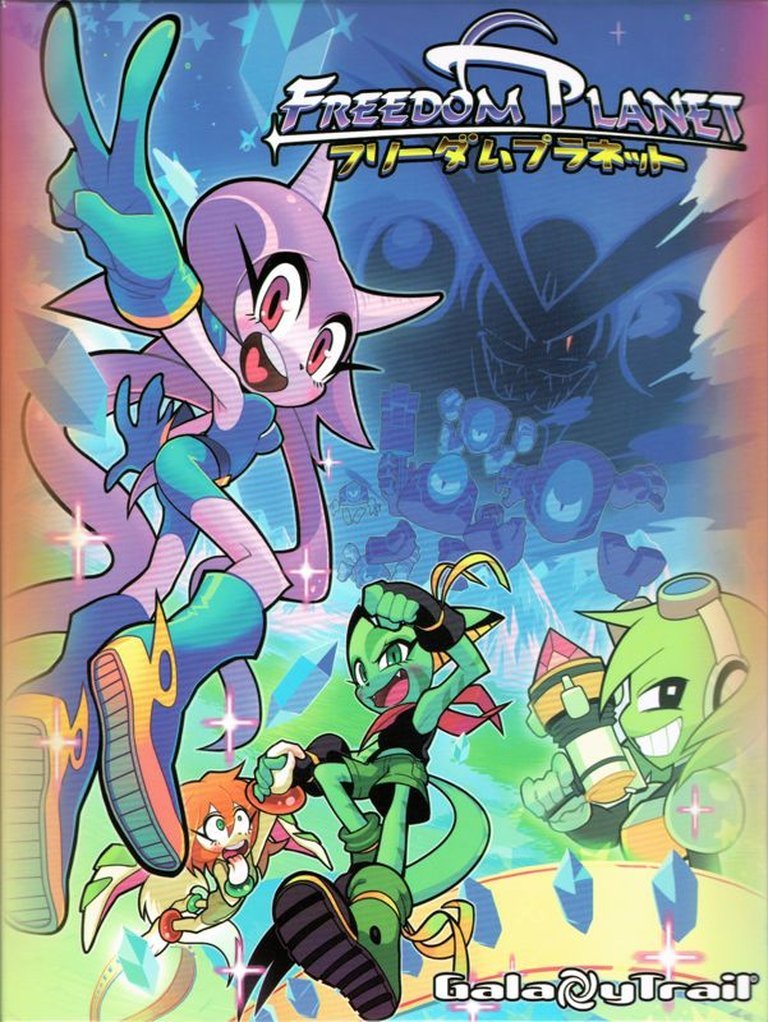
Freedom Planet is a high-speed platform adventure game set in a vibrant world with East Asian influences, following three anthropomorphic animal heroes—dragon girl Lilac, wildcat Carol, and basset hound Milla—alongside their alien ally Torque. Players must thwart the evil Lord Brevon’s plot to steal the legendary Kingdom Stone and conquer the galaxy through fast-paced platforming segments and action sequences.
Freedom Planet (Limited Edition) Mods
Freedom Planet (Limited Edition) Reviews & Reception
metacritic.com (82/100): Freedom Planet is a wonderful Sonic the Hedgehog-esque game that mixes nostalgia with something new. The quirky characters, fantastic levels, and interesting story will make you not want to put the game down.
metacritic.com (83/100): Amazing high speed platforming with beautiful visuals, a banger soundtrack, great bosses, cool characters and awesome story.
opencritic.com (81/100): Initially conceived as a Sonic fan-game, Freedom Planet is a lovingly made throwback to the 16-bit era — and a game that carves out a personality and appeal all of its own.
Freedom Planet (Limited Edition) Cheats & Codes
PC
Enter codes during gameplay.
| Code | Effect |
|---|---|
| Hold Down + C during cutscenes in Adventure Mode | Plays audio outtakes and sometimes animations |
| Rapidly press Up and Down at the character select screen | Changes character expressions |
Wii U
| Code | Effect |
|---|---|
| Quickly press Up and Down repeatedly without selecting a character | Changes character expressions |
Freedom Planet (Limited Edition): Review
1. Introduction
In the vast, often homogenous landscape of indie platformers, Freedom Planet (Limited Edition) emerges not merely as a game, but as a meticulously crafted artifact—a physical manifestation of a developer’s journey from Sonic fandom to fully realized, culturally resonant IP. Released via the IndieBox subscription service in November 2015, this boxed edition transcended its digital counterpart, offering tangible proof of a game that became a cornerstone of the 2010s indie renaissance. What began as a passion project in Clickteam Fusion evolved into a sprawling adventure that balanced the breakneck speed of classic Genesis-era platformers with surprisingly deep combat, a richly woven narrative, and a distinct East Asian-inspired artistry. Freedom Planet is, at its core, a masterclass in homage and evolution—a game that borrows liberally from its inspirations (Sonic, Mega Man, Gunstar Heroes) yet carves out its own identity through meticulous design and bold thematic ambition. This Limited Edition, packed with physical lore and a DRM-free legacy, serves as the definitive lens through which to examine a title that dared to be both a love letter and a standalone triumph, securing its place as a vital piece of video game history.
2. Development History & Context
Freedom Planet‘s genesis is as compelling as the game itself. Conceived in late 2011 by American developer Sabrina DiDuro (a.k.a. Strife) under her newly founded studio, GalaxyTrail, the project underwent a profound metamorphosis. Its origin story begins humbly, not as an original IP, but as a Sonic the Hedgehog fangame. Early concepts featured rings and even Doctor Eggman as the antagonist. However, DiDuro quickly recognized the limitations of derivative work, fearing it would forever remain “in the shadow of an established franchise.” This pivotal decision to abandon the fangame framework and forge an original universe marked the true birth of Freedom Planet.
Seeking unique characters, DiDuro discovered the vibrant art of DeviantArt user Ziyo Ling. Permission secured, Ling’s Sash Lilac (originally a hedgehog redesigned as a dragon), Carol Tea (a wildcat), and Milla Basset (a basset hound) became the game’s heart. The antagonist, Lord Brevon (his eyebrows resembling Eggman’s mustache as a subtle nod), replaced Eggman, shifting the conflict towards intergalactic conquest. Gameplay mechanics evolved significantly: the ring-based health system was replaced by a more traditional hit-point meter replenished by red leaves, and combat shifted from “jumping on robots” to a more dynamic system of punches, kicks, and special moves, drawing inspiration from DiDuro’s earlier fan projects. Development, spanning Denmark and the United States, utilized the accessible yet powerful Clickteam Fusion 2.5 engine, presenting constraints but also empowering rapid iteration.
The art direction became a deliberate fusion. While gameplay evoked Japanese 16-bit classics, the aesthetic drew heavily from medieval Chinese art, featuring intricate backgrounds, Chinese characters in the environment, and a logo subtitled in Japanese katakana (フリーダム・プラネット). This blend created a unique visual identity. Development milestones were marked by a successful Kickstarter campaign (funding a full version after a well-received August 2012 demo), a Steam Greenlight approval, and a series of delays – notably avoiding Steam’s Summer Sale and navigating platform restrictions (Steam releases couldn’t happen on weekends). The journey from fangame demo to polished, multi-platform release (Windows, Mac, Linux, Wii U, PS4, Switch) was a testament to indie perseverance, setting the stage for the Limited Edition’s physical celebration of this digital odyssey.
3. Narrative & Thematic Deep Dive
At first glance, Freedom Planet‘s plot – involving three animal heroes aiding an alien duck (Torque) to stop an evil warlord (Lord Brevon) stealing a mystical artifact (the Kingdom Stone) – seems straightforward. However, the narrative, penned by DiDuro and Edwyn Tiong, unfolds with surprising depth, political intrigue, and emotional weight, anchored by the complex relationships between its protagonists and the three warring kingdoms of Avalice: the militaristic Shuigang, the profit-driven Shang Mu (led by the sarcastic Mayor Zao), and the diplomatically cautious Shang Tu (led by the wise Royal Magister).
The core narrative drives a powerful exploration of colonialism, environmentalism, and the consequences of unchecked ambition. Lord Brevon is not merely a generic villain; he’s a terrifying symbol of imperialistic exploitation. His invasion of Shuigang is brutal and efficient – he decapitates the king on-screen, brainwashes Prince Dail, and twists the kingdom’s resources towards his genocidal conquest of Avalice. His critique of Torque breaking the “Prime Directive” serves as a stark reminder of the collateral damage inflicted by external powers, even those with ostensibly noble intentions. The Kingdom Stone itself embodies environmental scarcity and the perilous dependence on finite resources, its fading strength a metaphor for ecological crisis.
Character development is central. Lilac embodies idealism and heroism, but her journey tests her resolve, culminating in a harrowing capture and torture by Brevon – a shocking moment of vulnerability that leaves her physically scarred and forces her growth beyond “Miss Heropants.” Carol provides a crucial counterpoint, embodying pragmatism and street-smart cynicism rooted in her past with the thief guild, the Red Scarves. Her fallout with Lilac after Jade Creek stems from a clash of ideologies – Carol’s weariness with constant peril versus Lilac’s unwavering need to help anyone in need. Their reconciliation is hard-won. Milla, initially seeming as a timid support character, reveals hidden depths of courage and resilience, especially when horrifically mutated by Brevon, forcing Lilac and Carol into a devastating confrontation. Torque, stranded and desperate, evolves from a passive victim into a determined commander, while the morally ambiguous Spade, Dail’s half-brother, adds layers of betrayal and reluctant alliance. The narrative masterfully balances high-stakes action with genuine character moments, exploring themes of loyalty, sacrifice, the cyclical nature of war, and the difficult path to unity against a common, overwhelming threat. The “Rashomon”-style perspective shifts depending on the playable character further enrich the storytelling.
4. Gameplay Mechanics & Systems
Freedom Planet delivers a fluid and diverse platforming experience built around the distinct abilities of its three protagonists, offering significant replayability. Its core loop combines high-speed traversal with robust combat, all wrapped in level designs reminiscent of the Sega Genesis era but with modern sensibilities.
-
Character Triad & Progression:
- Lilac (The Dragon): The speed specialist. Her moveset emphasizes momentum and aerial combat: strong hair whips, a Dragon Cyclone double-jump/spin attack, and the signature Dragon Boost – an eight-directional, invincible air dash consuming an energy gauge. Lilac excels at covering ground quickly and navigating complex aerial paths, making her ideal for speedruns but requiring precision in combat. Her water dragon heritage grants extended underwater breathing.
- Carol (The Wildcat): The agile brawler and wall-climber. Faster on foot than Milla but slower than Lilac, Carol relies on rapid-fire punch combos and a powerful claw swipe while rolling. Her unique “motorcycle mode” power-up (triggered by fuel tanks) drastically increases speed and acceleration, enabling wall-riding and a rolling double-jump attack. Carol’s Wild Kick special grants temporary invincibility but drains energy. She’s the most versatile for exploration and platforming due to her wall-jump and interaction with jump pads.
- Milla (The Basset Hound): The defensive/support character. With the lowest health (4 petals vs. 7), Milla compensates with unique abilities: she creates and throws energy cubes for ranged damage, deploys a shield to reflect projectiles, and possesses a limited ear-flutter flight. Her Super Shield Burst offers a powerful, recoil-based ranged attack. Milla can also “sniff out” hidden power-ups, adding a subtle exploration mechanic. She’s the most challenging character, demanding careful positioning and defense, but offers unique solutions to puzzles and boss fights.
-
Core Systems:
- Health & Items: Replacing Sonic’s rings, health is displayed as petals (leaves). Collecting red petals dropped by enemies or found in the environment restores health. Extra lives, shields (Fire, Water, Earth, Wood, Metal – each offering specific elemental resistances and sometimes additional effects like gem attraction or health boosts), and invincibility power-ups are scattered throughout levels. Crystals/Keystones recharge the energy gauge for specials.
- Combat & Bosses: Combat is a key differentiator from Sonic. Players directly punch, kick, and use special moves against robotic enemies (“Shade Cores”) and imposing minibosses/main bosses. Boss battles, inspired by Treasure’s bullet-hell intensity, are major setpieces, often featuring multiple phases and environmental hazards. Defeating them requires pattern recognition and precise use of character abilities. Notable bosses include the mechanized Robopanther and the mutated Mega Serpentine.
- Level Structure & Modes: Levels are substantial, typically divided into two acts with a miniboss in the middle. They incorporate diverse gameplay: loops, wall-runs, corkscrews, underwater segments, and even shmup sections (Sky Battalion, Battle Glacier). Players choose between “Adventure” mode (full story with cutscenes) or “Classic” mode (cutscenes skipped). Progression initially restricts character choice (Lilac/Carol first, Milla unlocked after Stage 2), and cleared stages unlock Time Attack mode. Achievements reward various feats, including speedrun targets and boss-specific takedowns.
-
UI & Polish: The HUD clearly displays health, energy gauge, collected crystals, and cards (collectibles). Controls are responsive, physics tight, and the game generally offers a smooth experience, though later stages can be demanding. The Limited Edition itself represents a polished final state of the original game.
5. World-Building, Art & Sound
Avalice, the planet of Freedom Planet, is the game’s silent protagonist, a meticulously crafted world brimming with personality and cultural specificity. Its world-building is a masterful blend of fantasy and sci-fi, deeply rooted in East Asian aesthetics, particularly Chinese culture and mythology.
-
World-Building & Setting: Avalice is divided into three distinct kingdoms, each with its own architecture, culture, and political tensions:
- Shuigang (Waterwall): A northern kingdom with militaristic overtones, featuring palace fortresses and technological integration into its aesthetic, heavily impacted by Brevon’s invasion.
- Shang Mu (Woodville): A kingdom of commerce and industry, exemplified by the bustling, neon-drenched metropolis of Fortune Night (modeled after Chinese shopping districts and celebrations) and the colossal, mobile “truck” troop carriers. Mayor Zao embodies its profit-driven nature.
- Shang Tu (Capital): The central, more traditionally kingdom ruled by the wise but initially hesitant Royal Magister. Its landscapes range from the serene Dragon Valley to the treacherous, crystal-filled caverns of the Relic Maze and the polluted depths of Aqua Tunnel.
The overarching conflict revolves around the Kingdom Stone, a powerful relic left behind by ancient dragon-like beings whose starships crashed on Avalice centuries ago. Its fading energy supply drives the political instability, making it the coveted prize for Brevon and the focal point for Avalice’s nations. The lore, revealed through environmental storytelling and the Pangu Lagoon sequences, adds layers of history and mystery.
-
Art Direction & Visuals: The art style is a deliberate retro-modern fusion. High-resolution sprites for characters and enemies are incredibly detailed and expressive, bursting with personality. The environments are equally rich, drawing inspiration from Chinese ink paintings, architecture (pagodas, palaces), and folklore. Vibrant colors define each location – the lush greens of Dragon Valley, the fiery industrial palette of Thermal Base, the aquatic blues of Pangu Lagoon, and the stark, technological greys of the Final Dreadnought. The use of Chinese characters in signage and environment details (like the katakana logo) enhances the cultural immersion without feeling exploitative. The character designs by Ziyo Ling are distinct and memorable, instantly recognizable. The Limited Edition’s physical collectibles – the Mayor Zao coin, the Kingdom Stone leather pouch, the stickers – are extensions of this rich visual identity, offering tangible pieces of the world.
-
Sound Design & Music: The soundtrack, composed primarily by DiDuro, Leila “Woofle” Wilson, and Claire “Blue Warrior” Ellis, is a standout feature. Blending energetic chiptune melodies with rich synth orchestrations, it perfectly complements the gameplay and tone. Tracks like the main theme, the frantic “Sky Battalion,” the haunting “Relic Maze,” and the menacing variations of Brevon’s theme are instantly memorable. Woofle and DiDuro’s collaborative process, despite some creative disagreements (notably on “Sky Battalion”), resulted in a cohesive and powerful auditory experience. Voice acting, provided by talents like Dawn M. Bennett (Lilac), adds significant personality and emotional weight to the cutscenes, though some performances were noted as uneven by early critics. Sound effects are crisp and impactful, contributing to the satisfying combat and environmental interactions. The inclusion of the full soundtrack on CDs in the Limited Edition underscores its quality and importance to the game’s identity.
6. Reception & Legacy
Upon its full Steam release in July 2014, Freedom Planet received largely positive critical acclaim, solidifying its position as a major indie success. Reviewers consistently praised its fluid, Sonic-inspired gameplay, impressive visual polish (especially for an indie title), infectious soundtrack, and successful balance between homage and originality. Aggregate scores reflected this: Metacritic awarded 83/100 for PC, 84/100 for Wii U, and 81/100 for Switch. Critics like Jahanzeb Khan (Hardcore Gamer) hailed it as a “worthy successor” to Sonic 3 & Knuckles and “perhaps the most Sonic game to have come out since 1994.” Jonatan Allin (Eurogamer.dk), a Sonic skeptic, concurred. Griffin McElroy (Polygon) lauded its “difficult balancing act,” and comparisons to the action-packed brilliance of developer Treasure were frequent (Pablo Taboada, MeriStation). The game’s aesthetics, humor, and character variety were widely lauded, though critiques emerged regarding pacing (some felt combat slowed segments too much), the abundance of cutscenes (especially in Adventure mode), and occasional uneven voice acting.
Commercially, the game found significant traction. By June 2016, Steam and Wii U versions combined had sold over 250,000 copies. The Wii U version was a notable eShop success, peaking at #2 in North America behind Super Mario Maker. The Limited IndieBox release, while niche, was highly praised by subscribers like Geek.com as “the best yet,” offering unparalleled value with its physical extras. This physical release, alongside later ports (PS4 2017, Switch 2018) and partnerships with Limited Run Games (2019), ensured Freedom Planet‘s availability and appeal to collectors and platform enthusiasts.
Freedom Planet‘s legacy is multifaceted. Firstly, it stands as a landmark title in the indie platformer revival of the 2010s, proving that a small team could deliver a product rivaling the production values and polish of major studios. Secondly, its successful transition from fangame to original IP serves as an inspiring case study in creative independence and re-imagining. Thirdly, its distinct East Asian-inspired art and narrative themes pushed for greater diversity and representation within the genre, influencing subsequent indie games seeking unique cultural identities. Finally, it laid the foundation for its acclaimed sequel, Freedom Planet 2 (2022/2024), which expanded upon the original’s mechanics and world-building. The Limited Edition itself, as a curated physical artifact, represents a significant moment in the rise of indie physical media preservation, celebrating the game’s achievement and ensuring its place in gaming history is tangible as well as digital.
7. Conclusion
Freedom Planet (Limited Edition) is far more than just a beautifully packaged game; it is the definitive embodiment of a creative journey and a landmark achievement in independent game development. Sabrina DiDuro and GalaxyTrail crafted a title that masterfully channels the exhilarating speed and platforming thrills of classic Sega Genesis giants while forging its own unique identity through robust combat, deeply thematic world-building, and a distinct visual and sonic palette rooted in East Asian culture. The Limited Edition elevates this experience, transforming the digital triumph into a tangible collector’s item – a treasure chest containing not just the DRM-free game and soundtrack, but a physical piece of the Avalice universe.
While not without its minor flaws – occasionally uneven pacing in story segments and the shadow of its Sonic origins being its most persistent comparison point – Freedom Planet excels in execution. The three-character system offers profound replayability, the boss battles are thrilling spectacles, and the narrative delivers genuine emotional weight alongside its high-stakes adventure. Its critical reception and commercial success, particularly the robust sales milestones and the enthusiastic reception of physical editions, underscore its impact.
Ultimately, Freedom Planet (Limited Edition) earns its place in video game history as a testament to indie passion and artistic evolution. It stands as a bridge between the golden age of 2D platformers and the modern indie renaissance, proving that homage, when coupled with original vision and meticulous craft, can result in something timeless. It’s a vibrant, challenging, and surprisingly deep adventure that not only captures the spirit of its inspirations but fearlessly carves out its own legacy. For anyone seeking a masterclass in character-driven platforming, rich world-building, and the tangible joy of owning a piece of gaming history, this Limited Edition is an essential, enduring masterpiece.