
- Release Year: 2018
- Platforms: Windows
- Publisher: Wirtuel
- Developer: Wirtuel
- Genre: Driving, Racing
- Perspective: 1st-person
- Game Mode: Single-player
- Gameplay: Flight
- Setting: Futuristic, Sci-fi
- Average Score: 79/100
- VR Support: Yes
Description
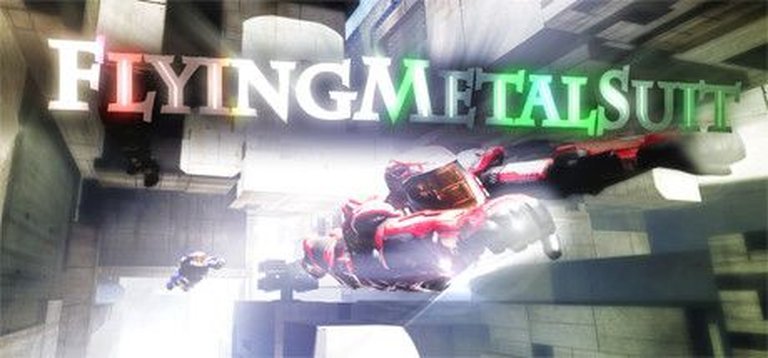
FlyingMetalSuit is a VR aerial racing game set in a sci-fi universe where players pilot a high-tech superhero suit through intense races across three distinct worlds. Utilizing motion-controlled flight mechanics, competitors navigate 12 Grand Prix events using boost and rocket abilities to outmaneuver rivals in a high-speed, immersive experience.
Where to Buy FlyingMetalSuit
PC
FlyingMetalSuit Guides & Walkthroughs
FlyingMetalSuit: Review
Introduction
In the crowded landscape of virtual reality games, where high-budget productions often dominate the conversation, FlyingMetalSuit emerges as a fascinating footnote—a small, ambitious title that dared to distill the fantasy of superhero flight into a lean, racing-focused experience. Released in November 2018 by the indie developer Wirtuel, this title operates at the intersection of accessibility and spectacle, offering players the chance to pilot a metallic suit through treacherous aerial courses. While it lacks the narrative depth or technical polish of mainstream VR titles, FlyingMetalSuit carves a niche through its intuitive motion controls and pure, unadulterated speed. Its legacy lies not in revolutionizing the genre, but in capturing a fleeting moment of VR’s mid-cycle potential—a time when developers experimented with simple, high-concept experiences that leveraged the medium’s unique strengths. This review deconstructs FlyingMetalSuit as both a product of its era and a testament to the enduring appeal of flight fantasy in virtual realms.
Development History & Context
FlyingMetalSuit was the brainchild of French developer Wirtuel, helmed by Vincent Warnke-Dherines, operating within the constraints of an indie studio and the nascent VR market of 2018. The game was built on Unreal Engine 4—a choice that granted it competent visuals but also imposed the heavy demands of VR optimization on a small team. The era was pivotal for VR: major headsets like the Oculus Rift and HTC Vive had established a foothold, but the market was still grappling with defining “killer apps.” Racing games, however, were proving fertile ground, with titles like Redout and Assetto Corsa demonstrating how speed and immersion could translate to VR. Wirtuel’s vision was laser-focused: strip away complexity and deliver the feel of flight. As the Steam store description bluntly states, “put yours hands in front of you, like a flying hero, and push the right trigger!” The developers prioritized accessibility, recommending players sit on a swivel chair to mitigate motion sickness—a concession to the physical limitations of VR at the time. This emphasis on motion control over traditional inputs reflected a broader industry trend, where VR was seen as a platform for reimagining rather than replicating conventional genres.
Narrative & Thematic Deep Dive
FlyingMetalSuit eschews conventional narrative in favor of pure, immediate experience. There is no story, no characters, and no dialogue—only the silent, solitary thrill of racing through three distinct sci-fi worlds. The thematic core, however, is potent: the liberation of flight, untethered by physics or consequence. Players embody a nameless pilot encased in a “flying metal suit,” a transparent nod to superhero archetypes like Iron Man, as noted in several Steam curator reviews. The races are framed as “incredibles and dangerous” challenges, emphasizing risk and reward. Without text or cinematics, the narrative is conveyed through environment: neon-lit canyons, floating platforms, and treacherous wind tunnels that feel like a testing ground for human augmentation. The lack of lore is both a strength and a weakness; it immerses the player in the moment, leaving room for personal fantasy, but it also robs the experience of emotional resonance. Ultimately, the game’s “story” is one of mastery—over the suit, over the courses, and over the fundamental human desire to soar.
Gameplay Mechanics & Systems
At its heart, FlyingMetalSuit is a study in elegant minimalism. The controls are designed to be intuitive: hold Vive or Oculus Touch controllers before you, and the suit mirrors your posture. Pulling the trigger engages a “booster” for acceleration, while spreading your hands apart slows you, and bringing them together increases speed. This motion-based system is the game’s defining innovation, transforming abstract inputs into tangible physicality. The core gameplay loop is a 12-Grand Prix circuit across three worlds (e.g., futuristic cities, alien landscapes), each comprising progressively difficult tracks with narrow gaps and environmental hazards. Players can deploy “rocket” attacks to knock opponents off-course, though this feature was notoriously buggy—user reports confirm that missile controls frequently failed on Vive controllers, a flaw Wirtuel never fully patched beyond the 2019 update, which added collision corrections. The absence of multiplayer (a frequent community request) and a progression system beyond raw times limits longevity. The UI is sparse, relying on VR’s spatial awareness to display lap times and speedometers, which maintains immersion but can feel barren. While the motion controls create genuine moments of euphoria—banking through a canyon, narrowly dodging a pillar—they also expose VR’s fragility; slight hand tremors or misalignment can send players spiraling into walls.
World-Building, Art & Sound
The game’s visual direction is a blend of futuristic grit and vibrant spectacle. Built on Unreal Engine 4, it delivers competent textures and lighting, with dynamic wind effects and particle trails that enhance the sense of velocity. However, it lacks the polish of AAA titles; environments, while varied, often repeat assets, and the suit itself looks functional rather than iconic. The three worlds—described as “differents” in the store copy—offer distinct palettes: one bathed in electric blue and chrome, another in volcanic reds, and a third in crystalline purples. These settings evoke a sense of scale and peril, but their static nature prevents them from feeling truly alive. Sound design is functional yet flawed. The low thrum of the suit’s engines and the rush of wind create a convincing aural backdrop, but audio bugs—like complete sound drops mid-race, reported by users like “BISTOR”—marred the experience. The 2019 update added “bonus stage with alternative game mode,” but these additions didn’t significantly alter the auditory landscape. Overall, FlyingMetalSuit succeeds in creating a believable flight fantasy, but its art and sound serve the mechanics rather than elevating them beyond a technical demo.
Reception & Legacy
At launch, FlyingMetalSuit was met with cautious optimism. Priced at a mere $1.99 (€1.59), it positioned itself as an accessible entry point for VR racing. On Steam, it garnered an 81% positive rating from 11 reviews, with praise for its “great impressions of speed” and “simple gameplay” (curator “Earth in a Porthole”). Positive reviews highlighted the “immersion” of high-speed flight and the satisfaction of nailing a difficult turn. However, criticism was equally vocal. Users like “BobDoyleVR” lambasted broken controls, noting that “missile” functions were “not working for the Vive controllers.” The absence of multiplayer was a recurring lament, with one user bluntly asking, “I want to know if you have plan for online game.” The 2019 update, which added a bonus track and alternative modes, addressed some bugs but failed to reignite interest. Commercially, its impact was negligible—no sales figures are available, but its low price point and niche appeal limited its reach. Critically, it flew under the radar, with Metacritic listing zero critic reviews and a “tbd” user score. Its legacy is subtle: as a case study in VR’s experimental phase, it demonstrated the power of intuitive motion controls but also the pitfalls of underdeveloped polish. It influenced few subsequent titles, though its “superhero flight” fantasy echoes in games like Icarus and Defector.
Conclusion
FlyingMetalSuit is a product of its time and its constraints—an indie VR title that aimed high with limited resources. It succeeds as a visceral, uncomplicated power fantasy, turning the dream of flight into a tactile, if flawed, reality. The motion controls are its triumph, offering a level of immersion that transcends traditional gaming inputs, while the 12 Grand Prix provide a satisfying challenge for short bursts. Yet, its reliance on unpatched bugs, sparse content, and a lack of multiplayer relegates it to the realm of curiosities. For VR enthusiasts seeking a cheap, adrenaline-fueled diversion, it remains a recommendable artifact of the medium’s wild west era. For the broader industry, it stands as a reminder that innovation in VR isn’t always about technical prowess; sometimes, it’s about the singular joy of putting on a metal suit and learning to fly. In the pantheon of video games, FlyingMetalSuit is not a masterpiece, but it is a charming, earnest attempt to capture lightning in a bottle—a testament to the boundless potential of virtual worlds, even in their earliest, most unpolished forms.