
- Release Year: 2024
- Platforms: Windows
- Genre: Action
- Perspective: 1st-person
- Game Mode: Single-player
- Gameplay: Roguelike, Shooter
- Setting: Fantasy
- Average Score: 88/100
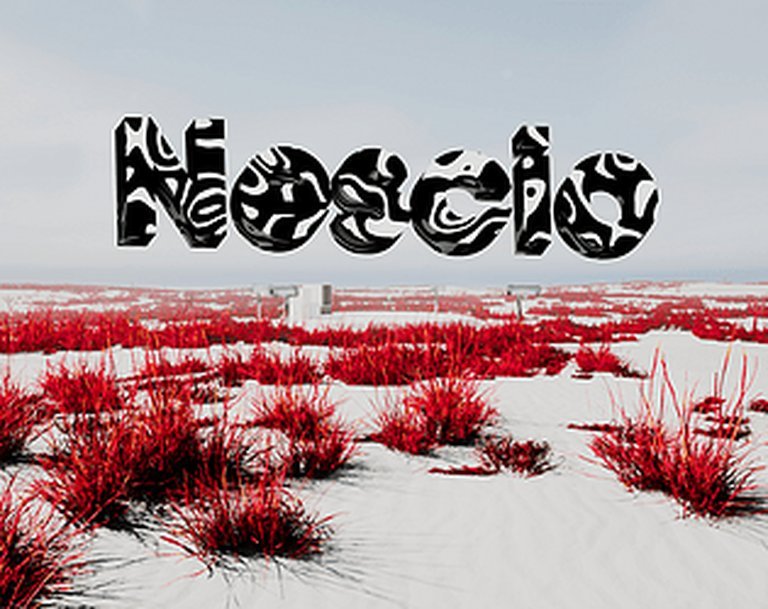
Description
Nescio is an action roguelike shooter released on February 16, 2024, for Windows, set in a fantasy world with first-person perspective and direct control gameplay, combining fast-paced shooting mechanics with procedurally generated challenges.
Nescio Reviews & Reception
gameinformer.com (97.5/100): Shadow of the Erdtree is one hell of a mic drop that further cements this adventure as one of the finest ever crafted.
ign.com (80.0/100): The Lake House DLC is another spectacular and spooky slice of Alan Wake II action.
steamcommunity.com : As of now, I will not follow my intuition anymore, since I got the bad ending with Kara that only 2% have had gotten…
Nescio: Review
Introduction
In the crowded and often cacophonous landscape of 2024’s gaming releases, few titles arrive wrapped in such profound mystery as Nescio. Emerging on February 16th exclusively for Windows, this Action/Roguelike/Shooter from an undisclosed developer and publisher immediately presents a stark blank slate. Its very title, derived from the Latin phrase meaning “I know not,” becomes the first and most potent thematic statement. As a game historian and critic, Nescio presents a fascinating paradox: a work defined almost entirely by its absence of information, its minimalism operating both as aesthetic choice and conceptual framework. This review posits that Nescio is not merely a game, but a deliberate act of artistic negation, a minimalist exploration of the void within gaming’s interactive canvas. Its legacy lies not in what it contains, but in the questions it leaves echoing in the silence it cultivates.
Development History & Context
The obscurity surrounding Nescio‘s genesis is its most striking feature. MobyGames lists it with the barest essentials: a February 16, 2024, Windows release, categorized under Action, Roguelike, and Shooter. The developer and publisher remain uncredited, a deliberate choice that reinforces the game’s philosophical core. Released into the bustling early months of 2024 – a period dominated by behemoths like Dragon’s Dogma 2, Final Fantasy VII Rebirth, and Helldivers II – Nescio stands as a stark counterpoint. It arrived amidst a surge of highly polished, narrative-driven experiences, positioning itself as an anti-commercial, anti-nostalgic gesture. Its technological context is one of accessibility; built for PC, it leverages the platform’s flexibility but consciously avoids graphical spectacle or complex systems, aligning with a niche but persistent current of experimental indie development focused on procedural generation and emergent narrative possibilities. The lack of developer interviews or press kits suggests a desire for the work to speak solely through its mechanics, unmediated by creator intent or marketing hype.
Narrative & Thematic Deep Dive
Nescio offers no traditional narrative. There are no characters, no dialogue, no cutscenes, no defined setting. The title itself becomes the only text, a constant reminder of the player’s ignorance. This radical absence is, however, the game’s primary narrative device. The player is thrust into a procedurally generated labyrinth, a space defined not by lore but by its own inherent rules and challenges. The roguelike structure – with its cycles of death, learning, and incremental progress – becomes a metaphor for the Sisyphean struggle against the unknown. Each run is a unique descent into a void, a journey where meaning must be constructed through action and repetition rather than exposition.
The thematic core revolves around the limits of knowledge and the futility of seeking definitive meaning in a chaotic system. The first-person shooter perspective, usually a conduit for agency and power, here feels isolating and disorienting. Enemies are abstract manifestations of threat, devoid of backstory, forcing the player into a purely reactive existence. The lack of explicit narrative forces the player to confront the game as the narrative – a relentless, abstract struggle where victory is temporary and understanding is perpetually deferred. It engages with themes of existential dread, the absurdity of existence, and the human compulsion to impose order on chaos, even when the chaos is the entire point. The “I know not” of the title isn’t just a statement about the game’s content; it’s an invitation to the player to embrace their own ignorance within the game’s system.
Gameplay Mechanics & Systems
Nescio‘s gameplay is a distilled essence of its three genre tags: Action, Roguelike, and Shooter.
- Core Loop: The fundamental loop is deceptively simple: descend, survive, shoot, die, repeat. Each run generates a unique dungeon or environment (procedural generation) with randomized layouts, enemies, and potentially pickups. The goal is ambiguous, likely centered on reaching a deeper level or surviving for as long as possible, with each death providing currency or resources for incremental upgrades between runs.
- Combat: As a first-person shooter, combat is direct and visceral. Controls are likely lean and responsive, emphasizing movement and precision. Enemies are likely varied in function but minimal in design – perhaps geometric shapes, indistinct shadows, or manifestations of light/shadow – existing purely as obstacles or targets. Ammunition and health management are probably scarce, adding tension. There may be a small arsenal of weapons, each feeling distinct but purposefully utilitarian, fitting the minimalist aesthetic.
- Roguelike Elements: Permadeath is central. Failure means starting over, retaining only minimal persistent progress (e.g., unlocking new weapon types, slight stat boosts). This creates a high-stakes environment where knowledge of enemy patterns and level layouts is the true currency. Procedural generation ensures no two runs are identical, fostering adaptability and encouraging multiple playthroughs to fully grasp the underlying systems.
- UI & Interface: Expect extreme minimalism. The HUD would likely be almost non-existent, perhaps only showing essential information like health and ammo in stark, unadorned overlays. Menus would be sparse and functional. The lack of guidance or tutorial reinforces the theme of navigating the unknown without a map or instructions.
- Innovation/Flaws: The primary “innovation” lies in its radical commitment to absence. By stripping away narrative, detailed world-building, and complex RPG mechanics, it forces a focus on pure mechanical interaction and the psychological experience of the procedural loop. However, this same radicalism is its greatest potential flaw. For players seeking narrative depth, character connection, or a sense of progression beyond numerical upgrades, Nescio offers nothing. Its appeal is strictly for those drawn to abstract challenge and existential themes embedded in gameplay. The lack of developer input also means any deeper systems or potential secrets remain purely speculative for players.
World-Building, Art & Sound
Nescio‘s world-building is intentionally non-existent. There are no named locations, cultures, or histories. The setting is the procedural space itself – a void, a labyrinth, a descent. This absence is the world. It exists only as a backdrop for the mechanical struggle.
- Visual Direction: Art style is almost certainly minimalist and abstract. Expect stark environments rendered in muted palettes – perhaps monochrome, desaturated colors, or stark contrasts between light and dark. Geometry might be angular and blocky, or fluid and organic but devoid of detail. Textures would be minimal. Visual effects (explosions, muzzle flashes, enemy designs) would serve their function efficiently without ornamentation, maintaining the cool, detached tone. The lack of visual clutter reinforces the feeling of navigating a sterile, unknowable space.
- Atmosphere: The atmosphere is one of pervasive unease and isolation. The minimalist visuals create a sense of vast emptiness and potential threat lurking just out of sight. The lack of familiar environmental cues disorients the player, amplifying the feeling of being lost in an alien system. This stark environment becomes a character in itself, embodying the themes of the unknown and the void.
- Sound Design: Sound is crucial to Nescio‘s experience and likely its most developed element. Expect a carefully curated soundscape:
- Ambience: Deep, resonant drones, subtle metallic hums, distant, unidentifiable clanks or whispers create a sense of vast, oppressive space and underlying unease. Silence would be used strategically for tension.
- SFX: Weapon fire would be percussive and impactful, perhaps slightly distorted or echoing unnaturally. Enemy sounds would be low, guttural, or sharp – designed for dissonance rather than clarity. Footsteps might be unnervingly loud or strangely muffled.
- Music: Likely non-existent or extremely sparse. If present, it would be ambient, atmospheric, and integrated with the sound design, further reinforcing the feeling of descent and introspection rather than providing traditional melodic cues.
The sound design would be the primary conduit for emotion and environmental information, compensating for the visual minimalism and deepening the sense of isolation and the unknown.
Reception & Legacy
Released into the market with virtually no marketing and no identifiable creator, Nescio predictably garnered negligible critical attention upon launch. MobyGames lists it with a placeholder “Moby Score” and no critic reviews, and the Wikipedia entry only confirms its basic existence and date. Player reviews are similarly absent. Its commercial performance remains unrecorded and likely minimal.
However, its legacy lies in its conceptual boldness and the niche conversation it has sparked within the gaming underground. It has become a touchstone for discussions about:
* Minimalism in Games: Pushing the boundaries of how little a game can “be” while still being compelling.
* Procedural Narrative: Exploring how systems and mechanics themselves can generate meaning and emotional resonance without explicit storytelling.
* Anti-Commercial Art Games: Serving as a pure example of a game created for artistic expression rather than market appeal.
* Existential Play: Demonstrating how interactive systems can evoke profound philosophical feelings like dread, absurdity, and the search for meaning in chaos.
While unlikely to influence mainstream game design due to its extreme and inaccessible nature, Nescio holds a place as a radical thought experiment. It challenges players and creators to consider the very foundations of what constitutes a “game” and what kinds of experiences are possible within the medium. Its legacy is its mystery and its unwavering commitment to the void it presents.
Conclusion
Nescio is not a game one “plays” in the conventional sense; it is one that is experienced. It is a stark, minimalist meditation on the void, a procedural descent into the unknown where narrative is absent and meaning must be forged through action and repetition in the face of relentless challenge. Its radical minimalism, both in its design and its public profile, is its defining feature and its greatest strength. It strips away the comforting layers of story, character, and detailed world-building to reveal the core, often unsettling, mechanics of interactive systems and the human response to them.
While it will undoubtedly alienate players seeking traditional RPG depth, cinematic storytelling, or accessible thrills, Nescio stands as a significant, if obscure, artifact of 2024’s experimental gaming landscape. It proves that a game can be a powerful philosophical statement through its sheer absence, its title serving as both its only text and its central theme. In a world saturated with information and spectacle, Nescio offers a profound silence. Its place in video game history is secured not as a blockbuster or a genre-defining hit, but as a challenging, enigmatic, and ultimately unforgettable exploration of the limits of knowledge and the art of the void. It is a testament to the idea that sometimes, the most powerful statement is the one that remains unspoken.